The CLARITY Act is facing fresh opposition from the National Sheriffs’ Association (NSA), which argues that the Blockchain Regulatory Certainty Act (BRCA) will make it harder to prevent financial crimes before they occur. This comes as U.S. President Donald Trump weighs the bipartisan ethics deal, which could pave the way for a vote on the bill next week.
National Sheriffs’ Association Raises Concerns Over CLARITY Act Provision
In a letter addressed to Senate Leaders John Thune and Chuck Schumer, the NSA raised concerns about the BRCA provision, which protects DeFi crypto developers, noting that it potentially enables illicit actors to use platforms that obscure crypto transactions.
As such, they urged the Senate leaders to address this, stating that the CLARITY Act has “significant law enforcement and public safety risks.” The law enforcement group also warned that exempting DeFi developers from key TradFi requirements would make it harder to prevent financial crimes before they occur and to crack down on them after they occur.
It is worth noting that some other law enforcement groups had also opposed the crypto bill before now, making a similar argument. However, the CLARITY Act has gained endorsement from law enforcement groups such as the Fraternal Order of Police and the Major Cities Chiefs Association following the release of the latest draft, which includes additional law enforcement provisions.
Treasury Secretary Scott Bessent also pushed back on the BRCA concerns earlier this week, noting that non-custodial builders and developers are not, and have never been, subject to registration obligations under the Bank Secrecy Act. This came as he urged the Senate to vote “now” on the crypto bill.
Trump Weighs Bipartisan Ethics Proposal
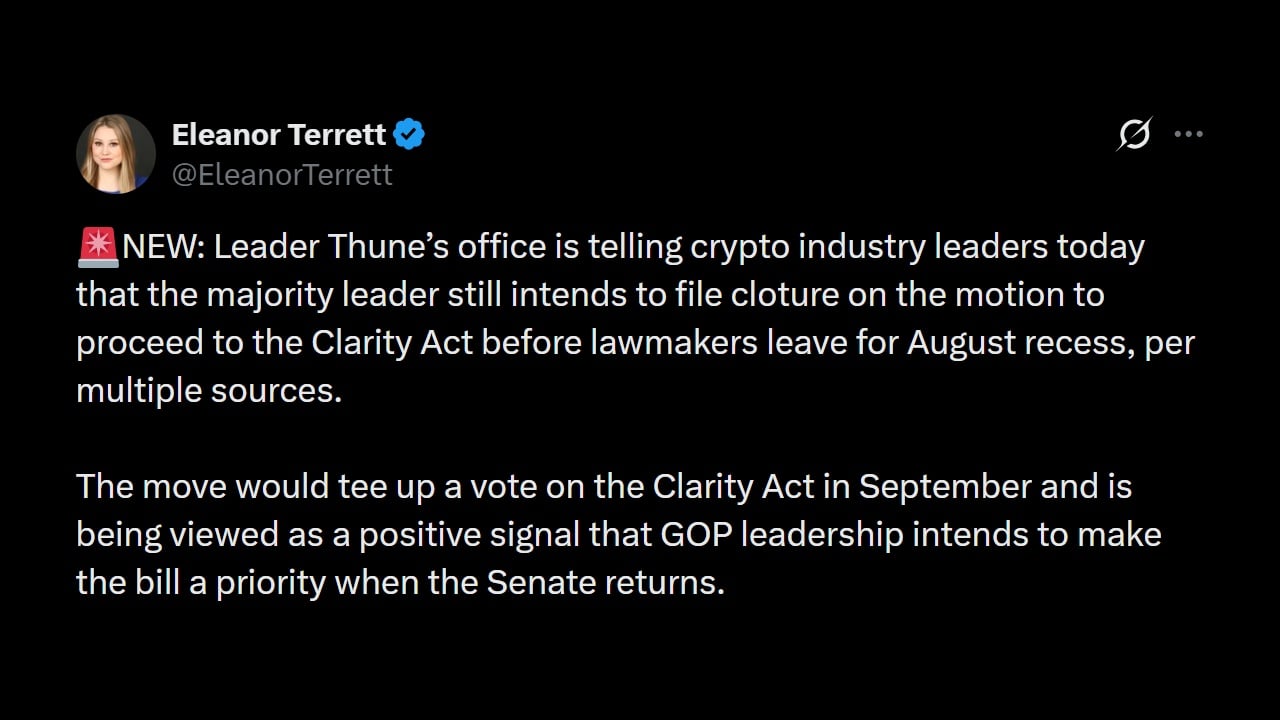
According to a Crypto In America report, the White House is currently weighing the bipartisan ethics proposal put forward by Senators Thom Tillis and Ruben Gallego. A green light from the White House could clear the way for the Senate to hold a vote on the CLARITY Act next week, just before the August recess.
The proposed ethics provision would reportedly empower state attorneys general to sue the Department of Justice (DOJ) if they fail to enforce the ethics provision. This follows pushback from Democrats over the current provision, which empowers only the DOJ, not state AGs, to enforce it.
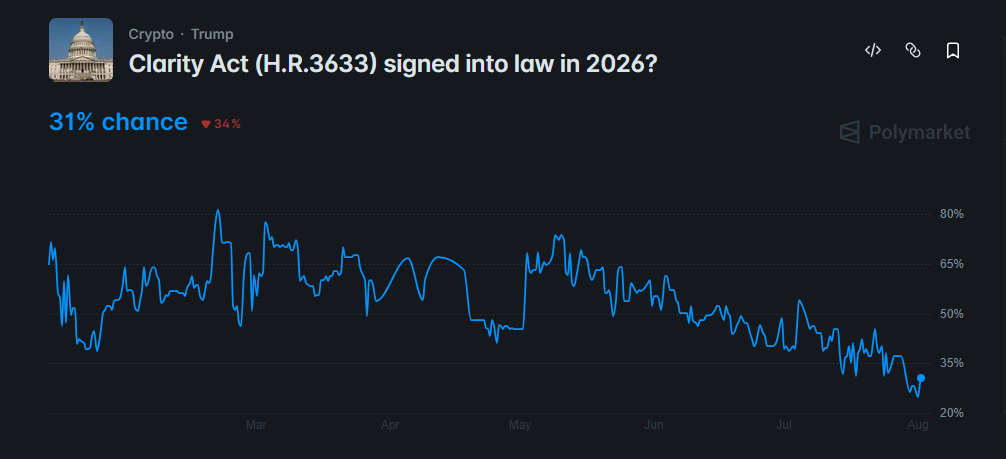
The odds of the CLARITY Act passing this year have slightly climbed from yesterday’s lows as the White House weighs the ethics proposal. Data from the top crypto prediction platform Polymarket shows a 31% chance that President Trump will sign the bill into law this year, up from as low as 23% yesterday.