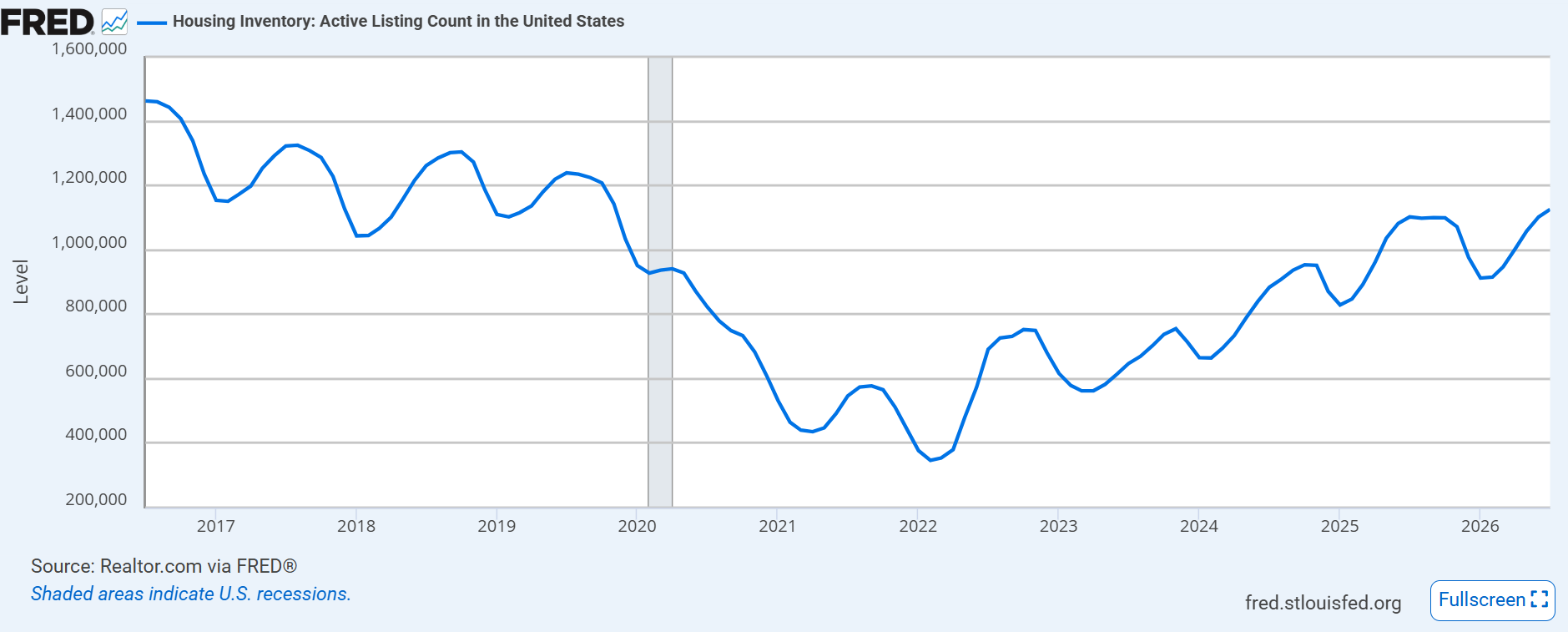
Dave:We cover a lot of data on this show because it is important, but sadly data is also imperfect. And right now the data we all know and talk about every episode of this show might be hiding the best opportunities real estate investors have right now because right now the median home price in the US is roughly flat. It’s up a little bit year over year actually, but it’s not really going anywhere exciting in either direction. But sale price doesn’t really equal what investors actually pay. And new data is coming out now that shows that home buyers and investors alike are scoring major discounts that aren’t being reflected in sales data. So today on On the Market, we’re going to talk about the opportunity to score major deals that right now are hiding in plain sight. We’re going to cover the new data, reveal important trends and talk about how you can use this information to land your next deal.Hey everyone. Welcome to On The Market. I’m Dave Meyer. Today we got a fun show because we’re talking about good news in the housing market if you’re a buyer at least and it’s actionable news that you can take advantage of almost immediately. Now of course I am a real estate investor. I’ve been doing this for 16 years. I also work in BiggerPockets. Been doing that for 10 years. But when I think about what I spend most of my time doing every single day, whether it’s for bigger pockets, my own personal investing, anything else, it’s I’m an analyst. I’ve been an investor for longer, but what I spend most of my time doing is analyzing data and information and trying to make sense of it. And something I’ve learned from being a data analyst for so long is that you can’t just take data, run some numbers and some statistics, and then call it a day and assume that everything’s right.One of the most important jobs of an analyst is to question the data and figure out if the numbers in front of you really tell the entire story. And in the housing market right now, I think the big popular numbers that we all look at all the time are not telling the whole story. Because if you listen to the show often, and if you do, thanks by the way, you probably know the housing market is pretty flat and is in what I call the great stall. If you’re new here, welcome. Now you know we’re in a very stalled housing market that I think is going to continue for the foreseeable future. But the data we use to determine these quote unquote flat prices, the median home sale price, is kind of misleading right now. It’s not always the case that it’s misleading. A lot of times it’s very accurate, but there is new evidence that the median home sale price is not telling us what I think might be the most important things for investors right now, the price they’re actually paying, the net price that actually comes out of their pocket.Now I know this can be confusing because shouldn’t the median sale price tell us the price that investors are paying? It should, yeah and often yes it does. But in buyers markets like the ones we’re in today where sellers far outpace buyers and buyers have all of the leverage, there is another major factor in play and that is concessions. You may have heard this term concessions before in a real estate context, but if you haven’t, no worries. It is not the most obvious thing. A concession and specifically in the scenario that we’re talking about in today’s market where you’re talking about seller concessions is basically things the seller gives the buyer during the negotiation, but it does not impact the actual final price. Some examples of this are putting money towards closing costs, a rate buydown or maybe even just straight up cash. And I know that seems weird.Why wouldn’t you just lower the price? But this actually happens and right now it is happening a lot. According to a new Redfin study, over 46% of US home sales in May of 2026 included a seller concession. So this is not some fringe situation that happens from time to time. Nearly half of home sales right now are including these types of concessions and is up from 43% a year earlier and is the highest share for any May, because we look at year over year data, the highest share for any May since Redfin started tracking this information in 2019. On top of that, and this should perk your ears up a little bit, but on top of that, about 15, 16% of homes that sold in May not just only had a concession, also had a price drop. So that should tell you something about the things you should be looking for.Now, before we get into that and what you should be doing, just call out here that this data, when I said it’s the highest it’s been, the data doesn’t go back that far. It only goes back to 2019, doesn’t cover the great financial crisis. But that being said, if you just think about that, half of all buyers are actually paying less than what it looks like they’re paying on paper. And if you extrapolate this a bit, it means prices in effect are probably going down, probably going down more than the median home price data suggests to us. Think about it this way. During COVID, no one, no one was getting seller concessions. You could just put some crappy home on the market and people were marching in with all cash offers, right? Why would you give a seller concession? In fact, there was buyer’s concession, right?They weren’t paying more than what is actually reported, but they were waiving contingencies like inspections and appraisals and financing and all of that. So if we look at the data we know, right, if we bring this forward back to today that sales prices are flat and that seller concessions have basically come up from nothing in the last four years and that number keeps growing. The logical conclusion is that the net price people are really paying is lower now than it was a year ago. Now again, this isn’t always true because if prices stayed flat and the number of seller concessions stayed flat, then at the end of the day, things are basically the same. But if we’re seeing flat pricing and increasing seller concessions, you have to think that the net price is actually going down. And I’m going to talk about by how much, because I have some information about how big concessions are getting right now.But before that, just want to articulate why this is happening right now. We’ve talked about the great stall, but basically we are in a strong buyer’s market. According to Redfin, we have 47% more sellers than buyers nationally. That’s big, right? We still have rates and prices pretty high relative to recent history at least. And even though inventory really isn’t growing that much despite what a lot of people say, it’s really pretty close to flat. The power in the market and just the vibes in the market have clearly shifted, right? What we see now, both from anecdotal experience, you hear it from the panel and Kathy and James and Henry are here. I see it in my own investing. See it when I sell a property. When sellers, if they get a place under contract, they want to close now. They’re not walking away for five grand more.They are willing to negotiate. They will give in on an inspection objection in ways they wouldn’t have dreamed of a couple of years ago. And this, again, for anyone looking to acquire deals should be music to your ears. We’re going to talk about how to use this to your advantage, but first I want to talk about the size of these concessions, like I said, because the amount that people are getting off and how much should really dictate how much of a strategic adjustment you should consider based on this data. Now we got to take a quick break, but I will be back with the size of those concessions right after this.Welcome back to On the Market. I’m Dave Meyer. Today we’re talking about seller concessions and how they could be hiding discounts that investors should be taking advantage of. Before the break, I talked about why and how roughly half of all home sales in May at least had a seller concession. Now I want to talk about how big they are. The typical concession size right now runs roughly one and a half to 2% of sale price on average. So if you had a home that was worth 400 grand, a little bit under the national average, but let’s just use round numbers, 400 grand. We’re talking about six to $8,000 on average in concessions. That is meaningful money right there. That is a significant discount. That is all your closing costs. That’s your cash reserve. That’s part of your renovation that people are getting off right now, but the data actually gets better than that.So that number of one and a half, 2% actually represents all transactions in real estate. But if you actually look at the people who zoom in, who go in and get the concessions, the concession range is like five to 7%. The exact data is kind of hard to get. That’s kind of why I opened the show talking about sometimes data isn’t perfect. We don’t have perfect data for this. But let’s just imagine here we’re talking about even on the low end, a concession of 5%, that’s 20 grand on a $400,000 house. That is huge. 5% might not sound like a like, but this is serious money you’re saving that can go to your down payments, to loan buydowns, to prepaid expenses like things like taxes or insurance. This is real, real money. Now there are limitations on that, which we’ll get to in a little bit, but the sheer amount is very appealing.So the question then as an investor is like, what do you do about this? This data is showing us that maybe there’s more opportunity to buy out a discount than we even knew about. Well, the obvious thing that you should be doing is to negotiate concessions because for whatever psychological reason there is, people often just want their number, quote unquote. People just have this number in their mind of what they are willing to sell their house for. This is particularly true of homeowners. They just have some idea of what their home is worth maybe because their neighbors sold it a couple of years ago or they need some amount of money in their mind to make this feel worth it to them. And if they hit that number, they might just give you back some of that money in terms of concessions. It doesn’t actually make any sense logically, but at least in my experience, this happens more often.A lot of times, especially if you’re… We’ve talked about this on the show with new construction. Builders are famous for doing this, offering concessions instead of lowering the price. But this pattern has now moved beyond just new homes and new builds and is into the existing home market with just regular old sellers. So trying to negotiate for concessions is a very good strategy right now. Now I’m not saying that this is the only tool you should be using, don’t get me wrong. Of course, you got to do the math, but if you can get a concession to buy down your mortgage rate, that can and honestly is often more valuable than a nominal price reduction. If someone’s going to say, “I’ll pay down your rate 2% for the lifetime of your loan, I’ll buy all those points for you. ” Versus a 3% discount on price or a 2% discount on price, you should do that math.Look at your cashflow and see what is better. Don’t just take concessions because they’re easy. You got to use this strategically to get a mutually beneficial outcome. Now, what a seller sees as mutually beneficial, not really up to you, but if they just want their price and they’re willing to buy down your rate to cover your closing costs, they’re not going to fight you on inspection objections, that’s fine. They might feel like they’re winning. But for you, you could also feel like you’re winning because ultimately what you should be caring about here is your ROI. As an investor, yeah, you want to buy at the best price and there are trade offs with getting a concession versus lowering the actual price that you pay. But at the end of the day, the most important thing is ROI. Are you walking away with better cash flow, better equity potential, less money out of pocket because you got concessions instead of something else?That to me is well worth considering. Now there is an art to this though, because as real estate investors, we’re always trying to get the best price. And in this market, that often means offering under asking price. So you need to find the right balance. So if you wanted to buy a home for whatever, $300,000 and the list price is 350, you could offer 300, no problem with that. But what I’m saying is, and what the data tells us is that what will probably work better, at least on average in markets where there are a lot of concessions you have leverage, you may want to consider trying offering something like 315 with some concessions. Now you’re still only trying to come out of pocket total of $300,000, but try playing with these things a little bit. Lowering your price to 315, still a low ball offer, but maybe it’s more palatable to the seller than seeing 300,000.And again, it’s just psychology. It’s the same amount. They’re giving $15,000 back to you in the form of a rate buydown or closing cost or something else. But honestly, appearances matter. I know this is like the least data driven thing, but this is what’s happening right now. What we’re seeing very clearly is people are more willing to give concessions than they are willing to lower price. You need to use that to your advantage. Ask your agent. Ask your agent if they’ve seen this work and if they don’t know, you should probably find another agent. But ask your agent if they’re seeing a lot of concessions, what kind of concessions and how you should formulate a strategy. Because I think this is just a tool that should be in everyone’s tool belt right now. You should know though, when you’re thinking about how to create this balance, you got to figure out what to offer versus what to ask for in concessions, when to ask for the concessions, that kind of thing.You can’t count entirely on concession because there are actually limits and it depends on your loan type. Now, if you’re buying for cash, you can do whatever you want, but there’s also a psychological limit. There’s no legal limit to what kind of concessions if you’re buying cash. But if you offer 400,000 and want $100,000 in concessions, that’s just weird. Don’t be that weird. Just be a little bit more reasonable. Again, you’re doing this for appearances to help people feel like they’re getting a good deal, that you’re both getting a good deal, going in and asking for a hundred grand in concessions just violates that. So you have to be normal about it. Assuming most people are not paying cash for other loan types, for conventional loans, if you’re putting 10% down or less, the limit that you can get in concessions is 3% of the purchase price.So 10% down, if you’re doing low money down, 10% down or less, the limit to your concessions is 3%. Now that number goes up depending on how big of a down payment you put. If you go up put 25% down like an investor, that number goes up to 9%, right? But we’ll talk about investor properties in just a second. But like if this was a house hacked, for example, you could get up to 9% if you’re putting 25% down. Now, if you have an FHA loan, it goes up to 6%, still pretty darn good, right? 6% VA goes up to 4%, pretty good. Investment properties are kind of the problem here because they’re capped at just 2%. If you are doing a Freddie or Fannie mortgage, right? If this is a conventional mortgage, investment properties are capped at just 2% regardless of the down payment.So this can feel like an obstacle, right? You can’t get what I was talking about before, but there are two ways around this. First and foremost is that owner-occupied strategy. If you’re doing a house hack or a live and flip, you go back to those other limits that I was talking about that were higher. So if you’re putting 20% down on a conventional and living in it, even if it’s a investment property, it’s a house hack, you can get 6% concessions. That is a ton, 6%. The other thing you can do if in your market, again, you have to balance all these things. There’s no right answer for every investment, but if in your market concessions are working and that’s going to get you a great price, you might want to consider using a non-QM mortgage like a DSCR loan because although those banks might have limits themselves, there’s no hard and fast rule across DSCR loans about what the limit of concessions are.So that is negotiable and is something you can find out when you’re shopping around for a DSCR loan. So those are just some of the limits. And one more thing on that actually, because the other thing you need to know is that the limits are limited. The limits are basically on what the funds can go to. So you’re capped out for an FHA loan at 6% of concessions that go to rate buydowns, closing costs, coverage, to prepaid expenses, things like that. And you are also sometimes capped depending on the loan. Again, you’re sometimes capped about repairs. You can ask for money to go make repairs and things that come up in the inspection objection. But there is a trick around this too, because if you just have the seller go out and make those repairs, that does not count towards the limit. So if you have something under contract and you’re negotiating after you get your inspection report and you’re already, let’s say you’re doing low money down, you’ve already extracted 3% concessions that’s the most you can get, what you can do in those scenarios is negotiate for the seller to go out and do the repairs themselves.Now not all sellers are willing to do that, but this is another tool in your tool belt to increase the amount of concessions without bumping up against that limit. The seller doing repairs themself is excluded from that limitation and is not a factor. So that is another lever you can pull in these negotiations. That doesn’t work. You can always try negotiating a lower price point at that point. Because remember, this stuff, what I’m talking about, these aren’t mutually exclusive. You have to choose price cuts or concessions, right? You can have both. You have to find the right balance. What I’m suggesting to you is try this more. I think it’s going to work more right now. The data suggests it’s working more. I’ve sold two properties in the last six months. It worked on me. I sold a flip for $1.65 million, but I gave them $45,000 in concessions.I know that sounds crazy. I still made a good profit on the deal, but that’s how it was structured. That’s how it was negotiated. That’s how we got the price that we needed and the net profit that I needed to get to. That’s basically what the buyer wanted. If not, they weren’t even offering 1.6.That’s how they structured it and that got me the number I wanted so I took it. Another thing happened to me recently. I sold a duplex. I’m going to trade it out and try and buy something a little bit bigger and I got the price I wanted. It was actually a little bit above asking price. I got it above asking price and then they negotiated $10,000. It’s a much cheaper property. I sold it for like 275. They asked for $10,000 in concessions after that, but they offered above asking price.And I said, sure. So that got me below my asking price, but it was within two or $3,000. And like I said, as a seller, I was like, “You know what? I’m not putting it back on the market. Yeah, I had another offer over asking, but they’re probably going to negotiate for this too and it’s time and it’s money and it’s effort. So I’m just going to accept this concession.” It works on me as a seller. I think it’s clearly working on other sellers if half of home sells have this concession. So that’s just what I’m saying. Use this tool to your advantage. Now, how much of a concession to ask for and what you should be doing really depends on your region because there are huge differences in how big concessions are and how often concessions are being used depending on your market. So you should know this before you go into any of these negotiations.I’m going to share with you some of those regional variations right after this quick break. Stick with us.Welcome back to On the Market. I’m Dave Meyer. Today we’re talking about seller concessions and how you can use this as a tool in your tool belt. Before the break, we talked about how on average people who negotiate concessions are getting five to 7% in discounts, right? That is pretty big. Now it’s going to depend on how big of a down payment you put down. It depends on your loan type, but that is pretty sizeable. That is meaningful money that can change a deal from being not worth buying to buying. And that’s what I think I’m trying to get at here is that at the headline, if you look at the sale price, a lot of deals don’t work, but think another level deeper. Think, what if I can get them to buy down my rate? Two percentage point. What if I can get them to cover all my closing costs and buy down my rate?Like does the deal work then? These are some of the things that you should be thinking about and offering because you never know what people are going to accept. Sometimes this is more palatable and sometimes it’s what makes a deal work. Now, as I said before the break, what you can offer and how big of a concession you can ask for is going to really depend on the area. So I just want to give you an example that in some areas of the countries, the percentage of sellers offering concessions is just absolutely massive. The market with the highest number of concessions in the country right now is Nashville, Tennessee with over 75%. If you’re buying a home in Nashville right now and not getting a seller concession, you’re doing something wrong. I mean, maybe something super underpriced on MLS, maybe that’s the 25%, right? They just put it under price just to get offers and then they’re not going to do concessions.But 75%, when I see that data, if I’m an agent or if I’m a real estate investor, I’m going with the concession route because every seller, hopefully the seller has been prepared by their agent, their listing agent, that they’re going to need to offer concessions. They’re probably expecting it. And if you don’t do it, they’re going to be delightfully surprised and be like, “Hey, they didn’t even ask for a concession.” So you have to work on this with your agent, figure out the right balance, but some combination of offering under asking price and asking for concessions probably going to work in Nashville. Not on every property, not every property is a deal, but in a market like that, man, that’s the bid strategy right now, right? Go after those concessions. You got a 5% in Nashville, that’s 15, $20,000. Next market up highest Charlotte, North Carolina.After that, Atlanta. These are great markets by the way. I mean, long term, you want to own property in Nashville, Charlotte, Atlanta. Those are good markets. Now they’re correcting a little bit right now, but that’s the whole point. Offer under asking, while these markets are a little bit funky, buy under asking price, get those concessions right now because these are good markets to own in if you buy a good deal using this strategy. On top of just those three, there’s Phoenix. We got Raleigh, all good markets, right? Well, if you’re curious, no. Why are these metros if they’re such good markets offering these concessions? We’ve talked about that a lot in other episodes, but I’ll quickly just remind everyone these metros, they built very aggressively. There’s a lot of supply in these markets. Demand has cooled as interest rates went up. There’s rising insurance and HOA costs.All these things, they’re squeezing buyers a little bit. So sellers have to compete. They got a lower price somehow. Some of them want that number and they’re willing to give concessions. See if they’ll do both, right? Why not? See if they’ll do both. And these markets, they’ll come back. I don’t know when. I can’t tell you when. This is generalization because there’s several markets we’re talking about, but Nashville, that’s a great market. It’s super popular. Businesses are moving there. Population growth is good. It is a strong economy and everyone is just giving stuff away in Nashville right now. I don’t mean they’re giving the homes away, but they’re giving away rate buydowns. They’re giving away concession. So go get you some. Other places to target right now. Orlando, now up to 60% concession rate that was just 38%. Meanwhile, home prices are in Orlando kind of flat.So you might be thinking in Orlando, “I’m going to wait and not buy because prices haven’t gone down.” Well, maybe they are going down just in the form of concessions. Now, the median sale price isn’t going down, which will probably help your resale value because your comps are still good and we’ll have to see what concessions do when you go and sell it. But you can get a better discount in Orlando than the data suggests or any of these markets. So go get you some. On the other end of the spectrum, don’t even try this. Don’t even try it at all in New York. 3%. You have to work pretty hard to find a concession there. San Jose, 6%. San Francisco, 15%, pretty low. It’s going to be pretty hard. There are some balanced markets in the middle. Boston, 27%, Chicago, 28%. Still worth shooting for, right?But there you have to be more careful. If I were offering in a market like Chicago or Boston, I would probably not try to offer underasking and concession, depending on the deal. Obviously, if it’s way overpriced, I would not overpay. But if Chicago, if there’s a well-priced asset, see if you can get yourself a concession. Maybe offer them their price so they feel like they’re winning, but see if you can get it in a concession. In a balanced market, that might actually work best. So this is something I would go out before you make your next offer, talk to your agent about this. And if you’re an agent, proactively go out there and talk to your investor clients about this because I think this strategy’s going to work. I’ve seen it work and I imagine I obviously don’t invest in every market. Let me know in the comments if this is working in your market, but go talk to your agent about how to use this trend, how to use what is seemingly a preference among sellers to give away concessions rather than lowering cost to your advantage because there’s absolutely ways that you can use this to your advantage and I’d love to hear in the comments how you’re doing it.So that’s our show for today and that is my advice. Add the negotiation of concessions to your tool belt. Get good at this. Work with an agent who’s good at this. It’s a great way to score discounts and boost ROI in this market. It’s certainly not a silver bullet. You still need to buy at a good price. You still need to operate well. You still need to buy great assets and great locations, but it’s a tactic that is working really well right now and is something worth considering in your own investing. Thank you all so much for watching this episode of On The Market. I’m Dave Meyer. I’ll see you next time.
Help us reach new listeners on iTunes by leaving us a rating and review! It takes just 30 seconds and instructions can be found here. Thanks! We really appreciate it!
Interested in learning more about today’s sponsors or becoming a BiggerPockets partner yourself? Email [email protected].