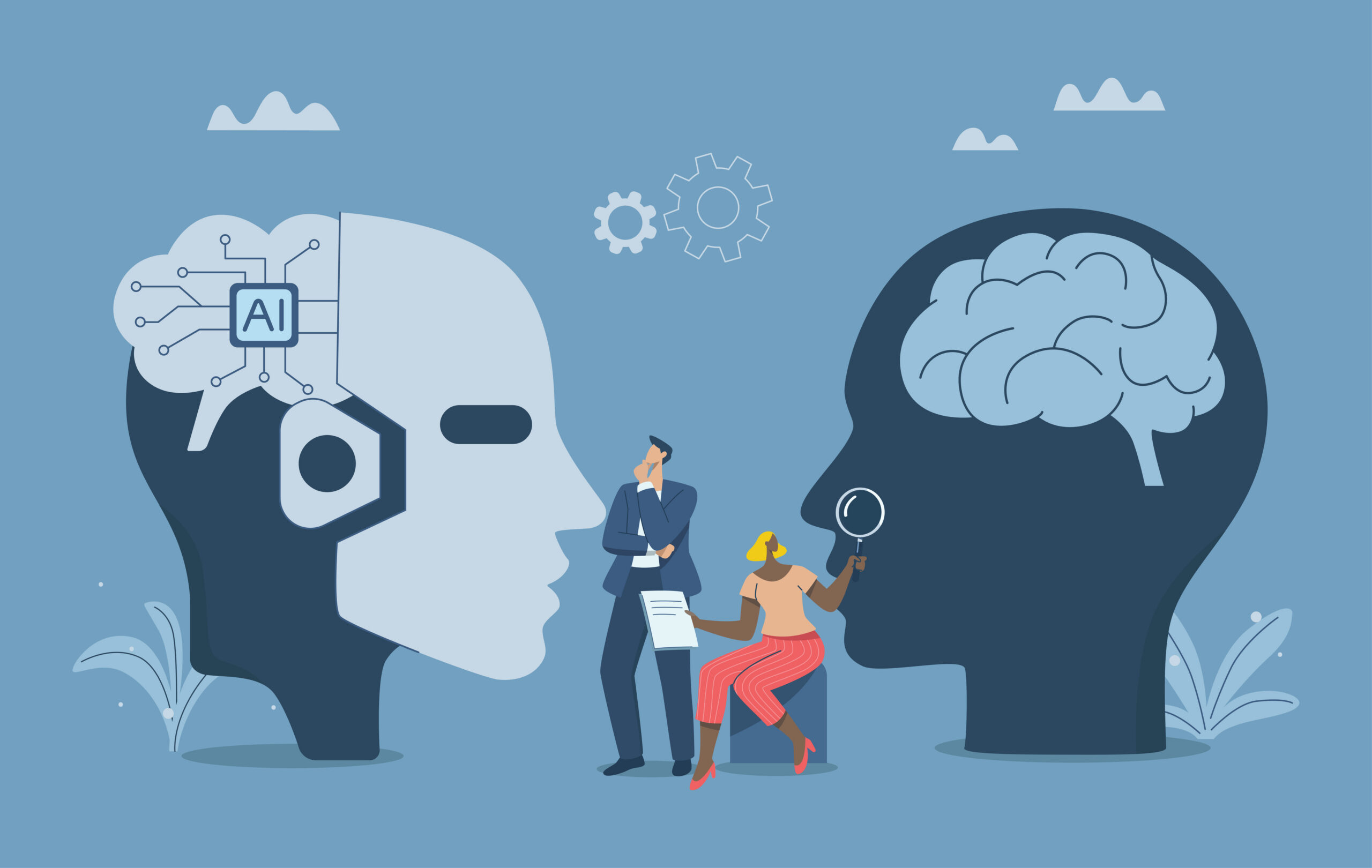
The education landscape is undergoing profound transformation as artificial intelligence (AI) tools are becoming more accessible and powerful. The days of paying someone to write an essay and paying subscriptions for homework answer websites are behind us. ChatGPT, Copilot, and other AI tools are free and far more flexible to solve nearly any question a student could ask. This evolving aspect of pedagogy has been previously explored. Uysalel demonstrates how AI-driven interactions can enhance student engagement and signals a shift towards more dynamic learning environments (Uysalel 2024). Barakat emphasizes the need for intentional incorporation of AI tools, specifically in the engineering curriculum, arguing that students must learn to use the systems while critically evaluating their output (Barakat 2024). Jiménez Romanillos and Andersson explore Bloom’s Taxonomy in the context of AI in design education, which shows how AI can reshape the cognitive expectations form assignments (Jiménez Romanillos and Andersson 2024).
All this considered, a question has arisen from teachers of every discipline: how do we develop assignments that facilitate learning with AI constantly present? This question does not have a single correct answer. Different instructors have different opinions on the role AI should play in education due to their discipline or personal teaching philosophy.
I interviewed two professors of electrical engineering at my graduate university to get their points of view in the context of STEM classes. They were both professors that taught classes in my electrical and computer engineering undergraduate degree. I knew beforehand that these professors had differing views on the role of AI in their courses. The following interviews seek to show that even in the same disciplines, educators can have different approaches to their course and assignment design when it comes to AI. Please note that Professor A’s responses were transcribed from an in-person interview, and Professor B’s responses are email responses due to interview scheduling complications.
Interviews
Can you describe the kind of courses you teach and the type of assignments that you use?
Professor A: Yes, so I teach three junior and senior level electrical and computer engineering courses: Microprocessor Systems, Computer Organization, and Embedded Systems Design. These three courses focus quite a bit on computer programming, and so Microprocessor Systems has a lot of programming, Computer Organization is a little less, but still some, and Embedded Systems has a lot of programming as well as circuit design. Many of the assignments in Microprocessor Systems and Embedded Systems are assignments where you have to turn in code, and so you have to write software and turn that in. And then we run that code to see if it works properly. In Computer Organization, the assignments are labs where we write code to design your processor and the other part is kind of traditional homework assignments that are done in Canvas that are more traditional, mathematic-type problems, and logic problems.
Professor B: I teach mostly electrical and computer engineering courses — lately focusing on digital logic — and I’ve also taught an Intro to AI course. Students do hands-on projects in Verilog, run simulations, and write short reports that tie into ABET (Accreditation Board for Engineering and Technology) outcomes.
When did you first become aware of students using AI tools like ChatGPT or others?
A: I became aware of them a couple of years ago in general, but it became very clear about a year ago (Fall 2024). I saw a student using ChatGPT during a final exam. I verified his answers against ChatGPT’s, and they matched. That was my first definite confirmation of students using AI to complete assignments.
B: I was an early adopter, so I noticed student use right away — some writing and code explanations suddenly felt a little too polished or generic.
How would you describe your overall attitude toward AI in education – more opportunity, more challenge, or somewhere in between?
A: It’s both. I do see opportunities, but I also see significant challenges. I’m not anti-AI, but I am cautious about it. I believe students need to first learn the core principles and how to solve problems themselves. Using AI before learning the fundamentals is like giving a first grader a calculator – they may get correct answers, but they don’t understand the math behind them. On the other hand, once foundational knowledge is in place, AI can be an excellent tool. For example, in my Embedded Systems class, during the final project, I actually encourage students to use AI to help with features we haven’t formally covered, like adding a touchscreen display. In that context, AI accelerates creativity and implementation.
B: Mostly positive. It’s a big opportunity if used intentionally, but it needs structure, so students still do the thinking.
Have you modified existing assignments to make them more “AI-resistant” or “AI-integrated”? Could you give an example?
A: For homework, there’s not a lot I can do to fully prevent AI use—I just have to trust students to follow guidelines. But for exams, I now use Respondus Lockdown Browser. I don’t particularly like it because it can be glitchy, but I’ve had students use ChatGPT during exams two semesters in a row, and both failed the course because of academic dishonesty. I want to remove that temptation.
B: Yes. Instead of trying to block AI, I build it in. For example, students might use ChatGPT to explain or refactor their code and then critique what it got wrong.
Think back to when COVID was happening, 2020-2021, and how you changed assignments in an online class context, but before the popularity of AI. How does that compare to what is happening now with AI?
A: During COVID, many students clearly didn’t learn as much, for various reasons. It took time for academic performance to recover. That’s a reminder that if AI is used in place of learning – not after learning – students won’t develop the competence needed to function as engineers. Our goal is to prepare them for real jobs, not just to help them pass classes.
B: During COVID I worried about engagement; now I worry about authenticity. Both pushed me to design assignments that show students’ thought process, not just the final product.
Has your department or institution provided any guidance or policies on AI use in assignments?
A: Yes. The Provost’s office provides guidance and suggested syllabus language, and we discussed it at our school-wide faculty retreat. At the department level, I don’t recall any formal discussions, but campus-wide guidance has been sufficient – though more tools and clarity could always help, especially for code evaluation
B: Baylor encourages us to set our own course policies — basically, acknowledge AI and use it responsibly.
Have you collaborated with other faculty to rethink assignment design in light of AI?
A: Yes, I’ve discussed it with one colleague. We don’t agree – he believes AI use is inevitable and we should teach students to use it from the beginning. I believe students should first learn to solve problems without it, and then incorporate AI later. We agree to disagree.
B: Yes, I’ve worked with colleagues to rethink assignments and even automate parts of grading with AI while keeping instructor oversight.
Any final or last comments?
A: The key point is balance. Students need foundational skills to make AI useful rather than limiting. I also want to stay open to change. The academic world will continue evolving, and if the best way to prepare students changes, then I should be willing to adapt. But for now, I believe students must learn core principles first.
B: AI isn’t going away, and that’s fine. The goal now is to help students learn with it, not around it.
Analysis
Although Professor A is 20 years younger than Professor B, I would call Professor A’s approach to AI traditional. The initial learning must be done by the student alone to form the foundational knowledge of a topic. Once that is achieved, AI can be used in a creative and supplemental way, but never as a substitute for the learning itself. This is very important for the courses that Professor A teaches. The assignments consist of programming that should come from the student’s creativity, problem solving abilities, and knowledge of coding practices that could be applied to these problems. I’m sure all of us have experienced a time when AI was not able to solve a problem the way we wanted. While it can do a passable job writing code to solve problems, it is the complex and nuanced problems that benefit from a competent and knowledgeable human programmer. These are the kinds of students Professor A hopes to produce.
He structures his assignments with this reality in mind. Many of his assignments are done independently, but when it comes to test time, the prospect of successfully using AI on these exams is as minimal as he can get it to be. This means that for the student, their independent learning will be rewarded, while coasting with AI will backfire when it is time to demonstrate knowledge.
Professor A is also open-minded. He sees the merit in how AI can enhance a student’s learning and even sees that AI can have a role in solving problems. As academic attitudes form and morph around AI, Professor A is willing to change, so long as these attitudes best serve the student’s education and career preparation.
Professor B’s responses are very reminiscent of the sentiment in the literature reviewed for this article. AI is viewed as an inevitable tool and students must be taught how to handle it. The aim is incorporation of AI while maintaining meaningful thinking.
Professor B has also taken the approach of integration rather than prevention when it comes to AI use in their assignment design. However, there are no attempts to stop the misuse of AI in Professor B’s responses. They solely focus on its beneficial uses in their courses, which certainly do exist. With Professor A’s responses in consideration, a “Goldilocks zone” may indeed exist between Professor A’s no-use policy and Professor B’s integration and utilization policy that increases student and learning engagement with AI as a tool only, and not as a task completer.
Conclusion
Both the perspectives of Professors A and B illustrate that even within the same discipline educators vary in how they deal with AI in their assignments. Their combined insights show that while there is not a single correct approach to AI in education, the goal of the approach is simple: designing assignments that cultivate genuine learning and prepare the student for a professional world where AI is ever present. This invites a unique challenge, but also an opportunity. Future research could help determine which approach results in better leaning outcomes. I encourage educators that read this article to consider the points of view of both these professors and critically evaluate them to further enhance their own consideration and use of AI in assignment design.
Luke Mello is a second year PhD student studying electrical and computer engineering at Baylor University. In addition to his work in antenna design and RF circuitry design, Luke uses his passion for teaching to explore how to be a improve modern STEM education.
References
Uysalel, C. (2024). Using AI interactive interfaces in design of machine elements education. Presented at the ASEE Annual Conference.
Barakat, N. (2024). Introducing AI tools in the engineering curriculum. In Proceedings of the 52nd Annual Conference of the European Society for Engineering Education (SEFI).
Jiménez Romanillos, E., & Andersson, T. (2024). The intersection of AI and Bloom’s Taxonomy in design education: A robotic design case study. In Proceedings of the International Conference on Engineering and Product Design Education (EPDE 2024), The Design Society.