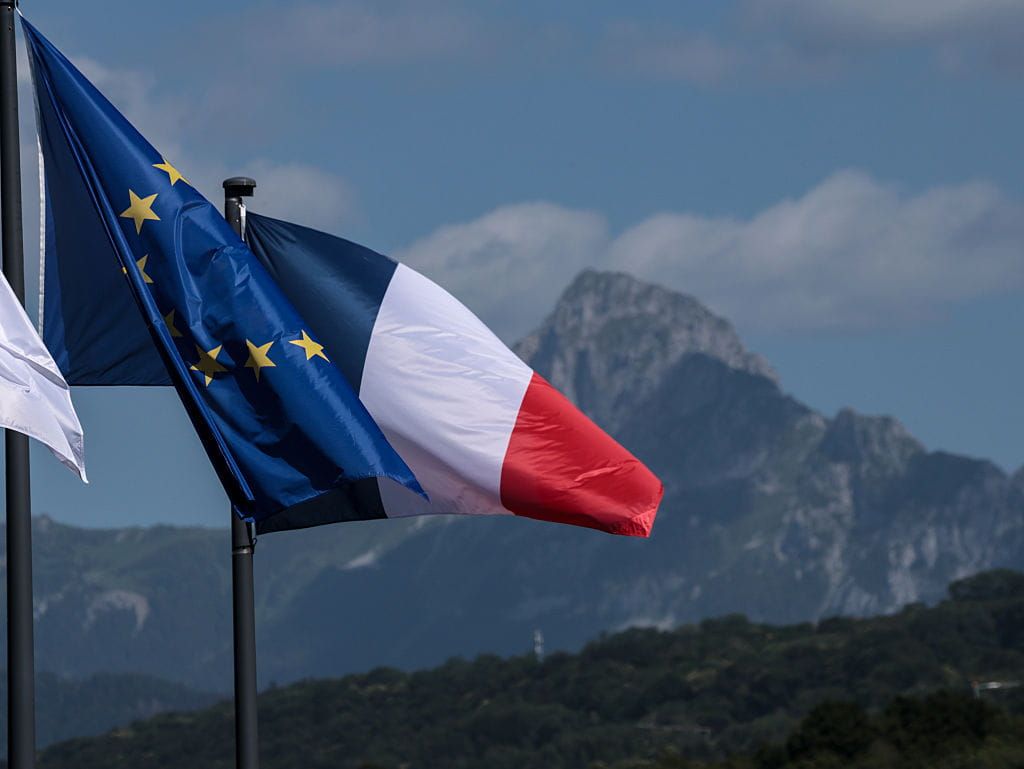
The Group of Seven, or G7, hosted this year by French President Emmanuel Macron in Évian-les-Bains, wrapped up today (June 17). Among the most pressing global issues was the Memorandum of Understanding (MOU) between the United States and Iran. Consequently, France invited key Gulf and regional states, including Saudi Arabia, the United Arab Emirates (UAE), Egypt, and Qatar, to join sessions focused on the Middle East.
G7 Meeting: A Forum for Regional Stakeholders
Though the US-Iran deal was agreed to on June 14, it was just a framework, and the official document is yet to be signed. As Liberty Nation News’ Editor at Large James Fite observed, “This Memorandum of Understanding – a formal but typically nonbinding agreement viewed as a stepping stone toward a final deal – is scheduled to be signed on Friday, June 19.” Including the key Gulf leaders in the G7 discussions provided an opportunity for the final MOU to be informed by regional stakeholders’ views. Since many of the Gulf partners have suffered attacks by Iranian drones and missiles, it makes sense that their perspectives are considered in the final details.
President Donald Trump began his visit to the G7 Summit with a press availability alongside Macron, during which the French chief executive said, “I think yesterday was signed a very important agreement, peace deal with Iran. It’s a very important one because first, it will fix the nuclear issue.” Macron added words of support from the European nations, which have been limited during most of the conflict. He said, “And so we are ready to take our fair share of the burden and be part of the commitment of the international community in order to support with you.”
At that press conference, Trump was very positive about the future of the Middle East. “I think a lot of great things are going to happen to the Middle East right now. Very importantly, the oil [price] is plummeting down, and the stock market is shooting up like a rocket.” When asked about the text of the MOU being released, Trump said, “I think pretty soon … it’s a very powerful document.” When asked if the MOU included sanctions relief for Iran, Trump explained, “No, it doesn’t … it’s really a behavioral thing. If they do what they’re supposed to do, that starts taking effect.”
The Associated Press reported that Trump held bilateral discussions with Qatar’s Emir Sheikh Tamim bin Hamad Al Thani, UAE President Sheikh Mohammed bin Zayed Al Nahyan (often referred to as MBZ), and Egyptian President Abdel-Fattah El-Sisi. These bilateral discussions concentrated on the US-Iran ceasefire agreement, regional security, stability in the Middle East, the opening of the Strait of Hormuz, as well as strengthening economic ties. In a press conference, Qatar’s Emir “thanked Trump for reaching a deal with Iran, calling it vital for the region,” Al Jazeera reported. The Emir also called attention to the more than $1.2 trillion investment Qatar is making in the United States.
Gulf States Have Stake in MOU
It is particularly important to include Qatar, the UAE, and Egypt in the G7 meetings. There is a lasting strategic value to ensuring that the Gulf states understand they have a stake in the success of the negotiations with Iran. Qatar, particularly, has been influential in bringing about the discussions between the United States and Iran.
A press release from the Egyptian leader’s office described his side meeting with the US president, explaining, “President El-Sisi urged the expedited implementation of US President Donald Trump’s peace plan for the Gaza Strip.” El-Sisi also “expressed his appreciation for President Trump’s efforts, which culminated in reaching an agreement to halt the war in Gaza, and recently, an agreement to cease hostilities with Iran.” Egypt has been a faithful intermediary in many Middle East negotiations aimed at achieving stability and peace in the region.
President Trump praised the UAE’s leader, President MBZ, “This country was very, very, a very powerful ally. And good things are happening. The ships are starting to move now. We’re going to have it fully opened by [June 19]. The ships are starting to move nicely. Oil is starting to go, and the prices are coming down rapidly.”
If all goes as planned, the efforts of the regional allies will be rewarded, and the goal of a lasting ceasefire in the conflict with Iran will be realized. It was not only useful to include key Gulf States at the G7 meetings but also crucial to achieving a united front to oppose Iran in the Middle East.
~
The views expressed are those of the author and not of any other affiliate.