Key Takeaways:
1099s are IRS tax forms used to report income earned outside of a traditional W-2 job, including freelance work, investment income, retirement distributions, and third-party payment transactions.
Common types of 1099s include Form 1099-NEC for independent contractors, 1099-MISC for miscellaneous income, 1099-INT for bank interest, 1099-DIV for dividends, and 1099-K for payments received through apps like PayPal and Venmo.
Unlike W-2 employees, taxpayers who receive 1099 income are generally responsible for paying their own income taxes and self-employment taxes, often through quarterly estimated tax payments.
Most 1099 forms must be sent by January 31 each year, and the IRS also receives copies, making it important to accurately report all taxable income on your tax return.
Receiving a 1099-K does not automatically mean all transactions are taxable. Personal reimbursements are generally not taxable, while payments for goods or services may need to be reported as income.
Failing to report 1099 income can trigger IRS notices, penalties, interest, or audits, so taxpayers should carefully review forms for accuracy and maintain detailed financial records throughout the year.
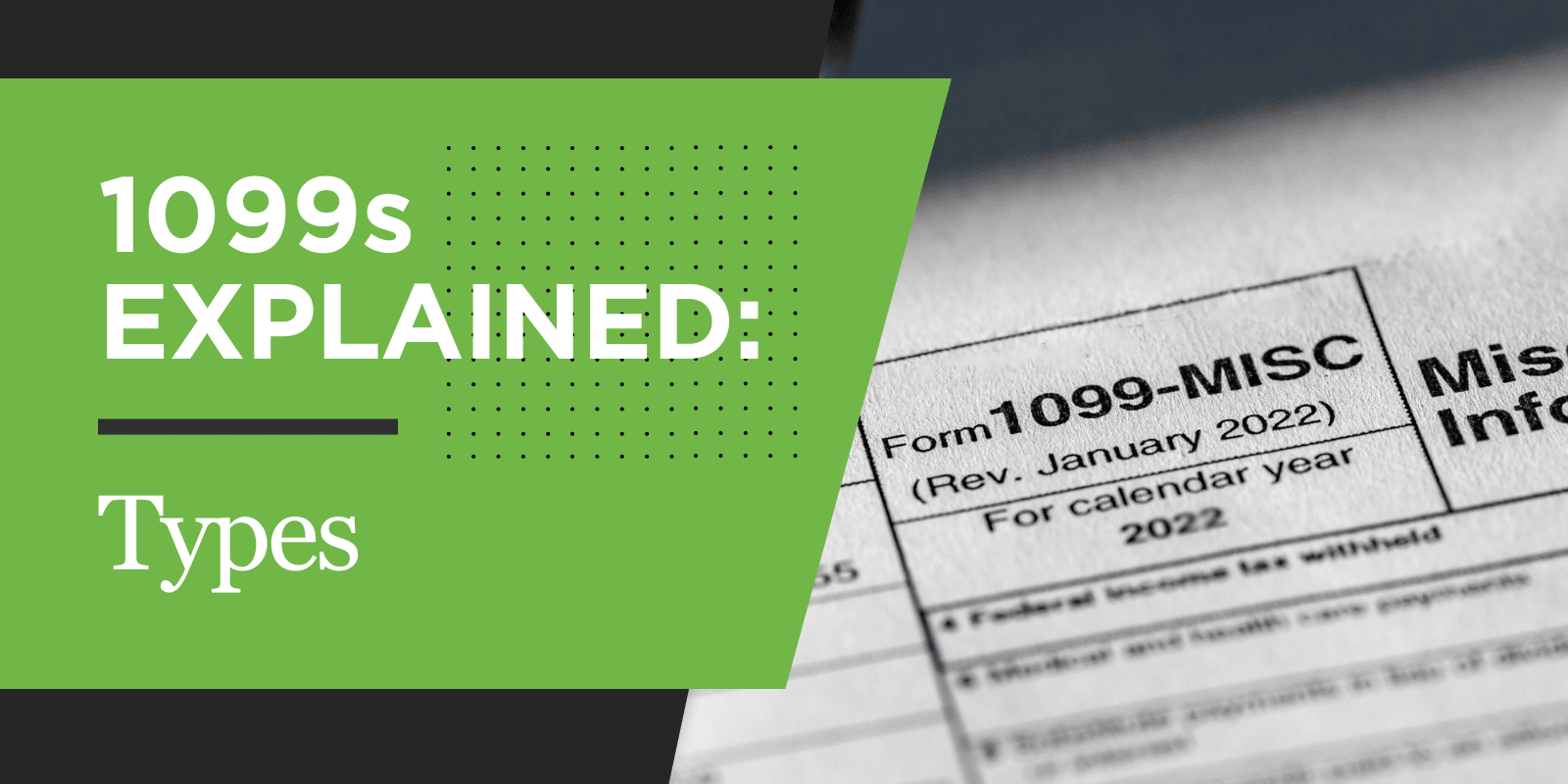
IRS Form 1099 is a crucial tax document used to report various types of income received outside of traditional employment.A 1099 form is an information return sent to both taxpayers and the IRS to report taxable income that is not earned through a traditional W-2 job. Financial institutions, payment processors, government agencies, and businesses commonly issue 1099s.
Most 1099 forms are required to be sent by January 31 each year, although some investment-related forms may arrive later. Even if you do not receive a 1099, you are still legally required to report all taxable income on your tax return. Remember, if you received any income outside your employer, you might receive a 1099. While most types of Form 1099 are not commonly received, there are a handful that you are likely to come across at some point. Whether you are an independent contractor, an investor, or someone who has received unemployment benefits, understanding the different types of 1099s can help you stay compliant with tax laws and avoid surprises during tax season. Here’s an overview of the different types of Form 1099.
What Is the Difference Between a W-2 and a 1099?
One of the most common tax questions involves understanding the difference between W-2 income and 1099 income. A W-2 is issued to employees whose employers withhold taxes from each paycheck. A 1099 is generally issued to independent contractors, freelancers, investors, or individuals receiving other non-employment income.
Unlike employees, people who receive 1099 income are typically responsible for paying their own federal income taxes, state taxes, and self-employment taxes. This often requires making quarterly estimated tax payments throughout the year.
For example, a full-time employee at a marketing company would receive a W-2 showing wages and withheld taxes. However, a freelance designer hired for a project would typically receive a 1099-NEC if they earned at least $600 during the year.
Common Types of 1099
Receiving a 1099 is more common than you’d think. You can receive a 1099 if you have a side gig, earn interest on a bank account, or sell stocks. Let’s review the most common types of 1099.
1099-MISC: Miscellaneous Income
The 1099-MISC is used to report various types of income that do not fall under the category of non-employee compensation. This includes rent payments, royalties, awards, medical and health care payments, crop insurance proceeds, attorney payments, legal settlements, and others. Businesses that pay at least $2,000 in qualifying payments — such as rent to a landlord — must issue a 1099-MISC for tax year 2026 and beyond. (The threshold was $600 through the 2025 tax year.)
Consider a scenario where a business leases office space from an independent property owner and pays $1,200 per month in rent. By the end of the year, the business has paid $14,400 in total rent. The landlord should receive a 1099-MISC documenting these payments, which they must report as rental income on their tax return.
Before tax year 2020, nonemployee compensation was also reported on Form 1099-MISC. The IRS later reintroduced Form 1099-NEC specifically for contractor and freelance payments.
1099-NEC: Nonemployee Compensation
One of the most frequently issued 1099 forms is the 1099-NEC. The 1099-NEC form is used to report non-employee compensation, including independent contractors, freelancers, sole proprietors, and self-employed individuals. If you received $2,000 or more in non-employee compensation during the 2026 tax year or later, you should receive a 1099-NEC. (For tax year 2025 and prior years, the threshold was $600.) Note that even if you don’t receive a 1099-NEC because your earnings fall below the threshold, you are still legally required to report all income on your tax return. This form is used to report payments made for services rendered. These might include consulting fees, professional services, and other types of compensation.
For example, a small business hires a freelance graphic designer to create a new logo and pays them $2,500 over the course of the year. Since the total payment exceeds the $2,000 threshold, the business must issue a 1099-NEC to the designer and report the payment to the IRS.
Gig workers who drive for rideshare companies, deliver food, or perform freelance work online commonly receive Form 1099-NEC. Because taxes are not automatically withheld, many taxpayers are surprised by their tax bill if they fail to make estimated quarterly payments.
1099-INT: Interest Income
Banks, credit unions, and financial institutions issue 1099-INT forms to individuals who earn interest income. This includes interest from savings accounts, certificates of deposit (CDs), and U.S. Treasury bonds. If you earned more than $10 in interest income, the financial institution is required to disburse a Form 1099-INT. The form will go both to you and the IRS.
Suppose a taxpayer holds a high-yield savings account that generates $750 in interest over the year. The bank will send them a 1099-INT, which must be included on their tax return as taxable income. Even if the taxpayer does not receive the interest as cash—such as in the case of a reinvested bond—it still must be reported.
1099-DIV: Dividends and Distributions
Form 1099-DIV is used to report dividends and distributions that are paid to you during the tax year, as well as any federal income tax withheld. This can include ordinary dividends, which are paid out of a company’s earnings and profits, qualified dividends, capital gain distributions, and non-dividend distributions. It does not include any dividends that you accrued through tax-sheltered retirement accounts. You will typically receive a 1099-DIV if you received at least $10 in dividend income.
For example, an individual who owns shares in a dividend-paying stock earns $1,200 in dividends throughout the year. Their brokerage firm will send them a 1099-DIV summarizing these payments. If some of the dividends qualify for a lower tax rate, they will be classified as “qualified dividends” on the form.
1099-K: Payment Card and Third-Party Network Transactions
Form 1099-K is meant to track payments made through third-party networks, such as PayPal, Venmo, or credit card transactions. This form is issued when total transactions exceed a specific threshold. For tax year 2024, the reporting threshold was $5,000 with no minimum number of transactions — part of a phased IRS approach that had been working toward a $600 threshold. However, the One Big Beautiful Bill Act, signed into law on July 4, 2025, permanently reversed those plans and restored the original threshold of $20,000 in payments and more than 200 transactions, retroactive to 2022. This is the same threshold that was in place before the American Rescue Plan Act of 2021 changed the rules.
For instance, a small bakery that accepts credit card payments through Square receives $5,000 in transactions over the course of the year. Square will issue a 1099-K to report this income. If the bakery owner also accepts cash payments, those earnings must be self-reported, as they will not be included on the 1099-K.
Many taxpayers are confused about Form 1099-K reporting requirements for apps like PayPal, Venmo, Cash App, and Stripe. Personal payments between friends or family members are generally not taxable and should not be reported on Form 1099-K. However, payments received for goods or services are considered business income and may be reportable to the IRS.
Receiving a 1099-K does not automatically mean the entire amount is taxable. Taxpayers should maintain records showing which transactions were personal reimbursements versus business income.
Other Common Types of 1099
Now let’s look at some other types of 1099. These are not the most common, but you are likely to come across these at some point in life.
1099-B, Proceeds from Broker and Barter Exchange Transactions
This form reports the sale of stock, bonds, and other securities through a broker, as well as barter exchange transactions. It includes details on the sale price, cost basis, and whether the transaction resulted in a capital gain or loss. These transactions must be reported even if you had a loss or broke even.
Investors use Form 1099-B to complete Schedule D and Form 8949 when filing taxes. Holding investments for more than one year may qualify for lower long-term capital gains tax rates.
1099-G, Certain Government Payments
This reports payments you received from government agencies, including unemployment, tax refunds, taxable grants, and more. Since unemployment income is generally taxable at the federal level, recipients may need to pay taxes on these benefits when filing their return.
1099-R, Distributions from Pensions, Annuities, Retirement or Profit-Sharing Plans, IRAs, Insurance Contracts, etc.
This reports distributions from annuities, profit-sharing plans, retirement plans, IRAs, insurance contracts, or pensions. Withdrawals from these accounts may be subject to income tax, and in some cases, early withdrawals before age 59½ may incur additional penalties. You should consult with a tax professional about whether you will owe tax on these distributions.
1099-R, Distributions from Pensions, Annuities, Retirement or Profit-Sharing Plans, IRAs, Insurance Contracts, etc.
This reports distributions from annuities, profit-sharing plans, retirement plans, IRAs, insurance contracts, or pensions. Withdrawals from these accounts may be subject to income tax, and in some cases, early withdrawals before age 59½ may incur additional penalties. You should consult with a tax professional about whether you will owe tax on these distributions.
Required minimum distributions (RMDs) from retirement accounts are also reported on Form 1099-R. Failing to take required distributions can result in IRS penalties.
1099-S, Proceeds from Real Estate Transactions
1099-S reports the sale or exchange of real estate. The form reports the gross proceeds from the sale, which may be subject to capital gains tax depending on the seller’s circumstances. If the property was your primary residence for two of the five years before the sale, then up to $250,000 of the profit is exempt from taxes. This amount increases to $500,000 for married couples filing jointly.
1099-SA, Distributions From an HSA, Archer MSA, or Medicare Advantage MSA
This form reports distributions made from a health savings account (HSA), Archer Medical Savings Account (Archer MSA), or a Medicare Advantage Medical Savings Account (MA MSA). Distributions used for qualified medical expenses are generally tax-free. However, nonqualified withdrawals may be taxable and could trigger additional penalties, if they were not rolled over in some cases, if excess contributions were made, and other scenarios. You should consult with a tax professional about whether you will owe tax on these distributions.
Less Common Types of 1099
Now let’s review the less common types of 1099. Remember, even if these are less common, the IRS is still diligently tracking which tax forms are reported. Be sure to include all 1099 income on your tax return.
1099-A, Acquisition or Abandonment of Secured Property
1099-A reports foreclosures on properties. You may be liable for capital gains tax and income tax for any unpaid foreclosed mortgage balances.
1099-C, Cancellation of Debt
This form reports discharged, forgiven, or canceled debt. This can include your property foreclosure or forgiven credit card debt but typically excludes debt discharged in bankruptcy. Canceled debt may be considered taxable income unless you qualify for an IRS exclusion, such as bankruptcy or insolvency exceptions.
1099-CAP, Changes in Corporate Control and Capital Structure
Form 1099-CAP reports the amount of cash, stock, or property received after a significant change in the company’s control or capital structure.
1099-DA, Digital Asset Proceeds From Broker Transactions
Form 1099-DA reports digital asset transactions, including crypto trades. It requires brokers to report users’ transaction details to the IRS, similar to how stock trades are reported on Form 1099-B.
As cryptocurrency reporting rules continue to evolve, taxpayers should carefully track purchases, sales, conversions, and transfers of digital assets to avoid IRS reporting issues.
1099-H, Health Coverage Tax Credit (HCTC) Advance Payments
This reports any advance payments of qualified health insurance payments you received. If you qualify for trade adjustment assistance (TAA), alternative TAA (ATAA), reemployment TAA (RTAA), or Pension Benefit Guaranty Corporation (PBGC), you might see this form.
1099-LTC, Long Term Care and Accelerated Death Benefits
Form 1099-LTC reports payments made under a long-term care insurance contract. This includes accelerated death benefits, or benefits received before death because the policyholder has been deemed terminally ill by a doctor. The amount shown on the 1099-LTC are generally tax-free but are required to be reported to the IRS.
1099-LS, Reportable Life Insurance Sale
This form reports the amount paid to you from a life insurance sale.
1099-OID, Original Issue Discount
1099-OID reports $10 or more of income received when bonds, notes, or certificates of deposit (CDs) are sold at a discount from their maturity value.
1099-PATR, Taxable Distributions Received from Cooperatives
This reports at least $10 in patronage dividends and other distributions from a cooperative (co-op) in the prior year.
1099-Q, Payments from Qualified Education Programs
1099-Q reports total withdrawals from qualified tuition programs (QTPs) like 529 plans or Coverdell educational savings accounts. This amount may be taxable, depending on how the funds were used.
1099-QA, Distributions from ABLE Accounts
Form 1099-QA reports distributions from an Achieving a Better Life Experience (ABLE) Account for special needs individuals with a disability. These funds are not taxable if you used them to support a disabled individual.
1099-SB, Seller’s Investment in Life Insurance Contract
Form 1099-SB reports a policy seller’s investment in a life insurance contract after the sale or transfer of the policy. Insurance companies use this information to help determine taxable amounts related to the transaction.
What to Do If You Receive a 1099
If you receive a 1099, carefully review it for accuracy. If the information is incorrect, request a correction from the issuer. Failing to report 1099 income can result in IRS penalties, so ensure all taxable amounts are included in your return. Maintaining proper records throughout the year can help simplify tax filing. If you have multiple 1099s or complex income sources, consulting a tax professional can help you navigate potential deductions and minimize tax liability.
The IRS uses automated matching systems to compare the income reported on your tax return against the information submitted on your 1099 forms. If income is missing, you may receive a CP2000 notice proposing additional taxes, penalties, and interest.
If you do not receive an expected 1099, contact the issuer immediately. Taxpayers are still responsible for reporting income even if the form never arrives.
If your 1099 contains incorrect information, request a corrected form as soon as possible. Filing a tax return with inaccurate income information could delay processing or trigger IRS correspondence.
How Optima Tax Relief Can Help
Understanding 1099s and reporting requirements can become complicated quickly, especially if you have multiple income sources, freelance earnings, investment income, retirement distributions, or IRS notices related to unreported income. Because the IRS receives copies of most 1099 forms directly from issuers, failing to report income accurately can lead to penalties, interest, CP2000 notices, or even audits. Taxpayers with self-employment or gig work income may also face additional challenges related to estimated tax payments and self-employment taxes.
At Optima Tax Relief, experienced tax professionals help taxpayers navigate complex tax situations involving 1099 income and IRS reporting issues. Whether you need assistance filing overdue tax returns, correcting reporting errors, responding to IRS notices, or resolving your tax burden, professional guidance can help you better understand your options and work toward compliance with IRS requirements.
Frequently Asked Questions
What are 1099s?
1099s are IRS tax forms used to report income received outside of traditional employment wages. Businesses, financial institutions, payment apps, and government agencies use different types of 1099 forms to report payments made to taxpayers throughout the year. Copies are typically sent both to the taxpayer and the IRS.
When are 1099s issued?
Most 1099 forms are issued during January for the previous tax year. Taxpayers generally begin receiving 1099s by the end of January or early February, although some investment-related forms may arrive later if financial institutions need additional time to finalize reporting information.
When do 1099s have to be sent out?
Most businesses and financial institutions must send 1099 forms to recipients by January 31 each year. Certain forms, such as some brokerage or investment statements, may have later deadlines depending on the type of reporting involved.
Do I have to file a 1099 with my tax return?
You generally do not attach most 1099 forms to your federal tax return when filing electronically, but you must report the income listed on the forms. The IRS already receives copies directly from issuers.
Tax Help for Those Who Receive 1099s
The types of Form 1099 and the accompanying filing requirements can quickly become complicated. You should always consult with a tax professional if you are unsure about your tax filing requirements. Remember, even if you do not receive a 1099 for income earned, it’s still your responsibility to include it in your taxable income. Not doing so can be a major red flag to the IRS and can result in an audit.
Taxpayers with self-employment income may also qualify for deductions related to business expenses, home office use, mileage, equipment, health insurance, and retirement contributions. Proper tax planning throughout the year can help reduce unexpected tax bills and improve compliance with IRS reporting rules. Optima Tax Relief is the nation’s leading tax resolution firm with over a decade of experience helping taxpayers.
If You Need Tax Help, Contact Us Today for a Free Consultation.