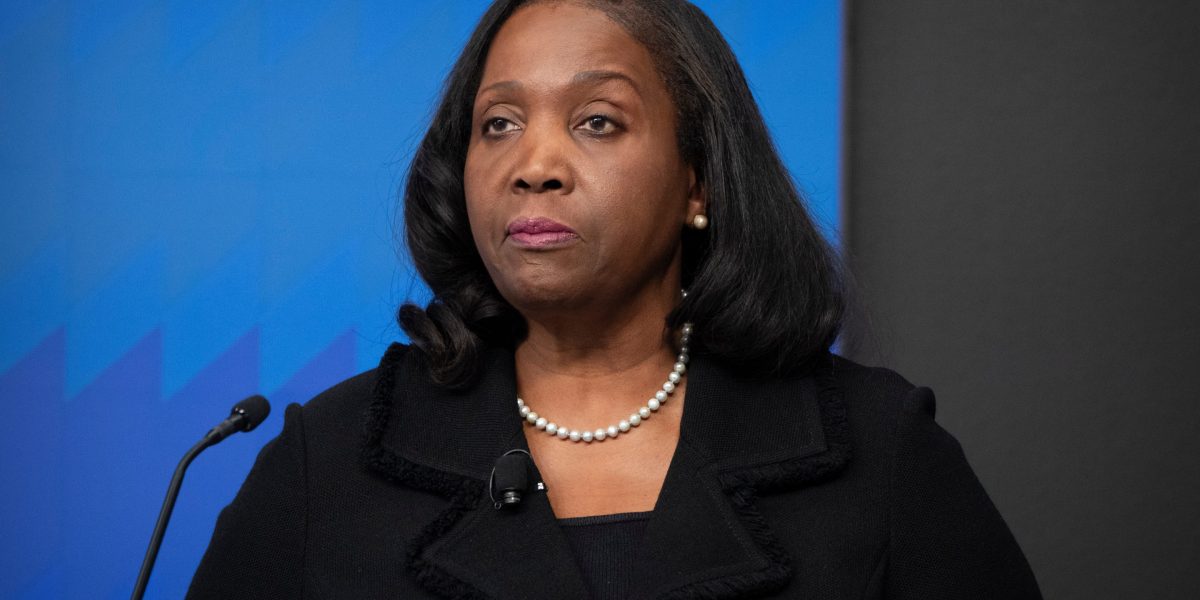
“The Israeli economy has very strong fundamentals – a surprisingly positive job market even in these difficult years, and high-tech that accounts for almost 20% of GDP and is the fifth largest in the world – but we have been in a significant change of trend in the last three years,” deputy budget commissioner Tamar Levy Boneh told the Aharon Institute for Economic Policy conference at Reichman University.
“We have had three years with an average annual growth of 2.6%, the credit rating has dropped, and after a decade of hard work to lower the debt-to-GDP ratio by half a percentage point, we have been raising it by 2.5% every year for three years now. If over a decade we raised NIS 447 billion, we have raised a similar amount in the last three years alone.”
Levy Boneh also warned, “In the past we had an economy that lowered the interest rate on its debt, increased civilian spending and hedged defense spending – everything has been completely reversed, and this brings us to a dilemma that is a challenge for decision-makers: we have to choose – debt, standard of living and security.”
“We must not give up on reducing government debt”
She insisted that we must not give up on reducing the government debt. The debt attributed to the war stands at NIS 358 billion. Earlier this week, Governor of the Bank of Israel Prof. Amir Yaron, presented a different calculation for the cost of the war, which he said was NIS 405 billion. According to Levy Boneh, the gap is the cost of local taxes, which was not included in the calculation she presented.
“This means that we have lost the ‘fiscal safety belt,'” stressed Levy Boneh. “I remind you that we knew how to go from a 60% debt-to-GDP ratio to 70% overnight. It was the safety belt, and we used it – the war required money, and the economy knew how to provide it because of the trust built over 20 years that the markets gave us.
“We did it without feeling the engine revs, but if we stay there – who will guarantee that in the next jump that we need due to an emergency between 70% and 80%, maybe then we will actually have to meet engine revs and maybe even a wall. An economy that needs to meet the needs of war and is in such a situation – this means a loss on the front line. It is impossible to manage an economy like ours if on a given day we do not know how to provide the debt that the country needs.”
RELATED ARTICLES
Israel’s cost of living surpasses wealthiest European countries
Treasury chief slams defense budget management
“We are not Greece, Ireland or the UK. Every country has a different economy, but when it happens, it happens quickly. Greece could have pursued an irresponsible policy for a decade, but then the subprime crisis arrived, and overnight it was no longer able to service the debt it needed. Liz Truss (former British Prime Minister) also encountered this.
“The cost of excess interest has exceeded NIS 20 billion in recent years. This is the total budget of 9 government ministries: Economy, Labor, Foreign Affairs, Culture and Sports, Science, Agriculture, Aliyah and Integration, Tourism and Communications, and total debt payments have already exceeded NIS 60 billion.”
Therefore, according to Levy Boneh, the debt must not be given up in the dilemma facing decision-makers. At the same time, the standard of living fell by 1.5% of GDP during the war due to tax hikes. “It was necessary and responsible on the part of the government, but it has consequences. The GDP per capita here is high relative to the OECD, and Israel ranks 12th out of 38 countries. But if you add the cost of living to that, we fall to 22nd place, and during the war we have slipped to 24th place.”
“We may need to talk about a trauma economy”
Levy Boneh added that if we want to cut the debt and maintain the standard of living, it is necessary to cut the defense budget, which has reached NIS 143 billion this year, up 130% from before the war.
“The Ministry of Defense is going to present enormous needs when we come to the 2027 budget, and you are familiar with the term ‘economy of choice,’ but we may need to talk about a ‘trauma economy,’ in which our economic needs are outlined according to the trauma we have gone through. We were already in such an economy after the Yom Kippur War, and it had significant consequences.”
She added, “For three years, the economy has been mobilized in favor of the Ministry of Defense. With all the precision ability to hit a window that is hundreds of kilometers away, perhaps the Ministry of Defense needs to learn how to satisfy its needs in a way that does not harm the standard of living. If the world is talking about 5% of GDP for defense, we are well beyond that at 8.8%.”
“Long-term growth requires painful steps”
Many economists expect a period of rebound in GDP after the war that could be a budgetary source to bridge the gaps that Levy Boneh presented, but she warns against “taking a gamble” on this. “A gamble is not a work plan. Long-term growth over time requires painful steps and in-depth reforms, and they don’t bring results quickly.
“We are after 10 quarters with a GDP gap that we haven’t closed. Sustainable growth is not a one-time rebound, we need to raise productivity and integrate populations into employment, especially Arab women and haredi men, increase the effectiveness of infrastructure projects, address centralization to lower the cost of living, and the effectiveness of the government and improve service to citizens.
“It won’t happen tomorrow morning without a profound change. The decision between investing in living standards, in security, or reducing debt will require the next government to make difficult decisions that will affect the lives of all of us.”
Published by Globes, Israel business news – en.globes.co.il – on April 29, 2026.
© Copyright of Globes Publisher Itonut (1983) Ltd., 2026. “