No Result
View All Result
SUBMIT YOUR ARTICLES
  • Login
Wednesday, April 22, 2026
TheAdviserMagazine.com
  • Home
  • Financial Planning
    • Financial Planning
    • Personal Finance
  • Market Research
    • Business
    • Investing
    • Money
    • Economy
    • Markets
    • Stocks
    • Trading
  • 401k Plans
  • College
  • IRS & Taxes
  • Estate Plans
  • Social Security
  • Medicare
  • Legal
  • Home
  • Financial Planning
    • Financial Planning
    • Personal Finance
  • Market Research
    • Business
    • Investing
    • Money
    • Economy
    • Markets
    • Stocks
    • Trading
  • 401k Plans
  • College
  • IRS & Taxes
  • Estate Plans
  • Social Security
  • Medicare
  • Legal
No Result
View All Result
TheAdviserMagazine.com
No Result
View All Result
Home Market Research Economy

The Theft of Your Good Deflation

by TheAdviserMagazine
2 weeks ago
in Economy
Reading Time: 4 mins read
A A
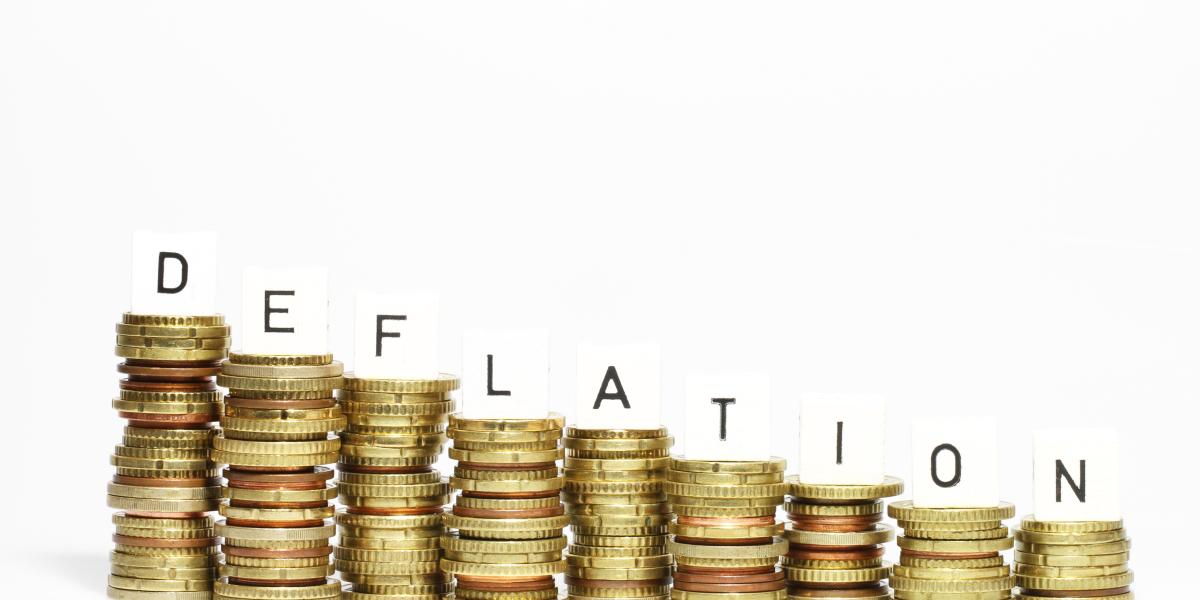
The Theft of Your Good Deflation
Share on FacebookShare on TwitterShare on LInkedIn


Your dollar has lost 96-97 percent of its purchasing power since 1913. This is not bad luck or mysterious market forces. It is the result of deliberate policy choices that steadily, quietly drained your wealth—and convinced you it was being done for your benefit.

The World That Was Stolen

For over a hundred years after America’s founding—roughly 1774 to 1900—prices did not steadily rise. Net cumulative inflation over that entire century was close to zero. Prices often fell, not because of poverty or collapse, but because of human ingenuity: more efficient factories, labor-saving machines, railroads slashing transportation costs, etc. Each new invention meant goods cost less to make and less to buy. Economists call this “good deflation”—the natural, healthy fruit of a productive economy.

Your great-grandfather’s dollar actually gained purchasing power as the decades passed. Imagine working hard and watching the cost of food, clothing, and tools gradually fall—so the same paycheck stretched further every year without a raise. That was the American reality for over a century. Then it was taken. As argued by George Selgin in Less Than Zero, a falling price level in a growing economy is not dangerous, it is the expected and desirable result of increased productivity.

The Great Excuse

The Great Depression gave those in power the justification they needed. We now know—what Federal Reserve Chairs have effectively admitted—that the Depression was not an inevitable market catastrophe. It was caused, deepened, and extended by catastrophically-bad government decisions: destructive monetary policy, trade wars, and tax hikes in the middle of an economic collapse. Without those failures, economists widely believe it would have been a painful but short recession—remembered the way we remember the recession of 1920, which ended quickly because the government largely stayed out of the way.

Instead, the Depression became the defining economic trauma of the 20th century. And that trauma became a political tool. Policymakers saw the Depression’s “bad deflation”—caused by their own failures—and used it to declare that all deflation, forever, was the enemy. They lumped a century of prosperity-driven falling prices together with their self-made disaster, called it all dangerous, and declared that responsible policy meant prices must always rise. The Federal Reserve’s own statements from this era make this policy rationale explicit.

The Crime by the Numbers

American workers are 5–6 times more productive per hour than in 1913. That explosion in productivity should have dramatically increased your dollar’s purchasing power—goods should cost a fraction of what they do now. Instead, the exact opposite happened: You work harder, produce more, and your money buys less every single year. That gap—between what your productivity should have delivered and what inflation actually let you keep—is the precise measure of what was taken.

The Smoking Gun

Then there is Beardsley Ruml. He was Chairman of the Federal Reserve Bank of New York and a key advisor to President Roosevelt—one of the most powerful men in American finance at the exact moment these monetary changes were being locked in place. In the 1940s, he published an article stating plainly: given control of a central banking system and a currency not backed by gold, a sovereign government is finally free of money worries and need no longer levy taxes to fund its spending.

Read that carefully. A government with control of the money supply can create currency from nothing and spend whatever it wants, on whatever it wants, without asking your permission, without passing a tax bill, without ever having to tell you what it is costing you.

For most of American history, the government’s power to spend was chained to its power to tax. Taxing required legislation. Legislation required votes. Votes required facing the public and justifying every dollar. Inflation replaced that accountability entirely. Your wealth is now taken not by a vote in Congress but by the quiet, invisible erosion of every dollar you hold.

Ruml then went further. He proposed what we now call payroll withholding—as he explained in a 1943 radio interview—having employers quietly remove taxes from every paycheck before the money ever reaches your hands. The genius of the scheme, in the darkest sense, was that it solved the government’s collection problem while making the tax nearly invisible. Instead of one annual bill that forced people to sit down, do the math, and feel genuine rage at the total, you simply receive a slightly smaller paycheck every two weeks. The difference between what you earn and what you receive becomes background noise—expected, normal, something you stop thinking about after your first job.

What This Means Today

The costs of things you cannot live without have not merely kept pace with inflation—they have demolished it. Since the 1970s, housing costs have outpaced general inflation by 2-3 times. Medical costs have outpaced it by 3-5 times. College tuition has outpaced general inflation by 4-5 times since 1980. An entire generation has been effectively priced out of homeownership, one serious diagnosis away from bankruptcy, and entering the workforce not just broke but deeply indebted—their future earnings already pledged to lenders before they cashed their first paycheck.

In every one of these sectors—housing, healthcare, education—government involvement, subsidy, and money creation have driven costs skyward while making it nearly impossible for market competition to bring them back down.

Inflation is also the most regressive tax ever devised. It transfers wealth upward—from those who earn money to those who already own things. The working person holding dollars loses; the person holding real estate, stocks, and hard assets wins.

The productivity gains of American workers—your parents, your grandparents, you—should have made life steadily, measurably more affordable. Instead, those gains were quietly redirected. And citizen control over government spending—the most fundamental power in a democracy—was abolished without a single vote.

Beardsley Ruml told you exactly what was happening; he published it, he put his name on it. Nobody was supposed to be paying attention.



Source link

Tags: deflationgoodTheft
ShareTweetShare
Previous Post

The 2026 Property Tax Revolt: These States Move to End Property Taxes

Next Post

Want Guaranteed Rents? These Are the Best College Towns to Invest In Right Now

Related Posts

edit post
Pokémon Go — The Largest Mapped Data Collection Ploy In History

Pokémon Go — The Largest Mapped Data Collection Ploy In History

by TheAdviserMagazine
April 22, 2026
0

When Pokémon Go was released, it appeared to be a harmless game encouraging people to go outside and explore, yet...

edit post
Market Talk – April 21, 2026

Market Talk – April 21, 2026

by TheAdviserMagazine
April 21, 2026
0

ASIA: The major Asian stock markets had a mixed day today: • NIKKEI 225 increased 524.28 points or 0.89% to...

edit post
Raico, Ekirch, and the Tragedy of American Militarism

Raico, Ekirch, and the Tragedy of American Militarism

by TheAdviserMagazine
April 21, 2026
0

In the final chapter of his excellent collection of essays, Classical Liberalism and the Austrian School, Ralph Raico turned to the...

edit post
Who Pays the Hormuz Toll?

Who Pays the Hormuz Toll?

by TheAdviserMagazine
April 21, 2026
0

Since the ceasefire on April 8 and Trump’s apparent capitulation to Iran, it appears the Iranians will levy a toll...

edit post
Peaceful Nationalism as a Foundation for Economic Liberalism

Peaceful Nationalism as a Foundation for Economic Liberalism

by TheAdviserMagazine
April 21, 2026
0

Political controversy has arisen in recent debates on immigration concerning the compatibility between economic liberalism and restrictions on the free...

edit post
Policy Dominance in Argentina – Econlib

Policy Dominance in Argentina – Econlib

by TheAdviserMagazine
April 21, 2026
0

There are at least two meanings for “dominance” in relation to monetary and fiscal policy. The first one, proposed by...

Next Post
edit post
Want Guaranteed Rents? These Are the Best College Towns to Invest In Right Now

Want Guaranteed Rents? These Are the Best College Towns to Invest In Right Now

edit post
Analysis Exposes a Relentless Layoff Trend Across American Tech Companies

Analysis Exposes a Relentless Layoff Trend Across American Tech Companies

  • Trending
  • Comments
  • Latest
edit post
Massachusetts loses billions in income after millionaire tax

Massachusetts loses billions in income after millionaire tax

March 24, 2026
edit post
Illinois’ Paid Leave for All Workers Act Takes Effect — Every Employee Now Gets Guaranteed Time Off

Illinois’ Paid Leave for All Workers Act Takes Effect — Every Employee Now Gets Guaranteed Time Off

March 27, 2026
edit post
Virginia Permits ADULT MIGRANT MEN To Attend High School

Virginia Permits ADULT MIGRANT MEN To Attend High School

March 30, 2026
edit post
A 58-year-old left NYC for Miami to save on taxes — then retired early thanks to hidden savings. Here’s the math

A 58-year-old left NYC for Miami to save on taxes — then retired early thanks to hidden savings. Here’s the math

March 30, 2026
edit post
Tax Flight Accelerates In Massachusetts

Tax Flight Accelerates In Massachusetts

April 6, 2026
edit post
Property Tax Relief & Income Tax Relief

Property Tax Relief & Income Tax Relief

April 1, 2026
edit post
Consumer search trends signal growing cost pressure in health insurance

Consumer search trends signal growing cost pressure in health insurance

0
edit post
UN experts decry human rights violations at Belarus detention camp – JURIST

UN experts decry human rights violations at Belarus detention camp – JURIST

0
edit post
How the Iran energy crisis is supercharging Southeast Asia’s EV transition

How the Iran energy crisis is supercharging Southeast Asia’s EV transition

0
edit post
Kevin Warsh’s Senate hearing: What to expect

Kevin Warsh’s Senate hearing: What to expect

0
edit post
Pokémon Go — The Largest Mapped Data Collection Ploy In History

Pokémon Go — The Largest Mapped Data Collection Ploy In History

0
edit post
Algorand, Aptos Quantum-Ready, Proof-Of-Stake Exposed: Coinbase

Algorand, Aptos Quantum-Ready, Proof-Of-Stake Exposed: Coinbase

0
edit post
Algorand, Aptos Quantum-Ready, Proof-Of-Stake Exposed: Coinbase

Algorand, Aptos Quantum-Ready, Proof-Of-Stake Exposed: Coinbase

April 22, 2026
edit post
Pokémon Go — The Largest Mapped Data Collection Ploy In History

Pokémon Go — The Largest Mapped Data Collection Ploy In History

April 22, 2026
edit post
Why smallcap funds are still a buy: A long-term strategy from Aditya Khemani

Why smallcap funds are still a buy: A long-term strategy from Aditya Khemani

April 21, 2026
edit post
UN experts decry human rights violations at Belarus detention camp – JURIST

UN experts decry human rights violations at Belarus detention camp – JURIST

April 21, 2026
edit post
Feud between AI power startup Fermi and fired CEO and top shareholder heats up over proposed sale

Feud between AI power startup Fermi and fired CEO and top shareholder heats up over proposed sale

April 21, 2026
edit post
Amazon Launches Nationwide GLP-1 Weight-Loss Program

Amazon Launches Nationwide GLP-1 Weight-Loss Program

April 21, 2026
The Adviser Magazine

The first and only national digital and print magazine that connects individuals, families, and businesses to Fee-Only financial advisers, accountants, attorneys and college guidance counselors.

CATEGORIES

  • 401k Plans
  • Business
  • College
  • Cryptocurrency
  • Economy
  • Estate Plans
  • Financial Planning
  • Investing
  • IRS & Taxes
  • Legal
  • Market Analysis
  • Markets
  • Medicare
  • Money
  • Personal Finance
  • Social Security
  • Startups
  • Stock Market
  • Trading

LATEST UPDATES

  • Algorand, Aptos Quantum-Ready, Proof-Of-Stake Exposed: Coinbase
  • Pokémon Go — The Largest Mapped Data Collection Ploy In History
  • Why smallcap funds are still a buy: A long-term strategy from Aditya Khemani
  • Our Great Privacy Policy
  • Terms of Use, Legal Notices & Disclosures
  • Contact us
  • About Us

© Copyright 2024 All Rights Reserved
See articles for original source and related links to external sites.

Welcome Back!

Login to your account below

Forgotten Password?

Retrieve your password

Please enter your username or email address to reset your password.

Log In
No Result
View All Result
  • Home
  • Financial Planning
    • Financial Planning
    • Personal Finance
  • Market Research
    • Business
    • Investing
    • Money
    • Economy
    • Markets
    • Stocks
    • Trading
  • 401k Plans
  • College
  • IRS & Taxes
  • Estate Plans
  • Social Security
  • Medicare
  • Legal

© Copyright 2024 All Rights Reserved
See articles for original source and related links to external sites.