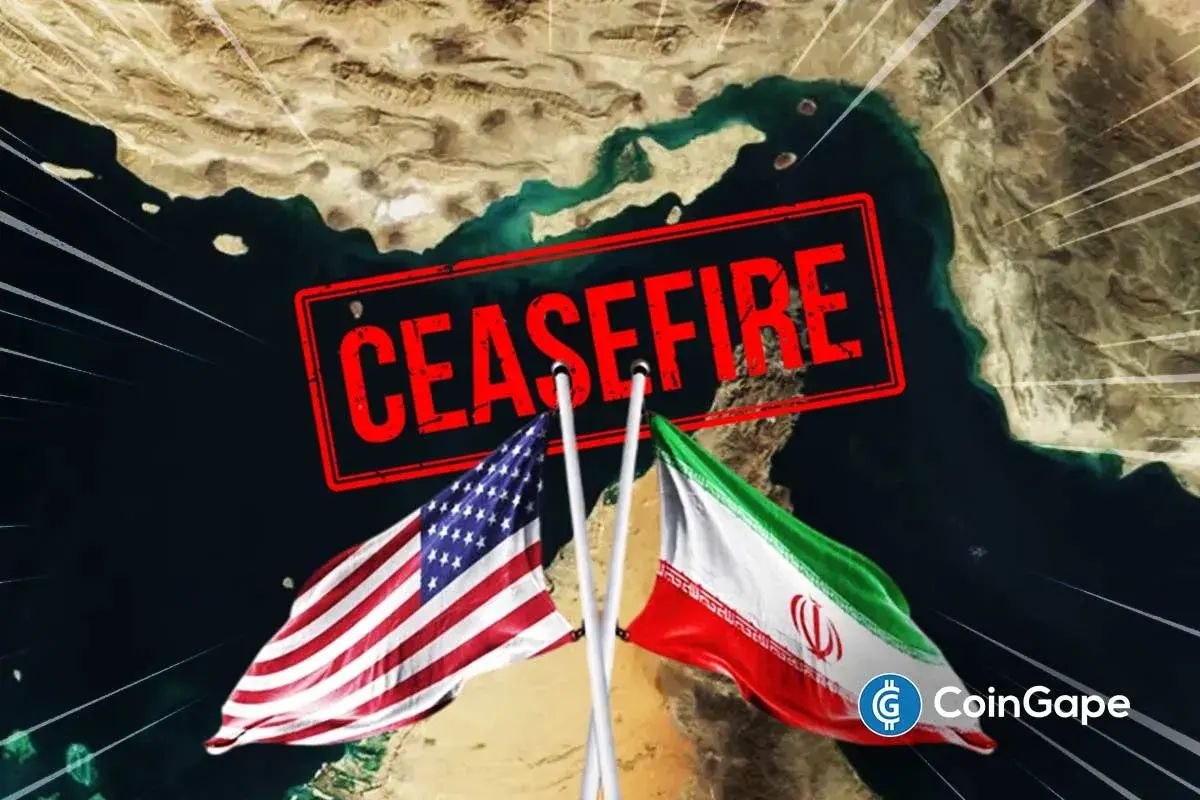
The Strait of Hormuz remains inactive despite a ceasefire between the United States, Iran, and Israel, with ship movements showing minimal recovery in the 24 hours following Iran’s pending opening announcement. Maritime tracking data shows that ship traffic has not returned to normal levels, adding to the uncertainty about the operational status of the key global shipping lane.
Recent data shows that only seven vessels crossed the waterway during the period, a drop from pre-conflict levels of more than 130 ships per day. These vessels included bulk carriers, many of which avoided the central shipping corridor and instead followed routes along Iran’s coastline under military coordination.
Strait of Hormuz Traffic Stays Limited Despite Passage Terms
Iran had announced that safe passage through the Strait of Hormuz would be permitted for two weeks, provided ships coordinated with its armed forces. However, actual movement has remained minimal, with most vessels avoiding the route.
Six of the seven ships recorded included vessels owned by Chinese and Greek operators. These ships followed specified coastal paths, often described as controlled routes, rather than the standard transit lanes.
At the same time, maritime intelligence data showed that no additional vessels crossed the strait after Wednesday morning. The last tracked ship made its passage around mid-morning Eastern Time before activity ceased again. However, this comes following the announcement of the Iran negotiation dispute, with Tehran calling talks unreasonable after alleging breaches of the agreed framework, adding pressure to ongoing negotiations.
Conflicting Warnings Add to Strait of Hormuz Uncertainty
Iranian state media reported that the Strait of Hormuz was “fully closed,” with some tankers reportedly turned away. Meanwhile, semi-official outlets linked to Iran’s Islamic Revolutionary Guards Corps reported that traffic had halted again following Israeli strikes in Lebanon.
However, according to the New York Times report, U.S. officials disputed those claims. White House press secretary Karoline Leavitt described reports of closure as false, while also calling for the waterway to reopen immediately.
She did not clarify who currently controls access to the strait. Further confusion emerged when ship-tracking data showed a Panamanian-flagged oil tanker reversing course mid-transit. The vessel later stopped entirely, further indicating operational disruption.
Security Risks and Market Impact Persist
The Strait of Hormuz, which carries roughly a quarter of global seaborne oil and one-fifth of liquefied natural gas, has been severely disrupted since late February. Iran had previously laid down mines and launched occasional attacks on vessels following U.S. and Israeli strikes.
Although some ships have tried to be en route with Iranian approval, most operators have avoided the area due to safety concerns and insurance risks. In addition, Iran has also laid out a regulated transit system, including coordination with its military and a possible fee structure per vessel. The proposal includes shared revenue arrangements with Oman, which borders the southern side of the strait.
Despite the ceasefire framework, tensions remain high. Iran has accused Israel and the United States of violating terms linked to regional military activity. Meanwhile, additional attacks and reported explosions in the Gulf have further complicated the situation.
Following these reports, Bitcoin price traded lower at the time of writing, declining by 1.19% to $70,721.89 after reaching $72,500, while market data showed a 17.46% drop in trading volume to $39.49 billion.
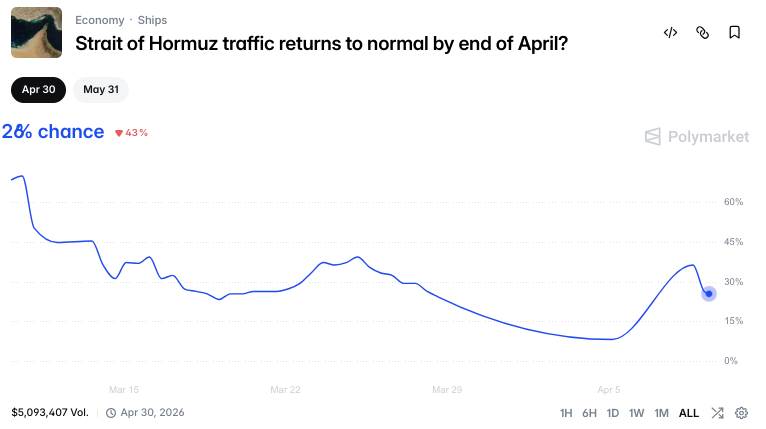
At the same time, a Polymarket prediction chart showed that the probability of Strait of Hormuz shipping normalization by April 30 stood at 26%, a 43% decline over the period, showing continued uncertainty in market expectations.