No Result
View All Result
SUBMIT YOUR ARTICLES
  • Login
Monday, June 8, 2026
TheAdviserMagazine.com
  • Home
  • Financial Planning
    • Financial Planning
    • Personal Finance
  • Market Research
    • Business
    • Investing
    • Money
    • Economy
    • Markets
    • Stocks
    • Trading
  • 401k Plans
  • College
  • IRS & Taxes
  • Estate Plans
  • Social Security
  • Medicare
  • Legal
  • Home
  • Financial Planning
    • Financial Planning
    • Personal Finance
  • Market Research
    • Business
    • Investing
    • Money
    • Economy
    • Markets
    • Stocks
    • Trading
  • 401k Plans
  • College
  • IRS & Taxes
  • Estate Plans
  • Social Security
  • Medicare
  • Legal
No Result
View All Result
TheAdviserMagazine.com
No Result
View All Result
Home Market Research Economy

Fractional Banking V Matched Funding

by TheAdviserMagazine
5 months ago
in Economy
Reading Time: 4 mins read
A A
Fractional Banking V Matched Funding
Share on FacebookShare on TwitterShare on LInkedIn


Banking has existed since the earliest times and has taken many forms, from safe deposit boxes and money changers to merchants capable of moving money internationally and moneylenders. Some people wrongly assume that they can eliminate the business cycle by eliminating fractional banking. They believe that it will be possible to match lenders and borrowers to maturity contracts. They do not comprehend that this is the line of thinking that always leads to authoritarianism, all the way to communism.

The problem that will emerge from this matching of lenders and borrowers to a maturity contract is that the boom-bust cycle will still exist. There will always be the perpetual rise and fall in asset values caused by other factors (including human nature), not least of which will be changes in technology, no less civil unrest and war that can alter capital flows. History offers a catalogue of solutions. All we need to test such an idea is to open the books.

Athen Akropolis_by_Leo_von_Klenze

People assume the cause of the business cycle is the fractional banking issue, as if that were eliminated, then you would flat-line the business cycle, creating utopia. Be very careful. This was Karl Marx’s goal as well. The starting point is a fundamental question. Has fractional banking always existed? NO! Since the answer is no, did the boom-and-bust cycle in banking exist even without fractional banking? The stark answer – YES.

In ancient times, financial panics occurred without fractional banking. In Athens in 354 BC, people borrowed money from the Temple, unbeknownst to others. They were speculating in real estate. The real estate market collapsed without fractional banking, and then it was exposed that the money was borrowed behind the curtain, so to speak, from the temple. Corrupt priests had all this money donated to Athena. She obviously was very frugal since she never seemed to go on a spending spree to buy shoes, owls, or spears. She wore a helmet, so she didn’t need a hairdresser. The priests could not keep their hands out of the treasury and were caught lending it out to their buddies for spare change. There was no fractional banking involved. They had the money and lent it to their buddies. The assets collapse because, as always, the mood of people changes with the seasons.

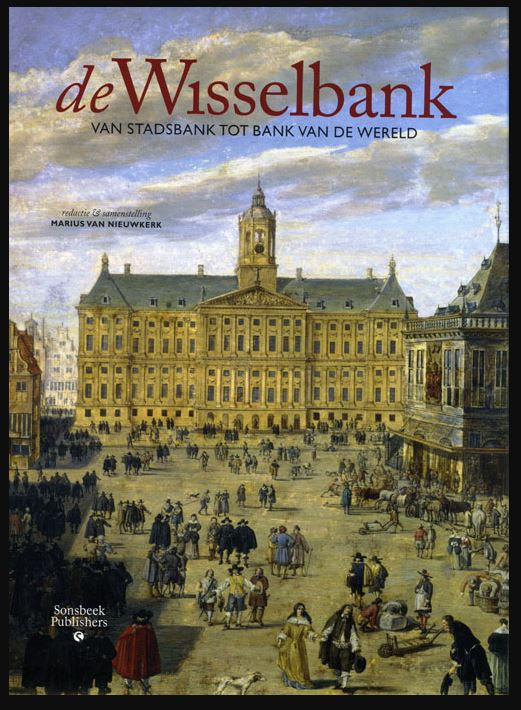
Wisselbank-2

Fast forward to the 17th century, and we find the very same scheme played out by politicians. There was the collapse of Wisselbank in Amsterdam, where people had deposited their money and assumed the bank was strictly a safekeeping facility. They offered no loans and paid no interest. Little did they know that the government was using their deposits to fund its own trading.

Netherlands Provinical - GELDERLAND Provincie 1581 - 1795

The Wisselbank was founded in 1609. Upon first opening an account, a depositor paid a fee of ten guilders, three guilders, and three stuivers for each additional account. Two stuivers were paid for each transaction, excepting those of less than three hundred guilders, for which six stuivers were paid, in order to discourage the multiplicity of small transactions. A person who neglected to balance his account twice in the year forfeited 25 guilders. A person who ordered a transfer for more than what was upon his account was obliged to pay three per cent for the sum overdrawn. The bank made further profit by selling foreign coin and bullion, which fell to it by the expiration of receipts, and by selling bank money at five percent and buying it at four percent. These sources of revenue were more than enough to pay for the wages of bank officers, and defraying the expense of management. (Adam Smith)

In 1602, the United East India Company (VOC) was formed from six trading companies in the Netherlands and granted a trade monopoly over the Indies. The bank was administered by a committee of city government officials concerned to keep its affairs secret. It initially operated on a deposit-only basis, but by 1657, it was allowing depositors to overdraw their accounts and lending large sums to the Municipality of Amsterdam and the United East Indies Company (Dutch East India Company). Initially, this was kept confidential, but it had become public knowledge by 1790. The City of Amsterdam took over direct control in 1791 as a bailout, before finally closing it in 1819.

There is ample history of banking prior to fractional banking. Sorry, but that did not stop banking panics, nor did it stop the business cycle with the boom and bust events. The Tulip Bubble was not leveraged with fractional banking. Regardless, the boom-and-bust cycle is driven by human nature. We tend to change our minds about everything from fashion to money.

The idea that we can match lenders and borrowers sounds nice. However, that will not eliminate the cycle. I can find no instance of such a flat line except during a Dark Age, where there was no banking, private ownership, or any real economy. Coinage during the period is rare and is typically confined to the region where it was struck, demonstrating the lack of an economy or circulation due to trade.



Source link

Tags: BankingFractionalFundingMatched
ShareTweetShare
Previous Post

A Top Concern Among Readers In 2025

Next Post

Warren Buffett retires today: Berkshire faces its first dawn without the Oracle of Omaha

Related Posts

edit post
Links 6/7/2026 | naked capitalism

Links 6/7/2026 | naked capitalism

by TheAdviserMagazine
June 7, 2026
0

re: AI Corey Robin post: In the New York Review of Books, Dan Chiasson has an excellent piece on capitalism...

edit post
The Sunday Morning Movie Presents: Chariots Of Fire (1981) Run Time: 2H 4M Plus Bonus Documentary!

The Sunday Morning Movie Presents: Chariots Of Fire (1981) Run Time: 2H 4M Plus Bonus Documentary!

by TheAdviserMagazine
June 7, 2026
0

Greetings gentle readers and welcome to another installment of the Sunday Morning Movie. Today it’s a saga of determination and...

edit post
The Impoverishing Thinking of Central Bankers Who Want Interest Rate Rises

The Impoverishing Thinking of Central Bankers Who Want Interest Rate Rises

by TheAdviserMagazine
June 7, 2026
0

Conor here: Richard Murphy examines central bankers eager to do their part in helping to speed up the breakdown. By...

edit post
The Food Supply Has Been Compromised

The Food Supply Has Been Compromised

by TheAdviserMagazine
June 7, 2026
0

Africa may be the world’s test site for vaccinations, but the United States has become the test site for synthetic...

edit post
Civilizations Are Transaction Costs | Mises Institute

Civilizations Are Transaction Costs | Mises Institute

by TheAdviserMagazine
June 6, 2026
0

Every map of civilizations is, underneath, a map of transaction costs. The usual stories about nations and civilizations fall into...

edit post
Links 6/62026 | naked capitalism

Links 6/62026 | naked capitalism

by TheAdviserMagazine
June 6, 2026
0

Engelhardt, A Personal TomDispatch Farewell (of Sorts) TomDispatch. All good things must come to an end, and sadly that includes...

Next Post
edit post
Warren Buffett retires today: Berkshire faces its first dawn without the Oracle of Omaha

Warren Buffett retires today: Berkshire faces its first dawn without the Oracle of Omaha

edit post
top international education stories from Africa

top international education stories from Africa

  • Trending
  • Comments
  • Latest
edit post
Supreme Court Delivers More Bad Redistricting News for Democrats

Supreme Court Delivers More Bad Redistricting News for Democrats

May 19, 2026
edit post
From Maine to Michigan, Democrats Are Making Communism Great Again

From Maine to Michigan, Democrats Are Making Communism Great Again

May 16, 2026
edit post
The 8 States That Still Tax Social Security in 2026

The 8 States That Still Tax Social Security in 2026

June 6, 2026
edit post
It’s Time To Talk About Massie

It’s Time To Talk About Massie

May 23, 2026
edit post
A Tax on Social Media – Blue-State Governments’ Newest Ploy

A Tax on Social Media – Blue-State Governments’ Newest Ploy

June 5, 2026
edit post
Red Snapper Used as Cudgel by Fed Judge

Red Snapper Used as Cudgel by Fed Judge

May 31, 2026
edit post
Edmund Phelps and Dynamic Capitalism

Edmund Phelps and Dynamic Capitalism

0
edit post
Crypto Moves Into The Mainstream Of Vietnam’s Digital Economy

Crypto Moves Into The Mainstream Of Vietnam’s Digital Economy

0
edit post
How Real Estate Investors Can Avoid Probate

How Real Estate Investors Can Avoid Probate

0
edit post
Sports Research Hydrate Electrolytes Powder Packets 32-Count only .80 shipped (Reg. !)

Sports Research Hydrate Electrolytes Powder Packets 32-Count only $17.80 shipped (Reg. $36!)

0
edit post
The One Document to Always Keep in Your Glovebox

The One Document to Always Keep in Your Glovebox

0
edit post
The Best Gold Dealers of 2026 for Your Investments

The Best Gold Dealers of 2026 for Your Investments

0
edit post
SC ruling seen shaping Sebi’s fraud-finding frame

SC ruling seen shaping Sebi’s fraud-finding frame

June 7, 2026
edit post
Hong Kong’s IPO boom is developing a performance problem

Hong Kong’s IPO boom is developing a performance problem

June 7, 2026
edit post
Strive CEO Shares Roadmap To Abolish Bitcoin Capital Gains Tax

Strive CEO Shares Roadmap To Abolish Bitcoin Capital Gains Tax

June 7, 2026
edit post
Crypto Moves Into The Mainstream Of Vietnam’s Digital Economy

Crypto Moves Into The Mainstream Of Vietnam’s Digital Economy

June 7, 2026
edit post
Another low-budget film crushes an expensive action movie at the box office

Another low-budget film crushes an expensive action movie at the box office

June 7, 2026
edit post
Nvidia’s CEO says new Vera chip will use SK Hynix’s memory chips

Nvidia’s CEO says new Vera chip will use SK Hynix’s memory chips

June 7, 2026
The Adviser Magazine

The first and only national digital and print magazine that connects individuals, families, and businesses to Fee-Only financial advisers, accountants, attorneys and college guidance counselors.

CATEGORIES

  • 401k Plans
  • Business
  • College
  • Cryptocurrency
  • Economy
  • Estate Plans
  • Financial Planning
  • Investing
  • IRS & Taxes
  • Legal
  • Market Analysis
  • Markets
  • Medicare
  • Money
  • Personal Finance
  • Social Security
  • Startups
  • Stock Market
  • Trading

LATEST UPDATES

  • SC ruling seen shaping Sebi’s fraud-finding frame
  • Hong Kong’s IPO boom is developing a performance problem
  • Strive CEO Shares Roadmap To Abolish Bitcoin Capital Gains Tax
  • Our Great Privacy Policy
  • Terms of Use, Legal Notices & Disclosures
  • Contact us
  • About Us

© Copyright 2024 All Rights Reserved
See articles for original source and related links to external sites.

Welcome Back!

Login to your account below

Forgotten Password?

Retrieve your password

Please enter your username or email address to reset your password.

Log In
No Result
View All Result
  • Home
  • Financial Planning
    • Financial Planning
    • Personal Finance
  • Market Research
    • Business
    • Investing
    • Money
    • Economy
    • Markets
    • Stocks
    • Trading
  • 401k Plans
  • College
  • IRS & Taxes
  • Estate Plans
  • Social Security
  • Medicare
  • Legal

© Copyright 2024 All Rights Reserved
See articles for original source and related links to external sites.