No Result
View All Result
SUBMIT YOUR ARTICLES
  • Login
Tuesday, May 12, 2026
TheAdviserMagazine.com
  • Home
  • Financial Planning
    • Financial Planning
    • Personal Finance
  • Market Research
    • Business
    • Investing
    • Money
    • Economy
    • Markets
    • Stocks
    • Trading
  • 401k Plans
  • College
  • IRS & Taxes
  • Estate Plans
  • Social Security
  • Medicare
  • Legal
  • Home
  • Financial Planning
    • Financial Planning
    • Personal Finance
  • Market Research
    • Business
    • Investing
    • Money
    • Economy
    • Markets
    • Stocks
    • Trading
  • 401k Plans
  • College
  • IRS & Taxes
  • Estate Plans
  • Social Security
  • Medicare
  • Legal
No Result
View All Result
TheAdviserMagazine.com
No Result
View All Result
Home Market Research Economy

Does a Decline in “Aggregate Demand” Cause a Recession?

by TheAdviserMagazine
6 months ago
in Economy
Reading Time: 4 mins read
A A
Does a Decline in “Aggregate Demand” Cause a Recession?
Share on FacebookShare on TwitterShare on LInkedIn


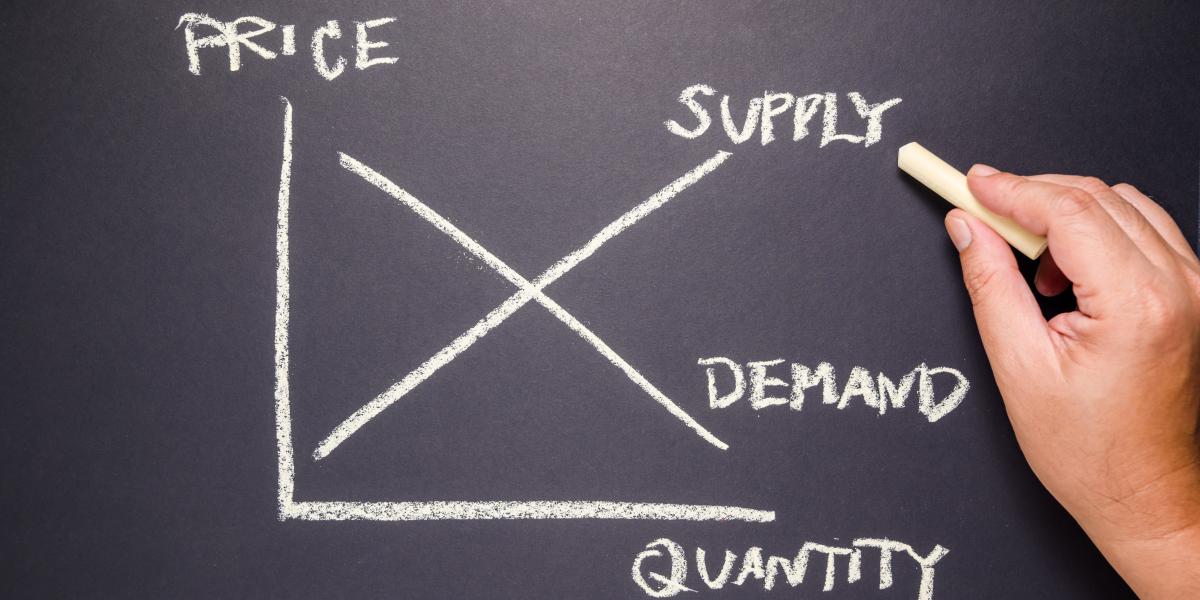
It is widely held that what causes recessions is a decline in the demand for goods and services. If the private sector fails to strengthen its demand, then the government should step in by raising its demand for goods and services. However, any individual’s ability to demand is constrained by their ability to produce goods valued by others. The more valued goods individuals produce, the more goods they can demand. According to James Mill,

When goods are carried to market what is wanted is somebody to buy. But to buy, one must have the wherewithal to pay. It is obviously therefore the collective means of payment which exist in the whole nation constitute the entire market of the nation. But wherein consist the collective means of payment of the whole nation? Do they not consist in its annual produce, in the annual revenue of the general mass of inhabitants? But if a nation’s power of purchasing is exactly measured by its annual produce, as it undoubtedly is; the more you increase the annual produce, the more by that very act you extend the national market, the power of purchasing and the actual purchases of the nation…. Thus, it appears that the demand of a nation is always equal to the produce of a nation. This indeed must be so; for what is the demand of a nation? The demand of a nation is exactly its power of purchasing. But what is its power of purchasing? The extent undoubtedly of its annual produce. The extent of its demand therefore and the extent of its supply are always exactly commensurate.

Can Government Grow an Economy?

The whole idea that the government can grow an economy originates from the view that an increase in government spending increases the economy’s output by a multiple of the initial government increase. The popularizer of the magical power of the multiplier, John Maynard Keynes, wrote,

If the Treasury were to fill old bottles with banknotes, bury them at suitable depths in disused coal mines which are then filled up to the surface with town rubbish, and leave it to private enterprise on well-tried principles of laissez-faire to dig the notes up again (the right to do so being obtained, of course by tendering for leases of the note-bearing territory), there need be no more unemployment and with the help of the repercussions, the real income of the community, and its capital wealth also, would probably become a good deal greater than it actually is.

Let us examine the effect of an increase in the government’s demand on the economy’s process of wealth formation. As government spends, it must tax, borrow, or print, and what it spends on bids up prices and gathers resources away from the private economy. It forces an exchange of something for nothing. As one can see, not only does the increase in the enforcer’s outlays—who does not produce any useful goods—not raise overall output by a positive multiple but, on the contrary, this weakens the process of wealth generation in general.

Through taxation, the government forces producers to part with their products for government services and this in turn weakens the production of wealth. Moreover, according to Mises,

…there is need to emphasize the truism that a government can spend or invest only what it takes away from its citizens and that its additional spending and investment curtails the citizens’ spending and investment to the full extent of its quantity.

The dependence of demand on the production of goods cannot be removed by means of government spending. On the contrary, loose fiscal policy will only impoverish wealth generators and weaken their ability to produce goods and services—it will weaken the demand.

Therefore, what is required to revive the economy is not strengthening aggregate demand through government spending, but curbing government spending. This will enable wealth generators to revive the economy by allowing them to move ahead with the business of wealth generation. By strengthening the economy’s ability to produce goods and services we are, in fact, strengthening aggregate demand. According to David Ricardo,

No man produces but with a view to consume or sell, and he never sells but with an intention to purchase some other commodity, which may be immediately useful to him, or which may contribute to future production. By producing, then, he necessarily becomes either the consumer of his own goods, or the purchaser and consumer of the goods of some other person.

What Causes Recessions?

For most commentators, the occurrence of a recession is a result of an unexpected event such as a shock that pushes the economy away from a trajectory of stable economic growth. Shocks weaken the economy.

On the other hand, as a rule, a recession is the product of inflationary monetary policies, especially directed by a government and central bank. Usually this takes place in response to a tighter stance of the central bank following a period of expansionary monetary policy. Various business activities, especially in the capital goods sector, that sprang up on the back of the previous monetary and credit inflation and low interest rates come under pressure. These activities cannot continue to support themselves because they survive because of the increase in money supply and artificially low interest rates. The inflationary increase in money and credit sets an exchange of nothing for something, which distorts the structure of production.

Once a central bank tightens its monetary stance (since it cannot simply inflate forever) there is a consequent decline in the growth rate of money supply and increase in the monetary interest rate. This undermines various non-productive activities and brings about a recession. Since non-productive activities cannot support themselves, being unprofitable, these activities begin to deteriorate (i.e., retrenchment, unemployment, liquidation of assets, wasted resources, incomplete projects, etc.). Obviously, then, aggressive fiscal and monetary policies, which caused the problem, can only weaken the prospects for an economic recovery.

Summary and Conclusion

During an economic crisis, what is required is for the government to do as little as possible. With less tampering, prices and production can be readjusted to come into line with market realities and more wealth remains with wealth generators, which allows them to facilitate an expansion of wealth. With a larger pool of wealth, it will be much easier to absorb various unemployed resources and eliminate the crisis. Aggressive fiscal and monetary policies are likely to hurt the process of wealth generation thereby making things much worse.


Source link

Tags: Aggregatedeclinedemandrecession
ShareTweetShare
Previous Post

Ok, Your Poverty is Your Parents’ Fault – Now What Are You Going To Do About It?

Next Post

NDA’s landslide Bihar triumph adds strong boost to Indian equities’ rebound narrative, says Motilal Oswal

Related Posts

edit post
The Inconsistencies of John Stuart Mill

The Inconsistencies of John Stuart Mill

by TheAdviserMagazine
May 12, 2026
0

Many people today consider the prospect of a socialist utopia to be very appealing. Even if they do not believe...

edit post
US Real Estate Remains Stale

US Real Estate Remains Stale

by TheAdviserMagazine
May 12, 2026
0

April existing home sales in the U.S. came in at an annualized pace of just 4.02 million units, barely rising...

edit post
Market Talk – May 11, 2026

Market Talk – May 11, 2026

by TheAdviserMagazine
May 11, 2026
0

ASIA: The major Asian stock markets had a mixed day today: • NIKKEI 225 decreased 295.77 points or -0.47% to...

edit post
Trump Regime Combines Reality Show Nonsense With Very Real Grifting

Trump Regime Combines Reality Show Nonsense With Very Real Grifting

by TheAdviserMagazine
May 11, 2026
0

Trump’s Transportation Secretary distracts with an ill-timed reality show even as an AI company linked to the Trump family and...

edit post
Nations by Consent | Mises Institute

Nations by Consent | Mises Institute

by TheAdviserMagazine
May 11, 2026
0

What is the Mises Institute? The Mises Institute is a non-profit organization that exists to promote teaching and research in...

edit post
The world holds its breath as Trump-Xi summit approaches

The world holds its breath as Trump-Xi summit approaches

by TheAdviserMagazine
May 11, 2026
0

SINGAPORE – When U.S. President Donald Trump and China's Xi Jinping meet in Beijing on Thursday, they and their teams...

Next Post
edit post
NDA’s landslide Bihar triumph adds strong boost to Indian equities’ rebound narrative, says Motilal Oswal

NDA’s landslide Bihar triumph adds strong boost to Indian equities’ rebound narrative, says Motilal Oswal

edit post
Sofinnova Partners closes €650M flagship fund to double down on early-stage biotech and medtech

Sofinnova Partners closes €650M flagship fund to double down on early-stage biotech and medtech

  • Trending
  • Comments
  • Latest
edit post
Gavin Newsom issues ‘final warning’ amid California’s dire housing crisis — what’s at stake for millions of residents

Gavin Newsom issues ‘final warning’ amid California’s dire housing crisis — what’s at stake for millions of residents

May 3, 2026
edit post
Florida Warning: With Senior SNAP Benefits Averaging 8/Month, Thousands Risk Losing Assistance in 2026

Florida Warning: With Senior SNAP Benefits Averaging $188/Month, Thousands Risk Losing Assistance in 2026

April 27, 2026
edit post
Minnesota Wealth Tax | Intangible Personal Property Tax

Minnesota Wealth Tax | Intangible Personal Property Tax

May 6, 2026
edit post
10 Cheapest High Dividend Stocks With P/E Ratios Under 10

10 Cheapest High Dividend Stocks With P/E Ratios Under 10

April 13, 2026
edit post
Exclusive: America’s largest Black-owned bank launches podcast with mission to unlock hidden shame holding back generational wealth

Exclusive: America’s largest Black-owned bank launches podcast with mission to unlock hidden shame holding back generational wealth

April 29, 2026
edit post
NYC Mayor Mamdani knocked Ken Griffin in pied-a-terre tax promo. His firm calls the move ‘shameful’

NYC Mayor Mamdani knocked Ken Griffin in pied-a-terre tax promo. His firm calls the move ‘shameful’

April 23, 2026
edit post
BoI: Widening roads doesn’t cut congestion

BoI: Widening roads doesn’t cut congestion

0
edit post
Getting a Raise? 7 Ways to Turn It Into Lasting Wealth

Getting a Raise? 7 Ways to Turn It Into Lasting Wealth

0
edit post
Nvidia CEO Jensen Huang isn’t part of Trump’s China trip

Nvidia CEO Jensen Huang isn’t part of Trump’s China trip

0
edit post
The Inconsistencies of John Stuart Mill

The Inconsistencies of John Stuart Mill

0
edit post
Morgan Stanley sees ‘spicier’ CPI as inflation week kicks off

Morgan Stanley sees ‘spicier’ CPI as inflation week kicks off

0
edit post
McDonald’s stock is trading at a shocking low

McDonald’s stock is trading at a shocking low

0
edit post
The Inconsistencies of John Stuart Mill

The Inconsistencies of John Stuart Mill

May 12, 2026
edit post
Morgan Stanley sees ‘spicier’ CPI as inflation week kicks off

Morgan Stanley sees ‘spicier’ CPI as inflation week kicks off

May 12, 2026
edit post
Getting a Raise? 7 Ways to Turn It Into Lasting Wealth

Getting a Raise? 7 Ways to Turn It Into Lasting Wealth

May 12, 2026
edit post
BoI: Widening roads doesn’t cut congestion

BoI: Widening roads doesn’t cut congestion

May 12, 2026
edit post
Nvidia CEO Jensen Huang isn’t part of Trump’s China trip

Nvidia CEO Jensen Huang isn’t part of Trump’s China trip

May 12, 2026
edit post
McDonald’s stock is trading at a shocking low

McDonald’s stock is trading at a shocking low

May 12, 2026
The Adviser Magazine

The first and only national digital and print magazine that connects individuals, families, and businesses to Fee-Only financial advisers, accountants, attorneys and college guidance counselors.

CATEGORIES

  • 401k Plans
  • Business
  • College
  • Cryptocurrency
  • Economy
  • Estate Plans
  • Financial Planning
  • Investing
  • IRS & Taxes
  • Legal
  • Market Analysis
  • Markets
  • Medicare
  • Money
  • Personal Finance
  • Social Security
  • Startups
  • Stock Market
  • Trading

LATEST UPDATES

  • The Inconsistencies of John Stuart Mill
  • Morgan Stanley sees ‘spicier’ CPI as inflation week kicks off
  • Getting a Raise? 7 Ways to Turn It Into Lasting Wealth
  • Our Great Privacy Policy
  • Terms of Use, Legal Notices & Disclosures
  • Contact us
  • About Us

© Copyright 2024 All Rights Reserved
See articles for original source and related links to external sites.

Welcome Back!

Login to your account below

Forgotten Password?

Retrieve your password

Please enter your username or email address to reset your password.

Log In
No Result
View All Result
  • Home
  • Financial Planning
    • Financial Planning
    • Personal Finance
  • Market Research
    • Business
    • Investing
    • Money
    • Economy
    • Markets
    • Stocks
    • Trading
  • 401k Plans
  • College
  • IRS & Taxes
  • Estate Plans
  • Social Security
  • Medicare
  • Legal

© Copyright 2024 All Rights Reserved
See articles for original source and related links to external sites.