Yves here. It is exceedingly difficult to keep of top of Turkish President Recep Erdogan’s ongoing playing of various parties against each other. Readers can give many examples, but one layer of his many schemes was being helpful to Russia after the start of the Special Military Operation by continuing to trade with Russia and refusing to allow military ships to enter the Black Sea, to the great annoyance of the US. At the same time, Turkiye’s considerable role in the collapse of Syria was to Russia’s detriment.
That is a long way of saying I cannot evaluate Korybko’s thesis but it is plausible.
By Andrew Korybko, a Moscow-based American political analyst who specializes in the global systemic transition to multipolarity in the New Cold War. He has a PhD from MGIMO, which is under the umbrella of the Russian Foreign Ministry. Originally published at his website
Turkiye sees an opportunity to turbocharge its rise as a Eurasian Great Power along Russia’s entire southern periphery in ways that autonomously align with American grand strategic interests.
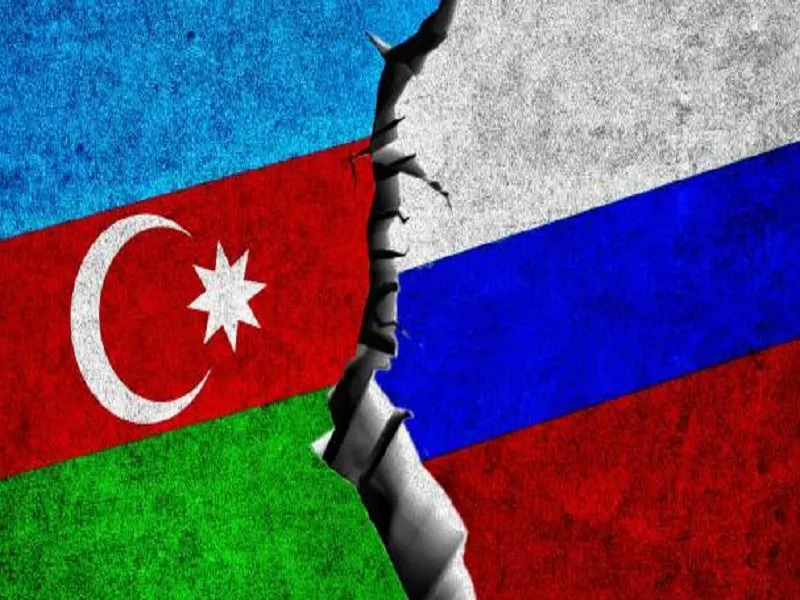
Russian-Azerbaijani relations are in trouble as a result of two scandals. The first concerns the recent police raid against suspected ethnic Azeri criminals in Yekaterinburg, during which time two of them died in circumstances that are now being investigated. That prompted Baku to officially complain to Moscow, after which a vicious infowar campaign was launched on social media and even among some publicly financed outlets as well alleging that Russia is “Islamophobic”, “imperialist”, and “persecuting Azeris”.
This was shortly thereafter followed by a police raid on Sputnik’s office in Baku, which had been operating in a legal gray zone after the authorities moved to effectively shut it down in February, thus resulting in the detainment of several Russians. That earlier decision was suspected to be connected to Azerbaijan’s displeasure with Russia’s response to late December’s airline tragedy in the North Caucasus that was caused by a Ukrainian drone attack at the time. Readers can learn more about it here and here.
Before determining who’s responsible for the latest trouble in bilateral ties, it’s important to recall the larger context within which all of this is unfolding. Prior to late December’s incident, Russian-Azerbaijani relations were proceeding along a very positive trajectory in accordance with the strategic partnership pact that President Ilham Aliyev agreed to with Putin on the eve of the special operation in late February 2022. That built upon Russia’s role in mediating an endto the Second Karabakh War in November 2020.
More recently, Putin visited Baku last August, the significance of which was analyzed here and here. This was followed by Aliyev visiting Moscow in October in connection with the CIS Heads of State Summit. Shortly before late December’s airline tragedy, Aliyev then gave an extended interview to Rossiya Segodnya head Dmitry Kiselyov in Baku, where he elaborated on Azerbaijan’s multi-aligned foreign policy and newfound suspicions of the West’s regional intentions towards the South Caucasus.
On that topic, the Biden Administration sought to exploit Armenia’s loss in the Second Karabakh War to more radically turn it against Russia and thus transform the country into a joint French-US protectorate for dividing-and-ruling the region, which worsened relations with Azerbaijan. The Trump Administration appears to be reconsidering that, however, and might have even agreed to let Armenia become a joint Azeri-Turkish protectorate instead. It’s this perception that’s driving the latest unrest in Armenia.
From Russia’s perspective, the French-US protectorate scenario could spark another regional war that might spiral out of control with unpredictable consequences for Moscow if they weaponize the revival of Armenian revanchism. Similarly, the Azeri-Turkish protectorate scenario could turbocharge Turkiye’s rise as a Eurasian Great Power if it leads to an expansion of its influence (especially military) in Central Asia. The ideal scenario is therefore for Armenia to return to its traditional status as a Russian ally.
Having explained the context within which the latest trouble is unfolding, it’s now time to determine who’s responsible. Objectively speaking, the Azerbaijani authorities overreacted to the recent police raid in Yekaterinburg, which signaled to civil society that it’s acceptable (at least for now) to wage a vicious infowar campaign against Russia. Some officials with an unclear connection to Aliyev then authorized the raid on Sputnik’s office as an escalation under the implied pretext of an asymmetrical response.
Given the ambiguity about Aliyev’s role in Azerbaijan’s overreactions, it’s premature to conclude that he decided to jeopardize the strategic ties with Russia that he himself cultivated, though he must still take responsibility even if mid-level officials did this on their own. That’s because Baku’s official complaint to Moscow and its raid on Sputnik’s office are state actions, unlike the recent police raid in Yekaterinburg, which is a local action. He’ll thus likely have to talk to Putin sometime soon to resolve everything.
The abovementioned observation doesn’t explain why mid-level officials might have overreacted to the Yekaterinburg police raid, which can be attributed to the deep-seated resentment that some have against Russia and speculative foreign influence. Regarding the first, some Azerbaijanis (but importantly not all and seemingly not the majority) harbor such sentiments, while the second might be linked to the scenario of the US letting Armenia becoming a joint Azeri-Turkish protectorate.
To elaborate, the US and France would struggle to turn Armenia into their own joint protectorate due to Georgia successfully repelling several rounds of Biden-era Color Revolution unrest, which aimed to pressure the government into opening up a “second front” against Russia and toppling it if it refused. The military logistics required for turning Armenia into a bastion from which they could then divide-and-rule the region therefore are no longer reliable since they could only realistically run through Georgia.
Accordingly, the Trump Administration might have decided to cut their predecessor’s strategic losses by “giving” Armenia to Turkiye and Azerbaijan, which would repair the troubled ties that he inherited with both. In exchange, the US might have requested that they take a harder line towards Russia if the opportunity emerges, knowing that neither will sanction it since that would harm their own economies but hoping that a future situation would develop to serve as the pretext for escalating political tensions.
Mid-level officials wouldn’t be privy to such talks, but the aforesaid speculative request could have trickled down to them from their superiors, some of whom might have implied state approval for overreacting to any forthcoming “opportunity”. This sequence of events could bestow Aliyev with the ability to “plausibly deny” his role in events as part of a de-escalation deal with Putin. The whole purpose of this charade might be to signal to Russia that a new order is forming in the broader region.
As was earlier explained, that order could be a Turkish-led one upon Ankara and Baku subordinating Armenia as their joint protectorate, after which they’d streamline military logistics across its territory to turn the “Organization of Turkic States” (OTS) into a major force along Russia’s entire southern periphery. To be clear, the OTS isn’t controlled by the West, but its Turkish leader and increasingly equal Azerbaijani partner could still autonomously advance the West’s strategic agenda vis-à-vis Russia in that scenario.
Just like the US and France have unreliable military logistics to Armenia, so too does Russia, so it could struggle to deter an Azerbaijani(-Turkish?) invasion of its nominal but wayward CSTO ally if Baku (and Ankara?) exploits its latest unrest (such as if Prime Minister Nikol Pashinyan falls). Moreover, the most optimal branch of the North-South Transport Corridor (NSTC) runs through Azerbaijan, which could block it if Russia takes decisive action in defense of Armenia (however limited due to the special operation).
To be clear, Russia has no intention to fight Azerbaijan, but Azerbaijan’s overreaction to the recent police raid in Yekaterinburg might be a ploy to preemptively craft the perception that Russia “backed down” as a result if Moscow doesn’t take decisive action to deter Baku if regional tensions over Armenia worsen. Had it not been for that raid, then perhaps some other pretext would have been exploited or concocted, but the point is that Russia and Azerbaijan have polar opposite visions of Armenia’s geopolitical future.
That same future is pivotal for the future of the broader region as was written, but Russia has limited means for shaping the course of events due to its complex strategic interdependence with Azerbaijan vis-à-vis the NSTC and its understandable military prioritization of the special operation. The preceding constraints are self-evident, and Aliyev (and Erdogan?) might be preparing to take advantage of them, emboldened as he(/they?) might be by Russia’s perceived setback in Syria after Assad’s downfall.
Azerbaijan is aware of its irreplaceable role in turbocharging allied Turkiye’s rise as Eurasian Great Power, which is dependent on subordinating Armenia in order to then streamline the OTS’ military logistics between Asia Minor and Central Asia via the South Caucasus. If Aliyev came to believe that his country has a brighter future as part of a Turkish-led regional order instead of a Russian-led one, especially if the US signaled approval of this as speculated, then Baku’s overreaction to recent events makes more sense.
The Moscow-mediated Armenian-Azerbaijani ceasefire of November 2020 calls for the creation of a Russian-controlled corridor across Armenia’s southern Syunik Province, which Baku calls the “Zangezur Corridor”, for connecting both parts of Azerbaijan. Pashinyan hitherto refused to implement this due to pressure from the West and the Armenian diaspora therein, but if Trump decided to “give” Armenia to Azerbaijan and Turkiye instead, then he might do it but only after squeezing Russia out of this route.
Russian control would prevent Turkiye from streamlining its military logistics to Central Asia through this corridor for the purpose of replacing Russia’s influence there with its own as part of a grand strategic powerplay that autonomously aligns with the Western agenda in the pivotal Eurasian Heartland. Azerbaijan (and Turkiye?) might therefore invade Syunik if their envisaged client Pashinyan either flip-flops on squeezing Russia out or before Russia is invited into there by a new government if he falls.
The consequences of Turkiye obtaining unhindered military access to Central Asia through either sequence of events could be disastrous for Russia since its influence there is already being challenged by Turkiye, the EU, and even the UK, which just signed a two-year military agreement with Kazakhstan. That country, with whom Russia shares the longest land border in the world, has been pivoting towards the West as was assessed here in summer 2023 and this troubling trend could easily accelerate in that event.
Reflecting on all this insight, the latest trouble in Russian-Azerbaijani relations might therefore be part of a Turkish-US powerplay, one which Trump could have agreed to with Erdogan and Aliyev later jumped on board but might still have his doubts. That would account for his “plausibly deniable” role in Azerbaijan’s overreaction to recent events. If taken to its conclusion, this powerplay could risk Azerbaijan becoming Turkiye’s junior partner with time, which he’s thus far sought to avoid through his multi-alignment policy.
If that’s the case, then it might not be too late for Putin to avert this scenario so long as he can convince Aliyev that Azerbaijan has a brighter future as part of a different regional order, one that would center on Azerbaijan continuing its Russo-Turkish balancing act instead of turbocharging Turkiye’s rise. The NSTC could figure prominently in this paradigm, but the problem is that Azerbaijan’s ties with Iran and India are very strained right now, so he’d have to prospectively mediate a rapprochement for this to happen.
Anyhow, the point is that it’s premature to assume that the latest trouble in Russian-Azerbaijani relations is the new normal or that it might even precede a seemingly inevitable crisis, though both possibilities are nonetheless credible and should be taken seriously by the Kremlin just in case. The best-case scenario is that Aliyev and Putin soon hold a call to amicably resolve the issues that have abruptly toxified their ties otherwise the worst might be yet to come and it could be disadvantageous for both.