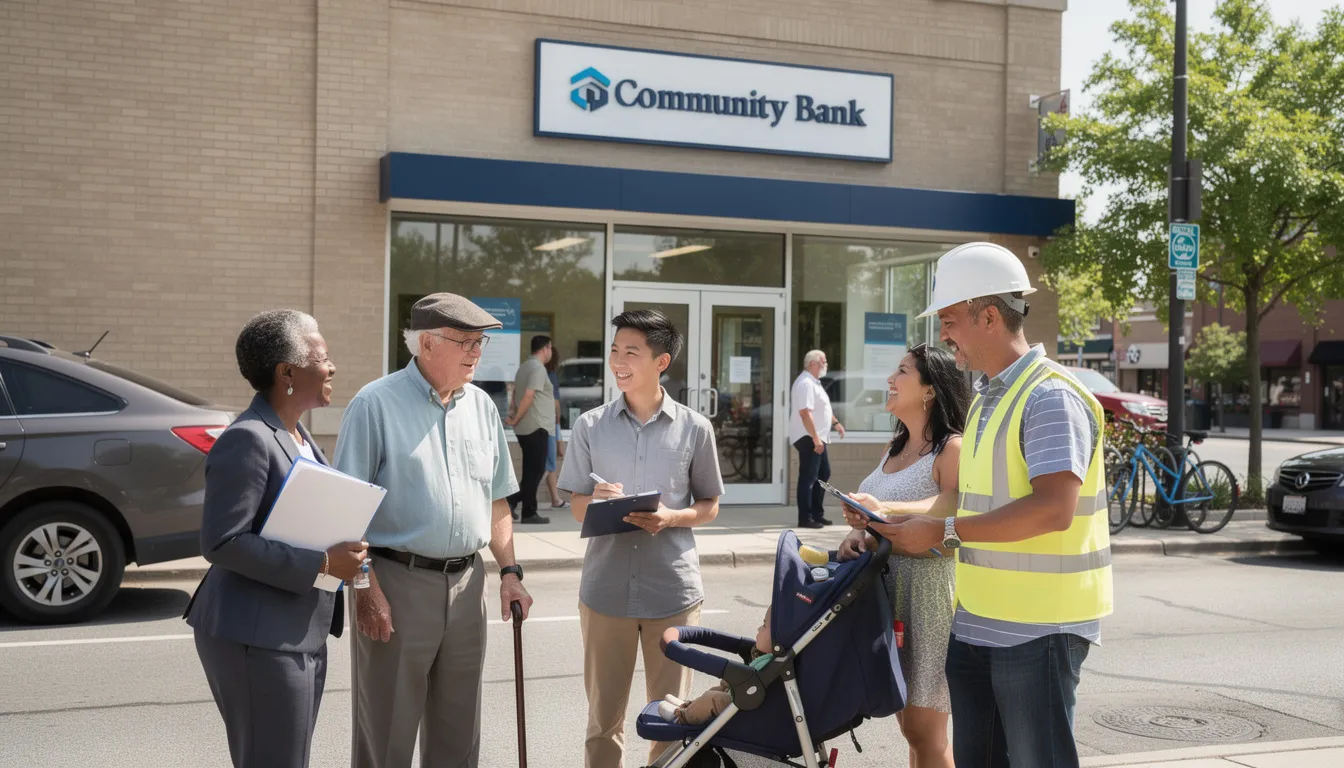
When banks evaluate where to direct their community investment dollars, one question rises to the top: Is this activity CRA eligible? Understanding what qualifies under the Community Reinvestment Act can mean the difference between regulatory success and missed opportunities to serve the communities that need support most.
Quick Answer: What Does “CRA Eligible” Mean?
CRA eligible refers to loans, investments, services, and geographic areas that qualify for Community Reinvestment Act consideration by federal banking agencies. These activities primarily benefit low and moderate income individuals, LMI census tracts, and certain distressed or underserved areas as defined by the Federal Reserve System, Federal Deposit Insurance Corporation, and Office of the Comptroller of the Currency.
Here’s what you need to know at a glance:
CRA eligibility drives how banks are evaluated when they apply for new branches, mergers, or acquisitions
Eligible activities must meet the credit needs of LMI communities through lending, investment, or services
Financial literacy programs in schools can be structured to be CRA eligible when they primarily serve students and families from LMI areas
CRA performance directly impacts an institution’s application for expansion and its reputation in local communities
Overview of the Community Reinvestment Act (CRA)
The Community Reinvestment Act CRA was enacted in 1977 to combat redlining and ensure depository institutions meet the credit needs of all neighborhoods they serve, including low and moderate income neighborhoods. Before CRA, many banks would collect deposits from entire community areas but refuse to lend back into those same neighborhoods—particularly communities of color and economically disadvantaged areas.
Today, three federal agencies share responsibility for CRA oversight. The Board of Governors of the Federal Reserve System examines state member banks. The Federal Deposit Insurance Corporation oversees state nonmember banks. The Office of the Comptroller of the Currency—often called the comptroller of the currency—regulates national banks and federal savings associations.
CRA applies specifically to insured depository institutions like commercial banks and savings associations. Independent mortgage companies and other nonbank lenders fall outside CRA requirements, though they may be subject to other fair lending regulations.
Key background facts include:
CRA performance evaluations result in public ratings: Outstanding, Satisfactory, Needs to Improve, or Substantial Noncompliance
These ratings are evaluated periodically and influence regulatory decisions on branch openings and mergers
Major CRA regulations modernization occurred in 2023, with phased implementation through 2024-2026
Banks must demonstrate consistent lending, investment, and service activities in their assessment areas
Who and What Can Be CRA Eligible?
CRA eligibility covers both geographic areas at the census tract level and specific activities that financial institutions undertake to support low and moderate income communities. An activity typically qualifies as CRA eligible when it meets specific criteria established by federal agencies.
An activity is usually CRA eligible if it:
Primarily benefits LMI individuals or LMI areas
Supports affordable housing, economic development, community services, or neighborhood revitalization
Occurs within the bank’s assessment area or a broader region including that area
Demonstrates a primary purpose aligned with community development goals
Concrete examples of CRA-eligible activities include:
Small business loans originated in LMI tracts
Mortgages to LMI borrowers purchasing their first homes
Investments in Low-Income Housing Tax Credit projects
Grants to community organizations providing services to underserved areas
School-based financial literacy programs targeted to LMI students
Bank staff volunteering their financial expertise at public schools with high free-and-reduced-lunch rates
CRA-Eligible Geographies and Tract Designations
CRA-eligible geographies are defined at the census tract level using data published by the Federal Financial Institutions Examination Council. Banks and community partners can access this data through the FFIEC’s CRA Geocoding/Mapping System to assess banks CRA performance opportunities.
Tract income level determination works as follows:
Compare census tract Median Family Income to Area Median Family Income
Less than 50% of AMFI equals low income designation
50-79% of AMFI equals moderate income designation
80-119% of AMFI equals middle income designation
120% or higher of AMFI equals upper income designation
The main CRA-eligible geographic categories include:
LMI tracts: Census tracts where median family income falls below 80% of area median
Distressed or underserved tracts: Certain nonmetropolitan middle-income tracts meeting specific criteria
Disaster areas: Federally declared disaster zones during specified time windows
Current tract designations rely on decennial Census and American Community Survey data. Banks and nonprofits can identify eligible tracts by using the FFIEC CRA Geocoding/Mapping System, which provides a dropdown menu for selecting geographic parameters, and regulator-provided tract lists available on each agency’s CRA website.
CRA-Eligible Activities: Lending, Investment, and Services
For larger banks, CRA exams evaluate three traditional tests: the Lending Test, Investment Test, and Service Test. Each test examines how well institutions serve their communities through different types of activities. Smaller banks may be evaluated primarily under the Lending Test, with optional community development consideration based on asset size thresholds set annually by federal reserve board guidelines.
The evaluation process considers an insured depository institution’s record of helping banks meet the credit needs of their communities through multiple channels. Sound banking operations require balancing profitability with community responsibility.
CRA-Eligible Services (Including Financial Literacy in Schools)
Community development services must be related to the institution’s provision of financial services and primarily benefit LMI individuals or LMI communities. This is where partnership opportunities with schools become particularly valuable.
Concrete examples of CRA-eligible services include:
Bank officers serving on the board or finance committee of a nonprofit running after-school financial literacy clubs in an LMI school district
Staff teaching quarterly budgeting and savings workshops to high school seniors at Title I schools
Volunteers providing free tax preparation through the IRS’s Volunteer Income Tax Assistance program
Branch managers participating in homebuyer education seminars at community centers
Sponsoring financial literacy programs at schools represents one of the most impactful CRA-eligible service strategies available. When banks partner with elementary, middle, and high schools serving high percentages of students who qualify for free or reduced-price lunch, they create lasting community benefit while earning CRA credit.
Example of CRA Eligible K12 School Financial Literacy Programs being sponsored by Banks and Credit Unions:

Example of CRA Eligible Community College/University School Financial Literacy Programs:

StockTrak: Financial Literacy and Investing Simulation used by over 1,000 universities.
To support CRA credit for educational initiatives, banks should track:
Total volunteer hours and staff roles
Number of students reached per program
Pre/post assessment results demonstrating learning outcomes
Geographic data confirming schools serve LMI populations

CRA-Eligible Lending
Lending typically carries the most heavily weighted component of CRA exams. To encourage depository institutions to serve all segments of their communities, examiners review lending patterns in key areas including home mortgage, small business, and consumer loans.
Specific loan types that often receive CRA credit include:
Home mortgage loans to LMI borrowers or in LMI tracts (example: a 30-year fixed-rate mortgage to a first-time homebuyer with income at 60% of AMFI)
Small business and small farm loans in LMI or distressed tracts
Community development loans to nonprofit developers of affordable rental housing
Small-dollar consumer loans that provide alternatives to predatory lending in LMI areas
Loan-level CRA data may be reportable for certain institutions under HMDA and CRA data collection rules. This data helps regulators assess how well banks meet the credit needs of their assessment areas.
CRA-Eligible Investments
CRA-eligible investments support community development through equity investments, grants, and qualified deposits. These investments help encourage financial institutions to deploy capital in ways that benefit underserved communities.
Common CRA-eligible investment vehicles include:
Deposits in certified CDFI banks or credit unions serving rural distressed counties
Equity in LIHTC projects creating affordable units restricted to households at or below 60% of AMI
Grants to nonprofits delivering financial education in public school districts where most students come from LMI families
Investments in New Markets Tax Credit funds serving qualifying tracts
Municipal bond purchases financing LMI housing or schools in underserved areas
Documentation should clearly tie each investment to community development purposes defined in CRA regulations. Banks should maintain records showing how investments contribute to community stability and access to services.
Determining If a Census Tract or Activity Is CRA Eligible
CRA eligibility isn’t intuitive—institutions must verify geographic and activity eligibility using official tools and accessible documentation. CRA requires careful attention to detail when coding activities for credit.
To check if a tract is CRA eligible:
Access the FFIEC CRA Geocoding/Mapping System online
Enter a specific address or census tract number in the search field
Review the income category displayed in results
Check whether the tract is designated distressed, underserved, or in a disaster area for the relevant exam period
Document findings for your records
To evaluate whether an activity qualifies:
Confirm that primary beneficiaries are LMI individuals or located in LMI areas
Verify the activity fits a community development purpose (affordable housing, community services, economic development, or revitalization)
Ensure the activity occurs in or benefits the bank’s assessment area
Review any available guidance from your office or examiner communications
Banks should develop internal CRA eligibility checklists to complete before coding activities—especially for newer initiatives like school-based financial education programs where eligibility criteria may be less familiar to staff.
Documenting CRA-Eligible Activities and Hours
Federal agencies expect clear documentation to support any claim that a loan, investment, or service qualifies as CRA eligible. Without proper records, even genuinely impactful activities may not receive appropriate credit during examinations.
Core documentation elements include:
Description of the activity and its financial nature
Identification of beneficiaries with income or tract data where possible
Dates, locations, and responsible staff members
Evidence of impact such as number of LMI participants served
Connection to community development purposes
Banks often use specialized CRA management systems or spreadsheets to track community development service hours. These tools help ensure consistent data collection across the institution.
Best practices for documenting school-based financial literacy programs:
Maintain memoranda of understanding with participating school districts
Track class rosters and student participation counts by session
Administer pre/post assessment tools to demonstrate learning outcomes
Capture written feedback from teachers and administrators
Document school demographic data confirming LMI focus
Photograph program activities (with appropriate permissions)
Why CRA Eligibility Matters for Banks and Communities
CRA-eligible activity levels and quality directly influence a bank’s CRA exam rating. This record affects approval for branch openings, mergers, and acquisitions—making CRA compliance a business imperative, not just a regulatory checkbox.
Community benefits from robust CRA activity include:
Expanded access to credit for LMI households previously underserved by institutions
Support for small business development in underserved areas
Stronger financial capability through education, particularly when banks sponsor financial literacy programs in local schools
Investment in affordable housing that stabilizes neighborhoods
Access to deposit facilities and banking services in communities that might otherwise lack them
Well-designed CRA-eligible initiatives align business objectives with community outcomes. A bank that builds relationships with students today may serve those same individuals as future customers. Financial literacy education creates informed borrowers who make sound decisions—benefiting both the community and lending institutions.
Reputational benefits matter too. A strong CRA record enhances trust with community organizations, school districts, and local governments. These partnerships often create additional lending and service opportunities that support low and moderate income families across the entire community.

Getting Started: Building a CRA-Eligible Strategy (With a Focus on Financial Literacy)
Institutions can take intentional steps to design programs that maximize CRA credit while delivering meaningful community impact. The process starts with understanding current activities and identifying gaps.
Strategic steps to strengthen CRA eligibility:
Map current lending, investment, and service activities to CRA categories
Identify gaps in LMI outreach, especially opportunities in local schools
Review assessment area demographics to prioritize partnering with high-need communities
Set measurable goals tied to CRA exam timelines
Form or strengthen relationships with key partners:
Public school districts and charter schools serving large LMI populations
Nonprofits specializing in youth financial education
CDFIs and community organizations that can help reach families
Local chambers of commerce in moderate income neighborhoods
Launch or expand school-based financial literacy initiatives:
Develop multi-week curricula for grades 8-12 covering budgeting, credit, and student loans
Organize annual “money skills” days at middle and high schools
Sponsor teacher training to integrate financial topics into math or social studies classes
Create age-appropriate programs for elementary students introducing savings concepts
Formalize CRA governance within your institution:
Designate a CRA officer or committee with clear accountability
Establish measurable annual goals (example: reach 500 LMI students per year)
Review results quarterly and adjust strategies before exam dates
Maintain expertise through ongoing training on evolving CRA requirements
Key Takeaways on CRA Eligibility
Understanding what qualifies as CRA eligible helps banks serve communities effectively while meeting regulatory expectations. Here are the essential points to remember:
CRA eligible refers to geographies and activities that qualify for CRA consideration because they benefit LMI people or designated areas
Banks must verify eligibility using official FFIEC data and clear community development criteria
Lending, investments, and services can all be CRA eligible when structured correctly and well documented
School-based financial literacy programs serving LMI students represent a highly effective, CRA-eligible strategy
CRA compliance delivers mutual benefits—helping institutions grow while strengthening local communities
Sponsoring robust financial literacy programs in schools is more than a compliance strategy. It’s an investment in the financial capability of the next generation, creating informed consumers who understand credit, savings, and sound financial decision-making.
Stay current with evolving CRA regulations and local needs. Use eligibility rules as a framework for creativity rather than a limitation. The institutions that thrive under CRA are those that view community development as integral to their mission—not just a box to check during the evaluation process.