Right now, go-to-market feels like the Wild West.
Every week there’s a new tool, a new workflow, a new promise to “10x pipeline.” And for teams with real revenue targets, that creates a frustrating tension. You want to experiment, but you cannot afford distractions. You need outcomes, not noise.
That is why the most interesting part of the AI conversation is not which tools are winning.
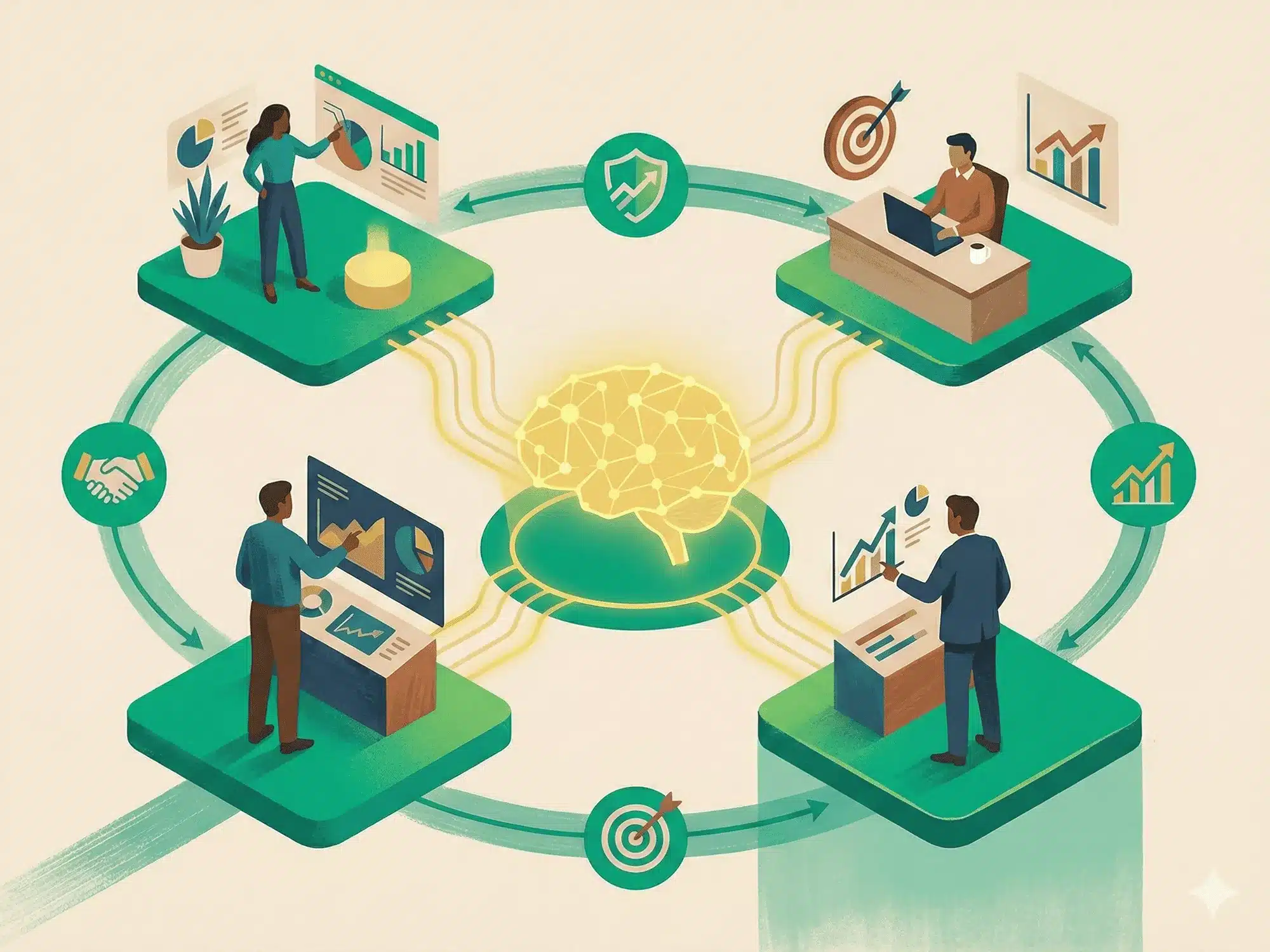
It is what AI is forcing GTM teams to do differently. Teams are being pushed to tighten their processes, raise the quality of their outreach, build stronger feedback loops, and show up as credible experts buyers can trust.
During a recent panel at Tech Superpowers, co-hosted with MGMT Boston, York IE’s Adam Coughlin moderated a candid conversation with GTM leaders from Growth Loops, Blitzy, and Skedda on how AI is actually changing GTM execution.
What followed was not a list of shiny tools, but a grounded discussion on discipline, people, and real-world execution.
1. GTM is messier than ever, and discipline is now the differentiator
Laura Beaulieu, Head of Marketing at GrowthLoops, described the current GTM landscape with one word: messy.
There are more tools than ever, no clear market leader, and no single “right” stack. Teams are stitching together point solutions while trying to keep pace with changing buyer expectations. This mirrors what many industry reports have highlighted about the rapid evolution of foundation AI models and tooling ecosystems.
Chris Harris, CRO at Blitzy, reframed the chaos as opportunity. When the market is unsettled, standing out is easier if you do something thoughtful and consistent. AI makes it tempting to move fast, but speed without intention quickly turns into noise.
The takeaway is clear. AI rewards focus, not experimentation for experimentation’s sake.
2. The biggest GTM disruption is happening before the meeting
One of the strongest themes across the panel was where AI is having the most immediate impact. It is not replacing live selling. It is reshaping everything that happens before and after the conversation.
Laura pointed to ICP definition, persona work, and outbound research as some of the earliest and clearest wins. Anything that can be systematized and trained into a GPT is being disrupted first.
Jake Helman, SVP of Sales and Partnerships at Skedda, shared how AI has fundamentally changed expectations for sales teams. There is now no excuse to be under-researched. AI has made it easy to quickly understand an account, an industry, or a specific signal of intent.
The danger is what Jake described as AI slop. Generic personalization is easy to spot and easy to ignore. The best teams are using AI to create pace and preparation, not to outsource thinking.
3. Credibility, not automation, is the real competitive advantage
As AI-generated messages flood inboxes, credibility has become the differentiator.
Chris framed this as a return to the consultant mindset. Buyers today are not short on options. They are short on confidence. Many know they need to modernize GTM or adopt AI, but they are afraid of making the wrong decision.
This is consistent with broader GTM trends discussed across platforms, where trust, clarity, and execution discipline are becoming more important than sheer volume.
AI can help produce content faster, but it cannot replace clear thinking, strong communication, and the ability to lead a structured conversation. If anything, AI raises the bar.
4. The most effective AI workflows create value between meetings
Rather than focusing on individual tools, the panel emphasized workflows that consistently create value for prospects and customers.
Jake shared how Skedda built a custom GPT trained on their sales playbooks and leadership voice. Instead of generic coaching, reps receive feedback that mirrors how they would be coached by a real manager. This type of enablement mirrors best practices outlined by modern conversation intelligence platforms.
Chris highlighted the opportunity to use call transcripts and AI to create highly personalized assets between meetings. Instead of waiting for the next scheduled call, teams can quickly generate tailored decks, training materials, or internal summaries that help deals progress when sellers are not in the room.
Laura emphasized that GPTs should be treated like living employees. If messaging, positioning, or product changes and the system is not updated, the output becomes stale and dangerous.
5. Guardrails are essential as speed increases
As AI accelerates GTM execution, the risk of inconsistency grows.
Laura spoke directly to the marketing challenge. Brand tone, messaging, and quality control cannot be left to chance. Teams need clear rules around what can be changed, what cannot, and how AI tools should be trained to reflect the brand.
Jake added that alignment across sales, marketing, and product is more important than ever. A GPT trained on outdated positioning quickly becomes a liability.
This is where RevOps becomes critical. We often describe RevOps as the control tower for GTM systems, aligning tooling, data, and execution across teams.
6. New GTM roles are emerging to manage humans and agents
AI is not just changing workflows. It is changing org design.
Chris described the rise of roles like Chief AI Officer or AI-fluent Chief of Staff. These roles focus on helping organizations use AI to operate faster and more effectively, not just build AI products.
Laura and Jake both pointed to the emergence of the GTM Engineer. This role blends demand generation, RevOps, and systems thinking. Similar shifts are being discussed across the ecosystem.
Teams are becoming blended systems of humans and agents, and someone needs to own the machine.
7. The most valuable skills remain deeply human
When the conversation turned to hiring, the panel was aligned.
The most valuable traits in an AI-enabled GTM org are builder mindset, curiosity, proactivity, coachability, and strategic thinking.
AI exposes who is thoughtful and rigorous and who is simply taking the first output and moving on.
8. What to avoid: automation that erodes trust
The panel closed with cautionary lessons.
Publishing the first AI output. Letting brand tone drift. Over-automating outbound without human review. Rushing instead of checking work. These shortcuts show prospects that you do not care enough to be precise.
As AI adoption becomes table stakes, being thoughtful, real, and relevant is becoming the differentiator.
What this means for GTM leaders
AI is not a silver bullet for growth. It is a forcing function.
It forces clarity. It forces discipline. It forces teams to raise their standards.
The organizations that win will not be the ones with the biggest stacks. They will be the ones that use AI to build trust faster, move with precision, and create real value at every stage of the customer journey.
Interested in strengthening your GTM execution? Learn more about York IE’s GTM services or connect with our team to explore how we can help you scale with confidence.