No Result
View All Result
SUBMIT YOUR ARTICLES
  • Login
Wednesday, March 18, 2026
TheAdviserMagazine.com
  • Home
  • Financial Planning
    • Financial Planning
    • Personal Finance
  • Market Research
    • Business
    • Investing
    • Money
    • Economy
    • Markets
    • Stocks
    • Trading
  • 401k Plans
  • College
  • IRS & Taxes
  • Estate Plans
  • Social Security
  • Medicare
  • Legal
  • Home
  • Financial Planning
    • Financial Planning
    • Personal Finance
  • Market Research
    • Business
    • Investing
    • Money
    • Economy
    • Markets
    • Stocks
    • Trading
  • 401k Plans
  • College
  • IRS & Taxes
  • Estate Plans
  • Social Security
  • Medicare
  • Legal
No Result
View All Result
TheAdviserMagazine.com
No Result
View All Result
Home Market Research Startups

The end of manual hiring? AI becomes the new standard for 2026 recruitment

by TheAdviserMagazine
3 months ago
in Startups
Reading Time: 5 mins read
A A
The end of manual hiring? AI becomes the new standard for 2026 recruitment
Share on FacebookShare on TwitterShare on LInkedIn


The job application process is about to fundamentally change.

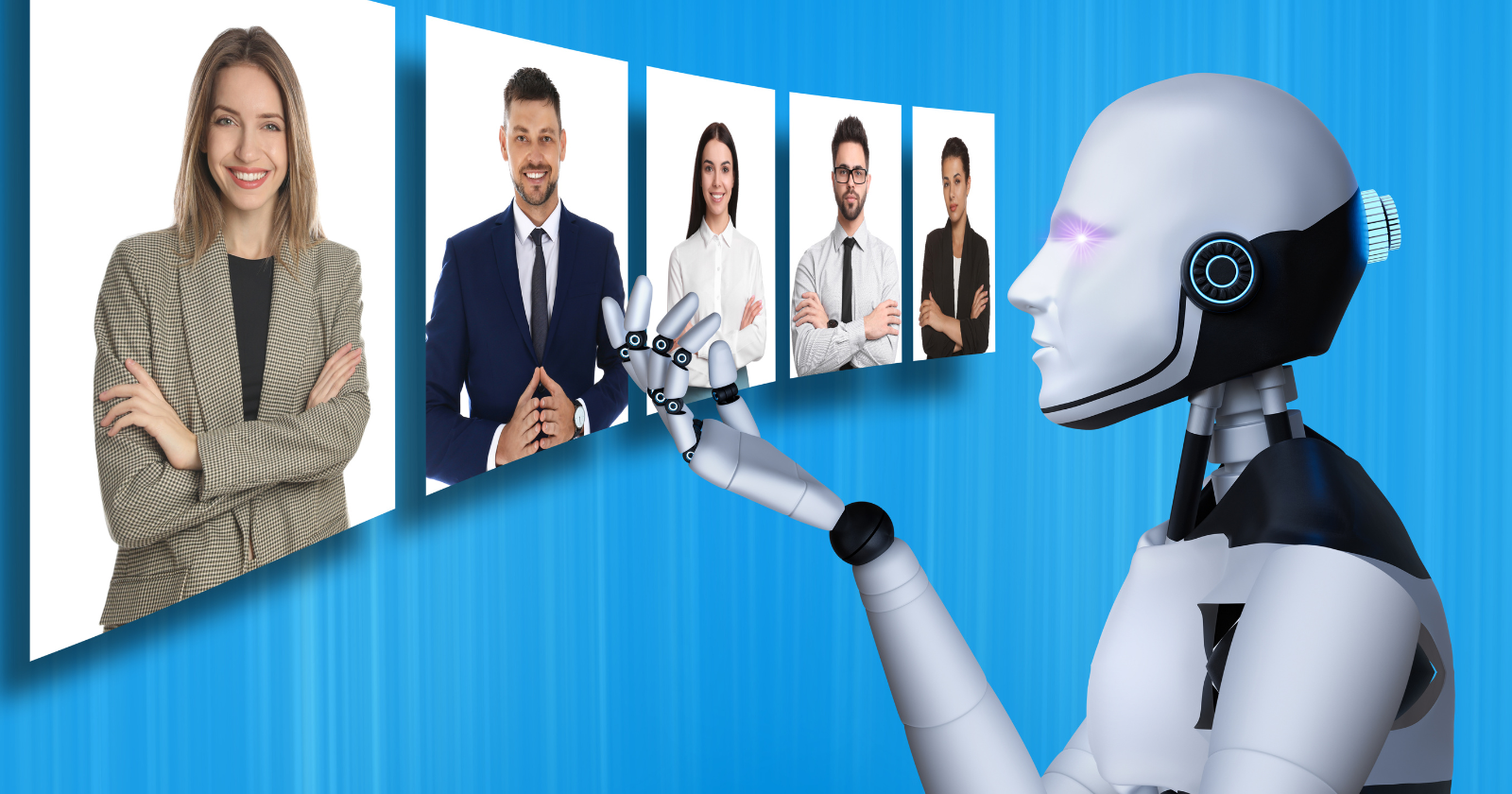
AI tools will become the default assistant in hiring throughout 2026, handling everything from resume screening to candidate communication to interview scheduling.

But here’s the part that should make anyone paying attention deeply uncomfortable: one in three companies now believe AI will run their entire hiring process by 2026.

Not assist. Not support. Run it. Completely.

This isn’t speculation about some distant future. The infrastructure for fully automated hiring is being built right now. More than half of talent leaders plan to add autonomous AI agents to their teams in 2026.

These aren’t the clunky chatbots that frustrate you on customer service websites. These are systems designed to operate independently, performing complex recruitment tasks without constant human oversight.

The shift mirrors what’s happening globally, but it’s being driven by very specific pain points. In New Zealand, for instance, 62% of jobseekers aren’t applying for roles because the hiring process “feels too draining,” according to Employment Hero’s end-of-year survey. That figure jumps to 70% among young workers.

The promise is that AI will reduce administrative bottlenecks, improve communication, and increase transparency. The reality might be something else entirely.

The efficiency gains are real, but so are the risks

Companies are adopting AI recruitment tools because the results, at least on paper, look compelling. Organizations report 30-50% faster time-to-hire and up to 30% reduction in hiring costs. Unilever achieved a 90% reduction in hiring time and slashed £1 million in annual recruitment costs after implementing AI screening.

AI-selected candidates show a 14% higher interview success rate than those filtered by traditional methods. Companies using these systems claim they improve the quality of hired candidates. About 74% of businesses relying on AI tools say the technology made their hiring outcomes better. The efficiency argument is hard to ignore when you’re a talent acquisition leader facing budget pressure and staffing shortages.

But efficiency and quality aren’t the same thing. And this is where the rosy projections start developing cracks.

Three in four companies now allow AI to reject candidates without human oversight. Read that sentence again. No human ever looks at your application. An algorithm decides you’re not worth consideration, and that’s the end of it.

The system might be screening you out for reasons that have nothing to do with your ability to do the job. Maybe your resume doesn’t contain the right keywords. Maybe you took a career break to care for a sick parent. Maybe the AI was trained on historical data that reflects existing biases in hiring.

The bias problem nobody wants to talk about

Here’s what companies know but don’t always want to admit: 57% worry that using AI could screen out qualified candidates. Another 50% fear it could introduce or amplify bias in hiring. These aren’t hypothetical concerns. They’re describing what’s already happening.

AI systems learn from historical hiring data. If that data reflects decades of discriminatory patterns, the AI doesn’t magically become fairer. It becomes efficient at replicating existing inequities at scale. A system trained on a company’s past hires will learn to favor candidates who look like the people already there. It will penalize career gaps that disproportionately affect women. It will struggle with non-traditional career paths that are more common among people who didn’t have access to elite educational institutions.

The technology can’t distinguish between correlation and causation. It can’t understand context. It sees patterns in data and optimizes for those patterns, regardless of whether those patterns are just.

Nearly half of job seekers distrust AI-driven hiring, fearing it strips the humanity out of a process that should be fundamentally about human connection and potential. They’re right to be skeptical. When 52% of job seekers have declined offers due to poor recruitment experiences, and 69% share those negative experiences online, companies should be asking whether fully automated hiring is actually the answer.

What gets lost in automation

The most successful recruitment isn’t about processing the most applications in the shortest time.

It’s about identifying potential that doesn’t fit neatly into algorithmic categories. It’s about recognizing that a career break might indicate resilience rather than lack of commitment. It’s about understanding that someone who took an unconventional path might bring perspectives your organization desperately needs.

Human recruiters can read between the lines. They can spot potential in unusual places. They can have conversations that reveal capabilities a resume never captures. They can adjust their evaluation when circumstances require nuance and judgment.

AI can’t do any of that. It can process information quickly and identify patterns in data. Those are valuable capabilities. But they’re not substitutes for human discernment.

Korn Ferry research shows that 73% of talent acquisition leaders rank critical thinking as their top recruiting priority, while AI skills rank fifth. There’s wisdom in that ordering. Anyone can learn to use AI tools in a few weeks. But knowing when AI is giving you unreliable information? Spotting the difference between helpful insights and convincing but flawed output? That requires human judgment that can’t be automated away.

The best AI users aren’t people who memorize every prompt technique. They’re people who can evaluate AI output and ask, “Does this actually make sense?” They catch errors, question recommendations, and know when human judgment beats machine logic.

The entry-level crisis accelerating

While companies rush to automate hiring, they’re creating a new problem: where do entry-level workers come from when AI eliminates traditional launching pad roles?

The data tells a stark story. Job postings to entry-level platforms like Handshake dropped 15% this school year compared to last, while applications per vacancy surged 30%. Traditional entry-level positions that absorbed thousands of graduates annually are increasingly being handled by AI. Research, drafting, analysis, the foundational tasks that used to teach young workers how professional environments operate, are disappearing.

This creates a vicious cycle. Companies want experienced workers because they’re immediately productive. But workers can’t gain experience if nobody will hire them for their first job. AI screening tends to favor candidates with proven track records, further tightening the bottleneck for people trying to enter the workforce.

Organizations that rethink their early careers strategy and shift from volume hiring to precision hiring for specialized roles might navigate this successfully. But most companies are simply cutting entry-level positions and hoping the problem solves itself. It won’t.

The human-AI balance that might actually work

The future of recruitment doesn’t have to be a choice between completely manual processes and fully automated systems. The most effective approach combines AI’s efficiency with human relationship-building capabilities.

AI can handle the volume. It can screen thousands of resumes, coordinate interviews at midnight, answer repetitive candidate questions, and surface patterns in hiring data that humans would miss. Those are legitimate strengths worth leveraging.

But humans need to remain in charge of guiding the process, building trust with candidates, and making final hiring decisions. AI should be the tireless assistant that handles rote tasks, not the decision-maker determining someone’s career prospects.

The goal, as Employment Hero’s forecast suggests, is using AI to reduce admin bottlenecks and improve transparency, not to remove human judgment entirely. When companies lose sight of that distinction, they end up with efficient systems that make consistently poor decisions at scale.

Several organizations have found this balance successfully. They use AI for early-stage screening to narrow candidate pools, then bring in human recruiters for substantive evaluation. They automate scheduling and communications, but ensure candidates interact with real people at critical decision points. They leverage AI’s analytical power for workforce planning while relying on human intuition for cultural fit assessment.

That hybrid model preserves efficiency gains while maintaining the human elements that make recruitment actually work. It’s harder to implement than just letting AI run everything. But it produces better outcomes for both employers and candidates.




Source link

Tags: hiringManualRecruitmentStandard
ShareTweetShare
Previous Post

Asian stocks join Wall Street rally, brace for BOJ hike

Next Post

Bangladesh protests: Why anti-India slogans are being raised in Dhaka, who is Osman Hadi, who killed him? Here’s what we know so far

Related Posts

edit post
The Brand–Culture Loop Is Your Startup’s Ultimate Moat

The Brand–Culture Loop Is Your Startup’s Ultimate Moat

by TheAdviserMagazine
March 17, 2026
0

If you’re building a startup today, there’s one moat that matters more than almost anything else. It’s not your product....

edit post
15 Budget-Friendly Ways Startups Can Address Cybersecurity Threats

15 Budget-Friendly Ways Startups Can Address Cybersecurity Threats

by TheAdviserMagazine
March 17, 2026
0

Cybersecurity doesn’t have to drain a startup’s limited resources. Experts across the industry have identified 15 practical, cost-effective strategies that...

edit post
People who can’t enjoy a meal without silently critiquing the plating aren’t refined — they’ve replaced the ability to experience pleasure with the compulsion to assess quality

People who can’t enjoy a meal without silently critiquing the plating aren’t refined — they’ve replaced the ability to experience pleasure with the compulsion to assess quality

by TheAdviserMagazine
March 17, 2026
0

Add Silicon Canals to your Google News feed. There’s a particular kind of person who sits down at a restaurant,...

edit post
Women over 60 who say they’ve never been more confident didn’t suddenly find self-esteem—they all stopped performing these 7 things that most women are taught to maintain from adolescence onward

Women over 60 who say they’ve never been more confident didn’t suddenly find self-esteem—they all stopped performing these 7 things that most women are taught to maintain from adolescence onward

by TheAdviserMagazine
March 17, 2026
0

Add Silicon Canals to your Google News feed. Last week at a coffee shop, I overheard a conversation that stopped...

edit post
There’s a version of clarity that only arrives in your 40s where you suddenly understand your father wasn’t distant because he didn’t care. He was performing certainty for thirty years and the exhaustion of never once saying ‘I don’t know’ eventually made him unreachable.

There’s a version of clarity that only arrives in your 40s where you suddenly understand your father wasn’t distant because he didn’t care. He was performing certainty for thirty years and the exhaustion of never once saying ‘I don’t know’ eventually made him unreachable.

by TheAdviserMagazine
March 17, 2026
0

Add Silicon Canals to your Google News feed. My father never once told me he was uncertain about anything. Not...

edit post
I’m 66 and I finally stopped being available to everyone all the time—not because I became selfish, but because I realized that being needed and being valued are two completely different things, and I had been confusing them for fifty years

I’m 66 and I finally stopped being available to everyone all the time—not because I became selfish, but because I realized that being needed and being valued are two completely different things, and I had been confusing them for fifty years

by TheAdviserMagazine
March 16, 2026
0

Add Silicon Canals to your Google News feed. I spent fifty years of my life with my phone always on,...

Next Post
edit post
Bangladesh protests: Why anti-India slogans are being raised in Dhaka, who is Osman Hadi, who killed him? Here’s what we know so far

Bangladesh protests: Why anti-India slogans are being raised in Dhaka, who is Osman Hadi, who killed him? Here’s what we know so far

edit post
FedEx raises FY26 EPS outlook to .80– amid network transformation and B2B momentum (NYSE:FDX)

FedEx raises FY26 EPS outlook to $17.80–$19 amid network transformation and B2B momentum (NYSE:FDX)

  • Trending
  • Comments
  • Latest
edit post
Foreclosure Starts are Up 19%—These Counties are Seeing the Highest Distress

Foreclosure Starts are Up 19%—These Counties are Seeing the Highest Distress

February 24, 2026
edit post
7 States Reporting a Surge in Norovirus Cases

7 States Reporting a Surge in Norovirus Cases

February 22, 2026
edit post
2025 Delaware State Tax Refund – DE Tax Brackets

2025 Delaware State Tax Refund – DE Tax Brackets

February 16, 2026
edit post
The Growing Movement to End Property Taxes Continues in Kentucky, And What It Means For Investors

The Growing Movement to End Property Taxes Continues in Kentucky, And What It Means For Investors

March 2, 2026
edit post
Who Is Legally Next of Kin in North Carolina?

Who Is Legally Next of Kin in North Carolina?

February 28, 2026
edit post
How Age Affects Your Social Security Disability Claim

How Age Affects Your Social Security Disability Claim

March 2, 2026
edit post
Bob’s Discount Furniture FY25 revenue rises 16.8% to .4bn

Bob’s Discount Furniture FY25 revenue rises 16.8% to $2.4bn

0
edit post
Postmaster Issues Urgent Warning: USPS Could Change Forever—Here’s What It Means for Your Mail

Postmaster Issues Urgent Warning: USPS Could Change Forever—Here’s What It Means for Your Mail

0
edit post
Sensex jumps nearly 3,000 points in 3 days. Has the market found its bottom or too early to celebrate?

Sensex jumps nearly 3,000 points in 3 days. Has the market found its bottom or too early to celebrate?

0
edit post
Notice of Civil Penalty Charge

Notice of Civil Penalty Charge

0
edit post
Estate Planning for Loved Ones With Special Needs or Disabilities

Estate Planning for Loved Ones With Special Needs or Disabilities

0
edit post
Recession odds hit 49% for next 12 months says Moody’s Mark Zandi

Recession odds hit 49% for next 12 months says Moody’s Mark Zandi

0
edit post
Bob’s Discount Furniture FY25 revenue rises 16.8% to .4bn

Bob’s Discount Furniture FY25 revenue rises 16.8% to $2.4bn

March 18, 2026
edit post
Estate Planning for Loved Ones With Special Needs or Disabilities

Estate Planning for Loved Ones With Special Needs or Disabilities

March 18, 2026
edit post
Recession odds hit 49% for next 12 months says Moody’s Mark Zandi

Recession odds hit 49% for next 12 months says Moody’s Mark Zandi

March 18, 2026
edit post
Sensex jumps nearly 3,000 points in 3 days. Has the market found its bottom or too early to celebrate?

Sensex jumps nearly 3,000 points in 3 days. Has the market found its bottom or too early to celebrate?

March 18, 2026
edit post
Rox Resources approves FID for Youanmi Gold Project

Rox Resources approves FID for Youanmi Gold Project

March 18, 2026
edit post
SEC Clarifies Crypto Rules, Shifting Responsibility to Brokers

SEC Clarifies Crypto Rules, Shifting Responsibility to Brokers

March 18, 2026
The Adviser Magazine

The first and only national digital and print magazine that connects individuals, families, and businesses to Fee-Only financial advisers, accountants, attorneys and college guidance counselors.

CATEGORIES

  • 401k Plans
  • Business
  • College
  • Cryptocurrency
  • Economy
  • Estate Plans
  • Financial Planning
  • Investing
  • IRS & Taxes
  • Legal
  • Market Analysis
  • Markets
  • Medicare
  • Money
  • Personal Finance
  • Social Security
  • Startups
  • Stock Market
  • Trading

LATEST UPDATES

  • Bob’s Discount Furniture FY25 revenue rises 16.8% to $2.4bn
  • Estate Planning for Loved Ones With Special Needs or Disabilities
  • Recession odds hit 49% for next 12 months says Moody’s Mark Zandi
  • Our Great Privacy Policy
  • Terms of Use, Legal Notices & Disclosures
  • Contact us
  • About Us

© Copyright 2024 All Rights Reserved
See articles for original source and related links to external sites.

Welcome Back!

Login to your account below

Forgotten Password?

Retrieve your password

Please enter your username or email address to reset your password.

Log In
No Result
View All Result
  • Home
  • Financial Planning
    • Financial Planning
    • Personal Finance
  • Market Research
    • Business
    • Investing
    • Money
    • Economy
    • Markets
    • Stocks
    • Trading
  • 401k Plans
  • College
  • IRS & Taxes
  • Estate Plans
  • Social Security
  • Medicare
  • Legal

© Copyright 2024 All Rights Reserved
See articles for original source and related links to external sites.