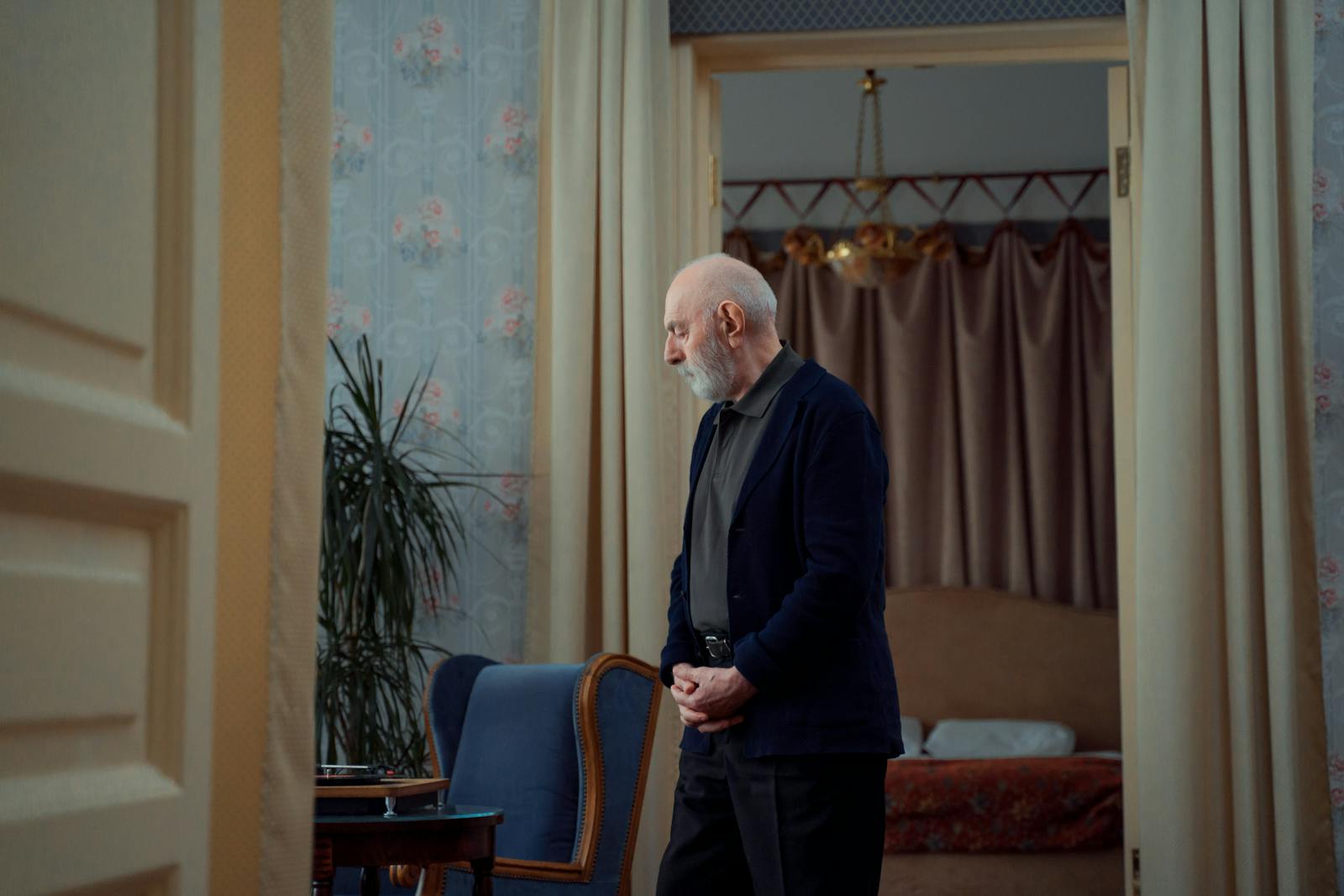
A friend of mine, a retired engineer named Dave, lives down the street here in Saigon. I watched him last Saturday morning hauling bags of lemongrass and chili from the wet market, arguing with a vendor in Vietnamese so broken it was practically a new language. He’s seventy-one. He has savings, a partner, good health, a social circle that keeps him busy. By every retirement metric, the guy’s won. But honestly, I don’t think any of that is the main reason he seems so alive. I think it’s the pot of broth on his stove that still isn’t right.
That’s what got me thinking about what actually makes retirement work. Because everyone plans for it in terms of what they’ll have. Enough money. A good doctor. A partner. Maybe a house somewhere warm. And those things matter, obviously. But the research on what makes retirement fulfilling keeps landing on something that doesn’t show up on any financial planner’s spreadsheet.
It’s not what you have. It’s what you’re still doing. More specifically, it’s what you haven’t finished yet. The thing you’re still in the middle of. Still learning. Still becoming. The thing that gives you a reason to get up tomorrow that has nothing to do with obligation and everything to do with curiosity.
The purpose problem
There’s a well-documented dip in sense of purpose that happens after retirement. Research published in the Journal of Aging and Social Policy found that relative to working older adults, retired participants reported less purposefulness, as well as an incremental decline in sense of purpose following retirement.
Look, this makes intuitive sense. For decades, your purpose was partially outsourced to your job. The structure, the deadlines, the team that needed you, the project that had to get done. When that scaffolding disappears, the question lands with uncomfortable clarity: what am I for now?
A meta-analysis of 70 studies on purpose in life across middle and old age confirmed a small but consistent age-related decline, with the decline becoming steeper in older age groups. But here’s the finding that matters: purpose in life showed a strong association with social integration, health, everyday competence, and psychological wellbeing. People with purpose weren’t just happier. They were healthier, more functional, and more engaged with life.
The question then isn’t whether purpose matters in retirement. It’s what kind of purpose survives the transition.
Not all purpose is created equal
A systematic review of purpose in life among older adults identified six different ways people conceptualise purpose: health and wellbeing, meaningful aims and goals, inner strength, social relationships, mattering to others, and spirituality. Of these, “meaningful aims and goals” is the category most vulnerable to retirement, because it’s the one most commonly anchored to work.
But the people who thrive in retirement aren’t the ones who find a replacement for work. They’re the ones who find something different in kind. Not a new job. A new edge. Something they’re still figuring out.
Research on goal changes and healthy aging found that after retirement, it becomes important to find substitutes that involve cognitive stimulation, such as taking courses or learning a new skill, to compensate for the reduction in cognitive challenges. The researchers emphasised that behaviour change is more successful and lasting when it combines specific action plans with genuine goals, not busy-work but real pursuit.
This is the distinction that most retirement advice misses. It’s not about staying busy. Busy is just a hedge against silence. It’s about staying engaged in something that genuinely requires you to grow.
The Japanese have a word for it
The concept of ikigai, roughly translated as “a reason for being,” has been studied extensively in the context of Japanese aging. Research using data from a nationwide longitudinal study of Japanese older adults found that having ikigai was associated with a 31 percent lower risk of developing functional disability and a 36 percent lower risk of developing dementia over a three-year follow-up.
Having ikigai was also associated with decreased depressive symptoms, higher happiness, greater life satisfaction, and more pro-social behaviours. And these effects were measured after controlling for sociodemographic characteristics.
What I find compelling about ikigai is that it’s not about achievement. It’s not about reaching a goal. It’s about having something that makes you want to wake up. Something unfinished. Something that still asks something of you.
Honestly, I think about this a lot. There’s a concept in Buddhism called viriya, usually translated as energy or effort, but it specifically means the energy that comes from engaging with something meaningful. It’s not willpower. It’s not discipline. It’s the natural momentum that arises when you’re genuinely interested in what you’re doing. Not pushing harder, but leaning into what’s alive. Like when you’re three hours into something and you forgot to eat lunch. That kind of energy.
The happiest retirees I’ve met, both here in Vietnam and back in Australia, share this quality. They’re not relaxing. They’re not killing time. They’re in the middle of something. Learning Vietnamese. Building a boat. Writing a memoir nobody asked for. Teaching themselves watercolour. Growing something in the garden that keeps failing and they keep trying.
They’re amateurs in the best sense of the word: people doing something for the love of it.
Why “still learning” matters more than “already good”
There’s a neurological basis for this. Research on sense of purpose and health behaviours found that individuals with a greater sense of purpose maintain better cognitive function and have lower dementia risk. The working hypothesis is that purposeful engagement keeps neural pathways active, promotes neuroplasticity, and buffers against the cognitive decline that accompanies disengagement.
But I think the key word isn’t engagement. It’s learning.
The thing you’re already good at doesn’t stretch you. It maintains you, which is valuable, but it doesn’t grow you. The thing you’re still in the middle of, the thing you’re bad at, the thing that requires you to be a beginner, that’s what keeps the mind genuinely alive.
Research on reciprocal associations between purpose and wellbeing in old age using data from the Health and Retirement Study found that sense of purpose and subjective wellbeing reinforce each other over time. Purpose predicts wellbeing, and wellbeing predicts purpose, creating an upward spiral when the conditions are right. The conditions being right means having something to engage with that isn’t finished. That still has questions you don’t know the answers to. That makes you a student again.
The retirement paradox
Here’s what nobody tells you about retirement. The freedom everyone dreams about can become the emptiness nobody planned for.
Research on purposeful retirement found that some but not all people decline in sense of purpose after retiring, and that retirees may view maintaining a sense of purpose as nonessential. In other words, some people retire and actively decide that purpose no longer matters. That the point is to stop doing.
And maybe for a while that feels like relief. But the research suggests it doesn’t last. Because purpose isn’t about producing something. It’s about becoming something. And the human psyche doesn’t do well when the becoming stops.
It’s like that Andy Dufresne line. Get busy living or get busy dying.
The Harvard Study of Adult Development, tracking people for over 85 years, found that the happiest older adults were those who stayed engaged with things that mattered to them. Robert Waldinger, the study’s director, noted that meaningful activity and close relationships together formed the foundation of wellbeing in later life. Not one or the other. Both. But the activity has to be meaningful, not just a way to fill hours.
The McKinsey Health Institute’s research on aging with purpose identified the ability to learn, grow, and make decisions as one of five functional abilities required for healthy aging, as defined by the WHO. It’s not a luxury. It’s a functional need. The capacity to keep learning is as essential to healthy aging as the capacity to meet basic needs or maintain relationships.
What this looks like in practice
I watch this from my balcony in Saigon. There’s an older Australian expat who lives down the street and has been trying to learn to cook Vietnamese food properly for three years. He’s terrible at it. His bún bò Huế is a war crime. But every week he’s at the market, arguing with vendors in broken Vietnamese, hauling bags of herbs home, and posting his latest failure to a group chat with the caption “getting closer.”
He’s seventy-one. He’s retired from a career in engineering. He has money, health, friends, and a partner. By every standard metric, his retirement is successful.
But I don’t think that’s why he’s happy. I think he’s happy because he’s still in the middle of something. Because every Saturday morning there’s a pot of broth he hasn’t perfected yet, and that imperfection is pulling him forward into next week.
That pull is what the research is trying to measure when it talks about purpose. It’s not the grand mission. It’s not the legacy project. It’s the thing on the bench that isn’t finished. The language that still sounds wrong when you say it. The instrument that still fights you. The garden that still has its own ideas about what it wants to be.
The thing underneath the thing
Wealth gives you options. Health gives you energy. Relationships give you warmth. But the thing you’re still learning gives you a future tense. It gives you tomorrow. Not as a date on the calendar but as a pull. A reason to be curious about what happens next.
Look, the best retirements I’ve seen aren’t the ones where people have the most. They’re the ones where people are still becoming. Still stumbling through something new. Still willing to be bad at something, in a culture that tells older people they should have it all figured out by now.
Honestly, I don’t think you need to figure it all out. I think you need to find the one thing that makes figuring it out feel worth doing. And then stay in the middle of it for as long as you can. That’s it. That’s the whole secret, and it’s almost embarrassingly simple.