Add Silicon Canals to your Google News feed. 
I started this project the way most of my investigations begin: with a question that seemed simple and turned out to be anything but. I wanted to know who owns the physical cables that carry the internet across oceans. The answer, once I mapped it, told a story about power that felt uncomfortably familiar.
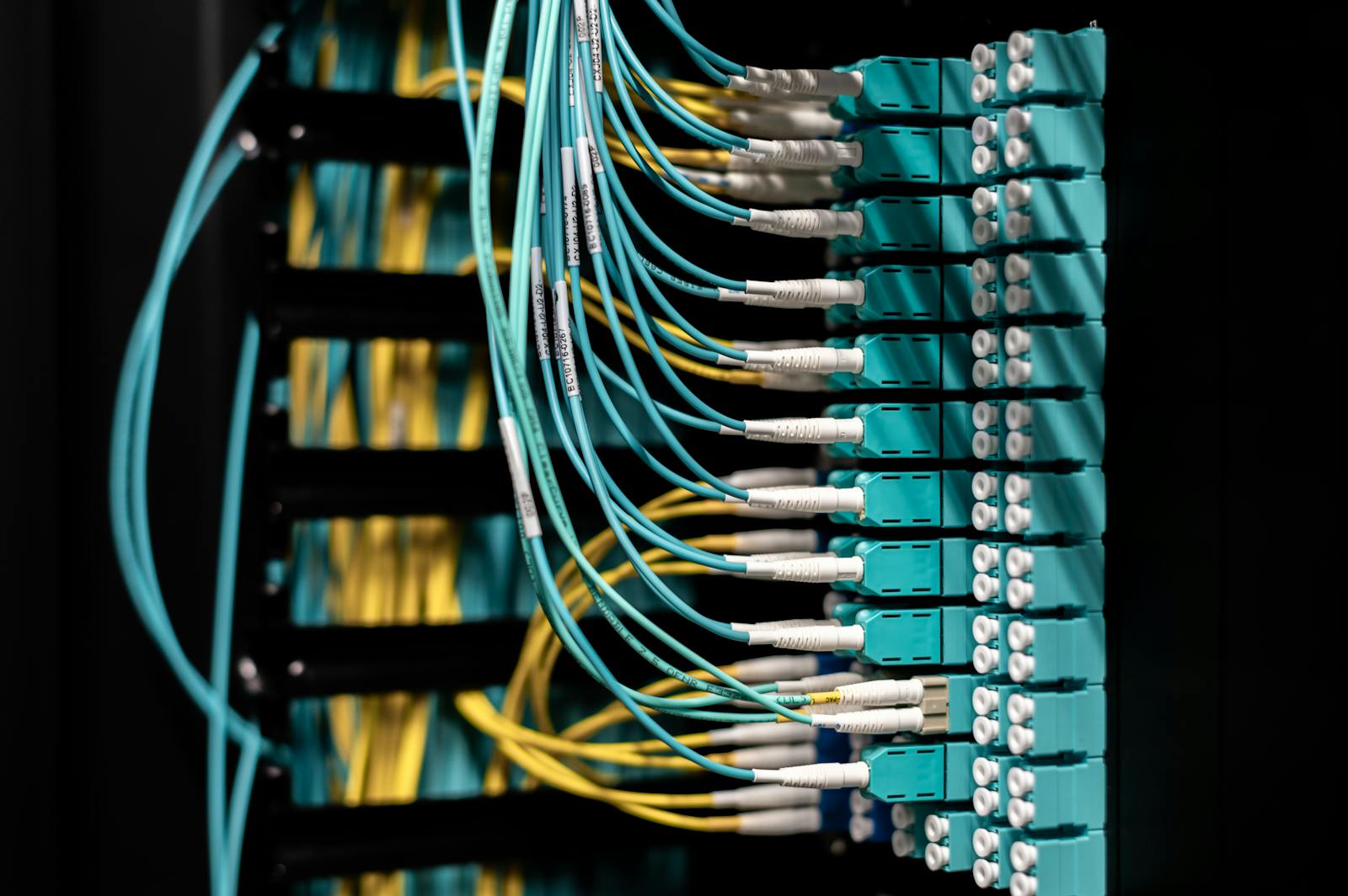
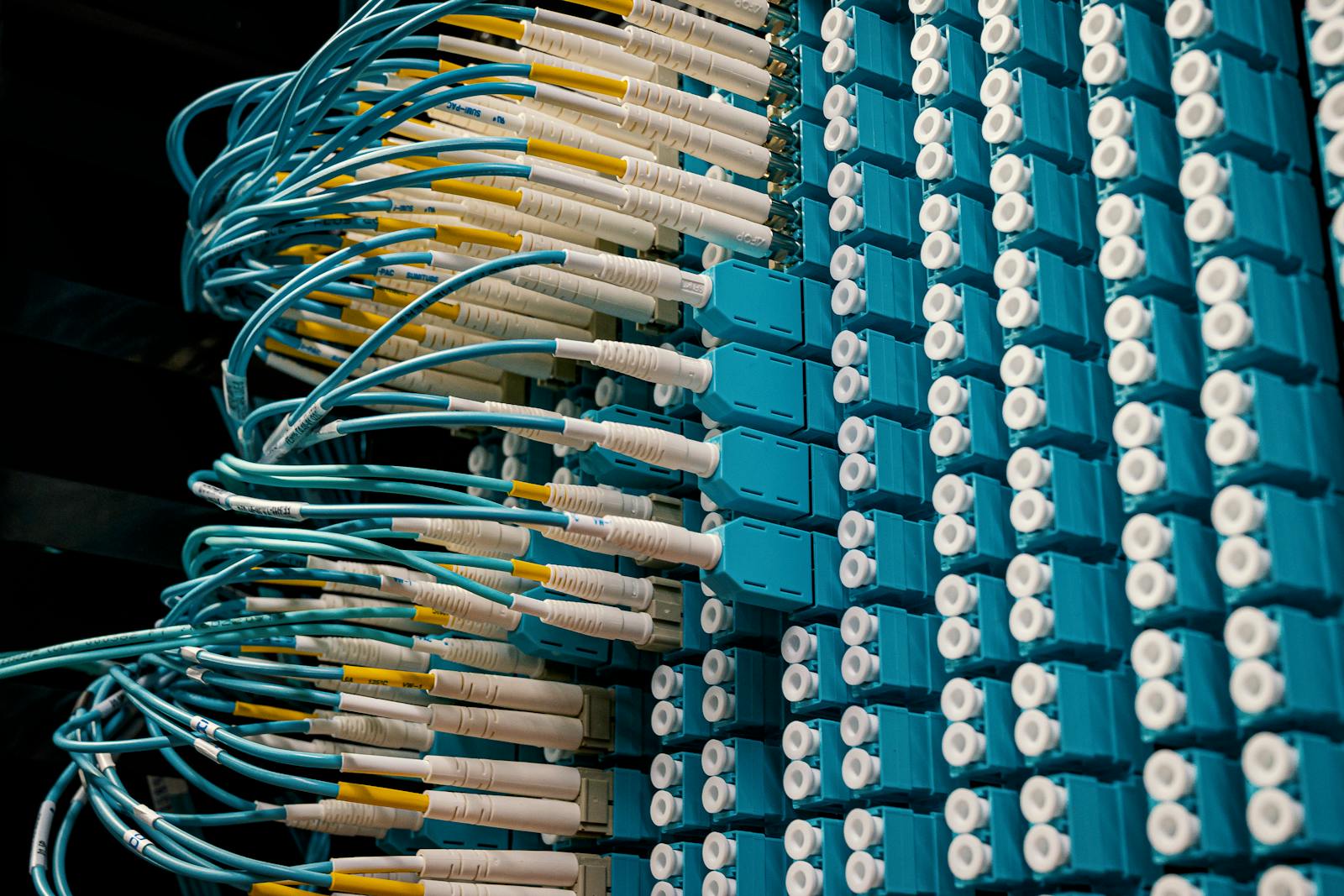
Ninety-five percent of intercontinental internet traffic travels through undersea fiber optic cables. Not satellites, not some ethereal “cloud” floating above us. Cables. Physical, tangible lines of glass fiber, thinner than a garden hose, laid across ocean floors by specialized ships. There are roughly 550 active or planned cable systems worldwide, according to TeleGeography’s Submarine Cable Map, and they represent the actual, material backbone of the global internet. When you send a message from Nairobi to New York, or stream video from Singapore to São Paulo, the data almost certainly travels through one of these cables. And someone owns every one of them.
I spent several months tracing ownership structures, consortium agreements, and landing rights for the major cable systems connecting continents. What emerged was a map that tracks, with eerie precision, onto the geography of colonial extraction. The cables land in the same ports, follow the same routes, and serve the same directional logic as the telegraph lines and trade routes of the 19th century British, French, and Portuguese empires. The technology changed. The topology did not.
The geography of extraction, digitized
Consider Africa. The continent of 1.4 billion people is connected to the global internet primarily through cables that run along its coasts, landing at a handful of port cities that were, in almost every case, colonial trading posts. Djibouti, Mombasa, Lagos, Dakar, Cape Town. These were the nodes of resource extraction for European empires. Today they are the nodes of data transit, and the cable systems landing there are overwhelmingly owned or majority-funded by companies headquartered in the United States and Europe.
The 2Africa cable, one of the largest subsea cable projects ever undertaken, is backed by a consortium that includes Meta, China Mobile International, MTN, Orange, Vodafone, and several others. It will encircle the African continent, with landing points in 33 countries. Meta’s involvement is the most telling. The company has become one of the largest private investors in undersea cable infrastructure globally, and its interest in connecting African markets is inseparable from its interest in capturing African users. Free Basics, Meta’s controversial program offering limited internet access in developing countries, was the soft-power precursor. Undersea cables are the hard infrastructure.
The pattern extends across the Global South. South America’s connectivity to the rest of the world runs primarily through cables landing in Fortaleza, Brazil, a city that served as a key node in Portugal’s Atlantic trade network. Southeast Asia’s internet connectivity is concentrated through chokepoints in Singapore, where I live, and a handful of other former colonial ports. The Strait of Malacca, once the critical bottleneck for spice trade controlled by successive European powers, is now a critical bottleneck for submarine cable routes.
I’m writing this from Singapore, one of the most connected nodes on the planet, sitting at the intersection of dozens of submarine cable systems. The infrastructure advantage I enjoy here is a direct inheritance of this city-state’s role in the British Empire’s communications network. That history didn’t end; it just got fiber optic cladding.
The new landlords of the internet
The ownership shift that should concern everyone happened quietly over the past decade. Historically, submarine cables were built and owned by telecommunications consortia: groups of national telcos who jointly funded construction and shared capacity. This meant that while the geography was colonial, the ownership was at least partially distributed among state-backed or nationally regulated entities.
That era is over. A 2022 analysis from the Atlantic Council’s Digital Forensic Research Lab found that Google, Meta, Microsoft, and Amazon now own or lease approximately 70% of undersea bandwidth globally. Google alone has significant ownership stakes in at least 20 cable systems. These companies are not sharing capacity through consortia. They are building private cables, for their own traffic, on their own terms. Google’s Dunant cable, connecting the United States and France, carries exclusively Google traffic. Its Equiano cable, running from Portugal to South Africa, serves Google’s cloud infrastructure needs in Africa.
This represents a fundamental transformation in who controls the physical layer of the internet. When a handful of private companies own the cables, they control the capacity, the routes, the landing points, and the terms of access. They decide which regions get high-bandwidth connections and which don’t. They determine latency, reliability, and, ultimately, what kind of digital economy is possible in a given country. In my recent piece on how the global south is being surveilled into compliance under the banner of development, I explored how technology platforms extend control through infrastructure that appears benign. Submarine cables are perhaps the most literal version of that dynamic: the physical wires through which digital dependency is maintained.
The Middle East offers a revealing case study in how this plays out. The region’s rapid rise as a digital hub, with massive investments in data centers and cloud infrastructure across the UAE, Saudi Arabia, and Qatar, has driven a surge in new cable projects. But the ownership structures of these cables still tilt toward the established tech giants and the legacy telcos of former colonial powers. The region’s growing market power has given Gulf states more leverage than many Global South nations in negotiating cable landing rights and ownership stakes, but the fundamental architecture of dependency persists. Data flowing between Middle Eastern countries often routes through European hubs before reaching its destination, a digital version of the old imperial pattern where trade between colonies had to pass through the metropole.
Why landing rights are the new territorial concessions
The politics of where a cable lands are as consequential as who owns it. Cable landing stations require government permission, and the negotiations around landing rights are, in practice, geopolitical negotiations. Countries that host landing stations gain economic benefits: data centers cluster nearby, tech companies establish local presences, jobs are created. Countries bypassed by major cable routes are consigned to higher latency, lower bandwidth, and digital marginality.
This creates a dynamic that mirrors the 19th century scramble for telegraph concessions. European powers negotiated exclusive rights to land telegraph cables in colonial territories, giving them control over information flows and, by extension, political and economic influence. Today’s cable landing negotiations involve similar asymmetries. A country like the Democratic Republic of Congo or Madagascar, desperate for connectivity, has limited leverage when negotiating with a consortium led by Meta or Google. The terms of access are set by the cable owners.
Research published by Nicole Starosielski in her book The Undersea Network documents how contemporary cable routes frequently overlay historical telegraph routes, and how the physical landing sites chosen for new cables tend to be the same sites used for over a century. This persistence is partly geological (some coastlines are better suited for cable landings) but largely political and economic. Existing infrastructure, established relationships, and concentrations of capital all favor the same locations that empire favored.
I found this pattern replicated consistently. When I traced the route of the Asia-Africa-Europe 1 (AAE-1) cable, connecting Southeast Asia to Europe through the Middle East, its path through the Suez Canal and Mediterranean follows a route that would be instantly recognizable to a 19th century telegraph engineer. The technology advanced by orders of magnitude. The power geometry barely shifted.
The illusion of a borderless internet
There’s a persistent mythology, cultivated by the technology industry, that the internet is inherently decentralized and borderless. This mythology serves a specific function: it obscures the material conditions of digital connectivity and makes the power relations embedded in infrastructure invisible. If the internet is everywhere and nowhere, then questions of ownership, control, and extraction seem irrelevant.
But the internet is not borderless. It is profoundly physical, and its physicality concentrates power in predictable ways. The roughly 1.4 million kilometers of submarine cable currently in service represent one of the largest infrastructure investments in human history, and the entities that control this infrastructure exercise a form of power that is difficult to overstate. They determine, at the most basic level, who can participate in the global digital economy and on what terms.
When I wrote about the infrastructure that makes upward mobility feel impossible, I was tracing how systems are designed to appear open while functioning as gates. Submarine cable ownership is one of the clearest examples of this dynamic at the global scale. The internet appears open and accessible. The infrastructure layer tells a different story: one of concentration, extraction, and the persistence of colonial geography.
I’m not writing from a position of purity here. I live in one of the most connected cities on Earth, a city whose connectivity is itself a product of the imperial geography I’m describing. Every article I publish, every call I make, travels through cables whose ownership I’ve been documenting. My access to the global internet, and the professional advantages it provides, are direct benefits of a system that disadvantages billions of others.
What would a decolonized internet actually require?
Some countervailing efforts exist. The African Union has been pushing for greater African ownership of submarine cable infrastructure, and projects like the Pakistan & East Africa Connecting Europe (PEACE) cable represent Chinese-backed alternatives to the historically Western-dominated cable landscape. But alternative ownership does not automatically mean equitable ownership. China’s investments in submarine cable infrastructure across the Global South carry their own geopolitical implications, and the structural dynamic of external ownership remains largely intact.
A genuinely decolonized internet infrastructure would require something more radical than changing which great power owns the cables. It would require rethinking the directional logic of connectivity itself: building lateral connections between Global South regions rather than routing everything through Northern hubs, establishing shared governance models for critical infrastructure, and treating submarine cables as something closer to a public utility than a private asset. The International Telecommunication Union has made gestures in this direction, but the momentum is overwhelmingly moving the other way, toward greater private concentration.
The rise of the Middle East as a major market for digital infrastructure could, in theory, provide a model for how regions can leverage economic power to reshape connectivity on their own terms. The UAE and Saudi Arabia are investing heavily in becoming regional data hubs, and their willingness to fund cable projects with significant sovereign ownership stakes is notable. But even this dynamic reinforces a broader point: the ability to shape your own digital infrastructure correlates almost perfectly with existing wealth and geopolitical power. The countries that most need equitable connectivity are the ones least able to demand it.
As I explored in my investigation into the global digital ID infrastructure being built without democratic input, the systems that will define the next century of human life are being designed and deployed by actors with no democratic mandate and minimal accountability. Submarine cables are the physical foundation of those systems. The map of who owns them is a map of who holds power in the digital century. And that map, as I’ve spent months confirming, looks almost exactly like the one drawn by empires two hundred years ago.
The next time someone tells you the internet is democratizing the world, ask them a simple question: who owns the cable?
Feature image by Brett Sayles on Pexels