No Result
View All Result
SUBMIT YOUR ARTICLES
  • Login
Wednesday, April 1, 2026
TheAdviserMagazine.com
  • Home
  • Financial Planning
    • Financial Planning
    • Personal Finance
  • Market Research
    • Business
    • Investing
    • Money
    • Economy
    • Markets
    • Stocks
    • Trading
  • 401k Plans
  • College
  • IRS & Taxes
  • Estate Plans
  • Social Security
  • Medicare
  • Legal
  • Home
  • Financial Planning
    • Financial Planning
    • Personal Finance
  • Market Research
    • Business
    • Investing
    • Money
    • Economy
    • Markets
    • Stocks
    • Trading
  • 401k Plans
  • College
  • IRS & Taxes
  • Estate Plans
  • Social Security
  • Medicare
  • Legal
No Result
View All Result
TheAdviserMagazine.com
No Result
View All Result
Home Market Research Startups

Behavioral economists found that people with substantial savings who live modestly aren’t being frugal – they’ve discovered that the security of untouched wealth provides more psychological satisfaction than any material display ever could

by TheAdviserMagazine
3 weeks ago
in Startups
Reading Time: 7 mins read
A A
Behavioral economists found that people with substantial savings who live modestly aren’t being frugal – they’ve discovered that the security of untouched wealth provides more psychological satisfaction than any material display ever could
Share on FacebookShare on TwitterShare on LInkedIn


Add Silicon Canals to your Google News feed.

There’s a man in my neighborhood who drives a 2011 Camry. Paint’s a little faded. Small dent on the rear bumper. Nothing about the car signals wealth, status, or success.

He’s worth over two million dollars.

I know this because we ended up talking at a barbecue one evening and the conversation drifted to investing. He wasn’t flashy about it. He mentioned it the way you’d mention a hobby — casually, almost reluctantly. He’d been maxing out index funds for twenty-five years. Lived in the same modest house. Never upgraded the car when it still ran fine. Wore clothes from the same three stores he’d been shopping at since his thirties.

Someone at the barbecue later called him “cheap.” I thought that was one of the most inaccurate readings of a person I’d ever heard. He wasn’t cheap. He’d made a decision that most people never make — and that behavioral economics is only now catching up to explaining.

He’d figured out that the feeling of having money is worth more than the feeling of spending it.

The purchase that never loses its value

Here’s what most people don’t understand about savings: they’re not just deferred spending. They’re not money waiting to become something. For people who accumulate substantial savings and choose to live modestly, the savings are the thing. The security itself is the purchase — and unlike almost everything else you can buy, it doesn’t depreciate.

A Princeton University study on the relationship between finances and life satisfaction found a powerful link between concerns over financial security and overall well-being — more powerful, in many cases, than income itself. It’s not how much money you make. It’s whether you feel financially safe. And that feeling of safety comes not from earning more but from needing less of what you earn.

Research published in PLOS ONE put it plainly: saving is a financial behavior that provides an individual with psychological security and boosts overall well-being. And critically, the study found that it’s not just your objective financial situation that predicts saving — it’s your subjective perception of your finances. People who feel financially secure save more, regardless of actual income. The security feeds on itself.

The man with the Camry doesn’t feel rich because of what he owns. He feels rich because of what he doesn’t owe, doesn’t need, and doesn’t worry about. His wealth isn’t on display. It’s in the absence of financial anxiety — and that absence is worth more to him than any car could be.

Why spending stops working

There’s a well-documented phenomenon in behavioral economics called the hedonic treadmill — the tendency for humans to return to a baseline level of happiness after positive or negative life changes, no matter how significant.

Buy a new car and you’ll feel great. For about three weeks. Then it’s just your car. Upgrade your house and the thrill lasts a little longer — maybe a few months. Then it’s just where you live. The brain adapts. What was exciting becomes normal. What was a luxury becomes a baseline. And the moment it becomes a baseline, you need the next thing to feel the same high.

Psychologists Philip Brickman and Donald Campbell coined the concept in 1971, and decades of research have refined it since. The core finding holds: material purchases produce diminishing emotional returns because our psychological systems are designed to normalize new conditions. Your brain treats that new kitchen the same way it treats any change in environment — it acclimates, and the emotional boost evaporates.

People who live modestly despite having money have figured this out, usually through experience rather than theory. They’ve bought the nicer thing. They’ve upgraded. And they noticed — honestly, without pretense — that it didn’t move the needle. The happiness bump was real but temporary, and the ongoing cost of maintaining a higher lifestyle was permanent. The math didn’t work.

The income-happiness research everyone misreads

You’ve probably seen the headline: money doesn’t buy happiness after a certain point.

The original research behind this — a landmark 2010 study by Nobel laureates Daniel Kahneman and Angus Deaton — found that day-to-day emotional well-being rose with income up to about $75,000 per year, then plateaued. More recent work by Matthew Killingsworth complicated the picture, finding that for most people happiness continues to rise with income, but for an unhappy minority (about 15-20%), more money stops helping beyond a certain threshold.

But here’s what both sets of findings actually point to, and what people who live modestly with substantial savings seem to intuitively understand: the relationship between money and happiness isn’t about spending. It’s about security.

The Kahneman-Deaton research showed that low income exacerbates the emotional pain of life’s hardships — divorce, illness, loneliness. What money provides, up to that critical threshold, isn’t luxury. It’s insulation. It’s the ability to absorb a shock without your life collapsing.

People who save aggressively and spend modestly aren’t denying themselves pleasure. They’re buying the most reliable form of emotional protection available: a financial buffer that turns catastrophic events into manageable ones. That buffer doesn’t fade. It doesn’t depreciate. It doesn’t become the new normal. It sits there, quietly, providing a continuous background sense of safety that no watch or handbag or car payment can replicate.

The real cost of looking wealthy

There’s an irony at the center of conspicuous spending that most people never examine: the things that make you look wealthy often make you less wealthy. The car payment, the designer wardrobe, the house that stretches the budget — these are signals of affluence that actually drain the resource they’re supposed to represent.

And they come with a hidden psychological cost. When your lifestyle depends on maintaining a certain income level, every paycheck becomes load-bearing. You can’t take a risk. You can’t take a break. You can’t say no to the job you hate because the mortgage requires it. Your spending has become a cage disguised as a lifestyle.

Research on the behavioral determinants of saving has shown that one of the biggest impediments to building savings isn’t income — it’s self-control in the face of present-tense desires. The life-cycle hypothesis in economics predicted that people would rationally smooth their consumption over a lifetime, saving during high-earning years. But actual human behavior diverges wildly from this model. People spend what they earn. Then they earn more and spend more. The treadmill spins and the savings never materialize.

The people who break this cycle aren’t necessarily more disciplined in a white-knuckle, teeth-gritting way. They’ve just discovered something that makes not spending easier than spending: the feeling of untouched wealth is more satisfying than the feeling of a new purchase. They’ve found the thing that doesn’t adapt.

Security as a permanent emotion

This is the part that’s hard to explain to someone who hasn’t felt it.

There’s a specific quality of calm that comes from knowing you could lose your job tomorrow and be fine for two years. Knowing you could handle an emergency without going into debt. Knowing you could walk away from a situation that isn’t working — a job, a city, a relationship — because your survival doesn’t depend on it.

That calm is not excitement. It’s not a thrill. It doesn’t spike your dopamine the way a new purchase does. But it also doesn’t fade. It’s there when you wake up. It’s there when you check your account. It’s there in the background of every decision you make, quietly expanding your options and reducing your anxiety.

Research on thrift and hedonic adaptation has suggested that individuals would actually spend less and derive more emotional benefit by focusing on eliminating debt, savoring positive experiences, and practicing appreciation — all strategies that align with modest living rather than conspicuous consumption. The practice of thrift, the authors note, has been advocated by thinkers from Socrates to Confucius to Warren Buffett — not because spending is wrong, but because the psychological returns on security consistently outperform the psychological returns on display.

People who live below their means aren’t suppressing desire. They’re acting on a different one — the desire for freedom, stability, and the quiet power of knowing you’re not dependent on anything you could lose.

What the modest millionaire actually understands

The man with the Camry isn’t performing poverty. He’s not making a statement. He’s not even being particularly philosophical about it. If you asked him, he’d probably shrug and say something like: “I just don’t need much.”

But what that sentence contains — when you unpack it through the lens of behavioral economics — is a profound psychological achievement. He’s decoupled his self-worth from consumption. He’s opted out of the hedonic treadmill. He’s discovered that the most durable form of financial satisfaction doesn’t come from buying better things. It comes from not needing to.

That’s not frugality. Frugality is restriction. What he’s doing is closer to freedom — the kind that comes from understanding, whether consciously or not, that the feeling of having enough is the only financial feeling that doesn’t expire.

And the beautiful thing about it? Nobody else has to know. The security doesn’t require an audience. The satisfaction doesn’t need a witness. It works just as well in a faded Camry as it would in a brand-new Mercedes.

Maybe better. Because in the Camry, nobody’s performing anything. There’s just a man driving home, financially secure, psychologically at ease, and completely uninterested in proving it to you.

From the editors

Undercurrent — our weekly newsletter. The sharpest writing from Silicon Canals, curated reads from across the web, and an editorial connecting what others cover in isolation. Every Sunday.

Free. No spam. Unsubscribe anytime.



Source link

Tags: arentBehavioraldiscoveredDisplayeconomistsFrugalliveMaterialModestlypeoplePsychologicalSatisfactionSavingsSecuritySubstantialtheyveUntouchedwealth
ShareTweetShare
Previous Post

Oil prices soar past $100 and Dow futures sink 900 points as Iran war spirals into worst-case fears

Next Post

ACME Solar raises Rs 2,300 crore from NaBFID

Related Posts

edit post
Sales Planning for 2026: What Modern Sales Teams Need to Stay Competitive

Sales Planning for 2026: What Modern Sales Teams Need to Stay Competitive

by TheAdviserMagazine
April 1, 2026
0

A few months ago, during a coaching session, a sales leader asked me a question I’ve heard far too often:...

edit post
There’s a specific exhaustion that belongs to people who spent decades being exactly what everyone needed them to be — and then one day realized they couldn’t remember what they needed

There’s a specific exhaustion that belongs to people who spent decades being exactly what everyone needed them to be — and then one day realized they couldn’t remember what they needed

by TheAdviserMagazine
April 1, 2026
0

Ever look in the mirror and wonder who’s staring back at you? I spent most of my twenties doing exactly...

edit post
There’s a specific kind of loneliness that only hits people who are very good at listening. Everyone trusts them with the heavy stuff, everyone seeks them out when things fall apart, and nobody ever thinks to ask them how they’re doing because the role was assigned so early it became invisible.

There’s a specific kind of loneliness that only hits people who are very good at listening. Everyone trusts them with the heavy stuff, everyone seeks them out when things fall apart, and nobody ever thinks to ask them how they’re doing because the role was assigned so early it became invisible.

by TheAdviserMagazine
April 1, 2026
0

A man I mentored years ago, a young apprentice who could strip and terminate cable faster than anyone I’d seen...

edit post
Psychology says the reason walking away from disrespectful people feels like guilt instead of freedom is because you were raised in an environment where your comfort was never a valid reason to make someone else uncomfortable — and unlearning that equation is the hardest boundary work there is

Psychology says the reason walking away from disrespectful people feels like guilt instead of freedom is because you were raised in an environment where your comfort was never a valid reason to make someone else uncomfortable — and unlearning that equation is the hardest boundary work there is

by TheAdviserMagazine
March 31, 2026
0

Ever feel like you’re the bad guy for walking away from someone who treats you poorly? Like somehow you’re being...

edit post
Psychology suggests if you still write things down on paper instead of your phone you aren’t resisting progress — you’ve found something that works and are practicing the increasingly rare skill of not replacing it simply because something newer arrived, and that skill, applied consistently, turns out to predict a surprising number of other things about how you make decisions

Psychology suggests if you still write things down on paper instead of your phone you aren’t resisting progress — you’ve found something that works and are practicing the increasingly rare skill of not replacing it simply because something newer arrived, and that skill, applied consistently, turns out to predict a surprising number of other things about how you make decisions

by TheAdviserMagazine
March 31, 2026
0

I keep a physical notebook for first drafts and interview notes. I know it’s inefficient. I know there are apps...

edit post
The people who keep their home impossibly clean aren’t necessarily organized. Some of them grew up in chaos and the only variable they could control was their physical space, and they’ve never stopped trying to create order in the one domain that actually responds to effort.

The people who keep their home impossibly clean aren’t necessarily organized. Some of them grew up in chaos and the only variable they could control was their physical space, and they’ve never stopped trying to create order in the one domain that actually responds to effort.

by TheAdviserMagazine
March 31, 2026
0

Compulsive tidiness is one of the most misread behaviours in adult life. We see the spotless kitchen bench, the colour-coded...

Next Post
edit post
ACME Solar raises Rs 2,300 crore from NaBFID

ACME Solar raises Rs 2,300 crore from NaBFID

edit post
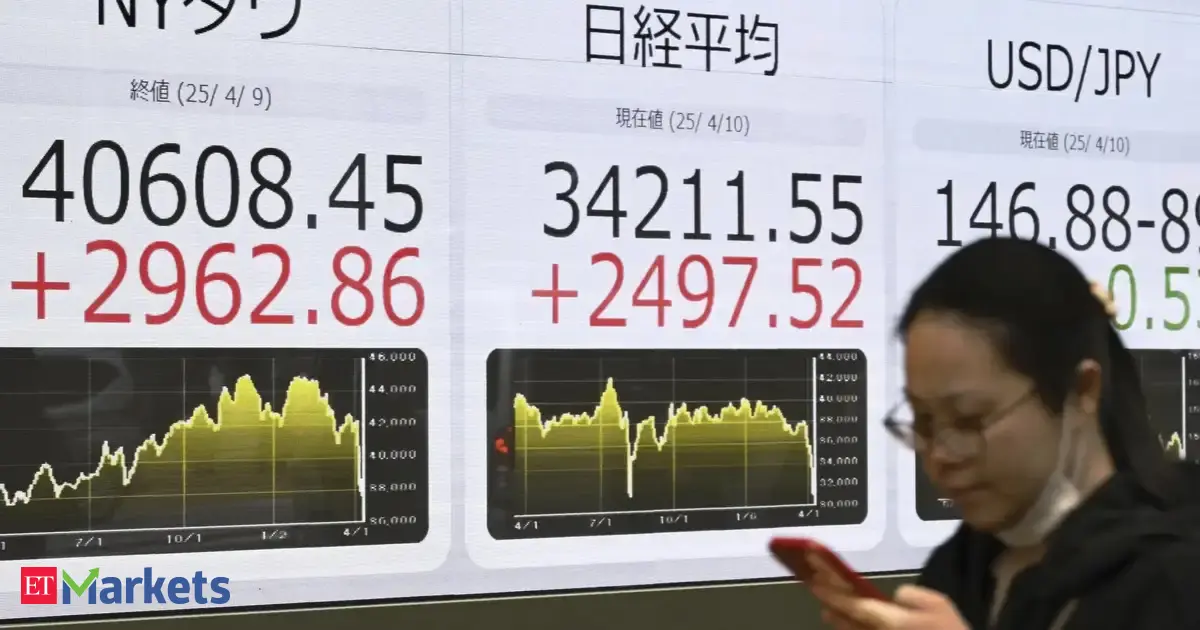
Global Market | Japan’s Nikkei 225 share index falls more than 6% as oil soars over 0 a barrel

Global Market | Japan's Nikkei 225 share index falls more than 6% as oil soars over $100 a barrel

  • Trending
  • Comments
  • Latest
edit post
Massachusetts loses billions in income after millionaire tax

Massachusetts loses billions in income after millionaire tax

March 24, 2026
edit post
Illinois’ Paid Leave for All Workers Act Takes Effect — Every Employee Now Gets Guaranteed Time Off

Illinois’ Paid Leave for All Workers Act Takes Effect — Every Employee Now Gets Guaranteed Time Off

March 27, 2026
edit post
Virginia Permits ADULT MIGRANT MEN To Attend High School

Virginia Permits ADULT MIGRANT MEN To Attend High School

March 30, 2026
edit post
A 58-year-old left NYC for Miami to save on taxes — then retired early thanks to hidden savings. Here’s the math

A 58-year-old left NYC for Miami to save on taxes — then retired early thanks to hidden savings. Here’s the math

March 30, 2026
edit post
Publix to Open 5 New Stores by End of April. See Upcoming Locations.

Publix to Open 5 New Stores by End of April. See Upcoming Locations.

March 20, 2026
edit post
Hospitals in This State Routinely Sue Patients Over Unpaid Bills

Hospitals in This State Routinely Sue Patients Over Unpaid Bills

March 27, 2026
edit post
Checklist for Tax Admin Night

Checklist for Tax Admin Night

0
edit post
Cabinet to discuss mortgage subsidies

Cabinet to discuss mortgage subsidies

0
edit post
Franklin Templeton acquires digital assets investment firm in active crypto management push

Franklin Templeton acquires digital assets investment firm in active crypto management push

0
edit post
Market Talk – April 1, 2026

Market Talk – April 1, 2026

0
edit post
Bitcoin Must Clear K For Altcoins and BTC To Resume Bull Market

Bitcoin Must Clear $69K For Altcoins and BTC To Resume Bull Market

0
edit post
Ariel Global Fund Re-Added Bristol-Myers Squibb Company (BMY) on Pipeline Strength and Attractive Valuation

Ariel Global Fund Re-Added Bristol-Myers Squibb Company (BMY) on Pipeline Strength and Attractive Valuation

0
edit post
Market Talk – April 1, 2026

Market Talk – April 1, 2026

April 1, 2026
edit post
Bitcoin Must Clear K For Altcoins and BTC To Resume Bull Market

Bitcoin Must Clear $69K For Altcoins and BTC To Resume Bull Market

April 1, 2026
edit post
Franklin Templeton acquires digital assets investment firm in active crypto management push

Franklin Templeton acquires digital assets investment firm in active crypto management push

April 1, 2026
edit post
Warren Buffett revives his charity lunch auction—with Stephen Curry. His last one raised  million

Warren Buffett revives his charity lunch auction—with Stephen Curry. His last one raised $19 million

April 1, 2026
edit post
Atmos Credit Cards Boost Bonus Offers, Up to 100K Points (Limited Time)

Atmos Credit Cards Boost Bonus Offers, Up to 100K Points (Limited Time)

April 1, 2026
edit post
5 Reasons Trump’s War on Renewables Is a Costly Mistake Right Now

5 Reasons Trump’s War on Renewables Is a Costly Mistake Right Now

April 1, 2026
The Adviser Magazine

The first and only national digital and print magazine that connects individuals, families, and businesses to Fee-Only financial advisers, accountants, attorneys and college guidance counselors.

CATEGORIES

  • 401k Plans
  • Business
  • College
  • Cryptocurrency
  • Economy
  • Estate Plans
  • Financial Planning
  • Investing
  • IRS & Taxes
  • Legal
  • Market Analysis
  • Markets
  • Medicare
  • Money
  • Personal Finance
  • Social Security
  • Startups
  • Stock Market
  • Trading

LATEST UPDATES

  • Market Talk – April 1, 2026
  • Bitcoin Must Clear $69K For Altcoins and BTC To Resume Bull Market
  • Franklin Templeton acquires digital assets investment firm in active crypto management push
  • Our Great Privacy Policy
  • Terms of Use, Legal Notices & Disclosures
  • Contact us
  • About Us

© Copyright 2024 All Rights Reserved
See articles for original source and related links to external sites.

Welcome Back!

Login to your account below

Forgotten Password?

Retrieve your password

Please enter your username or email address to reset your password.

Log In
No Result
View All Result
  • Home
  • Financial Planning
    • Financial Planning
    • Personal Finance
  • Market Research
    • Business
    • Investing
    • Money
    • Economy
    • Markets
    • Stocks
    • Trading
  • 401k Plans
  • College
  • IRS & Taxes
  • Estate Plans
  • Social Security
  • Medicare
  • Legal

© Copyright 2024 All Rights Reserved
See articles for original source and related links to external sites.