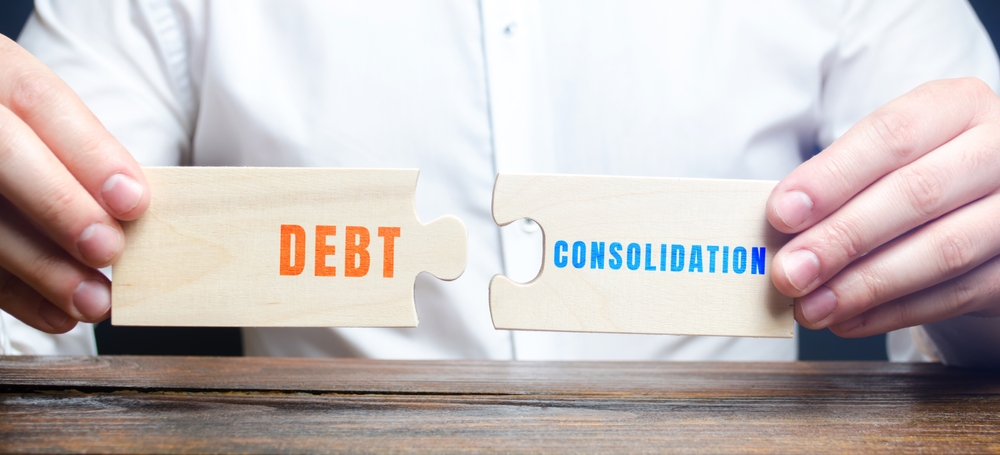
As the “One Big Beautiful Bill” Act and shifting interest rates reshape the financial landscape, many borrowers are rushing to simplify their lives. Debt consolidation—the process of taking out one new loan to pay off several high-interest debts—is the go-to strategy. When done correctly, it can lead to a significant credit boost. However, consolidating debt is not a “risk-free” maneuver. If you don’t understand the mechanics of credit scoring models like FICO 8 or VantageScore 4.0, you might find that your attempts to “fix” your finances actually trigger a sharp drop in your score. Here are the 6 times consolidating debt hurts your credit.
1. Closing Your Oldest Accounts After Payoff
The most common mistake homeowners and students make after a successful consolidation is immediately closing the old, paid-off credit cards. While it feels satisfying to “cut the ties,” this move can be devastating to your score. Length of credit history accounts for 15% of your FICO score. According to TransUnion, closing a 10-year-old account in favor of a brand-new loan can slash your “average age of accounts” overnight. Unless the card carries a high annual fee, it is almost always better to keep it open with a zero balance to anchor your credit history.
2. Triggering Multiple “Hard Inquiries” in a Short Window
Every time you apply for a consolidation loan or a 0% APR balance transfer card, the lender performs a “hard pull” on your credit report. A single inquiry might only drop your score by 5 points, but if you “shop around” across multiple months, those points add up. NerdWallet notes that while scoring models group inquiries for mortgages or auto loans, they are often less lenient with personal loans. If you apply for four different consolidation products in 2026 without using “pre-qualification” tools, you could see a 20-point drop before you even sign a contract.
3. Spiking Your Utilization on a Single Balance Transfer Card
If you use a balance transfer credit card to consolidate, you might inadvertently hurt your “per-card utilization” ratio. Even if your total credit utilization goes down, having one card that is 90% “maxed out” can signal high risk to lenders. Experian warns that high utilization on a single revolving account is a major red flag in modern scoring models. If your new “luxury” consolidation card has a $5,000 limit and you transfer $4,800 onto it, your score may stay depressed until that specific balance is paid down significantly.
4. The “New Account” Penalty
Opening any new line of credit—whether it’s a personal loan or a home equity line—temporarily marks you as a higher risk. This is known as “New Credit” and accounts for 10% of your score. For the first 6 to 12 months, the presence of a brand-new, $0-payment-history loan can act as a “drag” on your score. According to LendingTree, this is a temporary dip, but if you are planning to apply for a mortgage in early 2026, consolidating your small debts right before you apply could result in a higher interest rate on your home.
5. Falling into the “Double Debt” Trap
Consolidating debt hurts your credit most severely when it leads to more spending. This is the “Double Debt” trap: you move $10,000 in credit card debt to a personal loan, leaving your credit cards with a $0 balance. If you haven’t fixed the underlying spending habits, it is incredibly tempting to use those “empty” cards again. Within six months, you could end up with a $10,000 loan and $10,000 in new credit card debt. This doubles your total debt-to-income ratio, which, while not a direct score factor, makes you “unlendable” to most banks.
6. Accidentally Choosing “Debt Settlement” Instead
Many predatory companies in 2026 disguise debt settlement as “debt consolidation.” There is a massive difference. True consolidation involves paying your debts in full with a new loan. Debt settlement involves stopping payments to your creditors so the company can “negotiate” a lower payoff. As Debt.org explains, debt settlement is extremely detrimental to your credit score, as every account will be reported as “Settled for Less Than Agreed,” a mark that stays on your report for seven years and can drop your score by over 100 points.
How to Consolidate Safely
To ensure your consolidation is a win, prioritize “Soft Pull” pre-qualifications to protect your score while shopping. Once the loan is active, set up autopay immediately; since payment history is 35% of your score, a single missed payment on a new consolidation loan will undo all your hard work. Finally, treat your newly “empty” credit cards as emergency-only tools. Consolidation is a tool for restructuring, not a license for a lifestyle upgrade.
Have you ever seen your credit score drop after taking out a consolidation loan, and did you find that keeping your old cards open helped it bounce back faster? Leave a comment below and share your experience with our community.
You May Also Like…
How Veterans Can Qualify for Debt Consolidation Loans Despite Bad Credit
7 Types of People That Debt Consolidation Programs Work For
Credit card refinancing vs. debt consolidation: what do you need to know?
7 Debt-Consolidation Mistakes That Wreck Good Credit
Credit Card Debt Is Quietly Crushing Retirees—And It’s Getting Worse Every Month