In This Article
People love to lament that the rich get richer and the poor get poorer.
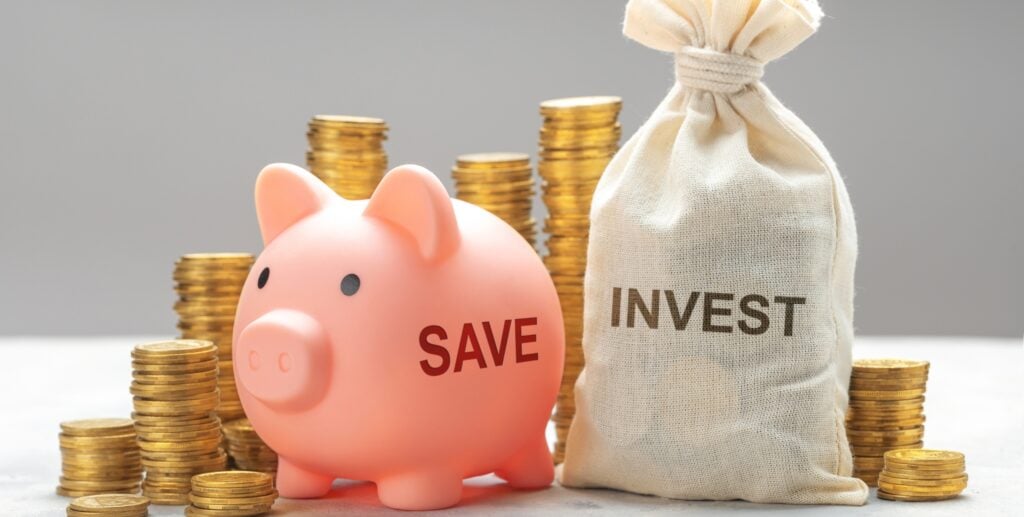
There is, of course, some truth there, but not just because “the system is rigged.” For plenty of practical and mindset reasons, savings begets more savings, and wealth begets more wealth.
Imagine that every dollar in the world was redistributed evenly overnight. In a decade, where would all the money be? I’d argue that almost all of it would be right back where it started, because people either understand how to put money to work, or they don’t.
Here’s what the financial independence (FI) and “stealth wealth” communities understand about how savings compound.
Life Insurance Becomes Optional
My wife and I both earn income, and maintain a high savings rate of 45%-50% (it used to be 65%-70% when we lived overseas, alas).
If one of us kicks the bucket tomorrow, the other would survive just fine financially. That means we can avoid blowing money on life insurance premiums. Read: more money for our savings and investments, rather than inflating insurance corporations’ profits.
And yes, I realize the “infinite banking” crowd throws a fit about questioning life insurance. But they’re making a strategic financial decision that’s less about needing death benefits than about tax savings and long-term arbitrage.
Avoid Long-Term Disability Insurance
The same principle applies to long-term disability insurance. We don’t have to pay for it, because if one of us became unable to work and earn, the other partner could cover our family’s living expenses.
Reach Accredited Investor Status Faster
As an organizer of a co-investing club, I know all too well how many more investment opportunities are available to the wealthy. The faster you reach a $1 million net worth (not including home equity), the sooner you gain access to better investments. These are investments not open to “Joe Sixpack.”
Granted, in our co-investing club, we go out of our way to vet investments that allow non-accredited investors too. But accredited investors still have far more options.
Avoid PMI
When you save more money, you can afford to put a 20% down payment on a home. And that means you avoid paying PMI.
Private mortgage insurance doesn’t help you in the slightest. It protects the lender, not you. It’s literally lost money that you flush away each month.
Avoid it, and you lower your monthly mortgage payment—which lets you save and invest even more money each month.
Higher Down Payment, Lower Mortgage Rate
Homebuyers who put down at least 20% also lower their monthly payment by scoring lower mortgage rates.
Lenders price their loans based on risk. The smaller your down payment, the greater the risk for them, and the more they charge in interest.
You might also like
Higher Credit Score, Lower Interest Rates
A high savings rate also keeps your debt utilization ratio low, which improves your credit score.
And of course, a higher credit score means lower interest rates, not just for your mortgage, but for auto loans, business loans, and every other loan you may one day need to borrow.
Avoid Unnecessary Interest
Less debt means less total interest paid, i.e., less of your money going to line the pockets of lenders.
High savers don’t pay interest on credit card balances. They pay them off in full each month, so they get all the benefits of credit card rewards and none of the interest cost.
They often keep their home mortgage in place, knowing that they can earn higher returns on investments than they pay in mortgage interest. But that’s a strategic choice, not a necessity.
Option for High-Deductible Health Plans and HSAs
My wife and I recently had to decide whether to opt for more expensive health coverage or a high-deductible health plan combined with an HSA.
We have the luxury of that decision, because we save enough money to cover that high deductible if a health crisis comes our way. A family that doesn’t have money in savings has little choice but to take the more expensive, lower-deductible option. (Of course, many do anyway, but then they’re up the creek if a health crisis hits.)
That leaves them unable to open and fund a health savings account (HSA), which comes with the best tax benefits of any tax-advantaged account in the U.S. You can deduct contributions, the investments compound tax-free, and you pay no taxes on withdrawals.
Tax Savings With Sheltered Accounts
The more money you save and contribute to tax-advantaged accounts, the more you save on taxes as well. That could mean lowering your tax bill today with traditional accounts, or reducing how much you need to save for retirement by avoiding taxes on withdrawals with a Roth account.
In 2026, Uncle Sam lets you contribute up to $7,500 to your IRA ($8,600 if you’re over 50). You can also contribute up to $24,500 to a 401(k), or $72,000 for a self-employed 401(k), plus additional catch-up contributions for Americans over 50.
Plus, HSAs let you contribute $4,400 for a single person or $8,750 for a family. I use my HSA as another retirement account, with even better tax benefits and easier withdrawals before 59 1/2.
But to reduce your tax bill, you need to actually save and invest more of your paycheck.
Transportation Savings and Health Boost
My wife and I lived without a car for six years when we lived in South America. After moving back to the States a few months ago, we now share one car. We can get away with that because I work remotely, and we live in a walkable area.
But it comes with other benefits too. Walking and biking around town keeps me healthier than the average American who drives everywhere. That keeps my healthcare costs lower, not just today, but later in my life as well.
I don’t know who first said, “Biking saves you money and runs on fat. Driving costs you money and makes you fat.” Regardless, I offer that simple quote to anyone who argues, “Poor people can’t afford a healthy lifestyle.” It costs a lot less to ride a bike than drive a car.
Lower Target for FI and Retirement
The less you spend, the less you need to retire.
If you follow the 4% Rule and you want to spend $40,000 a year in retirement, you need $1 million. If you want to spend $80,000, you need $2 million. Want to spend $120,000? You need $3 million.
By spending less and investing more, you reach your target faster. But from there, most early FIers continue working and earning—but doing their own dream work. Because they keep earning, they end up building far more wealth than they originally targeted.
Upward Social Spiral
You’ve heard it a hundred times: “You are the average of the five people you spend the most time with.”
When you surround yourself with high achievers, they rub off on you: their greater ambition and work ethic, financial sophistication, and network of people who help boost performance. These are people like business coaches, tax strategists, co-investing club organizers, mastermind organizers, and so on.
For that matter, many of these high-flyers can help you land better jobs or business opportunities. My own business exploded in growth after I joined a mastermind full of high achievers.
By saving and building wealth faster, you can increasingly surround yourself with people who will help pull you up to a higher level, rather than hold you down at your baseline.
The Financial Flywheel
We all know some showoff who earns a huge income, but spends every penny on “looking rich.” They wear the latest fashions, drive a slick car, and live in a posh home.
But even if you earn $200,000 a year, if you spend $200,001, you’re still getting poorer each year, not richer. Meanwhile, someone earning $100,000 but saving half their income will become a millionaire faster than you can say “keeping up with the Joneses.” (Not literally. But you get the idea.)
As I earn more, I find myself spending more not on things, but on ways to improve myself and my future earning potential. I recently hired a business coach to help me grow my business. I work with an attorney and a CPA team on tax treatment. And I joined a high-end mastermind group to surround myself with ultra-high achievers who hold me accountable and help lift me up.
Wealth begets more wealth—if you know how to use your savings to save and earn even more money.