Last May, I wrote about a $1.5 trillion transportation revolution that was ready to take off.
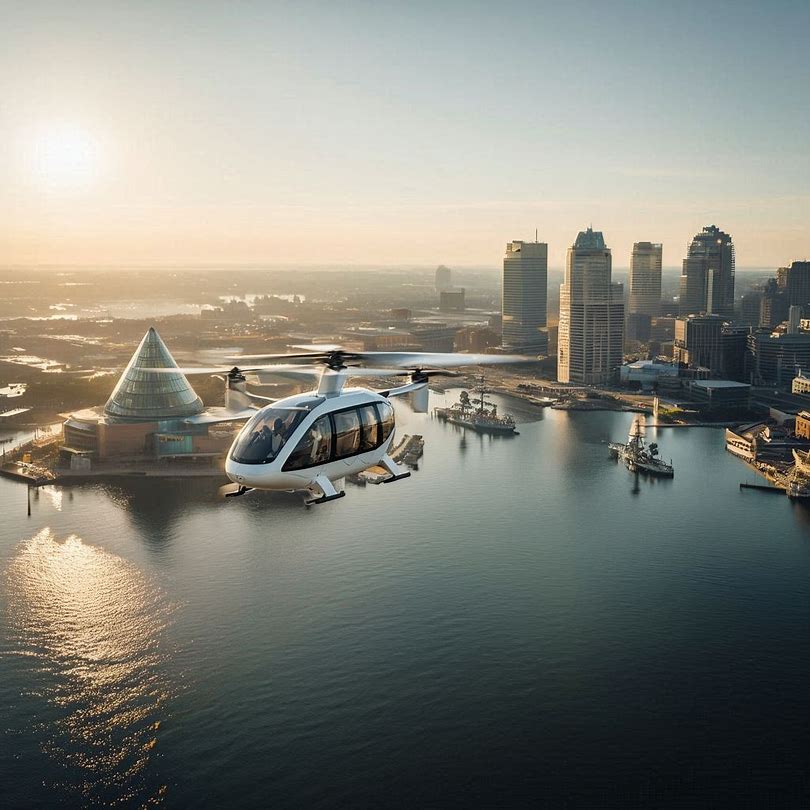
The idea that electric air taxis — small aircraft that take off and land vertically and can carry people across cities — could change how we move through congested metro areas has always been exciting to me. Think quick trips between airports, downtowns and major event hubs that are usually a nightmare to reach by car.
These aircraft, known as eVTOLs, promise quieter flights and far lower emissions than helicopters. But at the time I wrote that article, it seemed like the kind of technology that might need a long runway before it showed up in everyday use.
Today, that runway feels a lot shorter.
Air taxi companies are no longer speaking in general terms about the future. They’re lining up launch plans tied to real places and real events. And a recent move by a large institutional investor suggests that flying taxis are beginning to be treated like a real business.
Which means they could start taking off a lot faster than most people expected.
Institutional Capital Hits the Runway
This month, filings showed that a fund connected to Italian insurance giant Generali opened a position in Archer Aviation (NYSE: ACHR), purchasing roughly one million shares.
It’s not a massive position, but its size matters less than what it represents.
You see, large investors usually don’t rush into early technologies. They typically wait until they can see that a business might actually work, which means it has customers and identifiable paths to revenue.
Archer and its competitors are starting to reach that point.
One of the biggest changes in the air taxi story since last spring is that these companies now have real deadlines attached to them.
Archer has been named the official air taxi provider for the 2028 Los Angeles Olympics. The plan is to operate short-hop flights between venues like SoFi Stadium, the Coliseum and Los Angeles International Airport, with travel times measured in minutes instead of hours.
The aircraft involved, Archer’s Midnight model, is designed to carry four passengers plus a pilot and operate repeatedly throughout the day.
Image: Archer
Large events like the Olympics force coordination across regulators, city planners, infrastructure providers and operators. That kind of pressure will push this project out of testing and into real-world use.
Once that happens, it’s hard to go backwards.
And this progress isn’t limited to the U.S. Archer has also signed an agreement with Serbia that makes it the official air taxi partner for EXPO 2027 in Belgrade, with options for up to 25 aircraft.
That would represent one of the first meaningful fleet deployments for the sector.
At the same time, cities like Dubai are targeting commercial air taxi service as early as 2026, with companies like Joby Aviation (NYSE: JOBY) already working under formal agreements with local transport authorities.
What’s notable is how consistent these early use cases are across regions. They’re aimed at high-value routes where time matters most. Places like airport transfers, event traffic, dense urban corridors and tourism hubs.
Those routes already support helicopter services today, which gives regulators and operators a starting point for airspace management and pricing.
As the air taxi ecosystem has taken shape, the forecasts around it have sharpened too. Some estimates indicate the global air taxi market could grow from around $1 billion today to over $25 billion by 2030.

Morgan Stanley forecasts that 100,000 eVTOLs could potentially be deployed worldwide by 2040, underscoring the significant long-term growth potential of this sector.
And that only covers the aircraft themselves. It doesn’t include the rest of the system needed to make air taxis work, like vertiports, charging equipment, software and air traffic control.
When you add in those pieces, it’s easier to see why Morgan Stanley’s blue-sky scenario suggests that urban air mobility (UAM) could grow into a $1.5 trillion market by 2040
After all, certification work is moving forward and production plans are already taking shape. From here it just depends on execution.
Not that eVTOLs are going to replace Uber or your daily commute any time soon. But the air taxi business is starting to look more defined today. Companies are lining up real ways to make money, from major event transport to fleet sales for airlines and governments.
And institutional investors like Generali are starting to pay attention.
Here’s My Take
Last May, I said flying taxis were nearing an inflection point, and that the next phase would be where progress turns into actual deployment timelines.
Since then, we’ve seen the transition from promises and prototypes to something that long-term investors can actually start to evaluate.
I believe that once regulations and infrastructure are in place, adoption will accelerate quickly. Because the value proposition of faster trips and flexible urban routing is compelling for major cities that continue to add population.
I predicted air taxis would be a part of the Los Angeles Olympics, in a city notorious for traffic congestion.
And they might be coming to your city next!
Regards,
 Ian KingChief Strategist, Banyan Hill Publishing
Editor’s Note: We’d love to hear from you!
If you want to share your thoughts or suggestions about the Daily Disruptor, or if there are any specific topics you’d like us to cover, just send an email to [email protected].
Don’t worry, we won’t reveal your full name in the event we publish a response. So feel free to comment away!