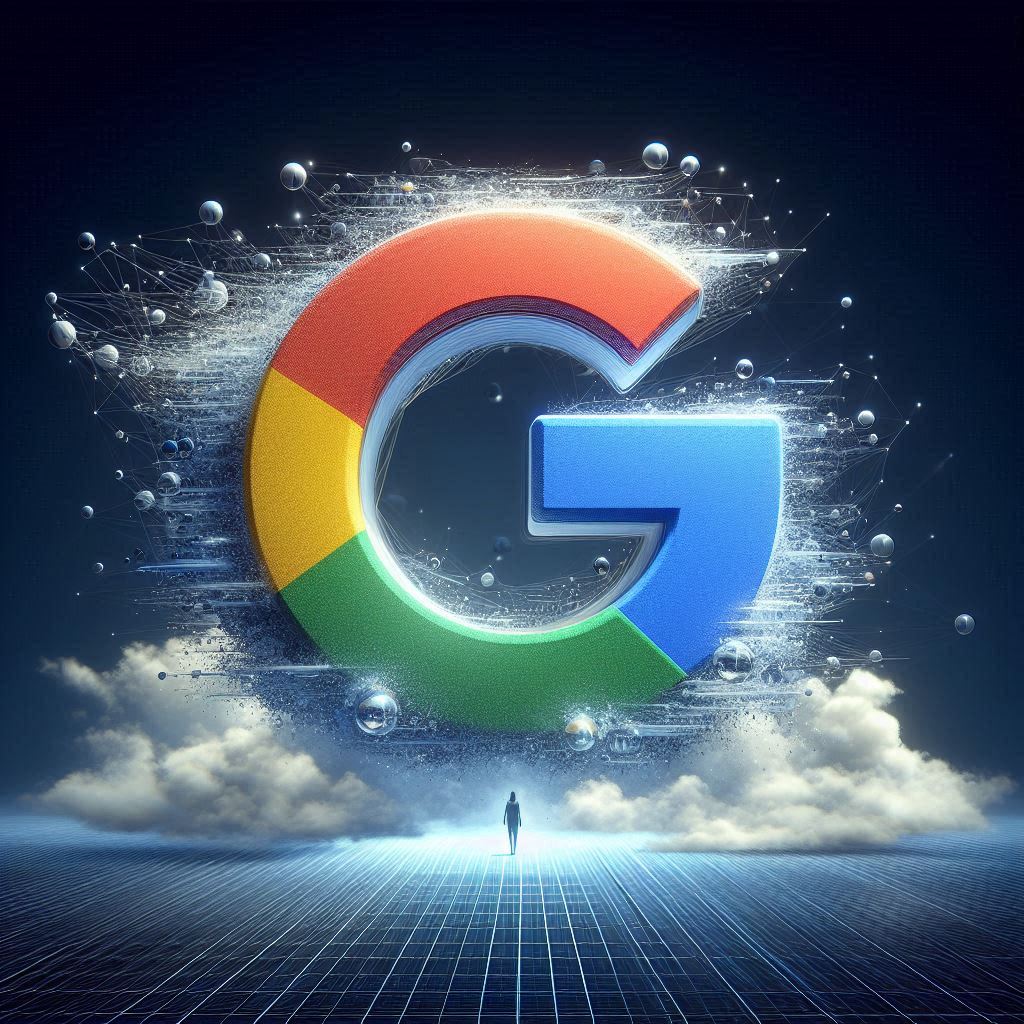
Last month, Google flipped a switch that changes how billions of people will use the internet. And in doing so, it could be dismantling the very system that made it one of the world’s most powerful tech companies.
This happened the moment the company started rolling out its new Gemini 3 AI model inside of Google Search.
Google calls the integration an upgrade. But it’s really the beginning of the end of the search engine as we’ve known it for the past twenty-five years.
And here’s the thing…
Google didn’t choose to make this change. Our changing search habits forced it to happen.
I see this rollout as Google’s clearest acknowledgment yet that its old model is no longer relevant.
Because with Gemini 3 now in place, Google has effectively killed the search engine it created.
Have People Stopped Searching?
In January 2023, ChatGPT hit 100 million monthly users. That made it the fastest-growing consumer app in history.
Image: businessday.ng
A year later, ChatGPT was estimated to be generating more than 1.5 billion visits per month, with a growing share of those visits coming from people asking questions they used to type into Google.
And as more of those everyday questions shifted toward AI tools, Google began to feel the impact.
The biggest drop came in informational queries. In other words, the “what is,” “how to,” and “explain” searches that once defined Google’s core business.
People figured out quickly that these are the exact queries that AI systems handle best. And several analytics firms reported meaningful declines in these categories throughout 2024 and into early 2025.
Google even acknowledged the trend on its 2024 earnings calls, with CEO Sundar Pichai noting that user behavior was “evolving” and that many people were “seeking direct answers to complex queries.”
That’s another way of saying that users were drifting away from the old search format.
Gemini 3 is Google’s answer to that drift.
When you type in a question into Search now, you no longer see a familiar list of websites at the top of the results page. Instead, you see a complete answer to your question.
And it’s written by AI.
This creates a conundrum for the company. Because Google doesn’t want users to go anywhere else for AI-driven results.
But its business runs on clicks. In 2023, around 57% of Alphabet’s revenue came from Search ads.
That’s over $175 billion tied directly to people clicking links.
But AI answers compress everything down into one screen. There’s no second page. Heck, there’s barely even a first page.
And if the AI gives you a clean answer, you might not click anything else at all.
Publishers are already feeling this shift in search habits. In 2024, organic search traffic to large news sites fell between 20% to 30%. And in the first quarter of 2025, several mid-sized publishing networks reported traffic drops of 35% or more.
SEO agencies say informational queries — once the bread and butter of rankings — are the categories disappearing the fastest.
This puts Google in a tight spot.
Because the more complete its AI answers become, the less traffic reaches individual sites. And the fewer clicks the web gets, the more it pushes creators and publishers toward other platforms that compensate them directly.
This is the same cycle that Facebook had to deal with a decade ago. And now it’s come for Google Search.
But even with all these challenges, Google had no choice.
Between 2023 and 2024, multiple surveys showed that over 40% of Gen Z preferred TikTok or ChatGPT over Google for informational queries. Among students, that number was even higher.

Image: emarkerter.com
When consumer behavior changes at that scale, companies can either adapt or fall behind. And Google is choosing to adapt… quickly.
By embedding Gemini 3 into Search, the company is pivoting toward a different type of interface. In this new world, when you ask a question, the AI synthesizes information across the web and you get a direct answer. That means the entire step of “searching” disappears.
In other words, it’s not a search engine anymore. It’s an answer engine.
And it represents a turning point for the entire digital economy.
For two decades, websites were built around the rules of search. They optimized headlines, loaded pages with keywords and published endless how-to guides because Google rewarded those structures with traffic.
But AI doesn’t reward any of that.
It rewards clarity, originality and depth. It looks for information it can trust and content it can summarize accurately.
That means the internet will start to reorganize itself around different incentives.
I imagine we’ll see fewer SEO-driven pages and more detailed explainers. We’ll see more proprietary data and expert analysis. And we’ll see a new push from publishers to license their content directly to AI platforms.
And with Gemini 3 accelerating this shift, we’re heading toward a future where companies that want to stay relevant digitally will have to adapt to this new, answer-driven internet.
Here’s My Take
Google spent twenty years training the world to search through results. But ChatGPT retrained them to ask a question and expect an answer.
So Google is adapting.
Gemini 3’s rollout is the clearest sign yet that Google knows the era of the search engine is over.
And it makes it likely that every major tech company — from social media platforms to news outlets to e-commerce brands — will soon be forced to compete for visibility inside an AI-generated answer box instead of a traditional search page.
That doesn’t mean traditional search will vanish overnight.
But it is a major step toward killing the classic search engine outright.
Regards,
 Ian KingChief Strategist, Banyan Hill Publishing
Editor’s Note: We’d love to hear from you!
If you want to share your thoughts or suggestions about the Daily Disruptor, or if there are any specific topics you’d like us to cover, just send an email to [email protected].
Don’t worry, we won’t reveal your full name in the event we publish a response. So feel free to comment away!