Learning how to practice day trading the right way can be the difference between building strong trading skills or developing bad habits that cost you real money.
Today, I’m going to lay out a clear, structured approach that focuses on discipline, strategy, and repetition — the same way I’ve trained thousands of students to build consistency.
When you treat practice with the same seriousness as real trading, you create the habits that lead to better execution under pressure.
1. Find Demo-Trading Platforms
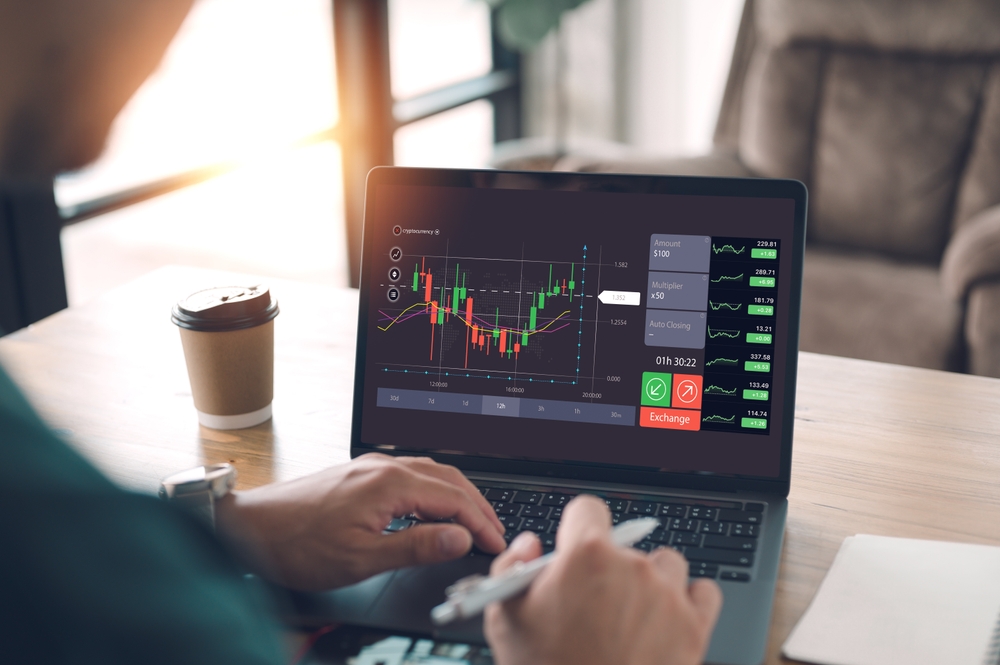
The first step to practicing day trading is finding a reliable demo-trading platform that simulates real market conditions as closely as possible.
You need a tool that lets you test strategies with real-time or delayed market data, using virtual funds. These simulators are often called paper trading platforms, and they allow you to build your skills without risking actual capital.
Over the years, I’ve seen too many beginners rush into trading with real money before they understand risk management, price levels, or proper execution.
That’s why I push students to start with demo accounts — so they can learn how different market scenarios feel in real-time.
The right simulator should have accurate liquidity data, depth of market tools, and a range of assets like stocks, options, or ETFs, depending on what you’re planning to trade.
Practicing with these tools isn’t about fantasy trading.
It’s about replicating real pressure and performance demands, so you’re not caught off guard when your trades have real money behind them.
2. Learn the Foundations
You can’t practice what you don’t understand.
Before jumping into any market simulation, you need to learn the basics of price action, trading strategies, indicators, and how different assets move.
This includes understanding chart patterns, volume, volatility, and how market trends shift based on news or technical triggers.
From my 20+ years in the markets and working with thousands of students, the ones who succeed always take time to study before they trade.
They don’t just follow alerts or rely on others. They build their own knowledge base around timing, setups, and risk.
You need to know the difference between breakout and breakdown patterns, how to manage stop losses, and what signals actually matter in your strategy.
Solid learning gives you the tools to create a strategy that fits your personality and capital. It also saves you from emotional mistakes that come from trading blind.
3. Choose Your Trading Style
Picking a trading style that fits your personality, risk tolerance, and schedule is key.
Whether you’re scalping, momentum trading, or trading morning panics, your strategy should match how you think and what market data you can process under pressure.
Don’t try to trade like someone else — figure out what fits you.
I’ve always gravitated toward short selling morning spikes and trading patterns that repeat. But not every student is suited to shorting, just like not everyone has the timing or tools for scalping.
The best trading style is the one you can stick to consistently, especially when market conditions get volatile.
As you simulate trades, test multiple styles. Watch how different strategies perform and how you react emotionally to different outcomes.
That’s how you find the approach that gives you confidence and structure.
4. Set Up a Proper Simulator
Setting up your trading simulator like a real account is critical if you want your practice to mean anything.
Use the same account balance you expect to start with, the same limit order types, and the same position sizing rules you’ll use when trading live.
This creates consistency in execution and mindset.
I’ve seen too many beginners set their simulators to $1 million accounts, trade 10,000 shares per position, and think they’re “killing it.”
That’s not how real accounts work, and it gives you false confidence.
Whether you’re trading small-cap stocks, futures, or options, you need your trading environment to reflect your actual risk profile.
Use realistic fees, slippage estimates, and live or delayed market data if available. Include trading tools like Level 2 data, indicators, and scanners if your platform allows it.
Realistic practice leads to better results when it counts.
5. Build a Simple, Rule-Based Strategy
You don’t need a complex system to succeed. You need a simple, rule-based trading strategy that can be tested, refined, and repeated.
Your setup should include clear entry and exit rules, risk management levels, and signals that are based on real indicators or price action.
I teach students to start with one pattern and master it.
This builds confidence, sharpens execution, and avoids overtrading. Whether it’s a morning panic dip buy or a breakout above resistance, your strategy should be something you understand inside and out.
No guessing. No hoping.
Write your rules down. Stick to them during paper trading. And track your results so you can see where the strategy works — and where it doesn’t. That’s how real traders improve.
6. Set Up a Daily Routine for Practice
Consistency is one of the most underrated tools in trading.
You need a structured daily routine that helps you build discipline, practice your setups, and refine your strategy.
This includes reviewing premarket market analysis, scanning for potential plays, and running simulated trades based on real-time conditions.
From working with thousands of students, I’ve learned that routines build habits — and habits are what keep you grounded when the market gets emotional.
Just like athletes train every day to prepare for game day, traders need to show up and follow their plan even during the slow days.
A daily routine could involve 1–2 hours of simulated trading, reviewing charts from the past week, and logging key insights into a trading journal.
This process helps you build confidence and improve your ability to execute under pressure.
7. Track Statistics Religiously
Every trade, win or loss, is a lesson.
Tracking your statistics is how you turn market data into meaningful performance analysis.
You should record entry price, exit price, size, time held, and reason for the trade — along with a screenshot and your emotional state.
This isn’t just for record-keeping. It’s how you learn what strategies are working, which ones are draining your account, and how your discipline is holding up under stress.
I teach students to break down every trade like it’s game film — because that’s where the real learning happens.
By reviewing your outcomes over hundreds of trades, you start to see patterns in your own behavior.
Are you cutting losses quickly? Are you following your rules? Your stats don’t lie — and they show you where you need to focus to improve.
8. Start Small with Trading
Once you’ve built confidence through simulation and tracked your performance, it’s time to start small with real trades.
That means using a small size, focusing on one or two setups, and testing your strategy with real emotions and live execution.
Too many beginners think they’re ready after one or two green weeks in a demo. But paper trading doesn’t prepare you for the emotional swings of real money.
That’s why I teach my students to ease in slowly. Focus on process, not profit.
Trading small lets you build experience without risking your entire account balance. It also teaches you the difference between a good setup and a random bet.
Once you prove you can stick to your rules under real pressure, you can scale up.
Practice Your Trading Skills in 2026
Practicing day trading starts with the right simulator and a mindset focused on discipline, not fantasy profits.
Learning the basics, picking a strategy that fits your strengths, and tracking every trade are keys to long-term improvement.
Here are some of the best simulators for day traders to use in 2026 to sharpen their skills and test strategies:
📈 StocksToTrade: All the features of STT available to traders are supported in its real-time paper trading function. Executions without real-time data aren’t worth the paper… they’re not printed on.
📈 Interactive Brokers: Offers a full-featured paper trading account with access to real-time market data, making it great for practicing complex assets like options and futures.
📈 Webull: Beginner-friendly with a sleek platform, real-time market simulation, and built-in indicators. Supports stocks, ETFs, and options.
📈 TradingView: A powerful charting tool with built-in paper trading features. Great for testing price action strategies and technical analysis.
📈 Warrior Trading Simulator: Tailored for momentum traders with access to Nasdaq-level 2 data and customizable trading tools.
📈 NinjaTrader Simulation: Offers a robust simulation engine, ideal for futures and active day traders. Includes detailed performance analysis tools and replay options.
Start small, stay consistent, and treat paper trading with the same seriousness as real trades.
This is a market tailor-made for traders who are prepared. Day trading thrives on volatility, but it’s up to you to capitalize.
Stick to your plan, manage your risk, and don’t let FOMO drive your decisions.
These opportunities are fast and unpredictable, but with the right strategy, you can make them work for you.
If you have any questions, email me at [email protected].
Cheers,
Tim SykesEditor, Tim Sykes Daily