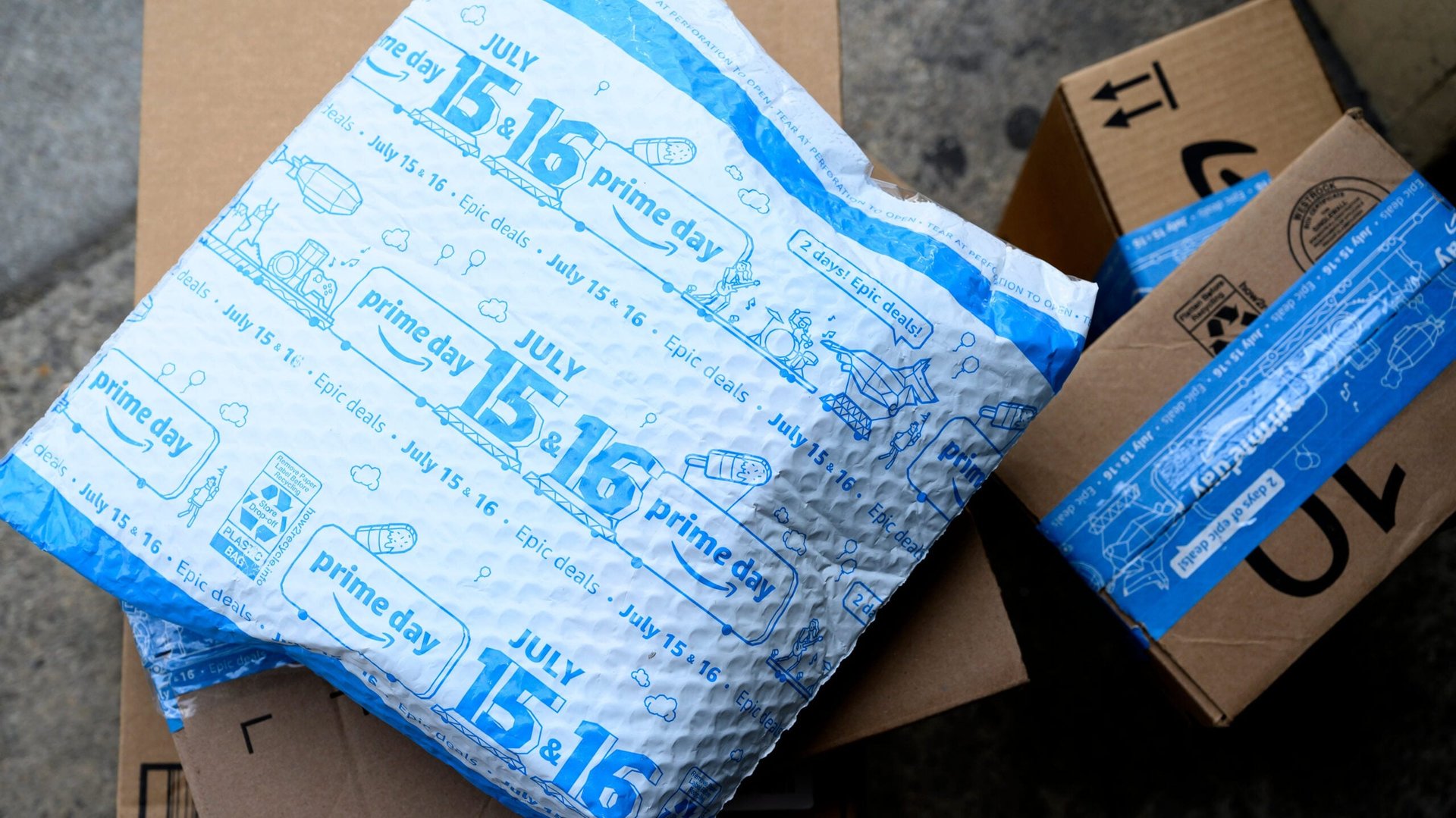
Four major retailers are betting big on wellness this year: Ulta, Target, Amazon and Boots have all made significant forays into wellness in 2026. These moves align closely with signals we’ve identified across consumer behavior, category convergence and wellness-led spending.
Consumers are dedicating more of their time, energy and dollars to their own wellness routines. Mintel has been tracking this shift for several years, identifying wellness as one of the most durable, cross-category growth drivers in consumer markets, and investing to help brands navigate it. We predict (client-access only) the US wellness market will grow 7.5% into 2030. Wellness is moving away from being an adjacent category towards a central growth strategy.
Wellness is a durable, cross-category growth driver
In each case, retailers are leaning on cross-category marketing and merchandising, reflecting an understanding that in consumers’ minds, wellness isn’t one note. Brands organize their products by category, but consumers think in stacks, or the combinations of products and behaviors that enable their desired wellness outcomes. For example, a sleep stack could include a tech product like Brick to cut down on screen time, a melatonin supplement, and a fragrance product like a lavender room spray. Increasing engagement with and investment in wellness solutions means consumers’ stacks are expanding. For brands, consumer centricity requires keeping up with out-of-category innovations.
It’s also an effective cross-selling tactic, and one more multi-brand retailers should tap into. Mintel’s Wellness Personas (client-access only) highlight how different consumers engage with wellness. Thrivers, the most spendy and trend-oriented segment, are actively shopping across beauty and personal care, food and beverage, health tech, vitamins and supplements, and home products. Retailers that can break down silos and effectively cross-merchandise in brick and mortar as well as online will enable more effective product discovery as they aid shoppers in expanding their wellness stacks.

How major retailers are activating wellness
Ulta is all about expertise and enhanced discovery
Ulta Beauty is piloting wellness shop-in-shops, or defined zones within existing stores, with a significant square footage expansion for their wellness assortment and hiring dedicated wellness experts to staff them. This cross-category merchandising encourages shoppers to experiment across product lines and introduces them to a wider range of wellness solutions.
Ulta is meeting consumers where they are. The retailer recognizes that some shoppers are coming in for beauty purchases with a casual interest in wellness, while others are shopping wellness-first. Ulta is poised to capitalize on both, with an increase in basket size from the former and growth as a destination for the latter.
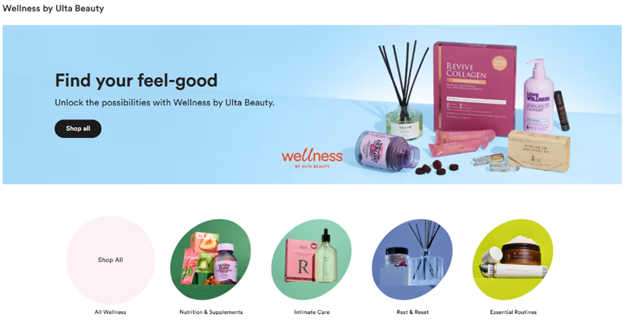
The move comes alongside Ulta Beauty’s TikTok Shop launch. A full 70% of Thrivers (the most spendy and trend-oriented segment) are on TikTok at least once a day, and the TikTok Shop presence offers a more seamless connection from inspiration and discovery to checkout.
Target scales wellness through affordability
Next up is Target. The mass retailer is expanding their wellness assortment by 30% and leveraging both digital and brick-and-mortar channels to capture discretionary dollars in an area consumers increasingly prioritize. It’s no secret that Target has been struggling to recapture the “Tar-zhay” image that’s dwindled over the last few years, and tapping into consumers’ current priorities is essential for a return to form. Their new CEO Michael Fiddelke said that shoppers can expect to see “more change to what we sell and how we sell it than you’ve seen in a decade.”
For that to be successful, customers have to see value. Where Ulta has room to play with premium brands, Target has an imperative to keep prices affordable and is offering many wellness items for under $10. While wellness is largely discretionary, it shouldn’t be out of reach for most consumers. Target’s more accessible pricing will draw in shoppers who previously thought wellness wasn’t for them.
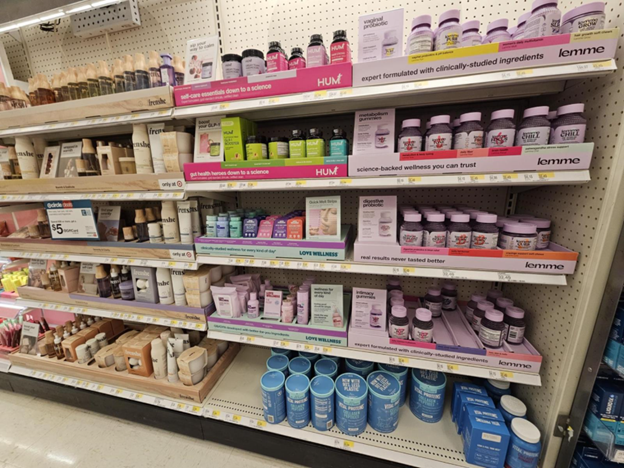
My own target store is displaying trendy VMS brands alongside skincare products, illustrating an understanding that a customer’s solution could be in a gummy vitamin or a serum (or, ideally for Target, both).
Amazon is extending into experience-led wellness
Amazon is a top wellness shopping destination, with 54% of US consumers indicating that the e-commerce behemoth is a go-to for wellness products (client-access only). To tap into that activity, they recently launched a cross-promotional effort with OLLY vitamins that’s all about better sleep. The brands collaborated to offer a sweepstakes prize for a stay in a sleep-themed home in Joshua Tree, California. The Sleep House experience promises immersive, multisensory rest and relaxation for the winners.
As most customers won’t be so lucky, the rest of us can experience the activation through an influencer sponsorship, or with Alexa. Amazon and OLLY are offering a sleep theme through Alexa+. The theme offers sleep tips, a quiz and can help users craft a sleep-enhancing nighttime routine.
Consumers’ wellness experiences are multimodal. Pairing VMS products with an auditory interaction shows an understanding that wellness doesn’t live in one box.
Boots use samples as an entry point into the wellness ecosystem
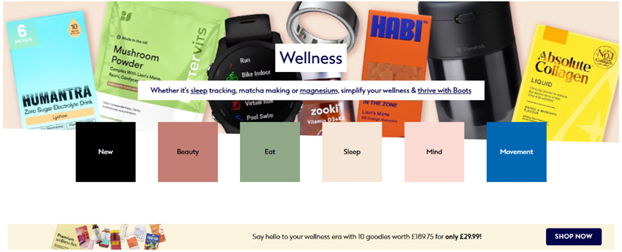
Across the pond, Boots is introducing Wellness Zones to their stores, in a similar effort to Ulta’s stateside experiment. The brand is encouraging pick and mix style samplings to introduce shoppers to new brands, so shoppers don’t have to commit to full size products and price points without testing flavors and efficacy first.
Mintel data shows that UK Thrivers demand myriad benefits from their diets – including strengthening immunity (49%), improving mood (44%) and maintaining healthy brain function (43%). Boots is expanding their wellness assortment and training staff to help shoppers find the right product for their desired wellness outcomes.
Create Winning Wellness Strategies with Mintel
Taken together, these examples show how retailers are using cross-category merchandising and experience-led marketing to tap into consumers’ growing demand for products and services that enhance their health and wellbeing. Winning in this space requires starting with consumers’ wellness outcomes and understanding how your brand can enable or augment their routines.
These examples illustrate some of the key success levers Mintel expects to see from leading wellness retailers:
Tailored expertise, whether human-led in store or AI-led online, will help shoppers cut through an enormous amount of noise to find a personalized combination of products for their desired outcome, driving up conversion rate and basket size.
Accessible pricing expands the addressable market and allows shoppers to lower the stakes when experimenting to see how different products work for them.
Partnerships enable brands and retailers to offer out-of-category solutions for multi-modal wellness routines and can create sticky experiences in digital ecosystems.
As wellness becomes a core retail growth strategy, brands need a clearer view of how consumers build routines across categories. Explore Mintel’s Wellness Platform, helping brands to spot growth opportunities and shape smarter retail strategies.