
From Inflation to Climate Anxiety: Travel Trends by Generation
Across global travel markets, consumers are navigating a shared set of macro pressures, ranging from persistent cost-of-living concerns to growing climate anxiety. However, how consumers react to these influences isn’t uniform. While travel remains a priority across generations, how people travel, spend, and choose destinations is increasingly shaped by age, income, and values.
How is inflation redefining travel habits?
Inflation may have eased from recent peaks, but financial uncertainty continues to loom large and is impacting generational travel trends. Across regions, this has resulted in a widening gap between affluent consumers who continue to spend on premium experiences and more price-sensitive travellers who are recalibrating their expectations around value.
In Europe and the US, this polarisation is particularly visible. Higher-income travellers remain comparatively resilient, showing a greater willingness to invest in premium or luxury holidays even amid economic uncertainty. At the same time, mid-tier travel is being squeezed, with consumers either trading up for perceived quality or trading down in search of affordability: Older consumers, often with greater financial security, are more likely to fund or anchor family and multigenerational trips, helping sustain demand for group travel even as overall caution persists.
Younger generations, by contrast, are adapting through flexibility rather than withdrawal. Gen Z and Millennials are more likely to respond to cost pressures by taking shorter or more frequent trips or prioritising domestic travel, which allows them to control spending. Deal-hunting travel consumer behaviour, such as last-minute bookings, early-booking discounts, and flexible cancellation policies, are increasingly important. Rather than abandoning travel altogether, many consumers are setting stricter budgets and reframing what value means.
In Asia-Pacific, economic uncertainty is playing out differently across markets. In China, holidaying remains resilient despite broader macro pressures, with over 40% of consumers planning to increase spending. However, growth is increasingly tied to value-driven, themed experiences rather than generic offerings. In Southeast Asia, rising living costs are nudging consumers toward domestic travel, with affordability, early-book deals, and cost-efficient options shaping decision-making. Meanwhile, in Japan, affluent consumers are driving renewed momentum in luxury travel trends.
Climate anxiety and sustainable travel trends across generations
Alongside financial pressures, climate anxiety is becoming increasingly influential in shaping travel habits. Younger generations across markets are especially attuned to environmental concerns, factoring climate change and overtourism into their destination choices. This has contributed to growing interest in alternative travel patterns, including domestic trips and so-called “coolcations” in cooler, less-crowded destinations.
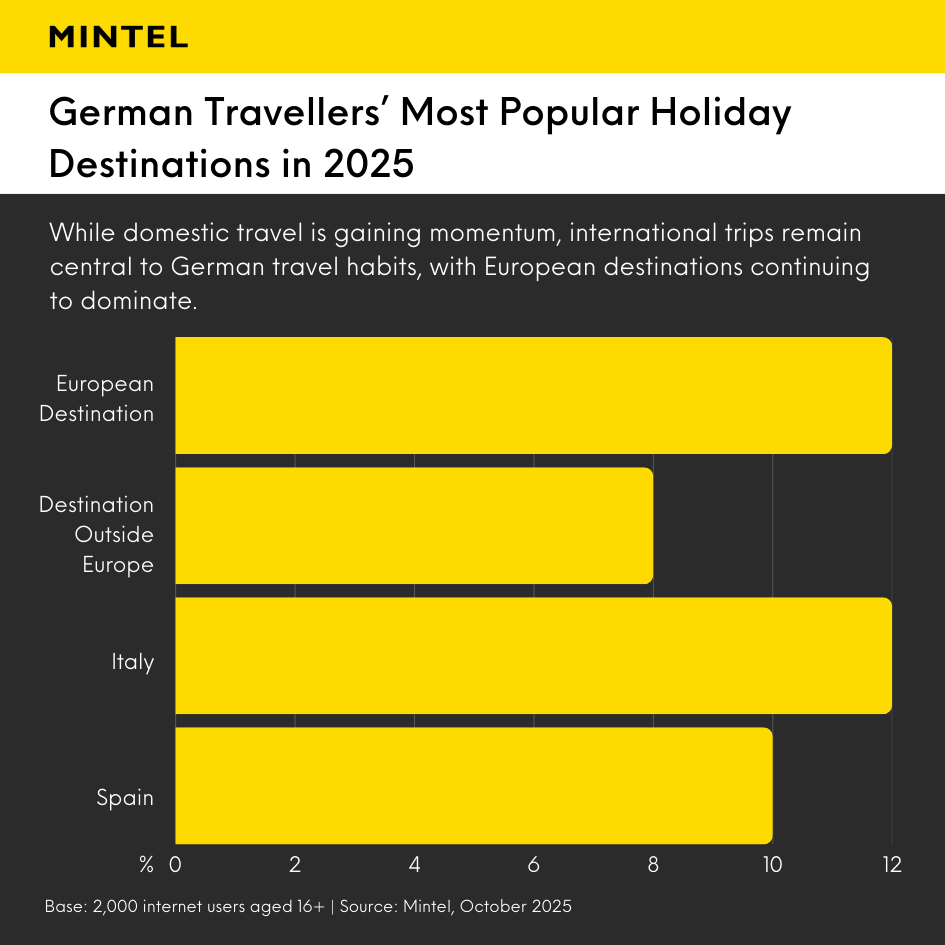
In Western markets, climate considerations are increasingly intersecting with practical decision-making, prompting travellers to reconsider when and where they go on holiday.
In Asia-Pacific, the picture is more complex. While climate change is affecting both physical and mental wellbeing across the region, sustainability is often secondary to other travel motivations — it sits alongside a broader desire for wellness and reprieve, shaping travel attitudes in subtler ways.
Sustainable Travel Trends Across Generations
Across markets, sustainability is becoming an increasingly visible part of travel consumer behaviour, particularly among younger cohorts. However, there is a persistent gap between ethical intent and actual behaviour, shaped by cost sensitivity, convenience, and expectations of where responsibility should sit within the travel industry.
The Say–do gap in sustainable travel
Generation Z travel trends and Millennial travel habits consistently point to high awareness of climate change, yet across markets, stated concern does not always translate into action for these cohorts. In the US, while more than 70% of younger consumers say climate change influences their shopping behaviour (Client Access Only), fewer than a third have meaningfully changed their habits. In Germany, behavioural contradictions are particularly pronounced: Many Gen Z and Millennial travellers justify relaxing eco-friendly standards while on holiday, framing travel as a space for enjoyment rather than restraint. This tension highlights a central feature of sustainable travel trends globally — sustainability matters, but not at the expense of pleasure, spontaneity, or perceived value.
Convenience continues to eclipse climate anxiety
Travel trends by generation show clear differences in how sustainability is weighed against price. Younger travellers are consistently more willing to pay for sustainable options, particularly when these are framed as tangible improvements rather than abstract benefits. In Germany, over half of Gen Z and Younger Millennials say they would pay more for flights using sustainable aviation fuel, compared to just over one-fifth of Baby Boomers.
However, cost remains a major barrier across all regions. In the UK, financial pressure limits willingness to pay a premium for sustainable travel, even among environmentally conscious consumers. In APAC markets, younger travellers show openness to eco-friendly, wellness, and nature-based experiences, but convenience and affordability continue to drive final decisions. As a result, sustainable choices are often deprioritised unless they align closely with existing travel habits or deliver immediate, personal value.

Sustainability is a secondary driver, not a standalone motivator
Sustainability rarely acts as a primary travel motivator on its own. Instead, it functions as a secondary filter influencing brand preference, transport choice, or accommodation selection once core needs such as cost, comfort, and experience have been met.
For older generations, sustainability remains peripheral to travel decision-making, with comfort, familiarity, and reliability continuing to dominate. This reinforces a broader travel industry trend: Ethical considerations are increasingly expected, but they must be integrated into mainstream offerings rather than positioned as trade-offs or sacrifices.
Generational Travel Trends & Motivations: How Are Generational Values Reshaping the Travel Industry?
Rather than being driven solely by destination or price, travel consumer behaviour increasingly reflects a desire to balance escape, enrichment, and connection, shaped by life stage and financial security.

Gen Z and Millennial travel habits are shaped by self-discovery, connection & experience
Among younger travellers, travel habits are deeply tied to identity-building and emotional wellbeing. Gen Z and Millennials are motivated by a combination of escape from daily stress, opportunities for personal growth, and meaningful social connection. Generation Z travel trends show a clear shift toward experience-driven travel, where adventure, wellness, and learning take precedence over traditional sightseeing.
What do younger consumers want from travel experiences? Outdoor experiences, wellness-focused travel, and educational or cultural exploration play a central role, with nature increasingly seen as a space for emotional regulation: 61% of 16 to 34-year-olds in the UK plan holidays with a wellness element. There is also growing appeal in simple, relaxed trips that prioritise time with friends or family over curated, picture-perfect itineraries. This reflects a broader move away from performative travel and towards “living in the moment,” even as social media travel trends continue to shape inspiration and discovery.
Social platforms and digital tools remain critical in shaping travel habits, especially for destination discovery and experience validation. However, motivations are evolving. Younger travellers are increasingly conscious of overtourism and environmental pressures, influencing choices around where — and how — they travel.
Within this group, life stage plays a defining role. Those in their late teens and early twenties are often motivated by emotional recovery, self-discovery, and strengthening social bonds. Older Millennials and younger professionals, particularly those without children, are more focused on self-investment and are seeking travel that enhances quality of life, deepens relationships, and supports long-term personal growth. These Millennial travel habits point toward future travel trends that favour modular, interest-driven experiences over one-size-fits-all holidays.
Generation X travel trends are all about balancing enrichment, comfort & togetherness
Generation X travel trends reflect a more pragmatic approach, shaped by responsibility, financial pressure, and a desire to make travel meaningful without unnecessary friction. For this cohort, travel motivations sit at the intersection of enrichment and comfort, with a strong emphasis on togetherness and shared experiences. Relaxation remains important, but it is frequently paired with learning, heritage, or quality time with family. In markets where multigenerational travel is common, such as the US, Gen X often plays a central coordinating role, balancing the needs of both younger and older travellers.
Wellbeing remains a relevant motivator: Nature-based travel and slower-paced experiences appeal as a way to disconnect from everyday pressures, without sacrificing comfort or convenience. Compared to younger generations, Generation X travel habits show a lower appetite for spontaneity, but a stronger focus on reliability, emotional value, and trips that feel “worth it.”
Baby Boomers travel for relaxation, comfort & emotional meaning
For older travellers, motivations are anchored in relaxation, tradition, and emotional connection. Baby Boomers consistently prioritise comfort, familiarity, and quality, favouring travel experiences that offer rest, cultural exploration, and a sense of being welcomed. Therefore,
beach holidays,
heritage sites,
and historically rich destinations
remain especially appealing.
Travel is often viewed as a reward and a chance to unwind, revisit meaningful places, or enjoy slower, more reflective journeys. In this context, luxury travel trends resonate strongly, particularly when framed around service, comfort, and cultural depth rather than exclusivity alone.
Family plays a central role in shaping motivations. In many cases, older travellers help fund or anchor group trips, using travel as a way to maintain emotional bonds and mark milestones. Skip-generational and multigenerational travel reflect a desire for connection and legacy, reinforcing travel’s role as an emotional investment rather than a purely experiential one.
How Do Different Generations Travel?
Generational differences are shaping preferences around transport modes, trip structure, and destination types, reflecting broader shifts in work patterns, financial flexibility, and lifestyle priorities.
Millennial & Gen Z travel habits are flexible and multi-modal
Generation Z travel trends and Millennial travel habits point to a highly adaptable approach to travel. Younger travellers are more likely to embrace a mix of transport modes depending on trip length and purpose. For short breaks, particularly in urban settings, rail travel holds strong appeal due to convenience, city-based lifestyles, and environmental awareness.
Solo travel is especially prominent among Gen Z and Millennials, with younger consumers more likely to seek premium-class air travel when travelling alone. Accommodation choices, however, vary by life stage. While Millennials show strong interest in hostels and homeshares, there is a gradual shift toward hotels as they age, reflecting changing expectations around comfort and convenience.
Remote and flexible work patterns enable shorter, more frequent trips and support hybrid travel models that blend leisure with personal development.
Generation X travel habits are practical & time-efficient
Generation X tend to favour reliability and convenience, with a strong inclination toward domestic or regional travel and shorter breaks that can fit around work schedules. The growing prevalence of remote and hybrid work has supported this shift, enabling some Gen X consumers to experiment with “bleisure” travel, combining work and leisure in a single trip.
Baby Boomers are looking for comfort-first transportation options
For Baby Boomers, travel habits are firmly rooted in comfort, tradition, and emotional reassurance. Older travellers show a strong preference for hotels over alternative accommodation and are more likely to choose economy flights, prioritising value and convenience over novelty. Homeshares and hostels hold limited appeal for this cohort, reinforcing the importance of familiarity in accommodation choices.
Which Generation Spends the Most on Travel?
Across markets, travel budgets are under pressure, but demand remains resilient. Rather than travelling less, consumers are adjusting how they spend, making trade-offs between frequency, comfort, and experience.
Gen Z & Millennial travel habits: Budget-conscious but experience-driven
Gen Z and Millennials are highly budget-aware cohorts, however, they are deeply committed to travel. While younger travellers are the most likely to plan increasing their holiday spending, they are also the most disciplined in managing costs — 81% of young Brits set daily budgets —, track spending using digital tools, and actively seek destinations where their money goes further.
Travel is often treated as a top savings priority, particularly among higher-earning Millennials. However, this spending is highly strategic. Younger consumers are more likely to splurge on experiences that feel meaningful, such as events, unique destinations, or authentic accommodation, while cutting back elsewhere. Common trade-offs include: Travelling off-peak, accepting lower accommodation standards, shortening trip length, or choosing domestic or nearby destinations in order to maintain travel frequency.
Generation X travel trends: Value-focused and deal-savvy
Generation X travel trends sit at the intersection of aspiration and constraint. This cohort tends to be highly engaged in deal-seeking and cost management. Generation X travel habits reflect a pragmatic approach: Travel remains important, but spending is carefully weighed against broader household priorities.
Across markets, Gen X consumers are more likely to moderate or maintain travel budgets rather than increase them significantly. They are proactive in seeking value, making use of promotions, bundled perks, and flexible pricing to stretch their budgets. While they are willing to spend where it enhances convenience or reduces friction, they are less inclined toward impulsive splurges than younger travellers. Trade-offs tend to focus on timing and structure rather than experience quality. Shorter trips, regional travel, and familiar destinations help manage costs without sacrificing comfort.
Baby Boomer travel habits: Spending on comfort, not compromise
Older travellers are generally more financially resilient and less sensitive to short-term economic uncertainty, allowing them to maintain or increase spending more comfortably. Rather than focusing on one large trip, many prefer multiple holidays, favouring consistency and familiarity over novelty.
Value perception among Boomers is strongly tied to comfort, reliability, and emotional reassurance. They are less likely to use digital budgeting tools or actively chase deals, instead prioritising quality and predictability. When they do spend more, it is typically on elements that enhance ease and comfort, such as accommodation, transport, or service, rather than on experimental or experience-led add-ons.
How Do Booking Habits Differ by Age Group?
While digital tools and social media travel trends are reshaping the travel consumer behaviour of younger cohorts, older generations continue to prioritise familiarity, transparency, and traditional booking channels.
Gen Z & Millennial travel booking is shaped by social media & AI tools
Gen Z and Millennials show a strong reliance on digital-first planning journeys. Across markets, younger travellers are more likely to draw inspiration from social media rather than traditional search engines, with platforms acting as both discovery and decision-making tools. Social content, peer recommendations, and visually led experiences often trigger the initial desire to travel.
They are also early adopters of AI-powered planning tools, using them for inspiration, route planning, and deal-finding. However, this openness to technology coexists with a sense of friction: Many Gen Z and Millennials report feeling overwhelmed by the volume of options available. As a result, they seek specialist advice or cede control to travel professionals, particularly for complex or high-stakes trips. This tension between autonomy and guidance is a defining feature of Millennial and Gen Z travel habits across markets.
Planning and booking timelines among younger travellers are notably compressed. In both Europe and the US, Gen Z and Millennials are increasingly booking trips at shorter notice, often securing transport and accommodation within weeks rather than months: Between 50 and 60% of Gen Z and Millennials plan holidays with less lead time now compared to a year ago.
Research and deal-savviness are key to Gen X travel booking
Generation X travel trends reflect a more measured and pragmatic approach to planning and booking. This cohort is highly engaged in research, but prefers structured journeys that prioritise clarity, value, and reliability. Gen X shows a strong preference for desktop or laptop research, detailed information, and familiar booking platforms.
Across markets, Gen X travellers tend to book further in advance than younger cohorts, although flexibility around timing is often used strategically to secure better value. While digital booking is common, there is significantly less appetite for AI-driven recommendations, with many Gen X consumers expressing caution around automation in the travel industry space.
Baby Boomers book their holidays with confidence, clarity & familiarity
Among older travellers, planning and booking behaviours are shaped by routine and a strong preference for established processes. Baby Boomers are less influenced by digital discovery channels and social media, instead relying on traditional travel brands, prior experience, and independent research. Desktop-based booking and in-person travel agencies remain important, particularly for more expensive or complex trips.
Boomers are the least open to AI-powered planning tools and mobile-first booking journeys, valuing transparent information and human reassurance over personalisation or speed. Their travel habits typically involve longer lead times — only 25% of Boomers in the US book transportation within a month of departure — allowing for careful planning and reducing perceived risk. While some older travellers take advantage of last-minute booking opportunities for affordability or flexibility, this behaviour is driven by timing rather than spontaneity.

The Future of Travel Trends with Mintel
These generational travel trends make one thing clear: A one-size-fits-all approach no longer reflects how consumers plan, book, experience, or evaluate travel. Across markets, age, life stage, and financial security are shaping travel habits in different ways — from how value is defined, to how sustainability is weighed, to how much friction consumers are willing to tolerate along their journey.
For travel and tourism brands, this fragmentation demands more nuanced strategies. Younger travellers prioritise flexibility, experience-led value, and digital-first journeys, but are also more prone to budget constraints, decision fatigue, and a clear say–do gap around sustainability. Generation X sits at the centre of competing pressures, balancing enrichment, comfort, and cost while often coordinating multigenerational trips. Baby Boomers, meanwhile, continue to anchor demand for premium and luxury travel trends, favouring familiarity, service quality, and emotional reassurance over innovation for its own sake.
At the same time, the data highlights opportunities for brands willing to adapt. Across regions, consumers are recalibrating rather than retreating, adjusting trip length, destination choice, transport modes, and booking behaviour to preserve travel as a priority. Brands that can reflect these trade-offs in their offerings, whether through modular experiences, flexible pricing, or clearer value communication, are better positioned to meet evolving expectations.
Sign up for free to Mintel Spotlight for the latest articles and thought leadership pieces for fresh insights from industry experts.
Subscribe to Spotlight
Or explore Mintel’s full range of Travel Industry Reports on Mintel Store.