Published on March 17th, 2026 by Bob Ciura
Monthly dividend stocks have instant appeal for many income investors. Stocks that pay their dividends each month offer more frequent payouts than traditional quarterly or semi-annual dividend payers.
For this reason, we created a full list of over 100 monthly dividend stocks.
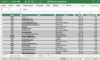
You can download our full Excel spreadsheet of all monthly dividend stocks (along with metrics that matter like dividend yields and payout ratios) by clicking on the link below:

Go Residential REIT (GONYF) is a monthly dividend stock with a high yield.
This potentially makes the stock more attractive for income investors looking for more frequent dividend payouts.
This article will analyze Go Residential REIT in greater detail.
Business Overview
GO Residential REIT was formed in June 2025 by industry veterans Meyer Orbach and Joshua Gotlib. It is an internally managed trust that debuted with a US$410 million IPO in July 2025.
The REIT focuses exclusively on luxury high-rise (LHR) multifamily assets and currently owns a portfolio of five premier properties in Manhattan, New York, totaling 2,015 suites (including the iconic Copper Buildings and Sutton Place North towers).
With a near-perfect 100% occupancy rate, the company’s core strategy relies on a “mark-to-market” initiative to capture rent growth in supply-constrained urban cores while paying out a monthly distribution.
On November 12th, 2025, GO Residential Real Estate Investment Trust reported its initial financial results for the short operating period from July 31st, 2025 (IPO closing) to September 30th, 2025, reflecting just 62 days of operations after the REIT’s formation earlier in the year.
During this abbreviated period, the REIT generated revenue of $27.3 million, supported by strong leasing activity across its newly acquired New York luxury residential portfolio. FFO Adjusted totaled $8.6 million, or $0.15 per unit.
Growth Prospects
GO Residential is an incredibly young REIT, meaning it is difficult to estimate its growth prospects.
For now, it seems like its growth potential is supported by Manhattan’s extreme supply-demand imbalance, characterized by a tight 2.4% vacancy rate and a projected annual rental supply growth of just 1.0% through 2029.
This scarcity positions New York City to lead the top 10 U.S. metropolitan areas with the highest expected annual rent growth at 3.2% over the same period.
These favorable dynamics support the trust’s “mark-to-market” strategy, aimed at capturing the gap between current in-place leases and an average monthly market rent that already stands at $6,818.
The REIT leverages a stable 99.5% committed occupancy rate across its 2,015-suite portfolio as a foundation for internal value-creation initiatives.
Key organic levers there include suite repositioning to command premium rates and amenity monetization across its five marquee properties, which have an average build year of 2011.
External expansion is backed by a ~$2.7 billion appraised portfolio value and a conservative debt profile, with about 58% of its debt maturing in five or more years.
While now concentrated in Manhattan, the REIT’s long-term mandate includes pursuing accretive acquisitions in other major, supply-constrained U.S. markets such as Chicago, Washington D.C., and Los Angeles.
But again, execution risk is a consideration for investors, given the REIT is less than a year old.
For now, we forecast annualized FFO/share growth of 4%, though our estimate is speculative and will likely be adjusted over time as the company matures.
Dividend & Valuation Analysis
Because the REIT was only formed in mid-2025, the lack of a multi-year track record makes any FFO-per-share estimates highly speculative and sensitive to near-term modeling assumptions.
This limited operational history, combined with the volatility of a new listing, makes it difficult to establish a definitive valuation until the trust delivers several quarters of stabilized results.
For now we have set our fair multiple at 16x, reflecting the usual premium New York-based REITs tend to command.
GONYF currently trades for a P/FFO ratio of 14.1, below our fair value estimate. An expanding P/FFO multiple from 14.1 to 16 could boost annual returns by 2.5% per year.
In addition, the stock has a current dividend yield of 6.6%. Including 4% annual expected FFO-per-share growth, total estimated returns are 11.8% per year over the next five years.
Final Thoughts
GO Residential REIT offers a high-quality entry point into the resilient Manhattan luxury high-rise market.
But its limited operating history and reliance on pro-rated management forecasts make today’s FFO-based valuations highly speculative for new investors.
We see annualized returns of 11.8% over the medium-term, but rate the stock a hold due to its very short operating history.
Additional Reading
Don’t miss the resources below for more monthly dividend stock investing research.
And see the resources below for more compelling investment ideas for dividend growth stocks and/or high-yield investment securities.
Thanks for reading this article. Please send any feedback, corrections, or questions to [email protected].