No Result
View All Result
SUBMIT YOUR ARTICLES
  • Login
Thursday, February 19, 2026
TheAdviserMagazine.com
  • Home
  • Financial Planning
    • Financial Planning
    • Personal Finance
  • Market Research
    • Business
    • Investing
    • Money
    • Economy
    • Markets
    • Stocks
    • Trading
  • 401k Plans
  • College
  • IRS & Taxes
  • Estate Plans
  • Social Security
  • Medicare
  • Legal
  • Home
  • Financial Planning
    • Financial Planning
    • Personal Finance
  • Market Research
    • Business
    • Investing
    • Money
    • Economy
    • Markets
    • Stocks
    • Trading
  • 401k Plans
  • College
  • IRS & Taxes
  • Estate Plans
  • Social Security
  • Medicare
  • Legal
No Result
View All Result
TheAdviserMagazine.com
No Result
View All Result
Home Market Research Investing

Decoding PE Buyouts: The Full Financial Picture is in the Consolidated Accounts

by TheAdviserMagazine
12 months ago
in Investing
Reading Time: 5 mins read
A A
Decoding PE Buyouts: The Full Financial Picture is in the Consolidated Accounts
Share on FacebookShare on TwitterShare on LInkedIn


Private equity (PE) buyouts introduce complex financial structures that can make it challenging to track portfolio company performance. The use of acquisition vehicles can obscure financial reporting, meaning investors and analysts can have a difficult time trying to  understand a company’s true debt levels, profitability, and overall financial health.

This post is the second in my three-part series. It explores the differences between operating entity accounts and consolidated group accounts, highlighting key financial discrepancies and what they mean for investment analysis.

In my first post, I demonstrated how the creation of acquisition vehicles to facilitate PE buyouts creates challenges for analyzing performance with the examples Topco, Midco, and Bidco. Understanding these vehicles (illustrated in Exhibit 1) is important to gain a clear understanding of the target group’s financials during the PE ownership period.

Figure 1. Topco, Midco, Bidco.

After a company is acquired in a PE buyout through such a structure, the consolidated accounts of the target group will typically be recorded at the newly created Topco level, while the operating entity will often file unconsolidated accounts. Other acquisition vehicles like Midco and Bidco will also often file unconsolidated accounts. These accounts, however, may lack complete financial information.

In some cases, more than one company in the group structure will file consolidated accounts. The key to recognizing which set of accounts is the most relevant to fully understanding the group finances is to capture the complete group ownership structure and identify which entity sits at the top of the corporate tree.

To further complicate the process, the post-buyout consolidated reporting entity may change during the PE holding period. This often happens, for example, when other investors acquire a stake in the target group or when the target acquires or merges with other firms. All of this can make accurately studying portfolio company performance from pre- to post-buyout a difficult exercise.

Operating entity accounts often do not capture the full group capital structure, and in some cases, may lack financial information altogether. Moreover, they may not reflect the group cost structure, as some costs may be charged further up in the chain – like at Topco level — so profitability may be stronger at the operating entity level compared to at the consolidated group.

What is more, the debt used to finance the acquisition is often only captured on the accounts of one or more of the newly created acquisition vehicles, meaning that the total debt figure on the balance sheet of the target operating firm may be considerably lower than the consolidated group figure. For buyouts which use a considerable amount of leverage to finance the deal, this will naturally be of even greater importance.

private markets button stack 2

Consolidated Group Accounts vs. Operating Firm Accounts

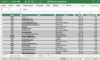
Table 1 shows a buyout transaction and reports the main financials for both the consolidated group entity, created for the purpose of the acquisition, with the unconsolidated operating entity accounts. The transaction is the acquisition of Xtrac Limited, a UK-based firm, by Inflexion Private Equity Partners LLP, a UK-based PE investor.

Three vehicles were created for the purpose of the buyout: Viola Bidco Limited, Viola Midco Limited, and Viola Holdco Limited. The latter vehicle consolidated the group accounts during the PE ownership tenure. Panel A shows the financials of the operating entity, while panel B shows the financials of the consolidated group entity.

There are differences across reported sales, assets, and headcount, all of which are which are lower at the operating entity level. On the other hand, EBITDA (earnings before interest, taxation, depreciation, and amortization) is higher at the operating entity level. Short- and long-term company debt is considerably lower at the operating entity level. These differences will naturally have implications for any financial ratios which are calculated, such as profitability and leverage.

Table 1 illustrates Inflexion Private Equity Partners’ acquisition of Xtrac Limited in 2017 and its exit in 2023. Panels A and B compare financial accounts of both the operating entity (Panel A) and the consolidated group entity (Panel B), which was created for the purpose of the buyout in 2017.

Table 1. Consolidated and Operating Firm Accounts.

I studied a sample of almost 3,000 PE buyouts in the United Kingdom over the past two decades and summarized my findings in a recent research article. In it, I document the difference in PE target group financials between the operating firms and the consolidated group entities. There are marked differences in sales, assets, earnings, debt, and cash holdings.

For example, the median difference in total assets in the first full year after the buyout between the consolidated group accounts and the operating firm accounts is 77%. The median difference in total debt is 244%, underlining that operating entity accounts do not fully reflect the size of the portfolio company’s consolidated group balance sheet. These differences are even greater in buy-and-build deals, where the target company acquires other firms during the PE holding period.

Key Takeaways

Understanding the differences between operating entity accounts and consolidated group accounts is essential for accurate financial analysis of PE-owned firms. The evidence shows major discrepancies in reported assets, debt, earnings, and profitability. Yet, these metrics can significantly impact valuation, risk assessment, and investment decisions.

As the PE landscape evolves, investment professionals must understand how to correctly capture the full picture of a portfolio company’s performance — especially in leveraged buyouts and buy-and-build strategies, where these differences are most pronounced. In my final post in this series, I will examine the implications these differences have when studying the capital structure and performance of PE-owned companies, and I will shed light on important accounting elements of buyout targets’ balance sheets.


Source link

Tags: AccountsbuyoutsconsolidatedDecodingfinancialFULLpicture
ShareTweetShare
Previous Post

SSDI and Alternative Therapies: What Counts as Treatment?

Next Post

Luck vs. Skill: Great Investment Leaders Know the Difference

Related Posts

edit post
Monthly Dividend Stock In Focus: Plaza Retail REIT

Monthly Dividend Stock In Focus: Plaza Retail REIT

by TheAdviserMagazine
February 19, 2026
0

Published on February 19th, 2026 by Bob Ciura Monthly dividend stocks have instant appeal for many income investors. Stocks that...

edit post
What the Market Knows That WACC Doesn’t

What the Market Knows That WACC Doesn’t

by TheAdviserMagazine
February 19, 2026
0

Valuation sits at the heart of strategic decision-making. At its core, it is the trade-off between today’s capital and uncertain...

edit post
Dividend Aristocrats In Focus: Colgate-Palmolive

Dividend Aristocrats In Focus: Colgate-Palmolive

by TheAdviserMagazine
February 19, 2026
0

Updated on Febuaury 19, 2026 by Felix Martinez Over time, the Dividend Aristocrats have proven to be among the best-performing...

edit post
The Housing For the 21st Century Act Brings Game Changers For Multifamily Investors

The Housing For the 21st Century Act Brings Game Changers For Multifamily Investors

by TheAdviserMagazine
February 18, 2026
0

In This Article There’s nothing that unifies opposing political factions faster than seeing homeless encampments in American cities. That’s why...

edit post
10 High Dividend Stocks With Low Volatility

10 High Dividend Stocks With Low Volatility

by TheAdviserMagazine
February 18, 2026
0

Published on February 18th, 2026 by Bob Ciura In the world of investing, volatility matters. Investors are reminded of this...

edit post
Attention Bias in AI-Driven Investing

Attention Bias in AI-Driven Investing

by TheAdviserMagazine
February 18, 2026
0

The benefits of using artificial intelligence (AI) in investment management are obvious: faster processing, broader information coverage, and lower research...

Next Post
edit post
Luck vs. Skill: Great Investment Leaders Know the Difference

Luck vs. Skill: Great Investment Leaders Know the Difference

edit post
Corporate Transparency Act Update | Geiger Law Office

Corporate Transparency Act Update | Geiger Law Office

  • Trending
  • Comments
  • Latest
edit post
Medicare Fraud In California – 2.5% Of The Population Accounts For 18% Of NATIONWIDE Healthcare Spending

Medicare Fraud In California – 2.5% Of The Population Accounts For 18% Of NATIONWIDE Healthcare Spending

February 3, 2026
edit post
North Carolina Updates How Wills Can Be Stored

North Carolina Updates How Wills Can Be Stored

February 10, 2026
edit post
Gasoline-starved California is turning to fuel from the Bahamas

Gasoline-starved California is turning to fuel from the Bahamas

February 15, 2026
edit post
Where Is My 2025 Oregon State Tax Refund

Where Is My 2025 Oregon State Tax Refund

February 13, 2026
edit post
2025 Delaware State Tax Refund – DE Tax Brackets

2025 Delaware State Tax Refund – DE Tax Brackets

February 16, 2026
edit post
Key Nevada legislator says lawmakers will push for independent audit of altered public record in Nevada OSHA’s Boring Company inspection 

Key Nevada legislator says lawmakers will push for independent audit of altered public record in Nevada OSHA’s Boring Company inspection 

February 4, 2026
edit post
Israel’s economy grew 3.1% in 2025

Israel’s economy grew 3.1% in 2025

0
edit post
Copart Reports Second-Quarter Revenue and Earnings Decline Amid Market Softness

Copart Reports Second-Quarter Revenue and Earnings Decline Amid Market Softness

0
edit post
A guide to costs and coverage

A guide to costs and coverage

0
edit post
Monthly Dividend Stock In Focus: Plaza Retail REIT

Monthly Dividend Stock In Focus: Plaza Retail REIT

0
edit post
Global Market Today | Asian stocks fall, oil climbs with Iran in focus

Global Market Today | Asian stocks fall, oil climbs with Iran in focus

0
edit post
United Makes Major Changes to Miles Earning Rates

United Makes Major Changes to Miles Earning Rates

0
edit post
Copart Reports Second-Quarter Revenue and Earnings Decline Amid Market Softness

Copart Reports Second-Quarter Revenue and Earnings Decline Amid Market Softness

February 19, 2026
edit post
Global Market Today | Asian stocks fall, oil climbs with Iran in focus

Global Market Today | Asian stocks fall, oil climbs with Iran in focus

February 19, 2026
edit post
Coinbase Integrates XRP, DOGE, ADA, LTC for Crypto Loans

Coinbase Integrates XRP, DOGE, ADA, LTC for Crypto Loans

February 19, 2026
edit post
How to Qualify for the New ,000 Tip Deduction on 2025 Taxes

How to Qualify for the New $25,000 Tip Deduction on 2025 Taxes

February 19, 2026
edit post
With advisors’ help, investors piled into private markets in 2025

With advisors’ help, investors piled into private markets in 2025

February 19, 2026
edit post
United Makes Major Changes to Miles Earning Rates

United Makes Major Changes to Miles Earning Rates

February 19, 2026
The Adviser Magazine

The first and only national digital and print magazine that connects individuals, families, and businesses to Fee-Only financial advisers, accountants, attorneys and college guidance counselors.

CATEGORIES

  • 401k Plans
  • Business
  • College
  • Cryptocurrency
  • Economy
  • Estate Plans
  • Financial Planning
  • Investing
  • IRS & Taxes
  • Legal
  • Market Analysis
  • Markets
  • Medicare
  • Money
  • Personal Finance
  • Social Security
  • Startups
  • Stock Market
  • Trading

LATEST UPDATES

  • Copart Reports Second-Quarter Revenue and Earnings Decline Amid Market Softness
  • Global Market Today | Asian stocks fall, oil climbs with Iran in focus
  • Coinbase Integrates XRP, DOGE, ADA, LTC for Crypto Loans
  • Our Great Privacy Policy
  • Terms of Use, Legal Notices & Disclosures
  • Contact us
  • About Us

© Copyright 2024 All Rights Reserved
See articles for original source and related links to external sites.

Welcome Back!

Login to your account below

Forgotten Password?

Retrieve your password

Please enter your username or email address to reset your password.

Log In
No Result
View All Result
  • Home
  • Financial Planning
    • Financial Planning
    • Personal Finance
  • Market Research
    • Business
    • Investing
    • Money
    • Economy
    • Markets
    • Stocks
    • Trading
  • 401k Plans
  • College
  • IRS & Taxes
  • Estate Plans
  • Social Security
  • Medicare
  • Legal

© Copyright 2024 All Rights Reserved
See articles for original source and related links to external sites.