No Result
View All Result
SUBMIT YOUR ARTICLES
  • Login
Saturday, January 24, 2026
TheAdviserMagazine.com
  • Home
  • Financial Planning
    • Financial Planning
    • Personal Finance
  • Market Research
    • Business
    • Investing
    • Money
    • Economy
    • Markets
    • Stocks
    • Trading
  • 401k Plans
  • College
  • IRS & Taxes
  • Estate Plans
  • Social Security
  • Medicare
  • Legal
  • Home
  • Financial Planning
    • Financial Planning
    • Personal Finance
  • Market Research
    • Business
    • Investing
    • Money
    • Economy
    • Markets
    • Stocks
    • Trading
  • 401k Plans
  • College
  • IRS & Taxes
  • Estate Plans
  • Social Security
  • Medicare
  • Legal
No Result
View All Result
TheAdviserMagazine.com
No Result
View All Result
Home Market Research Economy

Why War Matters | Mises Institute

by TheAdviserMagazine
1 month ago
in Economy
Reading Time: 4 mins read
A A
Why War Matters | Mises Institute
Share on FacebookShare on TwitterShare on LInkedIn


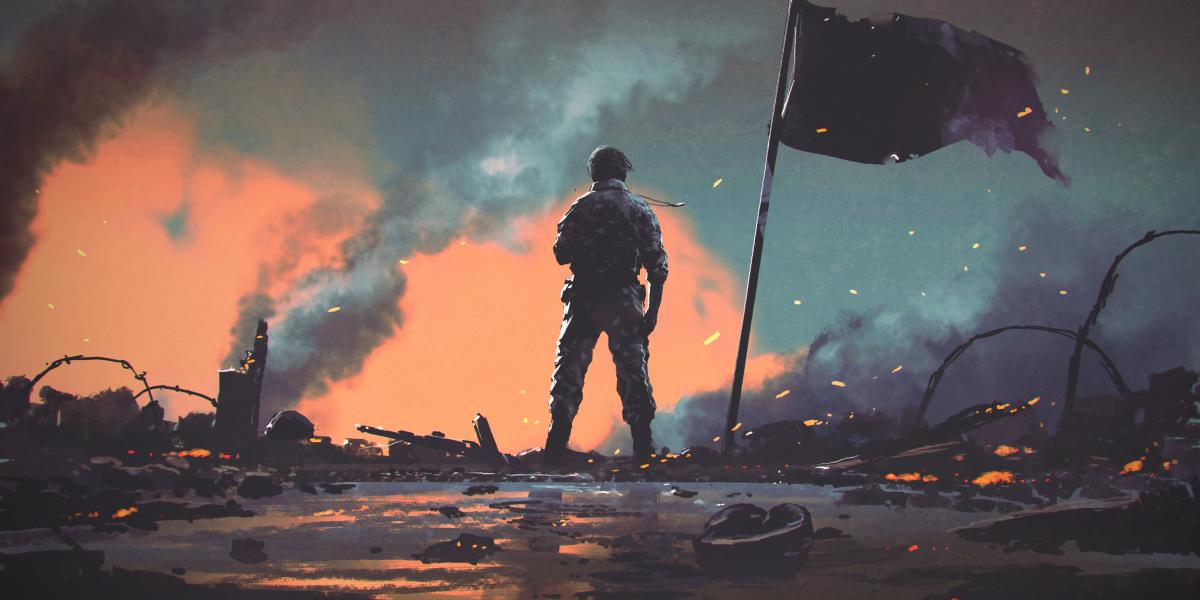
“I am getting more and more convinced the war-peace question is the key to the whole libertarian business,” Murray Rothbard wrote to his friend Kenneth Templeton in 1959. Rothbard had seen an article recently rejected by National Review in which he proposed a return to a restrained foreign policy and nuclear disarmament by both the USSR and United States. This marked one of the moments that would push Rothbard to abandon the New Right of William F. Buckley Jr.

Rothbard saw the fusionists, who dominated National Review, as sacrificing libertarianism on the altar of a global empire. Unlike Buckley, Rothbard did not believe:

[W]e have got to accept Big Government for the duration—for neither an offensive nor a defensive war can be waged, given our present government skills, except through the instrument of a totalitarian bureaucracy within our shores.

Today, some fans of our current administration will brow beat those with concerns over foreign policy and aid, accusing you of not being sufficiently focused on domestic issues. In a perfect world, one could stay focused on affordability (or immigration, as these brow beaters typically focus on) and other kitchen table issues. But the issue of war and peace touches every aspect of American life whether one wants to admit it or not.

You should not allow gatekeepers, who selectively brow beat over foreign policy as a focus, to prevent you from caring about foreign policy.

Rothbard himself emphasized the connection between leviathan state and war machine in his essay “War Collectivism in World War I” and The Betrayal of the American Right more broadly. What James Burnham described as the managerial revolution, and his disciple Sam Francis would dub “corporate liberalism,” was born in the wake of war. Buckley was correct in saying that the Cold War could not be waged without a totalitarian bureaucracy, because bureaucracy is an inherent form of government, especially the warfare state.

The permanent war economy needed to feed the military machine entails interventionism on many fronts.

First is the issue of financing. Per the usual Sowellian phrase, government must finance its expenditures through taxation, borrowing, or inflation. The financing of these conflicts through taxation and borrowing will result in mass capital consumption as military spending draws resources into it and the bill is fronted to the general public in a tax bill or in their stock market openly. This is why, as Dr. Joe Salerno explains, modern warfare has become dominated by inflation financing of conflicts. Inflation’s false profits bring about a slow erosion of the capital structure of the economy as interest rates are held low and firms consume out of their profits. Under a system of ordinary economic calculation, the costs of war would be evident. But under inflationism, there is a slow, insidious inflation required that hollows out industries that produce real goods and a wealth transfer to military contractors and their allies.

This inflationism is done so through a central bank that buys up government debt either directly in the case of the Bank of England in World War I, or indirectly through banks like the Federal Reserve today. The lowering of interest rates increases the values of equities as new money enters the economy. This pushes up artificially, not only the capital value of war producers who provide nothing of value to real consumers, but also homes and other assets held. This includes homes that many people will long struggle to buy.

The costs of war must be adequately analyzed further, as we left total war for a permanent garrison state long ago and thus don’t mobilize the entire economy as we did in World War II.

A far more insidious relationship exists between state and economy, and especially state and university.

The New Left—led by Students for a Democratic Society—would often accuse their universities of being complicit in the warfarism of the government and rightly so. The National Science Foundation and other agencies connected with the warfare state issue grants to research universities to conduct research that is no longer concerned with discovering the truth, but rather to make weapons, chemicals, and technology to be used in war. Some laud some of the achievements to be brought from this relationship––the internet and some radio technologies for one––but these represent a small amount of total research spending.

The brightest minds become sucked into research universities to produce research for military contractors and government. They then are recruited to military contractors, to create more weapons, and think tanks, to advocate more interventionism in all its forms. A brain drain from productive to destructive society occurs. The joke amongst young people of “working for Lockheed Martin and discarding morals” is a prospect under our garrison state.

This is just a cursory analysis of the economic effects of the warfare state that underpins foreign policy. One might go further to look at media, propaganda, civil liberties, and the like. But the simple fact remains that, contra the critics, foreign policy does matter to the average American.

All of American life has become intertwined with the military-university-industrial complex. We cannot ignore it and a refusal to recognize it demonstrates either gross ignorance or intentional gatekeeping to justify foreign policy.

Is it really in the interest of the average American to destroy their economy to police the world, to defend gross actions by foreign governments, or subsidize international trade for other nations? Is it worth the brain drain, the destruction of real businesses, and the unaffordability of new homes? Foreign policy is not its own isolated aspect of politics, it must be confronted as the trojan horse for the leviathan state it is.



Source link

Tags: InstituteMattersMisesWar
ShareTweetShare
Previous Post

Inward investment up or down? Treasury stresses the bright side

Next Post

Rooftop solar panels become mandatory on new houses

Related Posts

edit post
Coffee Break: Ancient Travelers and Artists, an Enigmatic Devonian Giant, and a Thinking Cow

Coffee Break: Ancient Travelers and Artists, an Enigmatic Devonian Giant, and a Thinking Cow

by TheAdviserMagazine
January 23, 2026
0

After one full year the grim news on the science front – all fronts really – this Coffee Break is...

edit post
Trump withdraws ‘Board of Peace’ invitation to Carney in widening rift with Canada

Trump withdraws ‘Board of Peace’ invitation to Carney in widening rift with Canada

by TheAdviserMagazine
January 23, 2026
0

U.S. President Donald Trump withdrew the invitation to Canada to join his "Board of Peace," days after Prime Minister Mark...

edit post
The Polish Rothbardians | Mises Institute

The Polish Rothbardians | Mises Institute

by TheAdviserMagazine
January 23, 2026
0

Those living in Generation Z are tired of the welfare-warfare state that has dominated political life in America from well...

edit post
The Deportation Labor Shock – Econlib

The Deportation Labor Shock – Econlib

by TheAdviserMagazine
January 23, 2026
0

Mass deportation is often framed as a pro‑worker policy. Remove unauthorized immigrants, the argument goes, and native wages will rise...

edit post
Fauci Knew Natural Immunity Was Real BEFORE Vax Mandate

Fauci Knew Natural Immunity Was Real BEFORE Vax Mandate

by TheAdviserMagazine
January 23, 2026
0

Newly released emails show that Anthony Fauci KNEW that natural immunity was more effective than the COVID vaccine. If you...

edit post
Market Talk – January 22, 2026

Market Talk – January 22, 2026

by TheAdviserMagazine
January 22, 2026
0

ASIA: The major Asian stock markets had a green day today: • NIKKEI 225 increased 914.25 points or 1.73% to...

Next Post
edit post
Rooftop solar panels become mandatory on new houses

Rooftop solar panels become mandatory on new houses

edit post
Links 12/10/2025 | naked capitalism

Links 12/10/2025 | naked capitalism

  • Trending
  • Comments
  • Latest
edit post
Most People Buy Mansions But This Virginia Lottery Winner Took the Lump Sum From a 8 Million Jackpot and Bought a Zero-Turn Lawn Mower Instead

Most People Buy Mansions But This Virginia Lottery Winner Took the Lump Sum From a $348 Million Jackpot and Bought a Zero-Turn Lawn Mower Instead

January 10, 2026
edit post
Utility Shutoff Policies Are Changing in Several Midwestern States

Utility Shutoff Policies Are Changing in Several Midwestern States

January 9, 2026
edit post
80-year-old Home Depot rival shuts down location, no bankruptcy

80-year-old Home Depot rival shuts down location, no bankruptcy

January 4, 2026
edit post
Tennessee theater professor reinstated, with 0,000 settlement, after losing his job over a Charlie Kirk-related social media post

Tennessee theater professor reinstated, with $500,000 settlement, after losing his job over a Charlie Kirk-related social media post

January 8, 2026
edit post
Warren Buffett retires on December 31 and leaves behind a manual for a life in investing

Warren Buffett retires on December 31 and leaves behind a manual for a life in investing

December 27, 2025
edit post
Elon Musk Left DOGE… But He Hasn’t Left Washington

Elon Musk Left DOGE… But He Hasn’t Left Washington

January 2, 2026
edit post
SPOUSAL REFUSAL IN FLORIDA – IT SOUNDS HARSH, BUT IT CAN OFTEN BE THE EASIEST (OR ONLY) WAY TO GET MEDICAID

SPOUSAL REFUSAL IN FLORIDA – IT SOUNDS HARSH, BUT IT CAN OFTEN BE THE EASIEST (OR ONLY) WAY TO GET MEDICAID

0
edit post
Biggest number of job vacancies since 2022

Biggest number of job vacancies since 2022

0
edit post
The FHA Took Care of Its Piggy Bank—Investors Have a Big Reason to Care About That

The FHA Took Care of Its Piggy Bank—Investors Have a Big Reason to Care About That

0
edit post
CSX railroad profit slips 2% as shipping demand remained weak and severance costs hurt results

CSX railroad profit slips 2% as shipping demand remained weak and severance costs hurt results

0
edit post
Trump’s Greenland ‘deal framework’ and tariff backdown confuse

Trump’s Greenland ‘deal framework’ and tariff backdown confuse

0
edit post
Trend Pulse Confirms Structural Weakness

Trend Pulse Confirms Structural Weakness

0
edit post
Trend Pulse Confirms Structural Weakness

Trend Pulse Confirms Structural Weakness

January 23, 2026
edit post
Dow ends lower after topsy-turvy week, as Intel’s outlook weighs on market sentiment

Dow ends lower after topsy-turvy week, as Intel’s outlook weighs on market sentiment

January 23, 2026
edit post
Homeless outreach nonprofits bulldozed a tent with a man sleeping inside, lawsuit says

Homeless outreach nonprofits bulldozed a tent with a man sleeping inside, lawsuit says

January 23, 2026
edit post
Electric Companies Are Raising Minimum Charges This Winter

Electric Companies Are Raising Minimum Charges This Winter

January 23, 2026
edit post
Dormant Bitcoin Wallets Show Continued Activity Despite Sub–Six-Figure Prices

Dormant Bitcoin Wallets Show Continued Activity Despite Sub–Six-Figure Prices

January 23, 2026
edit post
The thing Boomers miss most about their own parents that they can’t seem to recreate with their adult children—and the 8 reasons why

The thing Boomers miss most about their own parents that they can’t seem to recreate with their adult children—and the 8 reasons why

January 23, 2026
The Adviser Magazine

The first and only national digital and print magazine that connects individuals, families, and businesses to Fee-Only financial advisers, accountants, attorneys and college guidance counselors.

CATEGORIES

  • 401k Plans
  • Business
  • College
  • Cryptocurrency
  • Economy
  • Estate Plans
  • Financial Planning
  • Investing
  • IRS & Taxes
  • Legal
  • Market Analysis
  • Markets
  • Medicare
  • Money
  • Personal Finance
  • Social Security
  • Startups
  • Stock Market
  • Trading

LATEST UPDATES

  • Trend Pulse Confirms Structural Weakness
  • Dow ends lower after topsy-turvy week, as Intel’s outlook weighs on market sentiment
  • Homeless outreach nonprofits bulldozed a tent with a man sleeping inside, lawsuit says
  • Our Great Privacy Policy
  • Terms of Use, Legal Notices & Disclosures
  • Contact us
  • About Us

© Copyright 2024 All Rights Reserved
See articles for original source and related links to external sites.

Welcome Back!

Login to your account below

Forgotten Password?

Retrieve your password

Please enter your username or email address to reset your password.

Log In
No Result
View All Result
  • Home
  • Financial Planning
    • Financial Planning
    • Personal Finance
  • Market Research
    • Business
    • Investing
    • Money
    • Economy
    • Markets
    • Stocks
    • Trading
  • 401k Plans
  • College
  • IRS & Taxes
  • Estate Plans
  • Social Security
  • Medicare
  • Legal

© Copyright 2024 All Rights Reserved
See articles for original source and related links to external sites.