No Result
View All Result
SUBMIT YOUR ARTICLES
  • Login
Tuesday, February 10, 2026
TheAdviserMagazine.com
  • Home
  • Financial Planning
    • Financial Planning
    • Personal Finance
  • Market Research
    • Business
    • Investing
    • Money
    • Economy
    • Markets
    • Stocks
    • Trading
  • 401k Plans
  • College
  • IRS & Taxes
  • Estate Plans
  • Social Security
  • Medicare
  • Legal
  • Home
  • Financial Planning
    • Financial Planning
    • Personal Finance
  • Market Research
    • Business
    • Investing
    • Money
    • Economy
    • Markets
    • Stocks
    • Trading
  • 401k Plans
  • College
  • IRS & Taxes
  • Estate Plans
  • Social Security
  • Medicare
  • Legal
No Result
View All Result
TheAdviserMagazine.com
No Result
View All Result
Home Market Research Economy

Thoughts for Your Penny – Econlib

by TheAdviserMagazine
8 months ago
in Economy
Reading Time: 3 mins read
A A
Thoughts for Your Penny – Econlib
Share on FacebookShare on TwitterShare on LInkedIn


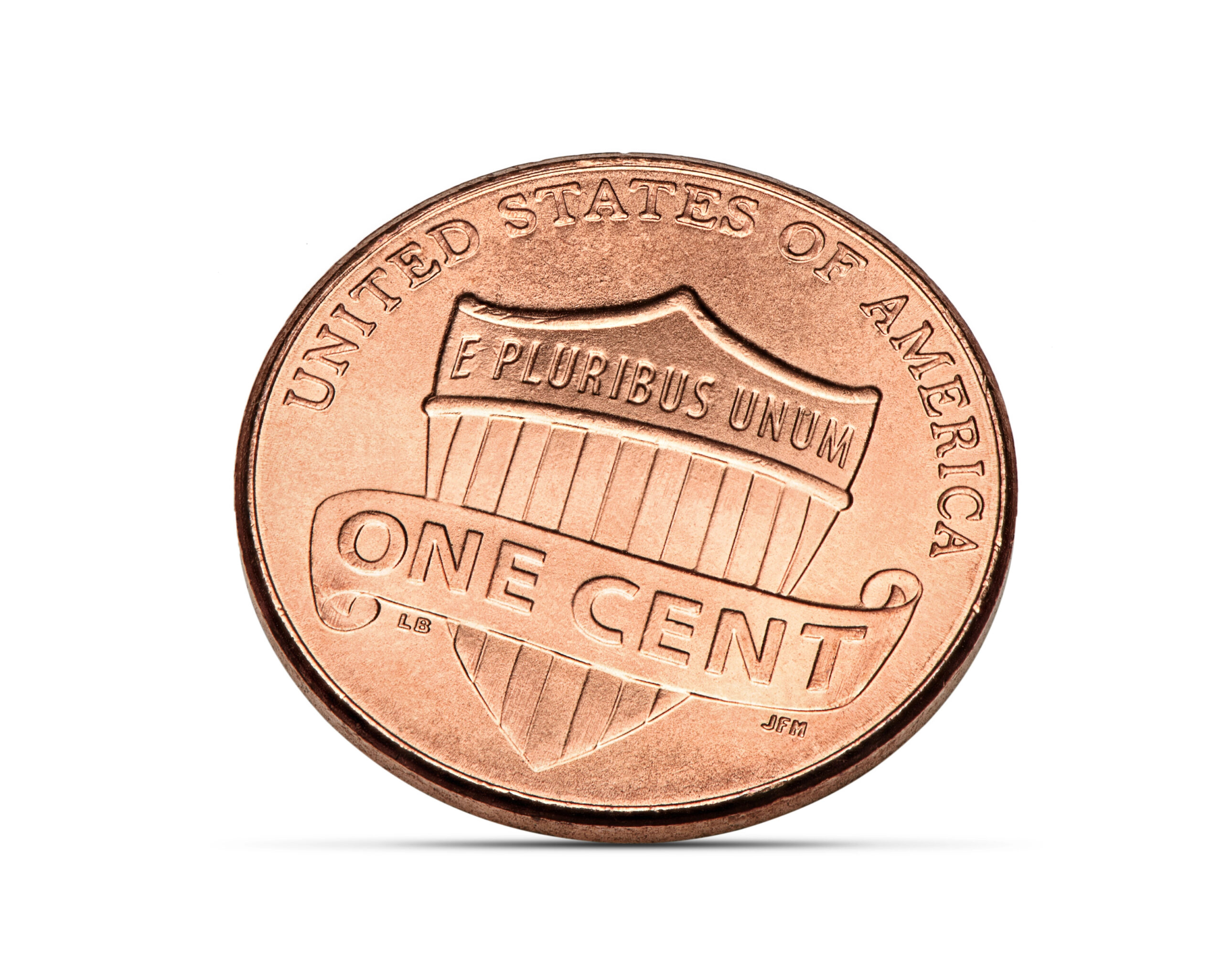
I’m glad that co-blogger Scott Sumner took on one of the fears about ending the production of pennies.

His post made me realize that I had neglected to post on my article on the demise of the penny that I published at Hoover in March. The article is “Thoughts for Your Penny?“, Defining Ideas, March 13, 2025. No, I didn’t come up with that great title. My editor did.

Some highlights:

The US government makes a pretty penny (pun intended) on seigniorage. It’s not as much as it used to be because more and more people use credit cards and even cryptocurrency to buy goods and services. Still, it’s a good amount.

The biggest gain from seigniorage is on the $100 bill. Printing one costs the federal government just 9.4 cents. So, when the feds spend this $100, they make a nice profit of $99.90. Not bad. Printing a $1 bill costs the feds 3.2 cents. So even on a $1 bill, the feds make 97 cents.

But minting small coins loses money for the feds. In its 2024 Annual Report, the US Mint reports the cost of producing each coin denomination. The cost of producing a penny was $0.03. In other words, the cost of producing a penny was three times the value of the penny. Interestingly, the feds went underwater even on the nickel, whose cost, at $0.11, was over twice the value of the nickel. That’s why I stated earlier that the federal government should stop producing nickels also. It isn’t until you get to the dime that you find a coin that the feds make money on. Interestingly, the cost of producing a dime, at $0.045, is less than the cost of producing a nickel.

That surprised me at first, but it shouldn’t have. First, the nickel is bigger than the dime. Second, the nickel and the dime are made up of almost the same metals. The nickel is made up of 75 percent copper and 25 percent nickel; it’s actually an alloy called cupronickel. Interestingly, since 1866, except for a period during World War II, when the US government wanted nickel for military uses, nickels have been made of cupronickel. The dime is made up of a copper core within an outer layer of cupronickel; the overall composition of a dime is 91.67 percent copper and 8.33 percent nickel. Unlike with the nickel, the dime’s composition has changed dramatically. Before the Coinage Act of 1965 removed silver from dimes, dimes were composed of 90 percent silver and 10 percent copper. I still have some silver dimes and quarters hidden away in my sock drawer. It should be obvious why the feds changed the composition of the dime: with increases in the price of silver, producing a dime the pre-1965 way was a losing proposition.

And:

Because the bigger gains would come from getting rid of the penny, not the nickel, that’s what I’ll focus on here. How would we make the transition?

First, no real transition would be necessary for the vast majority of transactions. Most people use credit cards or debit cards to buy items. If you bought an item on your Visa card for, say, $19.99, the merchant could charge you $19.99. No penny would need to change hands. Let’s say that that’s the only thing you bought that month and that you pay off your credit card in full each month. You would pay the credit card either by transferring funds from your bank electronically, or, as is rare now, writing and sending in a check. Again, no pennies would be necessary.

So, the only transition required would be for people who pay cash. How would that work? We can look to Canada for guidance. Under Conservative former prime minister Stephen Harper, Canada’s Royal Mint quit producing pennies in May 2012, and Canada’s government stopped distributing them in February 2013. I go to my cottage in Canada every summer and the few times I have paid cash, it has been seamless. If the bill came to, say, $19.97, the cash register rounded down to $19.95. But if the bill were $19.98, the cash register rounded up to $20.00. Interestingly, pennies are still legal tender in Canada, but for the past ten years, I have not seen anyone using them. Gone are the days with the little dish on the retail counter labeled “Take a penny, leave a penny.” There’s no need.

Read the whole thing.


Source link

Tags: EconlibPennythoughts
ShareTweetShare
Previous Post

LPL, Edward Jones, others to pay $9M-plus for overcharges

Next Post

Factory work is overrated. Here are the jobs of the future

Related Posts

edit post
December retail sales were flat, falling well short of estimate

December retail sales were flat, falling well short of estimate

by TheAdviserMagazine
February 10, 2026
0

Consumer activity slowed sharply for the December holiday shopping season amid a spate of rough weather, tariff impact and persistently...

edit post
WWIII The Documentary | Armstrong Economics

WWIII The Documentary | Armstrong Economics

by TheAdviserMagazine
February 10, 2026
0

When Zelensky became president, I warned that all of my sources said that this was the man selected by the...

edit post
Will Commodity Sports Last? – Econlib

Will Commodity Sports Last? – Econlib

by TheAdviserMagazine
February 10, 2026
0

If you wanted to bet on the Super Bowl this past weekend, you had options. You may have bet with...

edit post
Orban: Ukraine Is Our Enemy

Orban: Ukraine Is Our Enemy

by TheAdviserMagazine
February 10, 2026
0

Hungary’s Viktor Orban declared that anyone attempting to dismantle his nation’s energy supply is an “enemy.” “Anyone who says this...

edit post
Trump’s Stochastic Election Attacks, AIPAC Misfire

Trump’s Stochastic Election Attacks, AIPAC Misfire

by TheAdviserMagazine
February 9, 2026
0

Thus far, the U.S. mid-term election year of 2026 is defined by two competing trends: Trump’s stochastic attacks against the...

edit post
The Challenge of Distinguishing History from Fiction

The Challenge of Distinguishing History from Fiction

by TheAdviserMagazine
February 9, 2026
0

Writers of historical fiction do not necessarily depict events that actually happened. Even though their narratives are constructed around events...

Next Post
edit post
Factory work is overrated. Here are the jobs of the future

Factory work is overrated. Here are the jobs of the future

edit post
How to Verify Made in USA Labels and Stop Overpaying for Fake American Products

How to Verify Made in USA Labels and Stop Overpaying for Fake American Products

  • Trending
  • Comments
  • Latest
edit post
Medicare Fraud In California – 2.5% Of The Population Accounts For 18% Of NATIONWIDE Healthcare Spending

Medicare Fraud In California – 2.5% Of The Population Accounts For 18% Of NATIONWIDE Healthcare Spending

February 3, 2026
edit post
Most People Buy Mansions But This Virginia Lottery Winner Took the Lump Sum From a 8 Million Jackpot and Bought a Zero-Turn Lawn Mower Instead

Most People Buy Mansions But This Virginia Lottery Winner Took the Lump Sum From a $348 Million Jackpot and Bought a Zero-Turn Lawn Mower Instead

January 10, 2026
edit post
Key Nevada legislator says lawmakers will push for independent audit of altered public record in Nevada OSHA’s Boring Company inspection 

Key Nevada legislator says lawmakers will push for independent audit of altered public record in Nevada OSHA’s Boring Company inspection 

February 4, 2026
edit post
Where Is My South Carolina Tax Refund

Where Is My South Carolina Tax Refund

January 30, 2026
edit post
Washington Launches B Rare Earth Minerals Reserve

Washington Launches $12B Rare Earth Minerals Reserve

February 4, 2026
edit post
Utility Shutoff Policies Are Changing in Several Midwestern States

Utility Shutoff Policies Are Changing in Several Midwestern States

January 9, 2026
edit post
WWIII The Documentary | Armstrong Economics

WWIII The Documentary | Armstrong Economics

0
edit post
Bitcoin in Focus as State Street Warns Dollar Could Fall 10% on Fed Cuts

Bitcoin in Focus as State Street Warns Dollar Could Fall 10% on Fed Cuts

0
edit post
6 Coverage Mistakes That Cost Real Money

6 Coverage Mistakes That Cost Real Money

0
edit post
Israeli security analytics co Vega raises 0m

Israeli security analytics co Vega raises $120m

0
edit post
6 Ways I’ve Diversified My Passive Portfolio in Search of “Perfection”

6 Ways I’ve Diversified My Passive Portfolio in Search of “Perfection”

0
edit post
How to keep your low-rate home loan while tapping equity

How to keep your low-rate home loan while tapping equity

0
edit post
6 Coverage Mistakes That Cost Real Money

6 Coverage Mistakes That Cost Real Money

February 10, 2026
edit post
Bitcoin in Focus as State Street Warns Dollar Could Fall 10% on Fed Cuts

Bitcoin in Focus as State Street Warns Dollar Could Fall 10% on Fed Cuts

February 10, 2026
edit post
Alphabet set to raise over  billion in global debt sale: sources

Alphabet set to raise over $30 billion in global debt sale: sources

February 10, 2026
edit post
Wealth manager stocks sink as new AI tool sparks disruption fear

Wealth manager stocks sink as new AI tool sparks disruption fear

February 10, 2026
edit post
Super Bowl LX’s Growth Winners

Super Bowl LX’s Growth Winners

February 10, 2026
edit post
If a man does these 10 things regularly, he’s far more unhappy than he’ll ever admit, even to himself

If a man does these 10 things regularly, he’s far more unhappy than he’ll ever admit, even to himself

February 10, 2026
The Adviser Magazine

The first and only national digital and print magazine that connects individuals, families, and businesses to Fee-Only financial advisers, accountants, attorneys and college guidance counselors.

CATEGORIES

  • 401k Plans
  • Business
  • College
  • Cryptocurrency
  • Economy
  • Estate Plans
  • Financial Planning
  • Investing
  • IRS & Taxes
  • Legal
  • Market Analysis
  • Markets
  • Medicare
  • Money
  • Personal Finance
  • Social Security
  • Startups
  • Stock Market
  • Trading

LATEST UPDATES

  • 6 Coverage Mistakes That Cost Real Money
  • Bitcoin in Focus as State Street Warns Dollar Could Fall 10% on Fed Cuts
  • Alphabet set to raise over $30 billion in global debt sale: sources
  • Our Great Privacy Policy
  • Terms of Use, Legal Notices & Disclosures
  • Contact us
  • About Us

© Copyright 2024 All Rights Reserved
See articles for original source and related links to external sites.

Welcome Back!

Login to your account below

Forgotten Password?

Retrieve your password

Please enter your username or email address to reset your password.

Log In
No Result
View All Result
  • Home
  • Financial Planning
    • Financial Planning
    • Personal Finance
  • Market Research
    • Business
    • Investing
    • Money
    • Economy
    • Markets
    • Stocks
    • Trading
  • 401k Plans
  • College
  • IRS & Taxes
  • Estate Plans
  • Social Security
  • Medicare
  • Legal

© Copyright 2024 All Rights Reserved
See articles for original source and related links to external sites.