Yves here. Readers seem to like articles that discuss urban design, but with the news flow continuing to be intense, we much confess to having been. This article on an effort to promote pedestrian neighborhoods will go a tiny bit of the way towards making up for this lapse.
A big reason for the resurgence of the popularity of urban living, starting in the 1980s, was that most people prefer to walk (or perhaps bike) rather than pile into a car to run routine errands, such as trips to the grocer, pharmacy and cleaner. Better yet if there are other good provisions close at hand, such as a bakery, coffee shop, and other specialty shops. I found that even though I never or barely used most of them, they added to the vibrancy of street life.
This article discusses how in the US, zoning rules that promote parking block walking-friendly development. Having said that, this article finesses the matter of how these neighborhoods are provisioned, as in how trucks bring in supplies to businesses.
By Sarah Wesseler. Originally published at Yale Climate Connections
What would it take to make car-free living possible across the United States? The question has critical implications for the climate: Transportation is the nation’s top source of emissions, and everyday vehicles are the largest contributor within this category.
Today, cars are an inescapable fact of life in most of the country. Almost 70% of U.S. workers drove alone to work in 2022, compared to 2.9% who biked or walked and 3.1% who took public transportation.
This reality doesn’t necessarily reflect Americans’ preferences, however. Many people in the U.S. want to live in walkable areas, but only a small fraction of the nation’s developed land fits this description. Around 90% of all housing in the nation’s largest metro areas is located in car-centric suburbs. The low supply of real estate in walkable neighborhoods drives prices upward, making it unaffordable for most people.
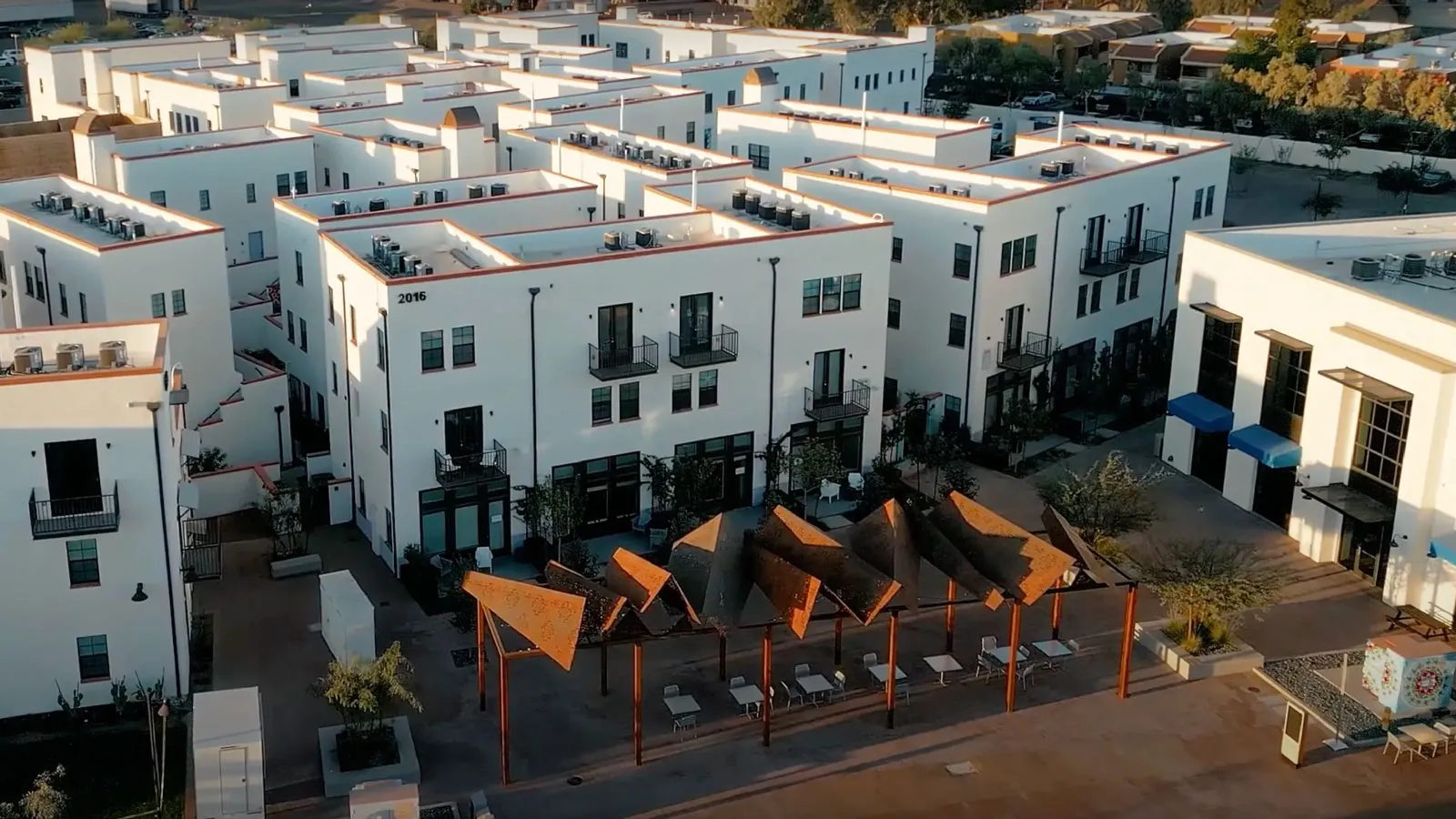
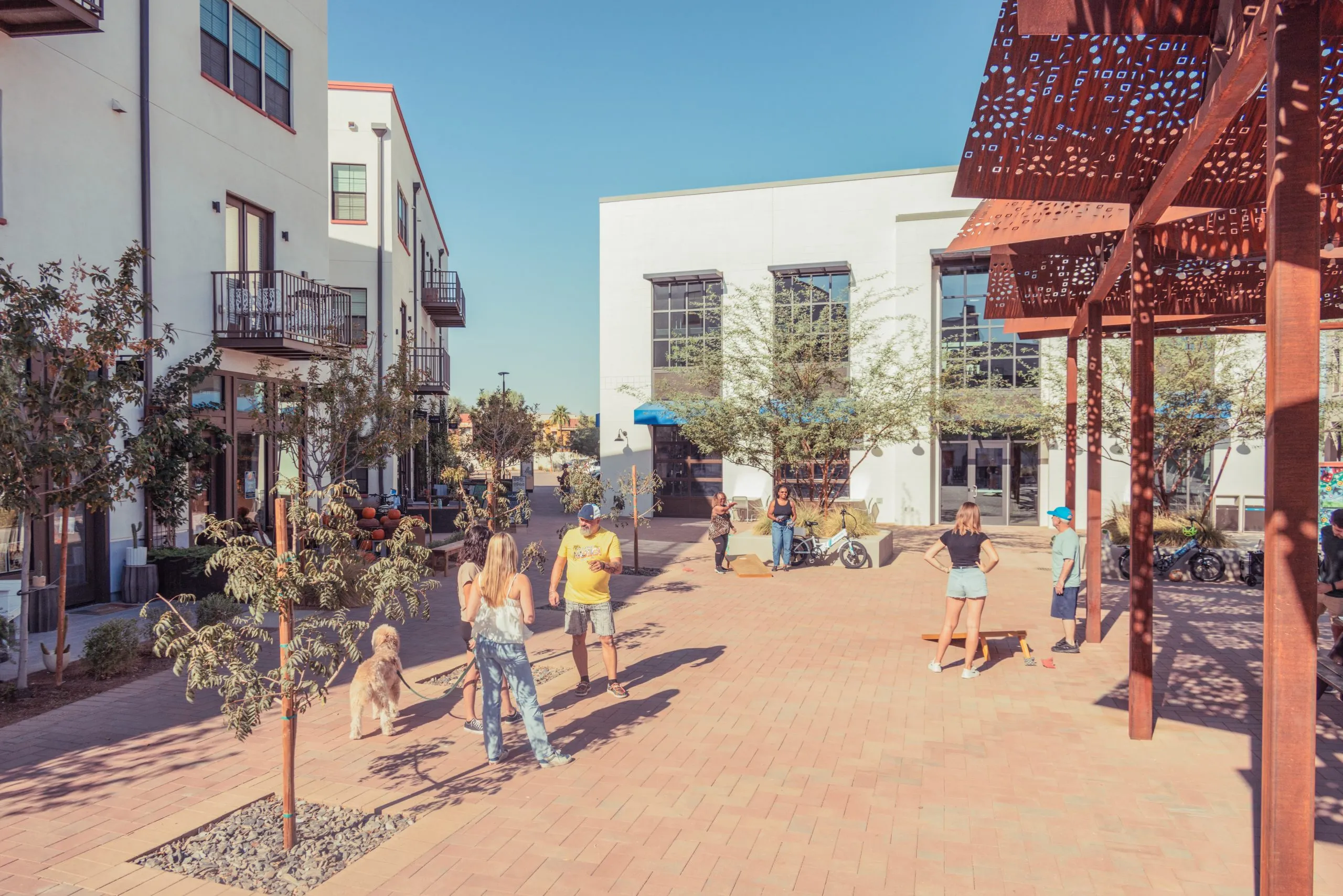
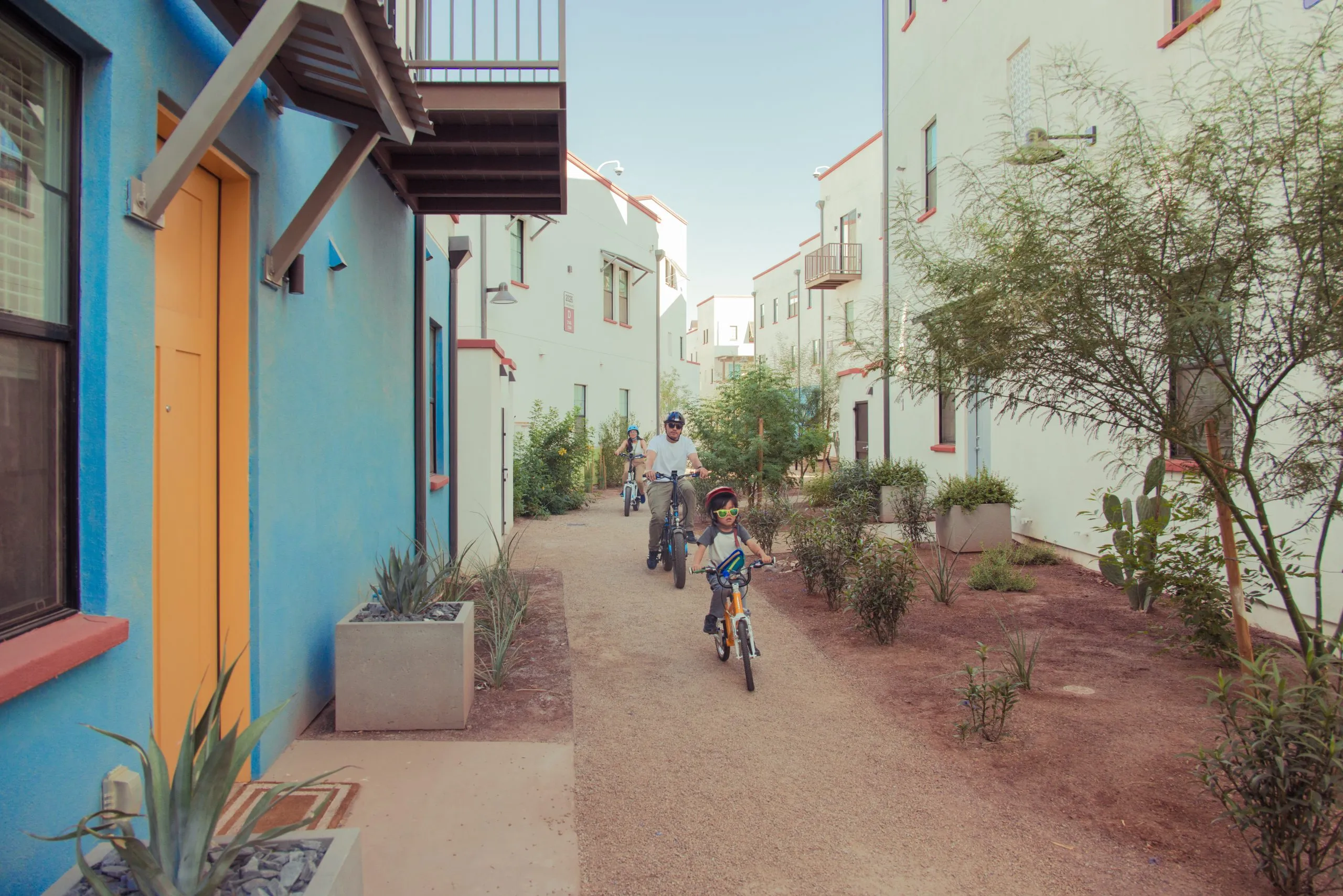
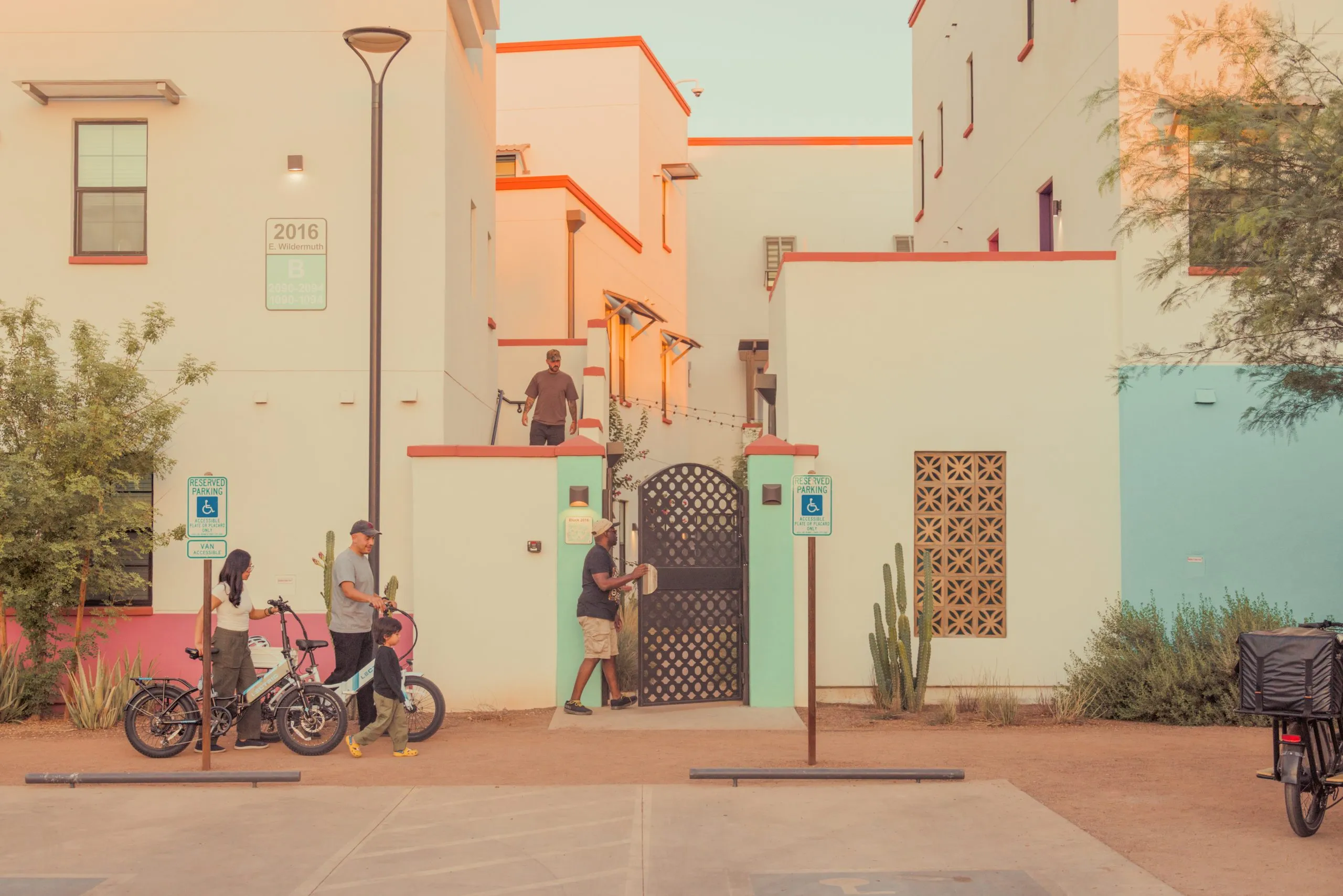
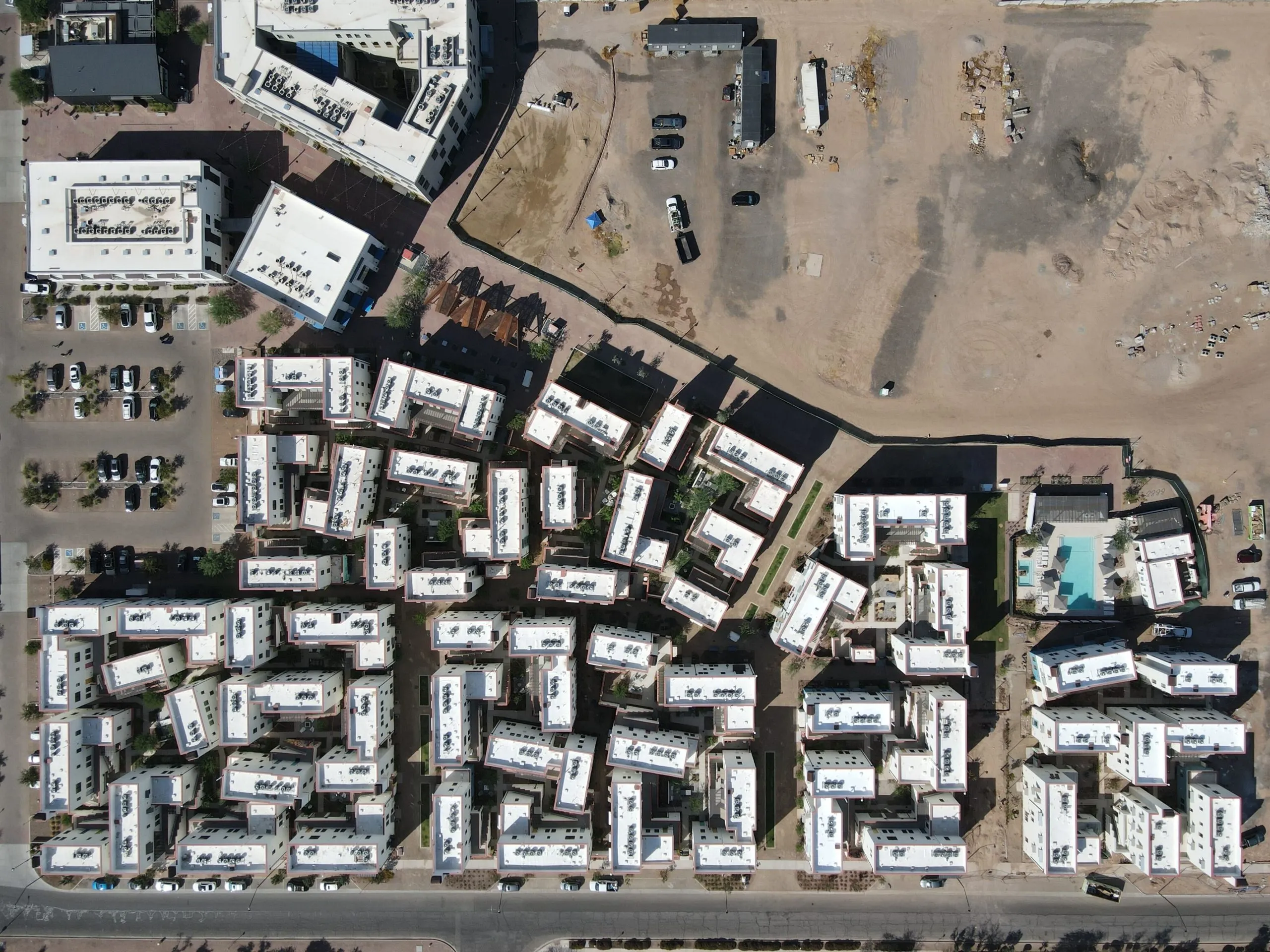
Ryan Johnson has spent years thinking about solutions for these problems. Inspired by travels to European cities, he cofounded Culdesac, a real estate developer dedicated to building walkable places, in 2018. In 2023, the company opened the first phase of Culdesac Tempe, a 17-acre development that offers a variety of transportation options – but no resident parking.
Yale Climate Connections spoke with Johnson about Culdesac Tempe and the future of American cities.
Interview edited and condensed.
Yale Climate Connections: Developing walkable neighborhoods in the U.S. is very difficult. What made you feel confident in taking on this challenge?
Ryan Johnson: I’ve been in real estate for 23 years now. I got started in college. I turned down MIT to go to University of Arizona on a scholarship that’s a full ride, plus cash on top. I used the scholarship money to get into real estate and built a portfolio of rentals, learned how to buy, renovate, etc. I saw so much opportunity to do housing better and bring innovation into real estate.
In my 20s, I went to 60 countries and lived in a handful, and that gave me so much inspiration. But I also worked in transportation, with trains and helicopters and buses, including for the New York City subway, and that showed me so much about the direction that transportation is going.
And then I was part of the founding team at Opendoor [an online brokerage company], which I think has some of the best data and customer interactions in real estate. That’s where I saw that areas built before cars do well and heard from so many customers that they want to live in walkable neighborhoods – and we’re just not building enough of those. That was what gave me the conviction to do Culdesac.
Yale Climate Connections: What are the primary obstacles that you’ve encountered in building a walkable neighborhood with Culdesac?
Johnson: The biggest reason there aren’t more walkable neighborhoods in the U.S. is that they’ve basically been banned. They’re more or less illegal because of zoning and other reasons, and we’ve mandated building lots of parking, which means things are spread out. So people feel they need a car, and then we mistake that as people wanting a car, when really they just didn’t have an alternative.
So there’s a bit of a chicken and egg. If you’re in a sprawling area, it’s hard to just build a walkable neighborhood. When you’re doing something different, there are so many questions: from cities, from investors, from partners. And the real estate industry doesn’t change very quickly; it’s very slow-moving.
We started the company in San Francisco in 2018. We looked all over the country for places that had the right conditions for development. We found that in Tempe, with this wonderful parcel that’s 17 acres, right on the light rail. We worked to understand the different questions that stakeholders had and put together a plan that everyone could get behind. And Tempe passed a landmark piece of legislation that was the city’s first agreement with a developer to build without parking in a multifamily context.
Today, the development is thriving. It’s doing well. Neighbors love it; the city loves it. And it’s become a reference project for understanding how to build walkable neighborhoods in the U.S. in the 2020s.
Yale Climate Connections: Can you say more about why you chose Tempe and how that decision came about? What did that search process look like?
Johnson: One of the challenges in this business is there’s not just one person that can say yes, but there’s lots of folks that can effectively say no. You don’t just talk to the mayor; there are lots of different stakeholders. You need to talk to different community groups. You need to talk to the fire department, the sanitation department, etc., to understand what people care about and how their system works.
That’s why it was really important to go to a place and understand the different stakeholders, and to go to a place that welcomes growth. Some places are looking for reasons to say no to a project.
Now that we’ve shown the way, it’s easier. So many cities and developers have visited Culdesac Tempe to see what they can learn. And the No. 1 thing that we get is, “When can we build one of these in my area?”
Yale Climate Connections: What about project financing? How did you structure things so that you were able to get the funds to build a novel concept?
Johnson: It’s true that when you’re doing something new, you get a bit of a new-concept penalty. There are more questions; it’s harder to get it funded. But that’s shifting.
This company is about how innovations in transportation are changing real estate. And we’re in, like, the second inning of the biggest change to transportation of our lifetime, and therefore the biggest change to cities.
We used to build great walkable neighborhoods, going back to Native Americans who have been in Arizona for thousands of years. And over time, transportation has evolved through innovations like Roman roads, streetcars in New York City, and then the highway system for cars. But now we’re entering a new era, which is that instead of having a private car that’s parked 95% of the time, people are starting to use a portfolio of transportation options.
I think this is where our perspective is a bit unique within the wider urbanist world. A lot of the urbanist world was initially very skeptical of rideshare such as Lyft, AV [autonomous vehicle] ride-hail such as Waymo, maybe because ride-hail competes with trains. But what it does is let us move to this portfolio approach to transportation. And the portfolio has a very healthy place for trains, because that’s what’s best for high capacity, but it’s also about walking. It’s about using Lyft and Waymo. [Editor’s note: Culdesac has partnerships with several of the brands mentioned in this interview, including Lyft and Lectric Bikes, and has worked with Waymo on joint marketing efforts.] It’s about electric bikes, electric scooters. Collectively, that portfolio lets people choose the right mode for a given trip, and that’s when people will shift away from private cars. That’s what we’re betting on.
Early on, we got laughed out of the room. People said, “You’re not going to get permission [to build this way].” “The demand is not going to be there.” And, “What are you talking about, that there are going to be Waymos everywhere and most people won’t have cars?”
Now we’ve got permission, the demand’s there, and it’s fairly widely appreciated that AV ride-hail really is going to change things. Part of the reason we chose Tempe is it’s right in the middle of Waymo’s first market. Today, you have investors that were skeptics saying things like, “My daughter sends my grandkids to school in a Waymo and thinks Waymo is the best thing that ever happened because she doesn’t have to be a chauffeur anymore.”
And that’s just one of the trends that are changing. So we’re moving from a new-concept penalty and getting closer to neutral now. And eventually it’s going to be a new-concept premium. Investors and banks are going to wake up to the fact that funding projects with structured parking (i.e., multistory parking garages) is a mistake. A huge portion of development costs is going towards building parking, and I think we’re close to a reckoning where people will realize how much of a mistake that was.
And the flip side to real estate being a slow-moving world is when things change, it’s a very powerful change.
Yale Climate Connections: And you’re starting to see signs of this change, or at least less of a negative reaction from banks?
Johnson: I think we’re getting closer to neutral. If you’re on an investment committee at a bank, just because you think things are going in a certain direction doesn’t mean you also go there now. But a lot of folks we’ve spoken with say they’re thinking more about structured parking and that we’re going to see that show up more in actual investment decisions.
It’s also going to show up in the returns of projects where developers do a project with structured parking, and when they go to sell it, buyers are less excited about their project because something that a lot of money was spent on is not as much of an asset – and it’s ugly. People are going to start to appreciate design and beauty more.
Yale Climate Connections: On the AV issue, I’m one of those traditional urbanists you mentioned who’s skeptical of them. I live in New York, where it’s easy to get around by walking and taking the subway. From that perspective, to the extent I think about AVs at all, they seem like a distraction. But you obviously see things very differently. Why do you see AV ride-hail as critical to reducing car dependency in the U.S.?
Johnson: Yeah, this also gets into my inspiration for Culdesac. So I’ve been 15 years without a car. The first time was when I moved to New York to work for the MTA [the Metropolitan Transportation Authority]. I had worked on urban issues in other places before this and just cared so much about improving cities, but it’s really challenging. There’s a lot of inertia, and it’s really hard for cities to modernize. For example, there are cities that have been running their subway systems with no drivers for decades, but New York still has two crew members in almost every subway train. Just that one thing costs the city millions of dollars per year.
One of the big benefits of AV ride-hail is cost. Private vehicles are parked 95% of the time, and they have a lot of costs, a lot of which are fixed: the price of the car, the price of maintenance. Then Lyft came along, and people use it, like, when they go out drinking or go somewhere with expensive parking. But that didn’t get rid of their fixed costs from having a car, so oftentimes they don’t save money by using Lyft. You only save money when you go cold turkey and no longer have a car.
The Tempe development was designed to make the most of all those different modes of transportation. We have a Waymo station here. We work with electric bike companies, electric scooter companies. We’re right on the light rail. We built a crosswalk to the development, and we also have lots of retail on-site.
Yale Climate Connections: Going back to the things traditional urbanists like me love, is the light rail popular with residents? Do they use it?
Johnson: Yeah, we have lots of data from resident surveys, and the No. 1 used method of transportation by far is the light rail. But they use the full portfolio.
We work closely with all these different transportation modes. We worked closely with Valley Metro [Phoenix’s public transportation agency] to get a free unlimited light rail pass for all our residents, and now any multifamily development can offer that; before it was only employers.
And we have a street, Lectric Avenue, named after one of our partners, Lectric, which is the No. 1 e-bike company in the country. They’re also based here in Phoenix. People would not have expected the first car-free neighborhood to be in Phoenix; they also wouldn’t expect the No. 1 e-bike company to be here. But sometimes it’s these places with more extreme designs that lead to innovations.
Yale Climate Connections: You mentioned that people ask how they can get similar projects in their communities. There does seem to be a real trend of car-free or car-lite developments popping up across the country, although it’s obviously still very far from the norm. What do you see as the main challenges and opportunities in making this kind of thing available to more people who want it?
Johnson: Well, the biggest lesson from Culdesac Tempe is that it’s possible to build walkable neighborhoods in the U.S. in the 2020s, and they’ll do well. The demand is there, and the tail winds of the transportation trends are moving in a very good way.
All the normal challenges and development are still there when you’re building walkable neighborhoods. It doesn’t give you some magical cost reduction: Wood is still wood, labor costs are still labor costs, interest rates and tariffs still affect us. So it’s hard to be a developer of any type, but this development pattern is the future.