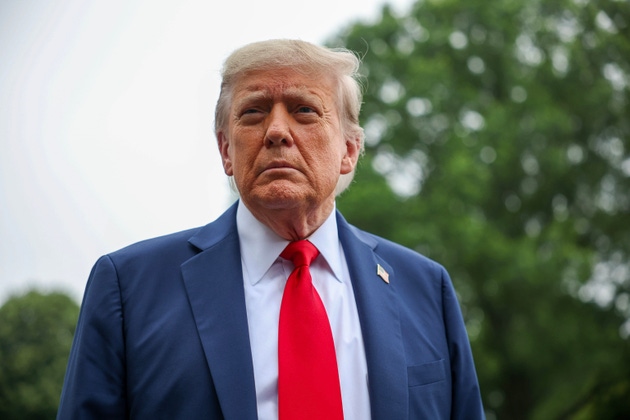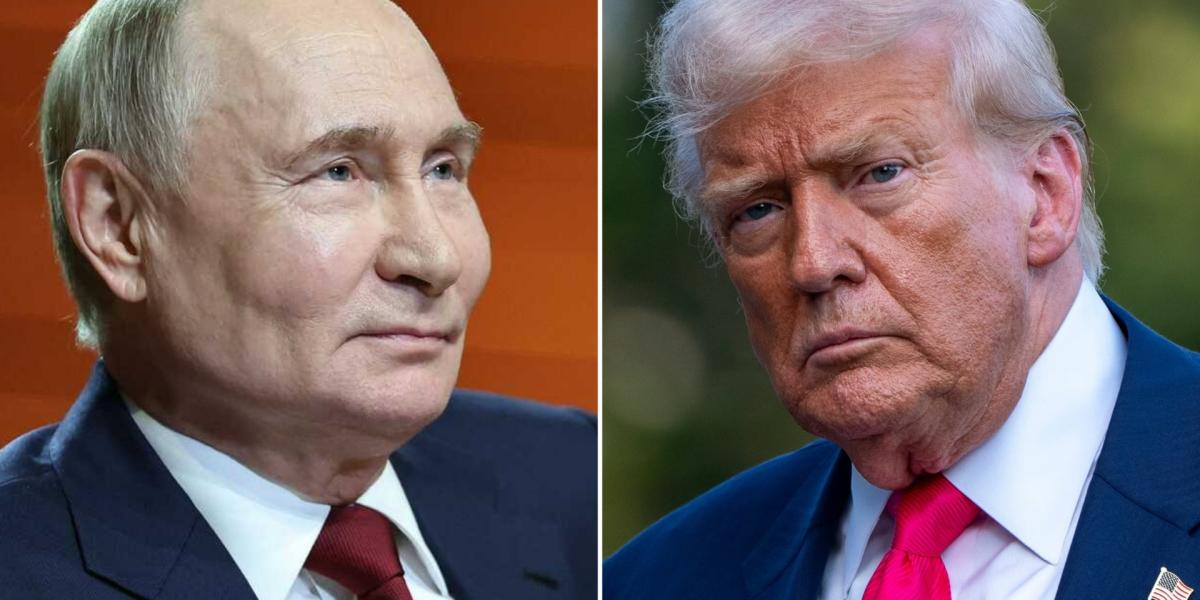
This Friday, President Trump and Russian President Vladimir Putin are set to sit down together in what will be the first face-to-face meeting between leaders of each country since the war in Ukraine broke out almost three and a half years ago.
For many, this is a long-overdue step towards bringing this war to an end. For others, it marks the dangerous and unnecessary return of a policy of “appeasement” that’s sure to prompt more invasions from Putin and other leaders that the US government does not back.
There certainly will be plenty of debate in the coming days over the wisdom and likely consequences of this meeting. But, as with anything, the best way to understand both is to look back at how we got here.
A lot has been written about the many policy decisions that took place after the USSR fell in 1991, which transformed the Russian government and the Western governments in NATO back into enemies. Those factors are important for understanding why Putin made the decision to invade Ukraine in early February 2022 and how he was able to get enough of the Russian public on board with the war.
But even setting all of that aside, when Putin gave the order for Russian forces to invade Ukrainian territory, he cited three purposes for the move in his address to the Russian people that can help us understand the specific Russian objectives in this campaign. They were to prevent Ukraine from joining NATO, to destroy the far-right Nazi factions within Ukraine, and to protect the people living in the separatist regions of eastern Ukraine.
It is certainly possible that none of these reasons was or is genuine. As we Americans should know well, governments frequently use entirely fake justifications to manufacture public acceptance for a war when they think the real reason won’t work.
However, if we look closer at Putin’s actions, we can get a clearer picture of what the Russian leader wanted and, importantly, was willing to settle for.
Shortly after the invasion began on February 24, 2022, Ukraine’s President Zelensky attempted to set up an indirect backchannel with Putin. He was able to do so fairly quickly with the help of the Israeli Prime Minister at the time, Naftali Bennet.
Thanks to Bennet’s efforts, the two sides began talking. And, exactly two weeks after the tanks had rolled over the border, the Ukrainian and Russian foreign ministers sat down in person in Turkey to see if an agreement could be reached that would put an end to the fighting.
A few weeks later, they did reach an agreement. According to officials who were present on both sides and in mediator roles, the Russians agreed to pull all of their forces back to pre-invasion boundaries—in other words, to end the war and give up all the territory they had seized in that first month. And, in exchange, the Ukrainians agreed not to seek NATO membership.
Remember, this isn’t some Russian spin on the Istanbul talks, it’s based on what the Ukrainian negotiators and the German, Israeli, and Turkish officials who were present said happened. So we know that a month into the war, Putin was willing to abandon two of the three stated objectives of his military campaign in exchange for a promise that Ukraine would not join NATO, which suggests that this really is the priority for the Russian regime.
He may have even begun to honor his side of the agreement. Putin claims that the sudden massive withdrawal of Russian forces from the areas around Kyiv, a few days after the Istanbul agreement was reached, was actually the first step towards withdrawing the entire invading force. That may be a lie, but the timing does match up.
Regardless, shortly after the talks wrapped up, UK Prime Minister Boris Johnson went to Kyiv, really on behalf of all the top Western military powers in NATO, and convinced the Ukrainians to walk away from the agreement, which they did.
It appears that Western governments talked the Ukrainian leaders into continuing the fight by promising heavier weapons and more sophisticated support to help them gain more leverage over the Russians, so future talks could be even more fruitful.
Some people in Western governments may have really believed that. But a lot of the rhetoric we saw from American officials when they were talking to the American public or to each other suggests that the true motivations for keeping the war going grew out of a recognition of how lucrative it would be for certain well-connected American companies, a desire to learn more about what tactics and technology is effective in modern conventional war, and a perceived opportunity to “weaken Russia” without the need to spill any American blood.
But regardless of whether their intentions were pure and misguided or deceptive and depraved, American and Western European officials stymied the early peace talks and kept the war going. And fairly quickly, it became frustratingly clear that the Ukrainians would not be able to fight their way to a better negotiating position than they had had in March of 2022.
Over that first summer, the “heavier weapons” the US and other Western governments began transferring to the Ukrainians did not push the front line dramatically to the east, as the Ukrainian government seems to have been led to expect. And then, in September, the Russian government formally annexed four oblasts—or provinces—in eastern Ukraine, laying permanent claim to tens of thousands of square miles of territory that it had previously agreed to surrender. Ukraine’s position in future negotiations was already growing weaker.
That said, in November, a month after the Russian annexation, Ukrainian forces successfully used misdirection to recapture the southern city of Kherson and the northern city of Kharkiv. While their position was still weaker than it had been in March, it was still a solid opportunity to transition back to talks.
But again, the opportunity was missed.
Instead, Western officials and their allies in the media began to generate hype about plans for a massive counteroffensive operation that would mobilize all Ukrainian forces to break through Russian lines and drive Russian forces out of the newly-annexed territory.
For months, the coming counteroffensive was used to shoot down any calls to return to the negotiating table. But several independent military experts raised doubts—especially in reaction to the nightmarish battle over the city of Bakhmut—that Ukraine truly had the capability to push the Russian lines way back to the east. Those concerns really came to a head in early 2023 when a 21-year-old airman named Jack Teixeira leaked evidence that American military and intelligence officials were similarly pessimistic about the operation—for which he was thrown in prison with a sixteen-year sentence.
And, sure enough, when the counteroffensive began in the summer of 2023, the Ukrainians struggled to break through Russian minefields and ended up losing more territory than they gained. The counteroffensive was a failure. And yet, the war went on.
For the next year, the front lines remained mostly unchanged as the war evolved into a trench-style artillery war of attrition. Ukraine was dealing with a serious shortage of soldiers, which the Russians appeared to have recognized meant time was in their favor.
Then, last summer, the Ukrainians made the surprising decision to pull troops away from the front line to send them north over the border to capture some Russian territory in the so-called Kursk region. While they were met with some initial success, because the Russians had not thought to defend the area heavily, the territory they took was small compared to what the Russians held in Ukraine. And, most consequentially, the transfer of soldiers weakened Ukraine’s already-tenuous standing on the eastern front.
Which has meant that, over the last year, Ukraine has been struggling. According to some analysts like retired Colonel Daniel Davis, the Russians have shifted their focus from trying to take more territory to trying to wipe out as many soldiers as possible to exacerbate Ukraine’s manpower problems, which will ensure that, down the road, taking territory will be far easier.
The Russians also didn’t let the lame-duck Biden administration’s provocative and unnecessarily risky decision to help the Ukrainians launch long-range missiles deeper into Russia pull them away from their strong position. So Russian forces now hold a lot of territory, and time is on their side if they wish to take even more territory in the future. And there isn’t much of anything else the NATO governments can do with weapons transfers or economic sanctions to change that. If they could, they would have done it already.
In other words, the Russians have significantly more leverage over the Ukrainians and their Western backers than they did during those early talks in Turkey a month into the war.
Trump has clearly tried to create some pain points against Putin that he can attempt to negotiate away—most notably a massive tariff on India for buying Russian oil. But the disheartening and frustrating fact is that Putin has no real reason to want this war to come to an end right now.
That said, the Russian president did signal that he would be open to stopping the war in exchange for eastern Ukraine. If that proposal is genuine, Trump should seriously try to work out a deal and hope that the boasts he made about deceiving the Iranians with fake negotiations earlier this summer did not destroy his credibility in situations like this.
But, regardless of what happens during the talks on Friday, more Americans need to start recognizing what the civilians in Ukraine evidently have already: that, as bad as this situation is, it can and will continue to get worse.
So many opportunities for peace have been missed. If there is any chance of another, Trump should take it.