No Result
View All Result
SUBMIT YOUR ARTICLES
  • Login
Monday, December 22, 2025
TheAdviserMagazine.com
  • Home
  • Financial Planning
    • Financial Planning
    • Personal Finance
  • Market Research
    • Business
    • Investing
    • Money
    • Economy
    • Markets
    • Stocks
    • Trading
  • 401k Plans
  • College
  • IRS & Taxes
  • Estate Plans
  • Social Security
  • Medicare
  • Legal
  • Home
  • Financial Planning
    • Financial Planning
    • Personal Finance
  • Market Research
    • Business
    • Investing
    • Money
    • Economy
    • Markets
    • Stocks
    • Trading
  • 401k Plans
  • College
  • IRS & Taxes
  • Estate Plans
  • Social Security
  • Medicare
  • Legal
No Result
View All Result
TheAdviserMagazine.com
No Result
View All Result
Home Market Research Economy

The Importance of Using Words Honestly

by TheAdviserMagazine
3 weeks ago
in Economy
Reading Time: 5 mins read
A A
The Importance of Using Words Honestly
Share on FacebookShare on TwitterShare on LInkedIn


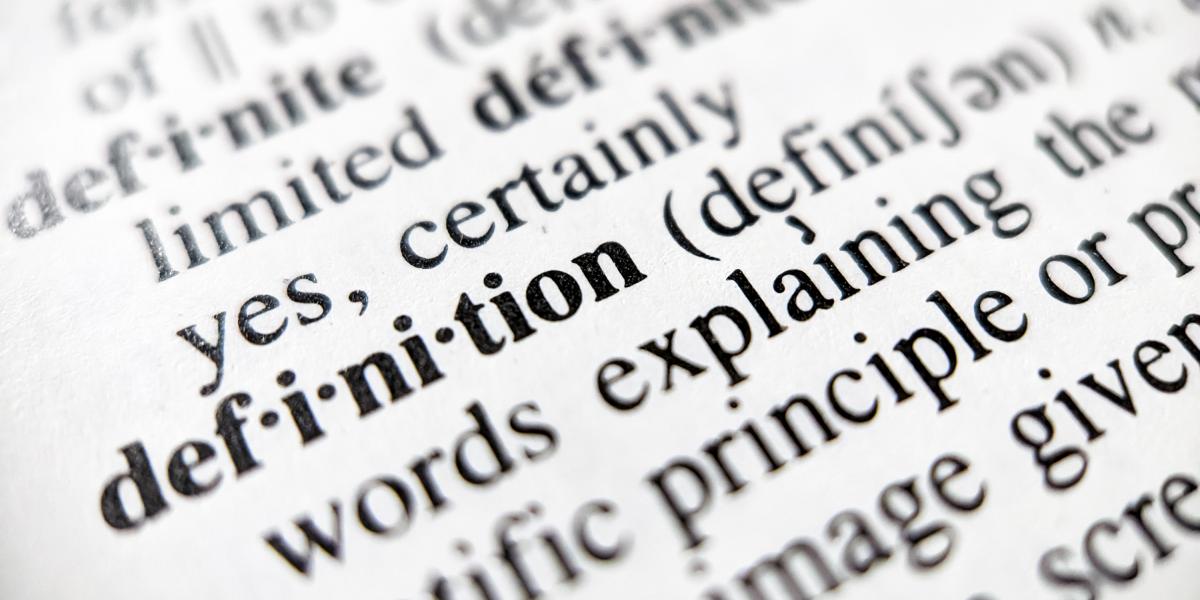
You might deem it self-evident that words should have meanings, but a growing number of people believe words can mean anything the speaker wants. It seems we now inhabit the fictional world imagined by Lewis Carroll, where, as Humpty Dumpty said, any word “means just what I choose it to mean—neither more nor less.” In the recent “what is a woman” debates, some argued that the word “woman” means whatever anyone feels the word woman should mean. Similarly, in a recent social media debate involving the campaign to “abolish prisons” and set criminals free, a supporter of the “abolish prisons” campaign advocated for the imprisonment of homeowners who defend their property against criminals. When asked if imprisoning homeowners did not contradict his “abolish prisons” stance, he responded that “abolish” does not necessarily mean “abolish.” He argued that claiming the word “abolish” has any specific meaning is a logical fallacy known as “appeal to definition.”

As it happens, the dictionary now includes the evolving definition of a woman. The Cambridge English Dictionary defines a woman as either “an adult female human being” or “an adult who lives and identifies as female though they may have been considered to have a different sex at birth.” It gives the following two sentences as examples of the second meaning:

Mary is a woman who was assigned male at birth.

Transgender woman; Marie is a transgender woman (= she was considered to be male at birth).

Perhaps we ought to be grateful that appealing to the dictionary is now regarded as a logical fallacy, given that dictionaries are increasingly caving in to the new woke definitions of words. We can only hope they will not update the dictionary to explain that the meaning of the word “abolish” depends on what exactly you are trying to abolish. But a more serious question also arises—how are people to communicate if words do not have specific meanings?

Words are the building blocks of language. Words must mean something, if language is to express or convey anything. There is no doubt that how words are used depends largely on the context, and the connotations of a word may vary according to context, but trying to understand the context is an exercise in futility if words have no meaning in the first place. In his Introduction to Philosophical Analysis, the philosopher John Hospers explains that the meaning of words is determined by convention, and that, “Since words are conventional signs, there is no such thing as the right or wrong word for a thing.” He argues that a speaker is free to use words otherwise than in their conventional sense, as long as he stipulates what he means by the word and remains consistent with the stipulated meaning. He calls this “freedom of stipulation.” However, Hospers points out that doing this—stipulating one’s own meaning of words that varies from the conventional meaning—would usually be “extremely confusing to other people.” Far from being “practical or useful,” it would often be “inconvenient” or, even worse, misleading.

In order not to mislead them, you would (if you wanted to stick to your new usage) have to tell them in advance that you were not using [the word] to mean the same thing that they were. Even so, the situation would be greatly complicated by your new usage…they would have to remember that you were using it to mean something different from the thing they had used the word to mean for many years. Such complication would be needless. There would be nothing to be said for it and everything to be said against it, but it would not be wrong—only confusing.

Hospers argues that, to avoid confusion, one should usually follow the “rule of common usage.” He acknowledges that there could be sound reasons to depart from common usage, for example when the common usage of a word is wrong or confusing. He gives the example of the word “liberal,” which he describes as “so indefinite in its present meaning that its continued use is confusing and unprofitable…the word as now used is simply a blanket term covering a nest of confusions.” Clearly, sticking determinedly to the correct meaning of words, when the wrong word is in common usage, is perfectly fine, and some may even say it is commendable. For example, some people only ever use the word “liberal” to mean classical liberal, and never use it in the conventional—but wrong—sense to mean an egalitarian, progressive, or socialist.

However, very often people who depart from common usage are not motivated by a desire for accuracy, or by any commendable purpose. On the contrary, they seek deliberately to confuse and obfuscate. As Hospers explains,

More often, however, when a word or phrase is used in violation of common usage, this is not done in the interest of clarity but in the interest of beguiling you into accepting an unwarranted conclusion.

An example is the political use of moralizing words like equality, justice, fairness—words that beguile voters into accepting whatever has been proposed. Hence, despotic states describe themselves as “democratic.” The South African government is now running a system of race-based laws which assign rights, privileges, and priorities based on race, but, instead of being called “apartheid,” it is dishonestly called “redress” or “transformation.” They are reversing apartheid by reintroducing apartheid under a new name, operating in the opposite direction. Instead of oppressing black people, which was “injustice,” they are now oppressing white people, which is “restorative justice.” George Orwell described this dystopian strategy:

The Ministry of Peace concerns itself with war, the Ministry of Truth with lies, the Ministry of Love with torture and the Ministry of Plenty with starvation. These contradictions are not accidental, nor do they result from ordinary hypocrisy: they are deliberate exercises in doublethink.

Even when there is no dishonest intention to deceive, the fact that many words have different meanings creates the risk of slipping subtly from one meaning to another and unwittingly falling into error. When words are used in an unconventional sense this ought to be disclosed at the outset, and if the wrong connotation has inadvertently been employed, it should be clarified as soon as it becomes clear that the sense in which the word is used has communicated the wrong idea. Otherwise, much time will be wasted in debating the meaning of words and never getting to the heart of the matter. In many cases, as Hospers says, “you and he may argue at cross purposes until you realize that he is using the word in this rather unusual sense.”

But in many cases, the errors are not inadvertent or merely careless. They involve people deliberately “manipulating words and employing them in violation of common usage without informing their hearers of the fact.” Often, the person who belatedly claims that he was using words in an idiosyncratic sense only offers this confession precisely to avoid conceding the debate after he is shown to be wrong. To use an example given by Hospers, imagine someone who confidently states that “All cats bark,” who then—when proved to be incorrect—claims that by “cat” he of course meant dog, or that by “bark” he merely meant “meow” or any sound made by an animal. Therefore, he was not wrong, he was just using words unconventionally. Or so he would have you believe.




Source link

Tags: HonestlyImportanceWords
ShareTweetShare
Previous Post

How Financial Advisors Profit From Confusing Retirement Fees

Next Post

Macy’s (M) Earnings Preview: Revenue and earnings expected to decline in Q3 2025

Related Posts

edit post
David Deutsch on the Pattern

David Deutsch on the Pattern

by TheAdviserMagazine
December 22, 2025
0

0:37Intro. Russ Roberts: Before introducing today's guest, I want to mention something important about when it was recorded.This week's episode...

edit post
Fentanyl Classified As Weapon Of Mass Destruction

Fentanyl Classified As Weapon Of Mass Destruction

by TheAdviserMagazine
December 22, 2025
0

Fentanyl has been classified as a Weapon of Mass Destruction (WMD) after it claimed the lives of 57,000 Americans in...

edit post
Europe Is Becoming A Country Risk For International Capital – Sell Now?

Europe Is Becoming A Country Risk For International Capital – Sell Now?

by TheAdviserMagazine
December 22, 2025
0

This is a free report we are providing to everyone for Christmas. The movement of gold from London and Switzerland...

edit post
The Brutality of the US Empire Is on Display in Venezuela

The Brutality of the US Empire Is on Display in Venezuela

by TheAdviserMagazine
December 21, 2025
0

I can’t help but feel very sorry for the Venezuelan people.Imagine living under a brutal and corrupt illegitimately-elected dictatorship, a...

edit post
Links 12/21/2025 | naked capitalism

Links 12/21/2025 | naked capitalism

by TheAdviserMagazine
December 21, 2025
0

The art of Pysanky: traditional egg decorating from Europe 📹vilsonpessanka pic.twitter.com/deAXF6ETty — Science girl (@sciencegirl) December 20, 2025 James Webb...

edit post
The Sunday Morning Movie Presents: An Ideal Husband (1969) Run Time: 1H 22M Bonus: Woo!

The Sunday Morning Movie Presents: An Ideal Husband (1969) Run Time: 1H 22M Bonus: Woo!

by TheAdviserMagazine
December 21, 2025
0

Greetings gentle readers and welcome to another installment of the Sunday Morning Movie. Today it’s an adaptation of Oscar Wilde’s...

Next Post
edit post
Macy’s (M) Earnings Preview: Revenue and earnings expected to decline in Q3 2025

Macy’s (M) Earnings Preview: Revenue and earnings expected to decline in Q3 2025

edit post
The Dangerous Shortage of Trained Nurses in Elder Facilities

The Dangerous Shortage of Trained Nurses in Elder Facilities

  • Trending
  • Comments
  • Latest
edit post
How Long is a Last Will and Testament Valid in North Carolina?

How Long is a Last Will and Testament Valid in North Carolina?

December 8, 2025
edit post
In an Ohio Suburb, Sprawl Is Being Transformed Into Walkable Neighborhoods

In an Ohio Suburb, Sprawl Is Being Transformed Into Walkable Neighborhoods

December 14, 2025
edit post
Democrats Insist On Taxing Tips        

Democrats Insist On Taxing Tips        

December 15, 2025
edit post
Detroit Seniors Are Facing Earlier Shutoff Notices This Season

Detroit Seniors Are Facing Earlier Shutoff Notices This Season

December 20, 2025
edit post
Elon Musk adds to his 9 billion fortune after Delaware court awards him  billion pay package

Elon Musk adds to his $679 billion fortune after Delaware court awards him $55 billion pay package

December 20, 2025
edit post
Living Trusts in NC Explained: What You Should Know

Living Trusts in NC Explained: What You Should Know

December 16, 2025
edit post
Billionaire philanthropy’s growing divide: Mark Zuckerberg vs. Mackenzie Scott giving styles

Billionaire philanthropy’s growing divide: Mark Zuckerberg vs. Mackenzie Scott giving styles

0
edit post
The Two Stories You’re Hearing About AI Are Both True

The Two Stories You’re Hearing About AI Are Both True

0
edit post
Wizz Air plans Tel Aviv, Eilat bases from March

Wizz Air plans Tel Aviv, Eilat bases from March

0
edit post
Europe Is Becoming A Country Risk For International Capital – Sell Now?

Europe Is Becoming A Country Risk For International Capital – Sell Now?

0
edit post
Sellers Do What No One Expects

Sellers Do What No One Expects

0
edit post
Mortgage Rates Today, Monday, December 22: A Little Lower

Mortgage Rates Today, Monday, December 22: A Little Lower

0
edit post
Billionaire philanthropy’s growing divide: Mark Zuckerberg vs. Mackenzie Scott giving styles

Billionaire philanthropy’s growing divide: Mark Zuckerberg vs. Mackenzie Scott giving styles

December 22, 2025
edit post
The Two Stories You’re Hearing About AI Are Both True

The Two Stories You’re Hearing About AI Are Both True

December 22, 2025
edit post
7 Energy‑Saving Tricks Boomers Are Using in Snowbelt States

7 Energy‑Saving Tricks Boomers Are Using in Snowbelt States

December 22, 2025
edit post
Wizz Air plans Tel Aviv, Eilat bases from March

Wizz Air plans Tel Aviv, Eilat bases from March

December 22, 2025
edit post
The Federal Reserve Just Delivered Spectacular News for This Under-the-Radar Real Estate Stock

The Federal Reserve Just Delivered Spectacular News for This Under-the-Radar Real Estate Stock

December 22, 2025
edit post
Foreclosure Starts Fall 7.6% Nationally, But These Key Counties Show Rising Distress

Foreclosure Starts Fall 7.6% Nationally, But These Key Counties Show Rising Distress

December 22, 2025
The Adviser Magazine

The first and only national digital and print magazine that connects individuals, families, and businesses to Fee-Only financial advisers, accountants, attorneys and college guidance counselors.

CATEGORIES

  • 401k Plans
  • Business
  • College
  • Cryptocurrency
  • Economy
  • Estate Plans
  • Financial Planning
  • Investing
  • IRS & Taxes
  • Legal
  • Market Analysis
  • Markets
  • Medicare
  • Money
  • Personal Finance
  • Social Security
  • Startups
  • Stock Market
  • Trading

LATEST UPDATES

  • Billionaire philanthropy’s growing divide: Mark Zuckerberg vs. Mackenzie Scott giving styles
  • The Two Stories You’re Hearing About AI Are Both True
  • 7 Energy‑Saving Tricks Boomers Are Using in Snowbelt States
  • Our Great Privacy Policy
  • Terms of Use, Legal Notices & Disclosures
  • Contact us
  • About Us

© Copyright 2024 All Rights Reserved
See articles for original source and related links to external sites.

Welcome Back!

Login to your account below

Forgotten Password?

Retrieve your password

Please enter your username or email address to reset your password.

Log In
No Result
View All Result
  • Home
  • Financial Planning
    • Financial Planning
    • Personal Finance
  • Market Research
    • Business
    • Investing
    • Money
    • Economy
    • Markets
    • Stocks
    • Trading
  • 401k Plans
  • College
  • IRS & Taxes
  • Estate Plans
  • Social Security
  • Medicare
  • Legal

© Copyright 2024 All Rights Reserved
See articles for original source and related links to external sites.