[This article is adapted from Chapter 15 of The Global Currency Plot.]
The danger is obvious that the social revolution would change the tangible and visible ruling class of today, openly recognized as such, into a secret demagogic oligarchy operating under the guise of equality.– ROBERT MICHELS
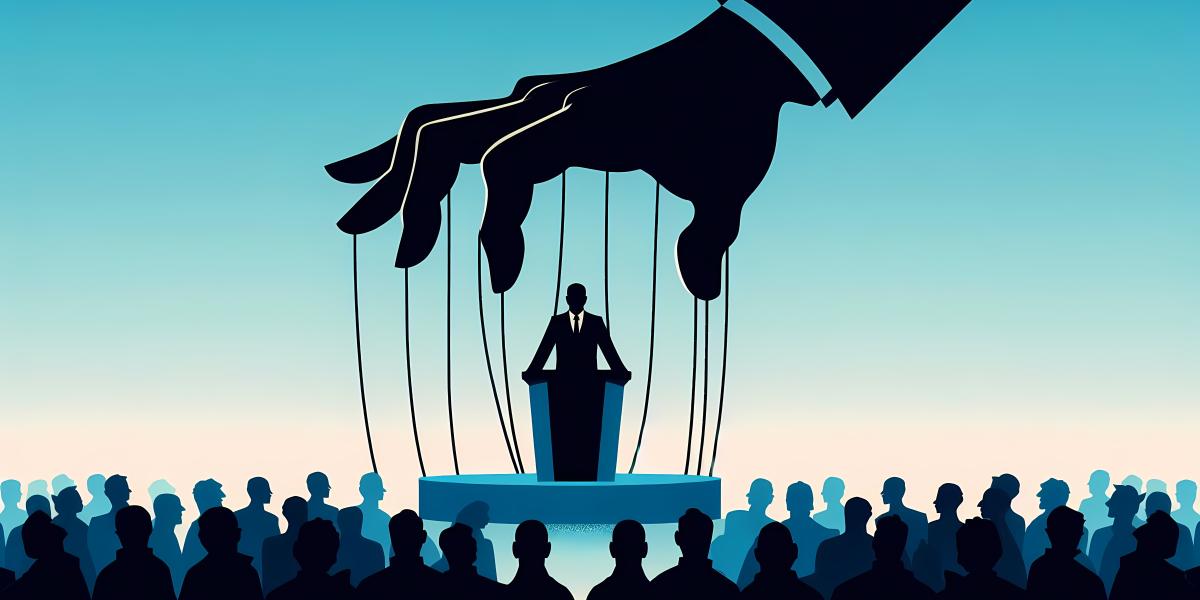
In 1911, the German-Italian sociologist Robert Michels (1876–1936) published his book Zur Soziologie des Parteiwesens in der modernen Demokratie: Untersuchungen über die oligarchischen Tendenzen des Gruppenlebens (Political Parties: A Sociological Study of the Oligarchical Tendencies of Modern Democracy). In it, he formulates the “iron law of the oligarchy.” In democracies, according to Michels, there is a tendency toward oligarchy: the rule of the few over the many. Sooner or later, a small group, the cunning, power-hungry party elites, will rule. There emerges a reign of the elected over the voters. It is therefore an illusion to believe that democracy gives voters self-determination over their destinies. Michels suggests three reasons that explain the shift of power from the voters, from the party base, to the elected.
First, self-government of the masses is not possible, not even technically. Democracy needs parties. Parties are organizations, and like any organization, a party needs firm leadership. This puts people in positions who have the necessary aptitude (expertise, leadership, assertiveness, etc.). A professional leadership emerges. Second, the mass of voters is ignorant and not the sovereign masters of their own destinies. The majority of people are not in a position to form their political will in a rational manner. They’re looking for political leadership. Third, the members of the party elites have the personal, intellectual, and also charismatic superiority to win over the masses and the party delegates and to create a following for themselves.
Once the relatively small group of party elites has reached the power centers—once a party oligarchy has developed—it begins, according to Michels, to isolate and shield itself from competitors. Because of their intellectual superiority, their will to assert themselves and their access to financial resources, the members of the elite can secure their fame as public elected representatives, make their actions appear to be directed toward the welfare of society, make themselves personally inviolable, and silence political counter currents. The party oligarchs use their incontestable position of power for their own purposes. They begin to pursue goals that are no longer consistent with the party base or the will of the voters.
Can Michel’s theses be transferred to the present? Does it offer a suitable pattern of interpretation for today’s sociopolitical events? One might first think that the “oligarchization of democracy” is kept in check if there is effective competition between parties for government power. As long as voters can give their votes to competing parties, oligarchization within the individual party may occur, but not oligarchization of government power per se. But this hope proves to be deceptive.
All parties are wooing for votes. And the voters give their vote to the parties whose programs and policies they hope will improve their personal position. The parties therefore have an incentive not only to attend upon voters’ dreams of redistribution but also to encourage them. In the competition for government power, those who want to be elected to power outbid each other in winning as many voters as possible with “election gifts.” It is precisely this buying of votes, which takes place in democracy, that supports Michels’s thesis.
Every form of rule—whether dictatorship, aristocracy, or democracy—depends on approval, at least on tolerance by public opinion. The rulers are outnumbered by the ruled. Should the conviction spread among the governed that they must get rid of the rulers, an overthrow would be inevitable. The parties and the party oligarchs know that. In order to maintain their power, they therefore rely on “persuasion,” for example, by ensuring that in education and training, people are taught the indispensability of the democratic party system. In addition, they follow a divide et impera principle: divide and rule. Tax revenues are used to pay for votes. And to avoid any resistance, everything is done to dispel the suspicion that there are “net tax victims” and “net tax profiteers.”
However, because all parties compete in the same way for the favor of the majority, the content of their programs more or less converges. In fact, a party cartel emerges that paves the way for the oligarchization of democracy. And once party competition has been paralyzed, the party oligarchs have a wide scope of action. Extreme policies can then be implemented relatively easily, which would not be so easily possible if grassroots democracy were operating—such as the dismantling of national sovereignty in favor of supranational authorities or the “policy of open borders.”
“Political globalism” bears the unmistakable signature of an oligarchized democratic socialism: small groups make far-reaching decisions, often in back rooms; special interests (of banks and large corporations) gain privileges; parliamentarians willingly give a leg up to the oligarchized rule. If one follows Michels, there is no reason to believe that in democracy (more precisely, in democratic socialism) the will of the voters determines the government. Rather, the power goes to the oligarchized elite rulership.
There is another aspect that needs to be addressed here: the role of professionals in the institutions that democratic socialism generates in large numbers. These institutions—whether social security, pension or health insurance, central banks or financial supervisory authorities—have one thing in common: they are characterized by growing complexity and confusion. The reason: all these state institutions are developed, managed, and changed by so-called experts, experts in their field. Outsiders can’t contribute anything.
And so, it is the experts who are asked by politicians for their opinion when something does not work, and solutions are sought. However, the experts are not only distinguished by the fact that they are experts in their field. They stand out above all because they unreservedly support the principles on which the institutions are built. When problems arise, they will therefore adapt and change the institutions, but always respecting the principles on which they are built: “Once the apparatus is established, its future development will be shaped by what those who have chosen to serve it regard as its needs.”
It is the experts in particular who create path dependency: Once they are made, decisions limit the scope of future decision-making; revision or abandoning the path taken becomes increasingly difficult. How can democratic socialism and its oligarchic leadership take advantage of this path dependency? As shown in the previous chapter, the attempt to build a worldwide democratic socialism by unifying in terms of language, culture, and religion the populations of the different nations of the world through migration would face great, seemingly insurmountable obstacles.
Another, more promising possibility for democratic socialists is to create a single world currency. That would have two advantages. After all, having one currency for the world is economically optimal—this was shown in chapter 8. On the other hand, the current system of national state fiat monies can be simply, at least from a technical point of view, converted into one fiat world currency and steered by one world central bank—and thus the worldwide economic and social development would be subject to a central political leadership to an extent previously unknown.
For the proponents of democratic socialism, the creation of a unified world currency is therefore an extremely attractive strategy for putting into practice their constructivist dream of steering the social and economic events on this planet according to their political demands. If we look at recent monetary history since the end of the Second World War, we can clearly see how far the ideas of democratic socialism have already influenced the world monetary system. This will be examined in more detail in the following chapter.
This article is adapted from Chapter 15 of The Global Currency Plot.