No Result
View All Result
SUBMIT YOUR ARTICLES
  • Login
Tuesday, March 10, 2026
TheAdviserMagazine.com
  • Home
  • Financial Planning
    • Financial Planning
    • Personal Finance
  • Market Research
    • Business
    • Investing
    • Money
    • Economy
    • Markets
    • Stocks
    • Trading
  • 401k Plans
  • College
  • IRS & Taxes
  • Estate Plans
  • Social Security
  • Medicare
  • Legal
  • Home
  • Financial Planning
    • Financial Planning
    • Personal Finance
  • Market Research
    • Business
    • Investing
    • Money
    • Economy
    • Markets
    • Stocks
    • Trading
  • 401k Plans
  • College
  • IRS & Taxes
  • Estate Plans
  • Social Security
  • Medicare
  • Legal
No Result
View All Result
TheAdviserMagazine.com
No Result
View All Result
Home Market Research Economy

Subcutaneous Microchip Mandates | Armstrong Economics

by TheAdviserMagazine
5 hours ago
in Economy
Reading Time: 3 mins read
A A
Subcutaneous Microchip Mandates | Armstrong Economics
Share on FacebookShare on TwitterShare on LInkedIn


There was a time when warnings about governments embedding identification technology directly into the human body would have sounded like something from George Orwell rather than a public policy debate. Yet here we are. Washington State is now considering legislation to prohibit employers from forcing workers to accept subcutaneous microchip implants. The fact that lawmakers even need to debate such a law should alarm anyone paying attention to where society is heading.

These implants are not some futuristic fantasy. They already exist and have been used in workplaces. The devices are small RFID or NFC chips roughly the size of a grain of rice that are injected under the skin, typically between the thumb and forefinger. They contain no battery and do not actively transmit signals across long distances. Instead, they act as a passive digital key. When scanned by a nearby reader, the chip sends a unique identification number to a computer system connected to a database. That database determines whether you can open a door, access a computer network, enter a building, or authorize a payment.

Companies have already experimented with this technology. In Sweden, workers in technology hubs voluntarily implanted these chips so they could unlock office doors, log into computers, and pay for meals simply by waving their hands near scanners. That happened in 2017 and technology is rapidly evolving. Biohacking companies now sell implantation kits to consumers who want to unlock their homes or vehicles the same way. What is being marketed as futuristic convenience begins to look far less appealing when one considers the broader direction governments are taking with digital infrastructure.

At the same time that corporations are experimenting with embedding identification devices in the body, governments across the world are aggressively pushing digital identification systems. Digital ID programs consolidate identity verification into centralized databases containing everything from passports and healthcare records to employment credentials and tax information. Once identity becomes digitized and centralized, access to everyday life increasingly depends on that system functioning and recognizing you as compliant.

Layer onto that the growing push for central bank digital currencies. Unlike physical cash, CBDCs operate entirely within controlled digital networks run by central banks and governments. Every transaction becomes visible within the system. The currency itself can be programmed. Purchases can be monitored, restricted, or denied. Access to funds can be frozen instantly.

Combine digital identity with programmable money and biometric identification and you begin to see the outlines of a system that previous generations would have described as dystopian. Implantable chips simply remove the remaining friction. Your identification, access permissions, and financial credentials become physically embedded within your body, ready to be scanned whenever a system demands verification.

Politicians insist these technologies are about efficiency, security, and modernization. Those are the same justifications governments have used throughout history whenever they expand surveillance and control. Programs always begin as optional conveniences. Participation is voluntary at first. Over time, the infrastructure becomes so embedded in daily life that opting out becomes practically impossible.

The troubling part is how casually these ideas are now discussed. Only a generation ago the thought of employers implanting tracking devices into workers would have sparked widespread outrage. Today it is framed as a workplace innovation that lawmakers must merely regulate.

Washington State attempting to prevent mandatory implants shows that at least some policymakers recognize how far this could go if left unchecked. Once the concept of embedding identification systems into human beings becomes normalized, it will not remain confined to opening office doors or buying lunch in the cafeteria. When identity, access, and money are all digitized and centrally controlled, the boundary between technological convenience and societal control begins to disappear.

The uncomfortable truth is that the architecture for an entirely new form of digital governance is being constructed piece by piece. Identity systems, financial systems, and surveillance technologies are being merged into a single framework that determines how individuals participate in the economy and society. Implantable chips may appear to be a small step in that process, but they symbolize something much larger: the quiet transformation of the relationship between the individual and the state in the digital age.




Source link

Tags: ArmstrongEconomicsMandatesMicrochipSubcutaneous
ShareTweetShare
Previous Post

ETMarkets Smart Talk | The future is omnichannel, not RM-only or tech-only: Srikanth Subramanian on wealth management’s next phase

Next Post

Mitzpe Ramon: Oasis of calm amid frenzy of war

Related Posts

edit post
The Real Threat Is Artificial Credit, Not Artificial Intelligence

The Real Threat Is Artificial Credit, Not Artificial Intelligence

by TheAdviserMagazine
March 9, 2026
0

Artificial intelligence is rapidly becoming one of the most capital-intensive industries in history. Consider: Semiconductor fabrication plants cost tens of...

edit post
Killing The Ayatolla Was A Vast Mistake

Killing The Ayatolla Was A Vast Mistake

by TheAdviserMagazine
March 9, 2026
0

Iran has chosen as expected the son of the former Ayatollah, Ali Khamenei’s son Mojtaba Khamenei has been hailed as...

edit post
How We Tamed Ourselves and Invented Good and Evil (with Hanno Sauer)

How We Tamed Ourselves and Invented Good and Evil (with Hanno Sauer)

by TheAdviserMagazine
March 9, 2026
0

0:37Intro. Russ Roberts: Today is January 28th, 2026, and my guest is philosopher and author, Hanno Sauer. His latest book,...

edit post
Happy Birthday, Wealth of Nations

Happy Birthday, Wealth of Nations

by TheAdviserMagazine
March 9, 2026
0

Today marks the 250th anniversary of the publication of Adam Smith‘s An Inquiry into the Nature and Causes of the...

edit post
Ukrainian Bank Workers Detained In Hungary As Oil Tensions Deepen

Ukrainian Bank Workers Detained In Hungary As Oil Tensions Deepen

by TheAdviserMagazine
March 9, 2026
0

The latest diplomatic explosion between Hungary and Ukraine did not come out of nowhere. Hungarian authorities recently detained seven Ukrainian...

edit post
Roger W. Garrison, R.I.P. | Mises Institute

Roger W. Garrison, R.I.P. | Mises Institute

by TheAdviserMagazine
March 8, 2026
0

What is the Mises Institute? The Mises Institute is a non-profit organization that exists to promote teaching and research in...

Next Post
edit post
Mitzpe Ramon: Oasis of calm amid frenzy of war

Mitzpe Ramon: Oasis of calm amid frenzy of war

edit post
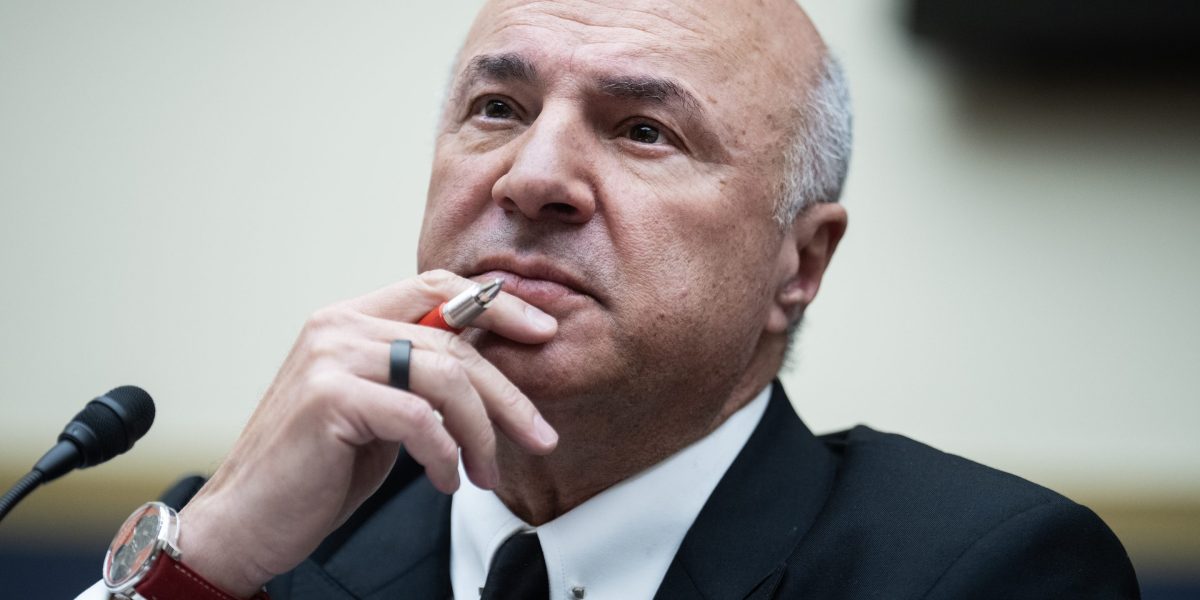
Kevin O’Leary doesn’t care if you work from your basement. He just wants to see if you can ‘execute’

Kevin O'Leary doesn't care if you work from your basement. He just wants to see if you can ‘execute’

  • Trending
  • Comments
  • Latest
edit post
Foreclosure Starts are Up 19%—These Counties are Seeing the Highest Distress

Foreclosure Starts are Up 19%—These Counties are Seeing the Highest Distress

February 24, 2026
edit post
North Carolina Updates How Wills Can Be Stored

North Carolina Updates How Wills Can Be Stored

February 10, 2026
edit post
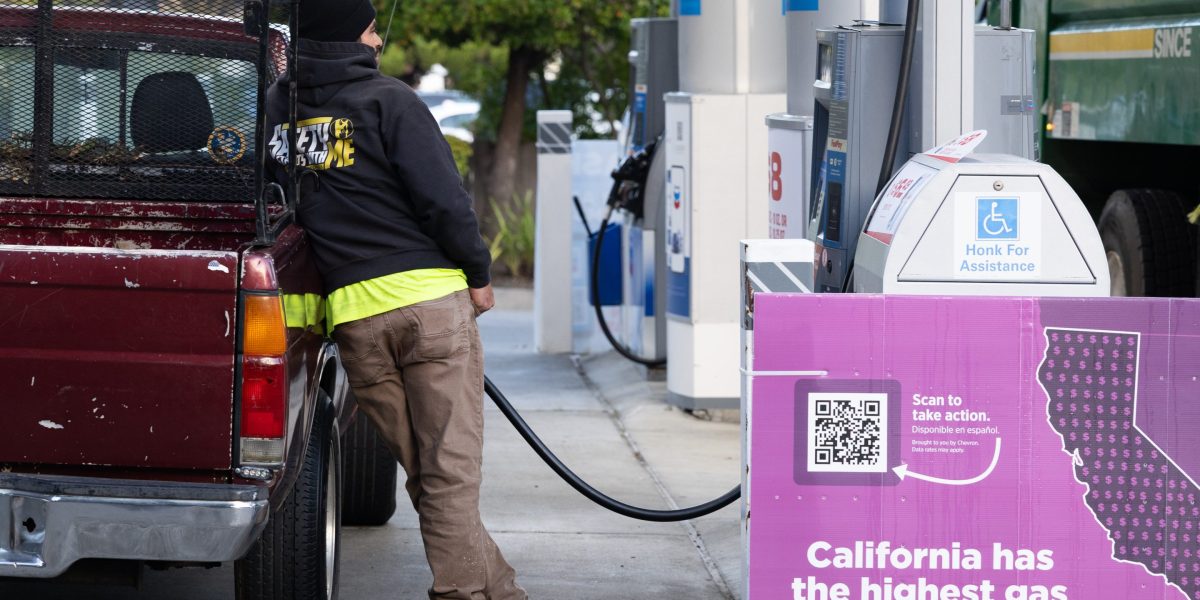
Gasoline-starved California is turning to fuel from the Bahamas

Gasoline-starved California is turning to fuel from the Bahamas

February 15, 2026
edit post
Where Is My 2025 Oregon State Tax Refund

Where Is My 2025 Oregon State Tax Refund

February 13, 2026
edit post
7 States Reporting a Surge in Norovirus Cases

7 States Reporting a Surge in Norovirus Cases

February 22, 2026
edit post
2025 Delaware State Tax Refund – DE Tax Brackets

2025 Delaware State Tax Refund – DE Tax Brackets

February 16, 2026
edit post
Boundless Bio Inc (BOLD) Q4 2025 Earnings Results

Boundless Bio Inc (BOLD) Q4 2025 Earnings Results

0
edit post
Best Devotionals & Christian Books for Women

Best Devotionals & Christian Books for Women

0
edit post
I almost left my career at 35 to do the thing I actually wanted and I chose safety instead — and the life I have now is good by every measure except the one that visits me at 4 AM and asks what would have happened if I’d been brave enough for six months

I almost left my career at 35 to do the thing I actually wanted and I chose safety instead — and the life I have now is good by every measure except the one that visits me at 4 AM and asks what would have happened if I’d been brave enough for six months

0
edit post
Vendor Rebate Programs

Vendor Rebate Programs

0
edit post
5 Ways the ,100 Part D Cap Works in 2026 (and What It Doesn’t Cover)

5 Ways the $2,100 Part D Cap Works in 2026 (and What It Doesn’t Cover)

0
edit post
Apex Trader Funding Review (2025): Rules, Payouts & Discount Code

Apex Trader Funding Review (2025): Rules, Payouts & Discount Code

0
edit post
I almost left my career at 35 to do the thing I actually wanted and I chose safety instead — and the life I have now is good by every measure except the one that visits me at 4 AM and asks what would have happened if I’d been brave enough for six months

I almost left my career at 35 to do the thing I actually wanted and I chose safety instead — and the life I have now is good by every measure except the one that visits me at 4 AM and asks what would have happened if I’d been brave enough for six months

March 10, 2026
edit post
Global Market | Strait of Hormuz tensions keeping oil markets on edge: Richard Yetsenga

Global Market | Strait of Hormuz tensions keeping oil markets on edge: Richard Yetsenga

March 10, 2026
edit post
Kevin O’Leary doesn’t care if you work from your basement. He just wants to see if you can ‘execute’

Kevin O’Leary doesn’t care if you work from your basement. He just wants to see if you can ‘execute’

March 10, 2026
edit post
Mitzpe Ramon: Oasis of calm amid frenzy of war

Mitzpe Ramon: Oasis of calm amid frenzy of war

March 10, 2026
edit post
Subcutaneous Microchip Mandates | Armstrong Economics

Subcutaneous Microchip Mandates | Armstrong Economics

March 10, 2026
edit post
ETMarkets Smart Talk | The future is omnichannel, not RM-only or tech-only: Srikanth Subramanian on wealth management’s next phase

ETMarkets Smart Talk | The future is omnichannel, not RM-only or tech-only: Srikanth Subramanian on wealth management’s next phase

March 9, 2026
The Adviser Magazine

The first and only national digital and print magazine that connects individuals, families, and businesses to Fee-Only financial advisers, accountants, attorneys and college guidance counselors.

CATEGORIES

  • 401k Plans
  • Business
  • College
  • Cryptocurrency
  • Economy
  • Estate Plans
  • Financial Planning
  • Investing
  • IRS & Taxes
  • Legal
  • Market Analysis
  • Markets
  • Medicare
  • Money
  • Personal Finance
  • Social Security
  • Startups
  • Stock Market
  • Trading

LATEST UPDATES

  • I almost left my career at 35 to do the thing I actually wanted and I chose safety instead — and the life I have now is good by every measure except the one that visits me at 4 AM and asks what would have happened if I’d been brave enough for six months
  • Global Market | Strait of Hormuz tensions keeping oil markets on edge: Richard Yetsenga
  • Kevin O’Leary doesn’t care if you work from your basement. He just wants to see if you can ‘execute’
  • Our Great Privacy Policy
  • Terms of Use, Legal Notices & Disclosures
  • Contact us
  • About Us

© Copyright 2024 All Rights Reserved
See articles for original source and related links to external sites.

Welcome Back!

Login to your account below

Forgotten Password?

Retrieve your password

Please enter your username or email address to reset your password.

Log In
No Result
View All Result
  • Home
  • Financial Planning
    • Financial Planning
    • Personal Finance
  • Market Research
    • Business
    • Investing
    • Money
    • Economy
    • Markets
    • Stocks
    • Trading
  • 401k Plans
  • College
  • IRS & Taxes
  • Estate Plans
  • Social Security
  • Medicare
  • Legal

© Copyright 2024 All Rights Reserved
See articles for original source and related links to external sites.