No Result
View All Result
SUBMIT YOUR ARTICLES
  • Login
Thursday, March 26, 2026
TheAdviserMagazine.com
  • Home
  • Financial Planning
    • Financial Planning
    • Personal Finance
  • Market Research
    • Business
    • Investing
    • Money
    • Economy
    • Markets
    • Stocks
    • Trading
  • 401k Plans
  • College
  • IRS & Taxes
  • Estate Plans
  • Social Security
  • Medicare
  • Legal
  • Home
  • Financial Planning
    • Financial Planning
    • Personal Finance
  • Market Research
    • Business
    • Investing
    • Money
    • Economy
    • Markets
    • Stocks
    • Trading
  • 401k Plans
  • College
  • IRS & Taxes
  • Estate Plans
  • Social Security
  • Medicare
  • Legal
No Result
View All Result
TheAdviserMagazine.com
No Result
View All Result
Home Market Research Economy

New Entries in the History of Hyperinflation

by TheAdviserMagazine
2 months ago
in Economy
Reading Time: 4 mins read
A A
New Entries in the History of Hyperinflation
Share on FacebookShare on TwitterShare on LInkedIn


I know that hyperinflation of the US dollar seems like a remote possibility, but alerting yourself to the possibility of a phenomena can improve your understanding of the phenomena and related issues, allow you to make cautionary considerations, and permit yourself to be psychologically toughened to the entire class of remote, but dangerous, events. During the actual occurrence of such phenomena fear and paralysis can occur. Therefore, prior rational thought, learning, and action can help displace such paralysis and make you better prepared to act in the real world.

At Minor Issues I have examined such things as the possibility of bull markets in monetary metals and commodities, black swans in the stock market, skyscraper curses, the reversal in the long run trend in interest rates, and of seemingly unlikely hyperinflation of the US dollar. Such events are not considered or are only considered minor issues in the mainstream media. I place a great deal of importance on such issues for their real-world educational value.

I link to the previous episode on hyperinflation from September of last year. I also link to the episode on the gold silver ratio from May of last year.

For this week’s episode, I would like to alert you to a new paper by Professor Steve Hanke, “On Hyperinflation: New Evidence from Zambia, the Central African Franc Zone, and Belarus” by Steve H. Hanke and Nicole Saade. Professor Hanke is Distinguished Senior Scholar at the Mises Institute and is a leading scholar on the history of hyperinflation and the foremost consultant on resolving hyperinflation, among other things.

This paper extends the history and data of hyperinflations to some more recent minor cases of hyperinflation that includes Zambia, which experienced hyperinflation in 1984-1986 as well as 1988, the Central African Franc Zone—a monetary union of more than a dozen sub-Saharan countries in 1994—and Belarus in 2011. These additions bring the total entries in the Hanke-Krus Hyperinflation database to 71 episodes, where hyperinflation is established with a monthly reading of price inflation, variously measured, in excess of 50 percent.

While the difficulties of measuring price inflation under hyperinflation (and sometimes primitive conditions) are large and the minimum time frame seems rather slight, the enormity of the 50 percent minimum measure gives us some clarity concerning the severity of conditions. Imagine all your cash, bank accounts, salary, life insurance losing half its value in one month!

Before we take a brief look at the background of these hyperinflation episodes it is important to note that the economic and social impact of hyperinflation is extreme and difficult to recover from. The overall impact of hyperinflation parallels that of war where a high percentage of the population is killed and the capital stock is destroyed. Professor Salerno takes the next step with his examination of the impact of the German hyperinflation on the destruction of the human personality.

Zambia is the landlocked African nation, formerly known as Northern Rhodesia. It experienced economic growth on the basis of copper mining until after the gold standard, when falling export prices—especially copper and rising prices, especially oil—took a toll. After 1982, relative stability was replaced by surging inflation. This was driven by government deficits and money printing, and fully unleashed by a floating exchange rate regime that saw hyperinflation levels five times between 1984 and 1989. Starting in 1994, the government adopted some free-market policies and imposed a few austerity measures on the government that ended the hyperinflation period.

The CFA Franc Zone was a union of more than a dozen sub-Saharan African nations to use the French franc as a basis of their local currency. By the early 1990s local exports were becoming increasingly uncompetitive in world markets due to the strong value of the currency. A subsequent devaluation of the currency caused a one-off move into hyperinflation territory of 101 percent/month in January of 1994. The newly-added case of Belarus was also relatively confined, barely reaching the 50 percent threshold for only one month. Both of these latter reports occurred due to political policy mismanagement and were corrected rather quickly so that the long-term damage was relatively limited.

It should be noted that these episodes did not occur recently but could only be included recently in the data set as the result of detailed research and data construction. In other words, of the recorded 71 hyperinflations, these episodes were some of the least obvious and lesser-known inflationary experiences. They should not be considered typical.

Possession of gold and silver is considered by some to be a financial fire extinguisher for family finances, but it has also been considered a primary alarm signal for economic trouble in the world economy—a canary in the coal mine so to speak.

In economic terms, gold is often the first commodity to react to economic conditions, both up/bad and down/good. This is often followed by silver, precious metals, petroleum, industrial metals, and other commodities with various lags. This tendency should certainly be viewed as a warning of price inflation to come, even if hyperinflation would also involve a great deal of government profligacy and financial mismanagement and central bank willingness to accommodate with money printing.

Professor Hanke’s efforts should be commended. The Hanke-Krus Hyperinflation database of 71 episodes points out that hyperinflation is a more common phenomenon than we all care to think about. Academics, graduate students, and even college and high school students should consider exploring the topic of hyperinflation. It is important and interesting from the broad spectrum of human sciences. In America, the impact of hyperinflation during the Revolutionary War and post-war recovery is particularly important.




Source link

Tags: entriesHistoryHyperinflation
ShareTweetShare
Previous Post

What is a thin credit file?

Next Post

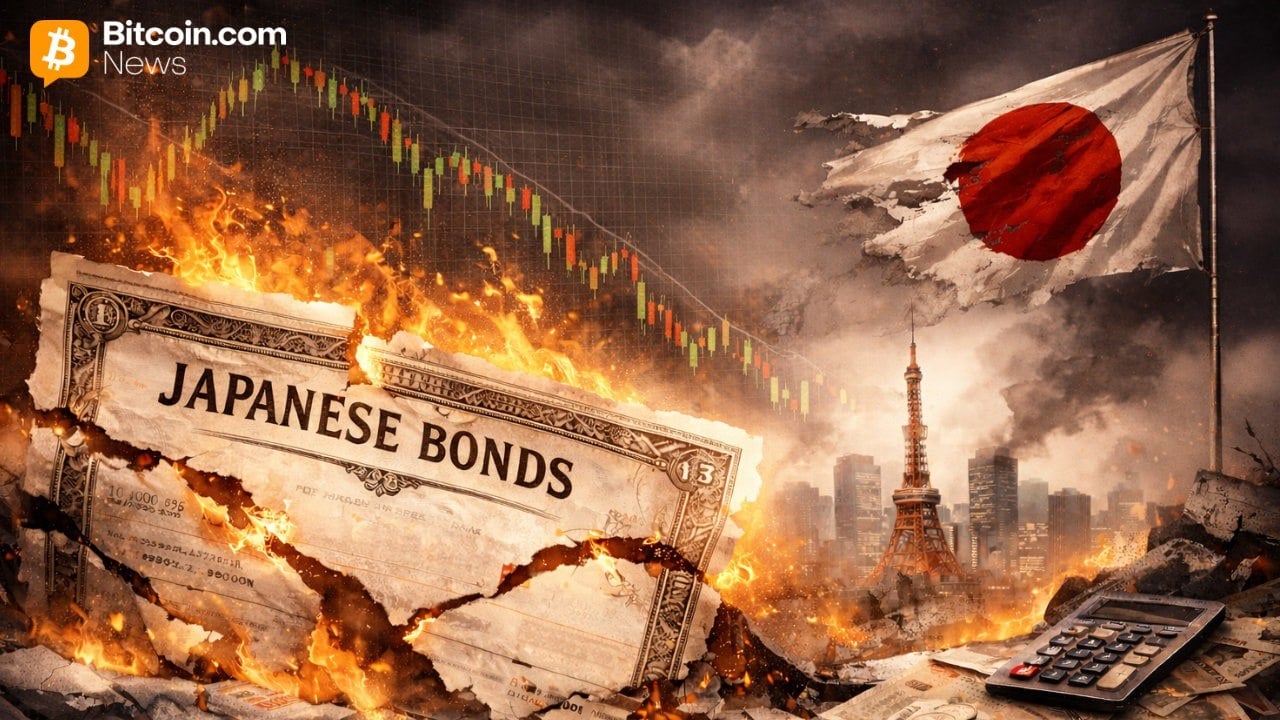
Japanese Bonds Crashing — Bitwise Says the US Fiscal Path Is No Safer

Related Posts

edit post
Durham Police and Prosecutors Committed Numerous Crimes in the Duke Lacrosse Case – And Escaped Meaningful Punishment

Durham Police and Prosecutors Committed Numerous Crimes in the Duke Lacrosse Case – And Escaped Meaningful Punishment

by TheAdviserMagazine
March 26, 2026
0

Through a campaign of lying—aided by the police, the media, and Duke University’s administration and faculty leadership—Durham County District Attorney...

edit post
Global forecasting group sees U.S. inflation at 4.2% this year, much higher than Fed estimate

Global forecasting group sees U.S. inflation at 4.2% this year, much higher than Fed estimate

by TheAdviserMagazine
March 26, 2026
0

The Iran war and its impact on the global energy market will keep headline U.S. inflation this year well above...

edit post
The Theory of the Bottom 99 Percent: The Cantillon Effect

The Theory of the Bottom 99 Percent: The Cantillon Effect

by TheAdviserMagazine
March 26, 2026
0

I want to dispel the claim in the minds of the establishment media that depicts free market Austrian economists as...

edit post
Netanyahu Tries To Sabotage Trump’s Peace Plan

Netanyahu Tries To Sabotage Trump’s Peace Plan

by TheAdviserMagazine
March 26, 2026
0

COMMENT: Marty, you are always ahead of the game. You are correct. Netanyahu has rejected Trump’s 15-point plan. He is...

edit post
Seabed 2030 – The Globalist Project Beneath The Water

Seabed 2030 – The Globalist Project Beneath The Water

by TheAdviserMagazine
March 26, 2026
0

Seabed 2030 is a global initiative launched in 2017 by the Nippon Foundation and GEBCO, operating under the International Hydrographic...

edit post
Mortgage Demand Collapses As Rates Surge

Mortgage Demand Collapses As Rates Surge

by TheAdviserMagazine
March 26, 2026
0

The latest data confirms what we have been building toward for months, as mortgage demand has now dropped sharply with...

Next Post
edit post
Japanese Bonds Crashing — Bitwise Says the US Fiscal Path Is No Safer

Japanese Bonds Crashing — Bitwise Says the US Fiscal Path Is No Safer

edit post
Bessent says Powell attending Supreme Court arguments on Lisa Cook is a mistake

Bessent says Powell attending Supreme Court arguments on Lisa Cook is a mistake

  • Trending
  • Comments
  • Latest
edit post
Massachusetts loses billions in income after millionaire tax

Massachusetts loses billions in income after millionaire tax

March 24, 2026
edit post
Publix to Open 5 New Stores by End of April. See Upcoming Locations.

Publix to Open 5 New Stores by End of April. See Upcoming Locations.

March 20, 2026
edit post
Who Is Legally Next of Kin in North Carolina?

Who Is Legally Next of Kin in North Carolina?

February 28, 2026
edit post
The Growing Movement to End Property Taxes Continues in Kentucky, And What It Means For Investors

The Growing Movement to End Property Taxes Continues in Kentucky, And What It Means For Investors

March 2, 2026
edit post
Foreclosure Starts are Up 19%—These Counties are Seeing the Highest Distress

Foreclosure Starts are Up 19%—These Counties are Seeing the Highest Distress

February 24, 2026
edit post
Georgia’s 0 Tax Rebate Is Moving Forward — Here’s When You Can Expect Your 2026 Check

Georgia’s $250 Tax Rebate Is Moving Forward — Here’s When You Can Expect Your 2026 Check

March 21, 2026
edit post
REX American Resources Corporation (REX) Q4 2025 Earnings: Key Takeaways

REX American Resources Corporation (REX) Q4 2025 Earnings: Key Takeaways

0
edit post
Shield AI projecting more than 0M revenue this year as valuation more than doubles to .7B

Shield AI projecting more than $540M revenue this year as valuation more than doubles to $12.7B

0
edit post
Isracard hijacks El Al’s Fly Card from ICC CAL

Isracard hijacks El Al’s Fly Card from ICC CAL

0
edit post
Best Crypto to Buy Now as Expert Predicts a Strong Summer 2026 Rally

Best Crypto to Buy Now as Expert Predicts a Strong Summer 2026 Rally

0
edit post
Netflix Raises Subscription Costs. See New Monthly Prices.

Netflix Raises Subscription Costs. See New Monthly Prices.

0
edit post
The Next Metric Investors Need to Keep Track of is…Grocery Prices?

The Next Metric Investors Need to Keep Track of is…Grocery Prices?

0
edit post
Shield AI projecting more than 0M revenue this year as valuation more than doubles to .7B

Shield AI projecting more than $540M revenue this year as valuation more than doubles to $12.7B

March 26, 2026
edit post
Netflix Raises Subscription Costs. See New Monthly Prices.

Netflix Raises Subscription Costs. See New Monthly Prices.

March 26, 2026
edit post
Trapped in private credit, investors wait to pull out B

Trapped in private credit, investors wait to pull out $5B

March 26, 2026
edit post
Elizabeth Warren rips Federal Reserve chair pick Kevin Walsh

Elizabeth Warren rips Federal Reserve chair pick Kevin Walsh

March 26, 2026
edit post
QDRO Acquisition prices 0M IPO (QADR:Pending)

QDRO Acquisition prices $200M IPO (QADR:Pending)

March 26, 2026
edit post
The most expensive thing about growing up poor isn’t what you couldn’t afford. It’s the decision-making architecture it installs, where every choice runs through a scarcity filter that adds cost to options other people experience as free.

The most expensive thing about growing up poor isn’t what you couldn’t afford. It’s the decision-making architecture it installs, where every choice runs through a scarcity filter that adds cost to options other people experience as free.

March 26, 2026
The Adviser Magazine

The first and only national digital and print magazine that connects individuals, families, and businesses to Fee-Only financial advisers, accountants, attorneys and college guidance counselors.

CATEGORIES

  • 401k Plans
  • Business
  • College
  • Cryptocurrency
  • Economy
  • Estate Plans
  • Financial Planning
  • Investing
  • IRS & Taxes
  • Legal
  • Market Analysis
  • Markets
  • Medicare
  • Money
  • Personal Finance
  • Social Security
  • Startups
  • Stock Market
  • Trading

LATEST UPDATES

  • Shield AI projecting more than $540M revenue this year as valuation more than doubles to $12.7B
  • Netflix Raises Subscription Costs. See New Monthly Prices.
  • Trapped in private credit, investors wait to pull out $5B
  • Our Great Privacy Policy
  • Terms of Use, Legal Notices & Disclosures
  • Contact us
  • About Us

© Copyright 2024 All Rights Reserved
See articles for original source and related links to external sites.

Welcome Back!

Login to your account below

Forgotten Password?

Retrieve your password

Please enter your username or email address to reset your password.

Log In
No Result
View All Result
  • Home
  • Financial Planning
    • Financial Planning
    • Personal Finance
  • Market Research
    • Business
    • Investing
    • Money
    • Economy
    • Markets
    • Stocks
    • Trading
  • 401k Plans
  • College
  • IRS & Taxes
  • Estate Plans
  • Social Security
  • Medicare
  • Legal

© Copyright 2024 All Rights Reserved
See articles for original source and related links to external sites.