No Result
View All Result
SUBMIT YOUR ARTICLES
  • Login
Sunday, April 19, 2026
TheAdviserMagazine.com
  • Home
  • Financial Planning
    • Financial Planning
    • Personal Finance
  • Market Research
    • Business
    • Investing
    • Money
    • Economy
    • Markets
    • Stocks
    • Trading
  • 401k Plans
  • College
  • IRS & Taxes
  • Estate Plans
  • Social Security
  • Medicare
  • Legal
  • Home
  • Financial Planning
    • Financial Planning
    • Personal Finance
  • Market Research
    • Business
    • Investing
    • Money
    • Economy
    • Markets
    • Stocks
    • Trading
  • 401k Plans
  • College
  • IRS & Taxes
  • Estate Plans
  • Social Security
  • Medicare
  • Legal
No Result
View All Result
TheAdviserMagazine.com
No Result
View All Result
Home Market Research Economy

Hyperinflating the Goat | Mises Institute

by TheAdviserMagazine
1 month ago
in Economy
Reading Time: 5 mins read
A A
Hyperinflating the Goat | Mises Institute
Share on FacebookShare on TwitterShare on LInkedIn


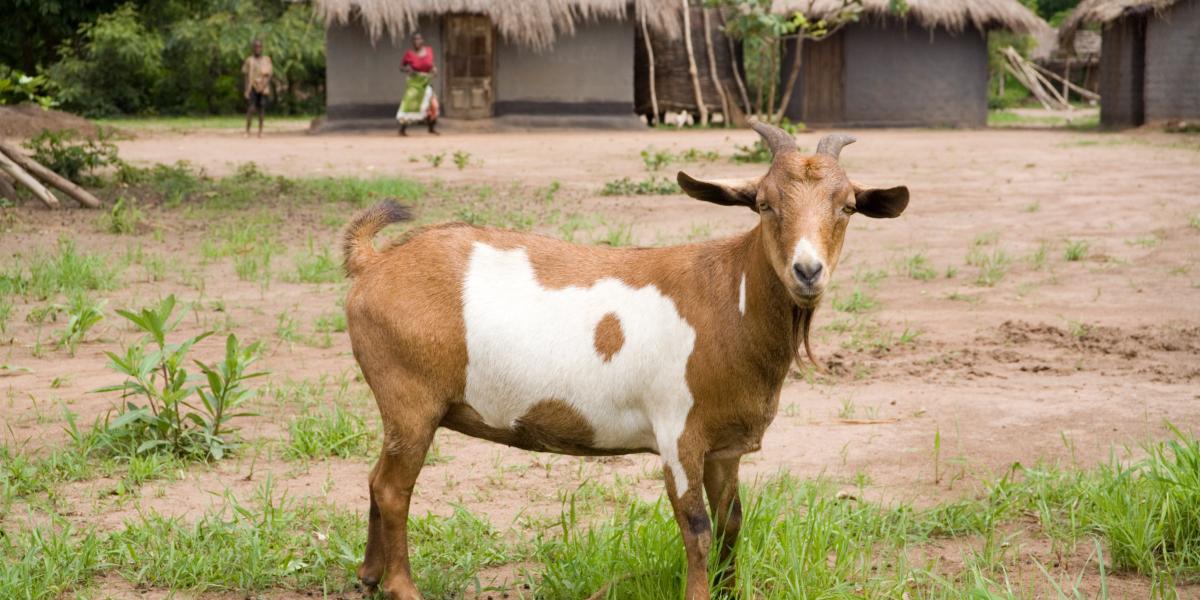
Goats are everywhere in Malawi. With a population exceeding 10 million as of 2024 and growing, they will surely overtake the human adult population of 12 million soon if they haven’t already. As a visitor leaving the international airport you will find them grazing at their leisure as far as the eye can see, and you’ll dodge them as they dash across the road or lie in the middle of it being torn to shreds by crows.

While goat milk is seldom consumed—the meat is a luxury reserved for special occasions and goat cheese is basically unknown—the goats of Malawi perform a much more essential function. They offer a store of value, accessible even to the poorest, a portable savings technology that outperforms all others.

In a country where the official inflation rate averaged 28.1 percent over the past year but the central bank caps the interest rate on savings at 4.3 percent, the currency devalues suddenly overnight (most recently by 44 percent in November 2023) and stocks, bonds, and real estate are inaccessible to the majority, goats truly live up to their name as the Greatest Of All Time (GOAT). A few years ago, they sold for 15,000 Malawi Kwacha (MWK) but now fetch north of 100,000 MWK. They are perhaps the closest thing we have to challenging Michael Saylor’s Bitcoin thesis that there is no second best. Because if Malawi’s central bank devalues significantly again (and it is surely only a matter of time) without putting the brakes on the 44.4 percent annual money supply growth, the goat will surely enter price discovery.

But this store of value is rapidly destroying all value.

During the maize-growing season between late December and late March, you would observe the goats being shepherded in an orderly fashion and corralled. Maize is the staple food of Malawians and is mostly grown during this single season, the rainy season. If the crop fails, it means widespread hunger. And everyone knows that goats eat everything.

Unfortunately, this disciplined shepherding ends once the maize has been harvested and the goats are set loose to wantonly graze on whatever takes their fancy. All the new tree saplings and other plants that started to take root during the rains are now picked off one by one. This means there is no reforestation in a country where deforestation is a well-known crisis. Well-intentioned tree planting efforts are defenseless against the goat onslaught, and you can’t stop people from cutting trees when trees are the only fuel available to cook with for the 85 percent living without electricity or gas is charcoal. Just watch the bicycles piled high with the stuff brazenly passing police checkpoints.

The result is that hardly any trees remain. Occasionally you will see a small gathering of beautiful, mature, indigenous trees almost certainly marking a cemetery, the dead seemingly clinging on to some hope of a future. You will also see the occasional mature mango tree—protected for the fruits it bears once a year—and in the hotter areas majestic and untouchable baobab trees. Everywhere else there is nothing.

The Greek island of Samothraki has recently undergone a similar catastrophe. Ravaged by these stomachs on legs, this once-lush island has been turned into a desert, unable to cope with storms and heavy rains. In 2017, the streets became rivers and mudslides washed away homes, taking the medical center away with them and splitting the town hall in half.

In Malawi, we are seeing similar devastating results, with the annual rains and cyclones causing more and more damage every year. Flash floods are now commonplace, destroying crops, sweeping away houses and dissolving roads. Many people lose everything. Some people die. There is nothing to hold the soil together, nothing to prevent the runoff of topsoil or the recently planted seed. The quality and productivity of agricultural land is rapidly depleting and this in a country where over 70 percent of people depend on agriculture for survival. The risk of a poor harvest and hunger grows by the year, driving demand for imported fertilizer and pushing the price of a 50KG bag from MWK 22,000 in 2020 to over MWK 150,000 in September 2025, unaffordable for most.

The store of value destroys all value and it is only getting worse.

Of course, the need to store value outside of the money system is not peculiar to Malawi, but the consequences vary. Across the world, fiat money has not performed the function of a store of value for decades. The US dollar has lost ~98 percent of its purchasing since 1971 when any link to gold was finally abandoned. So other assets have replaced money’s store-of-value function, among them houses, bringing us Generation Rent or a whole life term mortgage. If you can and have the conviction to save in other ways, you can buy stocks and bonds, precious metals or, increasingly, Bitcoin.

But many of these options aren’t available to Malawians. Individuals can’t even legally purchase US dollars unless they have a plane ticket out of the country, this being far out of the reach of the majority. Even then the banks often don’t have any currency to give you and if they do you are required to sell anything you don’t spend back to them at the official rate when you return. So when your money is losing 40+ percent per year you escape in any way you can.

The fact that the price of goats somehow keeps on increasing has not gone unnoticed by the donor class who specialize in devising programs from air-conditioned city suites to “increase incomes” for people living in rural areas. The Greatest Of All Time tick a big box for them because the donor class view the nominal gain when a farmer sells a goat as “increased income,” even though in reality the goat-holder has been engaged in capital preservation, a desperate attempt to escape the rapidly-depreciating currency. Only goats offer the hope that you’ll be able to afford next year’s school fees, buy food if your crop fails, or raise funds for funerals and medical emergencies.

And so, with agriculture becoming ever-riskier and with few other ways to “increase incomes” in rural areas, the Greatest (Value Destroyers) Of All Time emerge as the preferred solution. Believe it or not, it was the same donor class who perpetrated the destruction of Samothraki when—in the name of creating income-generating opportunities for its residents—the EU encouraged ownership of goats by heavily subsidizing them. Today in Malawi, World Vision is just one of the NGOs perpetuating environmental destruction in the name of income generation, in their case distributing 13,000 goats to 2,000 families with the aim that those families will furnish yet more families with their goats’ offspring to help the program (but little else) grow and sustain itself.

We can only hope that this all leads to hyperinflating the goat, increasing their supply so rapidly that their price in money terms crashes and they lose their status as the ultimate store of value. But with annual money supply growth at 44.4 percent, we will need an explosive increase in the goat population to have any hope of cratering the price. And, of course, by that point it will be too late because everything will have been destroyed and Malawi will find itself repurposed as the world’s premier goat yoga retreat.

A better way may be to offer Malawians the freedom to choose an alternative store of value that does not destroy all value. Instead of each household holding on to twelve goats, they could simply hold on to twelve (or better twenty-four) words to their Bitcoin wallet. As with so many of the world’s problems, the solution offered by Bitcoin once again emerges as the Greatest Of All Time.



Source link

Tags: GoatHyperinflatingInstituteMises
ShareTweetShare
Previous Post

50 Years Old and Sick of the Daily Grind? A ‘Mini-Retirement’ Could Be the Answer

Next Post

Leveraging Technology To Rapidly Scale Growth Delivering Financial Planning To Next-Generation Clients: #FASuccess Ep 481 With Adam Dell

Related Posts

edit post
Socrates & The War | Armstrong Economics

Socrates & The War | Armstrong Economics

by TheAdviserMagazine
April 19, 2026
0

QUESTION: Marty, I know you taught Socrates how to analyze rather than what. I remember you saying it checks every...

edit post
What 1971 Set in Motion

What 1971 Set in Motion

by TheAdviserMagazine
April 18, 2026
0

In a free market, the interest rate does one essential job: it tells the truth about time. When households save...

edit post
When AI Agents Trade with AI Agents, Price Discovery Dies

When AI Agents Trade with AI Agents, Price Discovery Dies

by TheAdviserMagazine
April 18, 2026
0

Autonomous AI agents are becoming active economic participants on both sides of market transactions. Enterprise platforms now embed what vendors...

edit post
Central bankers, politicians warn of global risks as Iran war drags on

Central bankers, politicians warn of global risks as Iran war drags on

by TheAdviserMagazine
April 18, 2026
0

A man walks among buildings destroyed in a joint attack by Israel and the United States on April 6, 2026,...

edit post
Fed Governor Waller says Iran war and labor market risks are keeping central bank on hold

Fed Governor Waller says Iran war and labor market risks are keeping central bank on hold

by TheAdviserMagazine
April 17, 2026
0

Christopher Waller, governor of the US Federal Reserve, speaks during the C. Peter McColough Series on International Economics at the...

edit post
Jesus and the Christian Socialist’s Problem of Evil

Jesus and the Christian Socialist’s Problem of Evil

by TheAdviserMagazine
April 17, 2026
0

In philosophy and theology, there is an issue called “theodicy” or the problem of evil. The problem of evil has...

Next Post
edit post
Leveraging Technology To Rapidly Scale Growth Delivering Financial Planning To Next-Generation Clients: #FASuccess Ep 481 With Adam Dell

Leveraging Technology To Rapidly Scale Growth Delivering Financial Planning To Next-Generation Clients: #FASuccess Ep 481 With Adam Dell

edit post
Israeli AI cybersecurity co Surf AI raises m

Israeli AI cybersecurity co Surf AI raises $57m

  • Trending
  • Comments
  • Latest
edit post
Massachusetts loses billions in income after millionaire tax

Massachusetts loses billions in income after millionaire tax

March 24, 2026
edit post
Illinois’ Paid Leave for All Workers Act Takes Effect — Every Employee Now Gets Guaranteed Time Off

Illinois’ Paid Leave for All Workers Act Takes Effect — Every Employee Now Gets Guaranteed Time Off

March 27, 2026
edit post
Virginia Permits ADULT MIGRANT MEN To Attend High School

Virginia Permits ADULT MIGRANT MEN To Attend High School

March 30, 2026
edit post
A 58-year-old left NYC for Miami to save on taxes — then retired early thanks to hidden savings. Here’s the math

A 58-year-old left NYC for Miami to save on taxes — then retired early thanks to hidden savings. Here’s the math

March 30, 2026
edit post
Tax Flight Accelerates In Massachusetts

Tax Flight Accelerates In Massachusetts

April 6, 2026
edit post
Property Tax Relief & Income Tax Relief

Property Tax Relief & Income Tax Relief

April 1, 2026
edit post
What the Allbirds ‘Hail Mary’ says about the AI trade right now

What the Allbirds ‘Hail Mary’ says about the AI trade right now

0
edit post
NewMexit: Secession in the Southwest?

NewMexit: Secession in the Southwest?

0
edit post
.3B Cardone Capital To Launch New Meme Coin, CEO Confirms

$5.3B Cardone Capital To Launch New Meme Coin, CEO Confirms

0
edit post
Iran War Is Driving Up Fertilizer Costs. What Will US Farmers Do?

Iran War Is Driving Up Fertilizer Costs. What Will US Farmers Do?

0
edit post
Market Trading Guide: Buy Shipping Corporation and Power Grid on Monday for short-term gains of up to 29%

Market Trading Guide: Buy Shipping Corporation and Power Grid on Monday for short-term gains of up to 29%

0
edit post
The Impact of the 2025 Reconciliation Law’s Tax Changes on Small Businesses and Lessons for Future Tax Reform

The Impact of the 2025 Reconciliation Law’s Tax Changes on Small Businesses and Lessons for Future Tax Reform

0
edit post
The U.S. has a 2 billion trade surplus you’ve never heard of — and it’s at risk

The U.S. has a $282 billion trade surplus you’ve never heard of — and it’s at risk

April 19, 2026
edit post
.3B Cardone Capital To Launch New Meme Coin, CEO Confirms

$5.3B Cardone Capital To Launch New Meme Coin, CEO Confirms

April 19, 2026
edit post
Iran War Is Driving Up Fertilizer Costs. What Will US Farmers Do?

Iran War Is Driving Up Fertilizer Costs. What Will US Farmers Do?

April 19, 2026
edit post
Psychology says the defining trait of people who always move forward in life isn’t how hard they push — it’s what they do in the hours and days after something breaks them, because the discipline that actually determines a life’s trajectory isn’t the kind that shows up in routines and goals, it’s the kind that surfaces when everything falls apart and nobody would blame you for stopping

Psychology says the defining trait of people who always move forward in life isn’t how hard they push — it’s what they do in the hours and days after something breaks them, because the discipline that actually determines a life’s trajectory isn’t the kind that shows up in routines and goals, it’s the kind that surfaces when everything falls apart and nobody would blame you for stopping

April 19, 2026
edit post
Aluminium prices at record highs: What’s driving the rally and what’s next?

Aluminium prices at record highs: What’s driving the rally and what’s next?

April 19, 2026
edit post
Market Trading Guide: Buy Shipping Corporation and Power Grid on Monday for short-term gains of up to 29%

Market Trading Guide: Buy Shipping Corporation and Power Grid on Monday for short-term gains of up to 29%

April 19, 2026
The Adviser Magazine

The first and only national digital and print magazine that connects individuals, families, and businesses to Fee-Only financial advisers, accountants, attorneys and college guidance counselors.

CATEGORIES

  • 401k Plans
  • Business
  • College
  • Cryptocurrency
  • Economy
  • Estate Plans
  • Financial Planning
  • Investing
  • IRS & Taxes
  • Legal
  • Market Analysis
  • Markets
  • Medicare
  • Money
  • Personal Finance
  • Social Security
  • Startups
  • Stock Market
  • Trading

LATEST UPDATES

  • The U.S. has a $282 billion trade surplus you’ve never heard of — and it’s at risk
  • $5.3B Cardone Capital To Launch New Meme Coin, CEO Confirms
  • Iran War Is Driving Up Fertilizer Costs. What Will US Farmers Do?
  • Our Great Privacy Policy
  • Terms of Use, Legal Notices & Disclosures
  • Contact us
  • About Us

© Copyright 2024 All Rights Reserved
See articles for original source and related links to external sites.

Welcome Back!

Login to your account below

Forgotten Password?

Retrieve your password

Please enter your username or email address to reset your password.

Log In
No Result
View All Result
  • Home
  • Financial Planning
    • Financial Planning
    • Personal Finance
  • Market Research
    • Business
    • Investing
    • Money
    • Economy
    • Markets
    • Stocks
    • Trading
  • 401k Plans
  • College
  • IRS & Taxes
  • Estate Plans
  • Social Security
  • Medicare
  • Legal

© Copyright 2024 All Rights Reserved
See articles for original source and related links to external sites.