The alarming political drift further away from freedom taking place in Europe must be seen against the background of an economic coercion that has been practiced for many decades on the Old Continent.
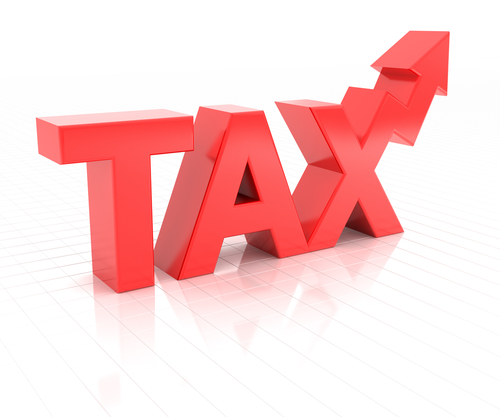
The situation is emphatically not one of Western societies with free and vibrant economies, in which now, suddenly, privacy and freedom of speech is under threat. It is one where economic freedom has been under retreat for decades, not least through stealthy, regular increases of the fiscal pressure, now reaching almost unsustainable levels for a healthy economic life in many European countries.
Stifling Europe’s Economies
Freedom is taken for granted in the West, and even takes second place compared to democracy, in the minds of many Europeans. Yet, it is difficult to qualify a society as “free” under the crushing fiscal pressure that is stifling Europe’s economies. Top effective marginal tax rates in Europe are simply eye-watering. But most stunning perhaps is that average wage earners in many countries cannot even keep half of what their companies pay for them (i.e., including employer charges).
When European enterprises must postpone, reduce, or cancel investments because of heavy payroll and corporate taxes, the entire society is hurt economically, through stagnating wages, increased unemployment, disincentive to work, and lack of innovation. Though there are other factors contributing as well, such as energy and red tape, the effects of taxation are taking a toll. As Murray Rothbard wrote in Power and Market (1970): “Taxation is a coercive, non-productive act; it shifts resources from producers to non-producers and therefore lowers production.”
Europe cannot then be called a zone of economic “freedom,” notwithstanding the unreasonably high indices generally given European countries by the Heritage Foundation. Moreover, the Laffer curve shows what many European politicians seem incapable of learning: that beyond a certain level of taxation, tax receipts will drop as this state parasitism slowly weakens the societal host. As the few remaining French libertarians say: “trop d’impôt tue l’impôt” (too much tax kills tax).
When the state seizes a significant part of a society’s generated wealth and inefficiently redistributes part of it, while bureaucratically squandering the rest in various ways, this cannot be called a state of economic freedom, though some claim it is “social justice.” Thus, Rothbard again, in Power and Market (1970): “Every tax imposes an excess burden — a loss of utility and welfare over and above the amount of tax money collected.”
The Consent of the Governed?
European citizens have been dimly aware of this situation, but have been convinced that what they lose in economic freedom they gain in security and other social benefits. This is the age-old bargain of substituting security for freedom, which is a slippery slope towards authoritarianism and the state’s ever deeper involvement in society.
This position is faulty both on practical and moral grounds. From a practical perspective, it’s obvious for most people that the security provided by the state today is patchy to say the least. Crime and insecurity are on the rise in Europe, which confirms that the bogus concept of “social contract” has nothing to do with a real contract, since one party to this fake “contract”—the state, the one with the laws and the guns—can and does violate it with impunity time and time again.
Indeed, the massive state redistribution of citizens’ wealth takes place without the express consent of society’s net contributors, working Europeans, and therefore exposes this “social contract” false narrative. An implicit “consent of the governed” obviously cannot be accepted, since it is obtained—when it is obtained—through subtle forms of propaganda.
Europeans would do well to remember the slogan of the American colonists: “No taxation without representation.” Yet, the principle of getting the consent from the people on issues of taxation is European and can be traced all the way back to the Magna Carta in 1215. Bruno Leoni wrote in Freedom and the Law (1961): “An early medieval version of the principle, ‘no taxation without representation,’ was intended as ‘no taxation without the consent of the individual taxed.’”
Even as late as the 19th century, most tax-levying states were still far closer than today to the ideal of “consensual taxation,” as formalized by Article 14 of the Declaration of the Rights of Man and of the Citizen (1789):
All citizens have the right to ascertain, either personally or through their representatives, the necessity of the public contribution, to consent to it freely, to monitor its use, and to determine its amount, basis of assessment, collection, and duration.
As a sidenote, it is often forgotten that this text is, since 1971, is officially part of the current French constitution. In order to get around this kind of embarrassing “obligation,” two forms of tax consent have been distinguished by modern statist theorists: consent to taxation, representing the social acceptance of the principle of taxation; and consent of taxation, representing the political and legal acceptance of taxation. But this hairsplitting feels artificial since the state is the only political entity that can impose taxes on society.
Yet, the question of consent to/of taxation is a constant headache for European administrations, because many civil servants are understandably concerned that people will object to the high fiscal pressure. But instead of strictly implementing Art. 14 above, and letting the Europeans majorities express their opinion on the acceptable level of taxation in different areas and adjusting public spending accordingly, the kneejerk reaction of the state administrators is instead to try to increase the people’s consent to taxation, while also increasing tax levels.
A Single, Indivisible Freedom
Actually, economic freedom is also eminently political; there is only one freedom, though it can be labeled in different ways depending on the topic. Political and economic freedom are just two sides of the same concept, because personal and company income is property. This is the definition of freedom as the right to property; or, said negatively, it is the absence of state coercion.
This leads straight to the immoral side of taxation. For, if there is no explicit consent to taxation of income, then it should be seen as legalized, yet insidious, theft of property. Rothbard again in Man, Economy, and State (1962): “All government actions rest on the fundamental immoral act of taxation, which is the taking of property by coercion.”
The bitter irony of Europe’s lack of economic freedom today is that European thinkers realized and expressed an understanding for it through their works. Cantillon, Quesnay, Hume, Smith, Turgot, Bastiat, Spencer, and Mises, to name the important ones, understood that the threats to freedom in society come exclusively from the state. Frédéric Bastiat called taxation legal plunder: “When plunder becomes a way of life for a group of men in a society, over the course of time they create for themselves a legal system that authorizes it and a moral code that glorifies it.”
Yet, this long intellectual tradition of freedom in Europe was sidelined at the turn of the last century, replaced by socialist and statist views promoting ever more “rights” for all. The concept of “rights” was expanded through decades of statist policies founded on the often-intentional confusion between liberty, democracy, and equality. What the majority of Europeans might finally see only the hard way, is that freedom must be cherished and defended again in order to arrest the economic and political decline of their societies. The only solution for Europe to stay competitive and grow naturally again is to release fiscal coercion. This means taking the taxman’s jackboot off the throat of working Europeans, in order to liberate Europe’s economies.
Concretely, this means a massive reduction of all main taxes rates, with an even sharper reduction of public spending, and a pullback of the state from society. Such a program would not only increase freedom in Europe but also lead to a burst of investment and entrepreneurship as well as creativity and optimism, which have all been too long repressed. Like a coiled spring, Europe can be set free, if only she could be unshackled from the chains of taxation.