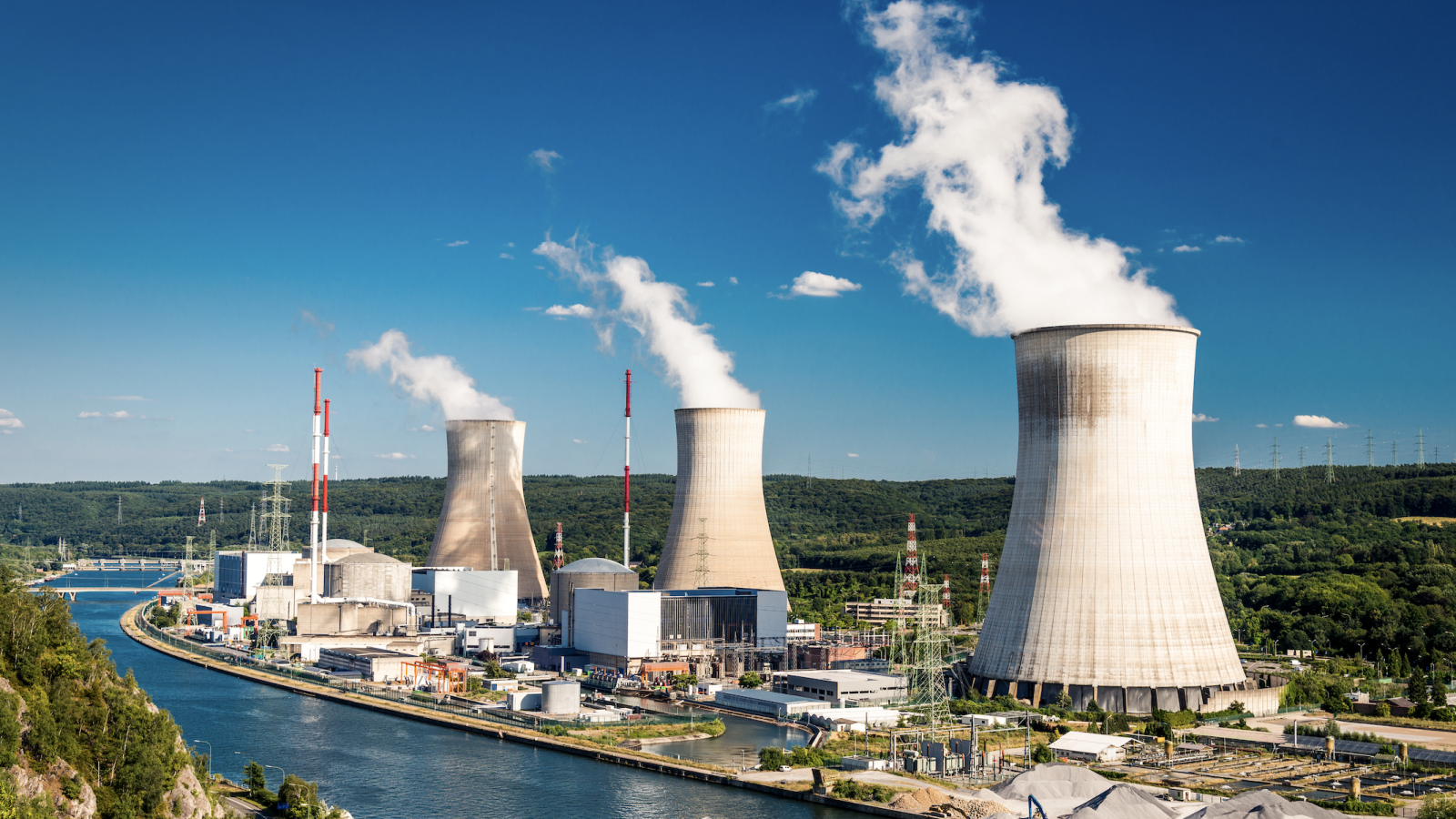
For years, politicians across the Western world have insisted that windmills and solar panels would power the future while reliable energy sources were dismantled in the name of climate policy. Now reality is beginning to intrude. Canada is preparing to unveil a national electricity strategy centered on expanding nuclear power as governments confront a basic problem they ignored for years — electricity demand is rising far faster than their green policies ever anticipated.
Artificial intelligence, data centers, and electrification mandates are dramatically increasing power demand across North America. At the same time, governments closed coal plants, restricted natural gas, and stalled nuclear projects for ideological reasons. The result has been rising electricity prices and growing concern about long-term energy security.
Canada is now quietly acknowledging what engineers and economists have been saying for years. Nuclear power remains one of the few reliable baseload energy sources capable of supporting a modern industrial economy. Several new reactors are already planned or under construction, and the government’s upcoming strategy is expected to accelerate those projects.
Canada is building a new generation of nuclear reactors known as small modular reactors (SMRs). The most important project is the Darlington New Nuclear Project in Ontario. Ontario Power Generation has begun construction of the first BWRX-300 small modular reactor at the Darlington site, with the reactor expected to come online around 2029–2030.
The Darlington project is significant because it is expected to become the first grid-scale SMR operating in a G7 country. The government has approved a full fleet of four SMRs at the site, which together could produce about 1,200 megawatts of electricity — enough to power roughly 1.2 million homes. Each reactor is a GE Hitachi BWRX-300 design that produces around 300 megawatts of power and is smaller and less complex than traditional nuclear plants, which is intended to reduce construction costs and speed up deployment.
At the same time, Canada is completing major refurbishment projects on existing nuclear plants such as the Darlington Nuclear Generating Station. This refurbishment extends the facility’s life for decades, preserves thousands of jobs, and continues to produce reliable baseload electricity.
Beyond individual projects, the Canadian government is preparing to release a national electricity and nuclear strategy to accelerate nuclear development and provide investors with clearer policy direction as electricity demand rises sharply.
This shift exposes the contradiction that has defined Western energy policy. Governments attempted to restructure entire energy systems based on political narratives rather than economic reality. Now they are discovering that the industrial world cannot function without stable, large-scale electricity generation. The return to nuclear is less about environmental policy and more about economic survival.

I will be speaking in Vancouver on March 31 at the 2026 World Outlook Conference. The discussion will be tailored to the Canadian investor, as it is paramount to understand what is on the horizon. The next few years will be volatile to say the least, and the best we can do is to prepare for what is to come. I have refrained from sharing the full scope of the glaring Turning Points and Panic Cycles flashing on Socrates, but I am prepared to give attendees the full story.