No Result
View All Result
SUBMIT YOUR ARTICLES
  • Login
Friday, March 20, 2026
TheAdviserMagazine.com
  • Home
  • Financial Planning
    • Financial Planning
    • Personal Finance
  • Market Research
    • Business
    • Investing
    • Money
    • Economy
    • Markets
    • Stocks
    • Trading
  • 401k Plans
  • College
  • IRS & Taxes
  • Estate Plans
  • Social Security
  • Medicare
  • Legal
  • Home
  • Financial Planning
    • Financial Planning
    • Personal Finance
  • Market Research
    • Business
    • Investing
    • Money
    • Economy
    • Markets
    • Stocks
    • Trading
  • 401k Plans
  • College
  • IRS & Taxes
  • Estate Plans
  • Social Security
  • Medicare
  • Legal
No Result
View All Result
TheAdviserMagazine.com
No Result
View All Result
Home Market Research Economy

Bargaining with the Butcher, Baker, and Brewer: A New Look at Smith’s Most Famous Sentences

by TheAdviserMagazine
8 hours ago
in Economy
Reading Time: 5 mins read
A A
Bargaining with the Butcher, Baker, and Brewer: A New Look at Smith’s Most Famous Sentences
Share on FacebookShare on TwitterShare on LInkedIn


“Give us this day our daily bread.” Adam Smith was at best an indifferent Kirk of Scotland churchman, but he would have known these words, which Jesus prescribes to his followers in the Sermon on the Mount, very well. The Lord’s Prayer speaks to one of the most basic questions of human survival. How will we be fed? Where is the next meal coming from?

These questions were important to Smith. His answer to them appears in what Samuel Fleischacker has called “the most famous sentences [Smith] ever wrote,” in the opening chapters of the Wealth of Nations:  “It is not from the benevolence of the butcher, the brewer, or the baker that we expect our dinner, but from their regard to their own interest.  We address ourselves, not to their humanity but to their self-love, and never talk to them of our own necessities but of their advantages” (WN 1.27).

Much separates Jesus’ prayer from Smith’s political economy. For one thing, the eighteenth-century Scotsman imagines a more opulent dinner than the first-century Judean, accompanying our daily bread with beef and beer. Yet I wish to suggest that they are more similar than we have often recognized. For Smith, as for Jesus, the important thing about getting food is that we need to ask for it.

Smith’s famous sentences about the butcher, brewer, and baker have often been taken to place interest (often silently emended to “self-interest”) at the root of human activity. Gregory Mankiw’s widely used introductory economics textbook glosses them in just this way: “Smith is saying that participants in the economy are motivated by self-interest.” Smith could have said this. His famous sentences might have read “The butcher, brewer and baker provide us with dinner not out of benevolence, but out of self-interest. They act not out of humanity, but out of self-love, and seek their own advantage.”

But this is not what Smith wrote. Verbs of judgment and reflection (“expect,” “regard”), as well as persuasive communication (“address,” “talk”) distinguish Smith’s actual argument from the simpler alternative I have just given, and from Mankiw’s paraphrase. For Smith, getting dinner means talking to people, specifically about “their advantages.” These verbs of communication are not empty flourishes; rather, they reveal a larger line of thought which is merely implied in this passage but is spelled out at greater length in Smith’s discussion of the role of interest in retail market transactions in the Lectures on Jurisprudence:

If we should enquire into the principle in the human mind on which this disposition of trucking is founded, it is clearly the natural inclination every one has to persuade.  The offering of a shilling, which to us appears to have so plain and simple a meaning, is in reality offering an argument to persuade one to do so and so as it is for his interest.  Men always endeavor to persuade others to be of their opinion even when the matter is of no consequence to them.  If one advances any thing concerning China or the more distant moon which contradicts what you imagine to be true, you immediately try to persuade him to alter his opinion.  And in this manner every one is practicing oratory on others thro the whole of his life… In this manner they acquire a certain dexterity and adress in managing their affairs, or in other words in the managing of men… This being the constant employment or trade of every man, in the same manner as the artizans invent simple methods of doing their work, so will each one here endeavor to do this work in the simplest manner. This is bartering, by which they adress themselves to the self interest of the person and seldom fail immediately to gain their end. (LJ 352)

In other words: people feel a deep need to persuade other people, even when the subject is a remote one, like China seen from the perspective of Scotland, or even the moon (a topic about which Smith in fact sought to persuade others, in his essay, “History of Astronomy.”) Money is a modern labor-saving device for doing the work of persuasion, analogous to the windmills and automatic boiler valves whose efficiency Smith celebrates in the opening chapters of the Wealth of Nations.

Money, for Smith, is an “argument.” Sometimes it is the right argument, and sometimes it is not.  Smith exemplified the absent-minded professor stereotype, but no memoirist preserves any record of him reading a paper to his baker in hopes of persuading him to furnish the Smith household with bread, nor of offering Jeremy Bentham a guinea to change his mind about usury. As the Lectures on Rhetoric and Belles Lettres make clear, Smith knew that effective persuasion required awareness of genre, and he saw the conventions of different modes of persuasion as distinct: “No one ever made a bargain in verse” (LRBL 137).

Thus we impoverish Smith’s statement about the butcher, brewer, and baker if we reduce it to “participants in the economy are (often) motivated by self-interest,” although that is a claim with which Smith—and many others who see material interest as one among a plurality of human motivations—would agree. Smith’s principle might be more accurately paraphrased thus: “people naturally desire to persuade each other—it’s an impulse at least as basic as speech and reason itself—and have discovered through practice and over time that participants in the eighteenth-century commercial economy can be persuaded by appeals to their interest.” Seen this way, the exchange based on self-interest between vendors and customers is not a paradigm for understanding all human interactions, any more than all human beings use windmills or boiler valves. Rather, such exchange is one case out of a wide class of phenomena that belong under the more general heading of the “natural inclination… to persuade.” It is an important case, because it promotes the beneficent effects of the division of labor, and it therefore assumes an outsized importance in the Wealth of Nations, the part of Smith’s project that considers those effects in great detail. But it is a single case nonetheless.

Why is it important to understand the human “disposition of trucking,” a phrase revised to the more famous “propensity to truck, barter, and exchange,” when Smith composed the Wealth of Nations, as a “necessary consequence of the faculties of reason and speech,” and an expression of the more fundamental “desire to persuade” (WN 1.20; LQ 352)? There are many possible implications, but I’ll close by noting one of special relevance here: Smith’s insight here offers a mirror in which scholars, researchers, and writers of all kinds can see themselves. I have written this essay because I believe that it presents a persuasive reading of Smith’s thought, and I therefore desire to persuade you to understand Smith as I do. Indeed, the fact that I’m writing this piece is an (admittedly modest) piece of evidence in favor of Smith’s claim—and so is every other piece on AdamSmithWorks. Our desire to persuade each other is not reducible to our pursuit of self-interest in a narrow material sense; it is rather a deep feature of human nature, one we share not only with each other but also with the men and women whom we rely on for our food. “Give us this day our daily bread”: Jesus instructs his followers to pray to God in order to be fed. The more worldly Smith likewise believes that food comes from speech, but he suggests that we will instead need to talk to the baker.


[1]  Samuel Fleischacker, On Adam Smith’s Wealth of Nations: A Philosophical Companion (Princeton: Princeton University Press, 2009), 90.[2]  Gregory Mankiw, Principles of Economics, 7th ed. (Stamford, Ct.: Cengage, 2015), 10. Amartya Sen, The Idea of Justice (Cambridge, MA: Harvard University Press, 2009), 186 concurs both with Fleischacker in calling these sentences the “most famous and widely quoted passage from the Wealth of Nations” and with Mankiw in taking them to reduce the motivation for economic exchange to self-interest.[3] See Pierre Force, Self-Interest Before Adam Smith (Cambridge: Cambridge University Press, 2005), 129–30.

Editors’ note: In honor of the 250th anniversary of the publication of An Inquiry into the Nature and Causes of the Wealth of Nations, we are featuring some of our biggest hits from AdamSmithWorks, part of the Liberty Fund network. This piece was originally posted there. 



Source link

Tags: BakerBargainingBrewerButcherFamousSentencesSmiths
ShareTweetShare
Previous Post

I used to think forgiveness meant I had to feel peaceful about what happened. It took me until my late thirties to understand that forgiveness is just the moment you stop carrying someone else’s debt in your own body and it has absolutely nothing to do with how you feel about them.

Next Post

Eternal shares jump 3% from lows as Zomato hikes platform fee by Rs 2.4 per order

Related Posts

edit post
It’s Not Anarcho-Tyranny, It’s Interventionist Non-Intervention

It’s Not Anarcho-Tyranny, It’s Interventionist Non-Intervention

by TheAdviserMagazine
March 20, 2026
0

In 1994, Sam Francis originally coined a term: “anarcho-tyranny.” He described this phenomenon as “the combination of oppressive government power...

edit post
Russia To Refer Childless Women For Psychiatric Evaluations

Russia To Refer Childless Women For Psychiatric Evaluations

by TheAdviserMagazine
March 20, 2026
0

Russia is now advising psychological counseling for women who do not intend to have children, which is precisely the type...

edit post
Crude Oil 0 Slingshot? | Armstrong Economics

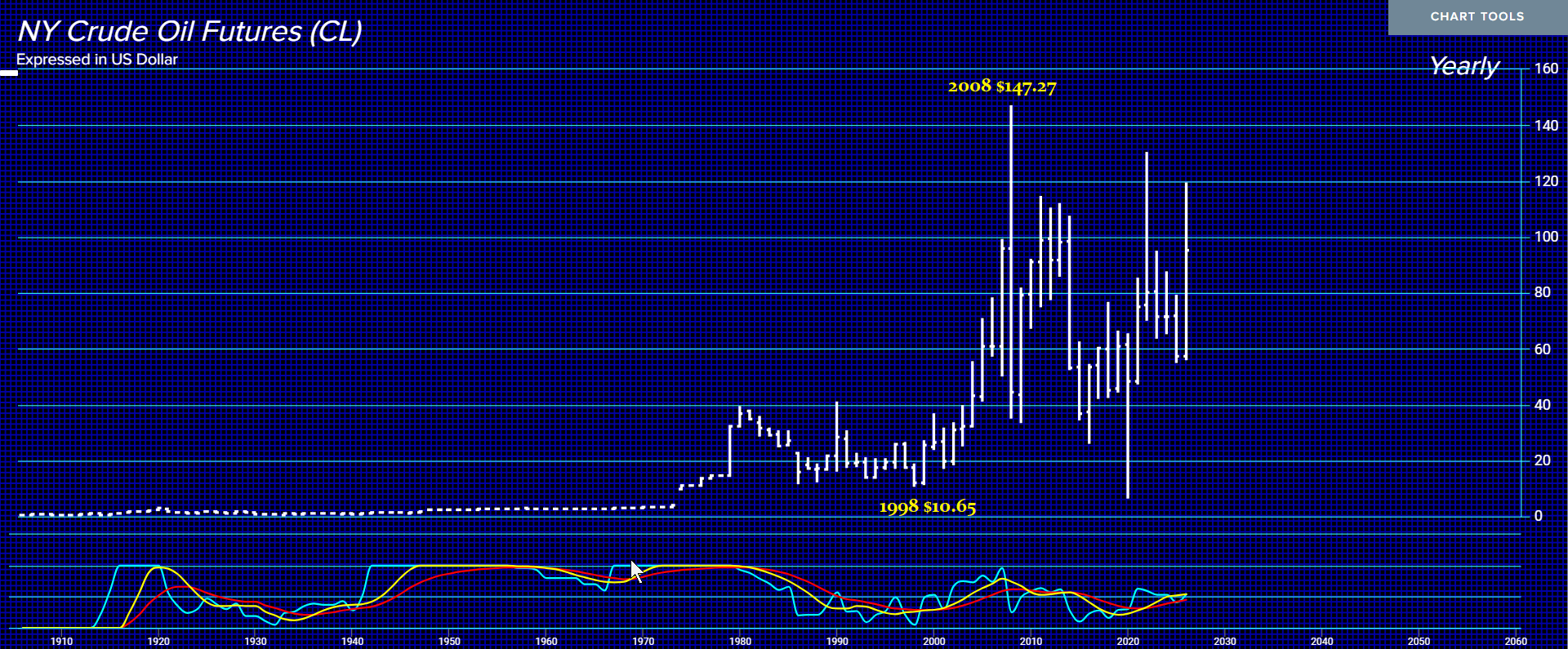
Crude Oil $200 Slingshot? | Armstrong Economics

by TheAdviserMagazine
March 19, 2026
0

QUESTION: Marty, many people know about your forecast of Russia, 1987, 2007 high in real estate, Nikkei, the collapse of...

edit post
Market Talk – March 19, 2026

Market Talk – March 19, 2026

by TheAdviserMagazine
March 19, 2026
0

ASIA: The major Asian stock markets had a negative day today: • NIKKEI 225 decreased 1,866.87 points or -3.38% to...

edit post
Traders see little chance of rate cut this year following Fed decision

Traders see little chance of rate cut this year following Fed decision

by TheAdviserMagazine
March 19, 2026
0

All of the positive economic talk out of this week's Federal Reserve meeting had a negative impact on investors, who...

edit post
Remembering Paul Ehrlich (Even If We Would Rather Not)

Remembering Paul Ehrlich (Even If We Would Rather Not)

by TheAdviserMagazine
March 19, 2026
0

More than 30 years ago, I was listening to an NPR interview with Paul Ehrlich, the late Stanford University biologist...

Next Post
edit post
Eternal shares jump 3% from lows as Zomato hikes platform fee by Rs 2.4 per order

Eternal shares jump 3% from lows as Zomato hikes platform fee by Rs 2.4 per order

edit post
The Great Stall is ON

The Great Stall is ON

  • Trending
  • Comments
  • Latest
edit post
Foreclosure Starts are Up 19%—These Counties are Seeing the Highest Distress

Foreclosure Starts are Up 19%—These Counties are Seeing the Highest Distress

February 24, 2026
edit post
7 States Reporting a Surge in Norovirus Cases

7 States Reporting a Surge in Norovirus Cases

February 22, 2026
edit post
The Growing Movement to End Property Taxes Continues in Kentucky, And What It Means For Investors

The Growing Movement to End Property Taxes Continues in Kentucky, And What It Means For Investors

March 2, 2026
edit post
Who Is Legally Next of Kin in North Carolina?

Who Is Legally Next of Kin in North Carolina?

February 28, 2026
edit post
Hidden Danger for Seniors: Why Radon Is Building Up in Basements Across 10 States

Hidden Danger for Seniors: Why Radon Is Building Up in Basements Across 10 States

March 17, 2026
edit post
How Age Affects Your Social Security Disability Claim

How Age Affects Your Social Security Disability Claim

March 2, 2026
edit post
The “Boring” Rental Strategy That Could Retire You by Your 40s (Rookie Reply)

The “Boring” Rental Strategy That Could Retire You by Your 40s (Rookie Reply)

0
edit post
AI boom is fueling demand for skilled trades—and demand for technicians, HVAC workers, and electricians is soaring, with six-figure salaries to match

AI boom is fueling demand for skilled trades—and demand for technicians, HVAC workers, and electricians is soaring, with six-figure salaries to match

0
edit post
Travel the World Every Year: How Much Should You Save Monthly?

Travel the World Every Year: How Much Should You Save Monthly?

0
edit post
Mortgage Rates Today, Friday, March 20: Rising Toward 2026 Peak

Mortgage Rates Today, Friday, March 20: Rising Toward 2026 Peak

0
edit post
The Great Stall is ON

The Great Stall is ON

0
edit post
Keshet reports record year for philanthropy in Israel

Keshet reports record year for philanthropy in Israel

0
edit post
AI boom is fueling demand for skilled trades—and demand for technicians, HVAC workers, and electricians is soaring, with six-figure salaries to match

AI boom is fueling demand for skilled trades—and demand for technicians, HVAC workers, and electricians is soaring, with six-figure salaries to match

March 20, 2026
edit post
Travel the World Every Year: How Much Should You Save Monthly?

Travel the World Every Year: How Much Should You Save Monthly?

March 20, 2026
edit post
I’m 66 and I finally understand that my father’s anger when I came home late wasn’t about rules — it was about the 45 minutes he spent at the window imagining every possible version of what might have happened, and by the time I walked through the door his nervous system had processed so many catastrophic simulations that the relief arrived as fury because his body didn’t have a calmer way to discharge the accumulation

I’m 66 and I finally understand that my father’s anger when I came home late wasn’t about rules — it was about the 45 minutes he spent at the window imagining every possible version of what might have happened, and by the time I walked through the door his nervous system had processed so many catastrophic simulations that the relief arrived as fury because his body didn’t have a calmer way to discharge the accumulation

March 20, 2026
edit post
Bitcoin Price Breaks Legendary 14-Year Support, What This Means For The Market

Bitcoin Price Breaks Legendary 14-Year Support, What This Means For The Market

March 20, 2026
edit post
MHA names Craig McSherry as banking and capital markets partner

MHA names Craig McSherry as banking and capital markets partner

March 20, 2026
edit post
Mortgage Rates Today, Friday, March 20: Rising Toward 2026 Peak

Mortgage Rates Today, Friday, March 20: Rising Toward 2026 Peak

March 20, 2026
The Adviser Magazine

The first and only national digital and print magazine that connects individuals, families, and businesses to Fee-Only financial advisers, accountants, attorneys and college guidance counselors.

CATEGORIES

  • 401k Plans
  • Business
  • College
  • Cryptocurrency
  • Economy
  • Estate Plans
  • Financial Planning
  • Investing
  • IRS & Taxes
  • Legal
  • Market Analysis
  • Markets
  • Medicare
  • Money
  • Personal Finance
  • Social Security
  • Startups
  • Stock Market
  • Trading

LATEST UPDATES

  • AI boom is fueling demand for skilled trades—and demand for technicians, HVAC workers, and electricians is soaring, with six-figure salaries to match
  • Travel the World Every Year: How Much Should You Save Monthly?
  • I’m 66 and I finally understand that my father’s anger when I came home late wasn’t about rules — it was about the 45 minutes he spent at the window imagining every possible version of what might have happened, and by the time I walked through the door his nervous system had processed so many catastrophic simulations that the relief arrived as fury because his body didn’t have a calmer way to discharge the accumulation
  • Our Great Privacy Policy
  • Terms of Use, Legal Notices & Disclosures
  • Contact us
  • About Us

© Copyright 2024 All Rights Reserved
See articles for original source and related links to external sites.

Welcome Back!

Login to your account below

Forgotten Password?

Retrieve your password

Please enter your username or email address to reset your password.

Log In
No Result
View All Result
  • Home
  • Financial Planning
    • Financial Planning
    • Personal Finance
  • Market Research
    • Business
    • Investing
    • Money
    • Economy
    • Markets
    • Stocks
    • Trading
  • 401k Plans
  • College
  • IRS & Taxes
  • Estate Plans
  • Social Security
  • Medicare
  • Legal

© Copyright 2024 All Rights Reserved
See articles for original source and related links to external sites.