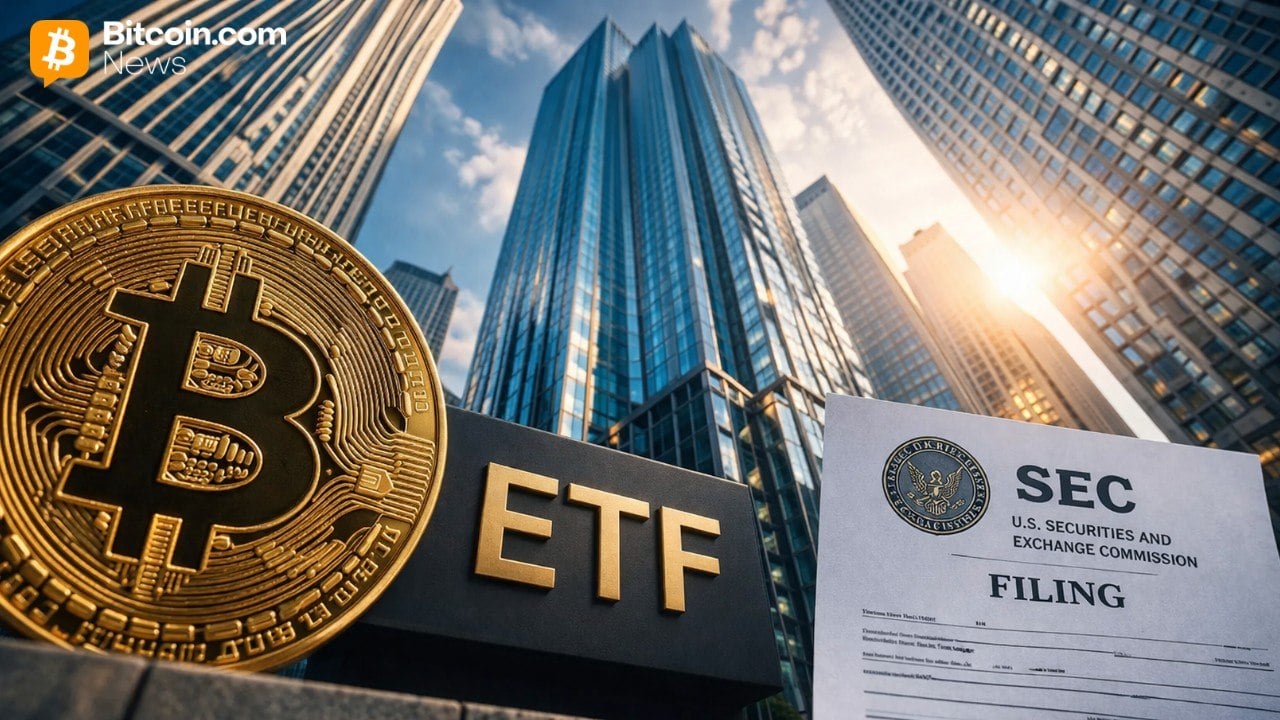
Cboe wants to bring back all-or-nothing options, a contract that pays a fixed amount if a condition is met and pays zero if it isn’t.
While that might sound like a small product refresh, the timing makes it hard to ignore. Prediction markets have trained a new retail reflex: turn a belief into a number that reads like odds, then buy or sell that number.
Cboe’s proposal to the SEC is an attempt to package that same instinct inside US exchange rules, clearing, and brokerage distribution.
However, it’s important to note that Cboe isn’t trying to replicate Polymarket feature-for-feature. The company is actually trying to compete for the same mental model with regulators watching: the simple yes/no frame, the single price, and the quick feedback.
If it works, probability trading will stop being a crypto-native curiosity and become a mainstream retail format that sits next to equities and standard options, with the same compliance wrappers.
If it fails, it won’t be because the payoff shape is unfamiliar, but because permissioned markets have limits on what they can list and how close they can drift toward anything that looks like sportsbook behavior.
A prediction market in a suit
Binary options are easy to explain and even easier to understand, which is part of the appeal.
A buyer pays a price today for a contract that settles at a fixed payout if a specific condition holds at expiry. In many designs, the contract trades inside a tight band between “no chance” and “certain,” so the price feels like implied odds, even though fees, market frictions, and risk premiums keep it from being a clean probability readout.
That single number is the hook: you don’t need to learn the Greeks to understand what you own.Binary options also have a long paper trail. Cboe itself launched binary options in 2008 and later stepped away when uptake was thin.
The current push is tied to discussions with retail brokerages and an aim to offer a regulated alternative to fast-growing prediction venues, while sticking to financial market outcomes rather than open-ended event questions.
So the 60-second explanation of binary options is that you’re buying a condition, not upside that scales with how far a market moves. Either it settles in the money, and you receive the fixed payout, or it settles out of the money, and you receive nothing.
That fixed-payoff feel is why many retail traders describe these contracts more like odds than options, and why they slot neatly into the mental category that prediction markets popularized.
The crucial difference between them is where the contract lives.
Cboe’s version would sit inside the regulated exchange stack: standard broker rails, surveillance, margin rules, and clearing.
Prediction markets span a wide range of designs and regulatory environments, from US-regulated event contracts to offshore or crypto-native venues that rely on smart contracts, oracles, and venue-level rulebooks.
That distinction is what decides who gets access, what can be listed, how disputes get handled, and how quickly the product can evolve.
Why binaries keep returning
There’s a reason why binary options keep reappearing in waves.
Retail demand repeatedly clusters around markets and assets that feel simple and bounded. A fixed-loss, fixed-payout contract offers a nice and clean way for sizing risk. You can decide what you’re willing to lose before you press the button, and you never have to translate a one standard deviation move into a payoff curve.
What changed in the last few years is the interface people learned.
Prediction markets normalized the idea that you can trade beliefs as a price. They made probability legible to people who don’t care about what’s under the hood.
A contract that says “yes 62” or “no 38” is a triumph of user experience because it compresses uncertainty into a single tradable number, and it makes the act of updating your view feel like moving a slider instead of building a strategy.
All of this means we can see Cboe’s bet for what it really is: a distribution play. Exchanges already have the infrastructure and the broker pipes. Cboe itself has been explicit that it’s focusing on areas tied to prediction markets and crypto as part of its growth agenda, even as it benefits from an options boom in its core business.
There’s also an uncomfortable, unavoidable history lesson here. Binary options became a dirty phrase in the retail world because of fraud and abusive offshore marketing that used the simplicity of the product to sell something that was anything but fair market. That legacy raises the bar for any US exchange effort.
The pitch cannot just be that these contracts are simple. It has to be that they’re simple inside a structure that is surveilled, standardized, and very, very hard to game.
The real contest is distribution and trust
When you put the two stacks side by side, the competition becomes permissioned odds versus open odds.
The regulated exchange stack has three built-in advantages.
First, it already sits inside the brokerage apps where quite a bit of retail trading happens.
Second, it comes with a clearer set of guardrails around custody, clearing, and standardized settlement.
Third, it can be framed as a financial instrument rather than a social betting product.
But that stack also carries constraints that aren’t negotiable. A US exchange can’t list “anything that people want to argue about.” Product scope is bounded by what regulators will tolerate, what surveillance can support, and what doesn’t trigger the view that the exchange is running a casino.
Crypto-native and other open venues thrive precisely where those constraints are weakest. They move faster, they can iterate on market design quickly, and they can list culturally relevant questions that capture attention beyond finance.
Their problem is legitimacy and trust at scale.
When the contract is built around an oracle, a dispute process, or a venue rulebook, the user has to believe the settlement will be handled cleanly in edge cases. That’s a hard sell for mainstream retail, even for users who like the format.
This is where the US-regulated prediction market story complicates things. Kalshi has argued for years that event contracts can sit inside the federal commodities framework, and it has fought legal battles on where state gaming rules end and federal oversight begins.
In early February, a Massachusetts judge ordered Kalshi to stop offering sports-related contracts in the state unless it gets a state gaming license, a reminder that even a federally regulated issue can still collide with state-level gambling regimes.
Copying the interface is easier than copying the universe
The biggest limitation on a Cboe-style product is the “listable reality” problem: what a permissioned venue can place on its shelves.
Prediction markets draw energy from relevance. The flywheel is cultural. People trade the relevant thing, the thing they’re already arguing about, and the price of those contracts becomes part of the conversation. That’s going to be very hard to reproduce inside a narrow lane of financial outcomes without losing much of what made the format magnetic.
Even in the regulated world, the boundary has been contested.
Kalshi’s attempt to list political contracts led to a high-profile legal fight with the CFTC, and an appellate decision in 2024 became a key reference point in debates about whether certain political event contracts can be treated as permissible under the commodities regime.
That dispute isn’t what Cboe is proposing, but it shows the terrain: the closer you get to markets on everything, the more you invite arguments about gaming, public policy, and incentives.
So, a Cboe product that stays anchored to financial thresholds may avoid the loudest fights, but it also risks feeling sterile next to platforms that can list the questions that dominate the group chat.
The exchange can borrow the probability-shaped UI, but it can’t easily borrow the universe of topics that powered prediction markets’ cultural momentum.
The gambler’s interface problem
Probability trading carries a second tension, and it won’t go away just because the rails are regulated.
A yes/no frame lowers the psychological barrier to participation. That’s good for accessibility, but it also invites criticism that the format is engineered for compulsion: quick resolution, simple narratives, and the sense that you are buying odds rather than taking risks.
There are also market-structure risks that matter even in a clean, well-run venue. Thin liquidity can make prices jumpy, which turns probability into a noisy artifact.
Settlement incentives can attract attempts to game the reference process, especially around boundary conditions where the contract definition matters more than the underlying economic truth.
And ambiguous wording is poison. If a contract leaves room for interpretation, the first dispute becomes the story, and trust evaporates quickly.
Regulated venues can reduce some of these risks. They can standardize definitions, publish settlement procedures, and police abusive activity. But they can’t remove the core temptation critique, because the critique is about design. A contract that turns uncertainty into a single tradable number will always look, to some observers, like a financialized version of betting, regardless of whether it clears through a well-known clearinghouse.
What to watch if Cboe actually launches
If Cboe gets this product out of the idea stage and into accounts, success will show up in boring microstructure details.
You’d want to see tight spreads that persist beyond the novelty phase, and volume that sticks after the first week, not just a launch spike. You’d also want to see brokers place it somewhere visible rather than bury it, because distribution is the entire point of doing this on an exchange.
You’d also want to see how quickly the contract menu expands without triggering a regulatory fight. A narrow set of equity-index thresholds would be an early proof of life. A broader set of economically meaningful event-style contracts would be proof that the format can grow inside the fence.
The other tell will be the political tone that surrounds it.
Quiet acceptance is a form of permission. Loud objections can freeze expansion, even if they don’t kill the product. The Kalshi disputes show how quickly the conversation can turn from a new market format to unlicensed gambling, and how that can become a state-by-state grind.
Cboe’s move, in the end, is a recognition that prediction markets exported something valuable to the wider financial world: a compact way to trade beliefs. The open venues built the culture and taught users the interface.
The regulated venues have the distribution and the legitimacy that large pools of retail capital still prefer. The question is whether that legitimacy can coexist with a format that looks, at first glance, like odds.
Wall Street isn’t going to turn into a prediction market any time soon. But it seems to be trying hard to absorb the part of prediction markets that retail found easiest to understand, then fit it inside a structure that can survive regulators, politicians, and the inevitable backlash cycle that follows anything popular and simple.
Whether that becomes a durable new retail habit will depend on what permissioned markets can safely list, and how much of the markets on everything energy they can capture without stepping over the line that turns a trading product into gambling.