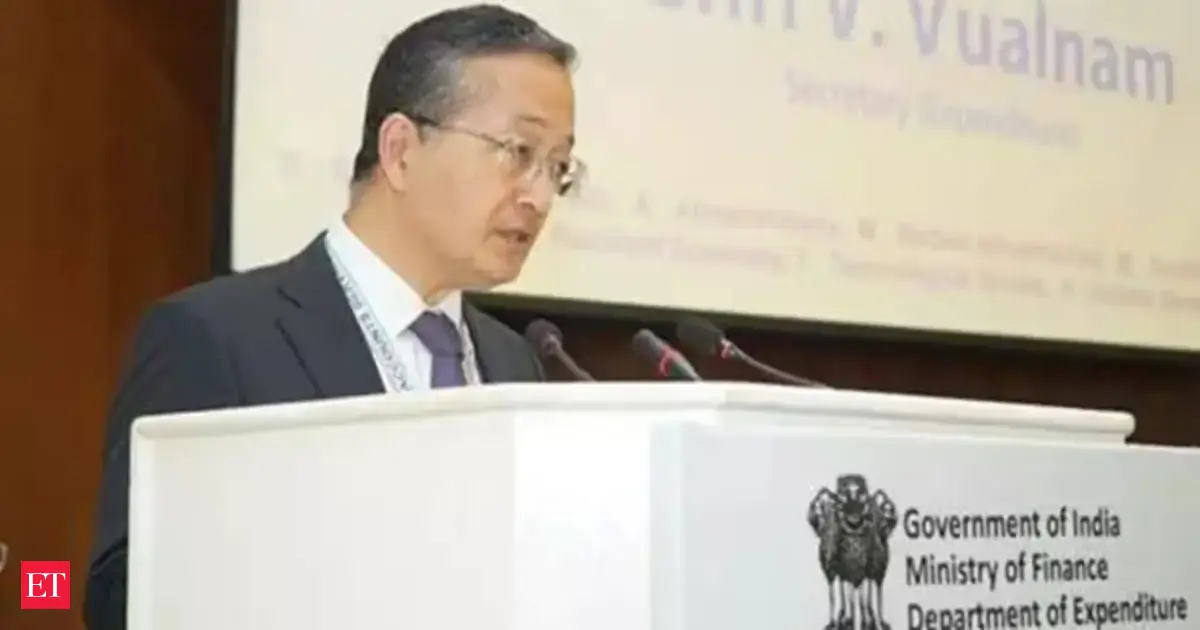
“Spending on infrastructure creation remains a priority and is a key element of government policy,” he said, adding that the Centre increased the capex for the coming financial year after assessing requirements across infrastructure sectors, which would have a multiplier effect on the economy.
When asked whether the pace of capex growth could taper in the coming years amid rising commitments, including those linked to the Eighth Pay Commission and future Finance Commission recommendations, the secretary said allocations would be reviewed later.”These are early days and what will be the requirement in the years in the future is something we will assess,” he said, adding: “Whether the same level is required or whether it needs to scale up or scale down, we will see.”Addressing concerns that states and departments are unable to spend funds on time, the secretary said utilisation had improved significantly and only a few big schemes had seen a slowdown this year. “The spending was slow because they were reviewing scheme components or implementation at the grassroots level,” he said. “Otherwise, most schemes are moving well.” The 16th Finance Commission in its report recommended doing away with revenue deficit grant and sector-specific or state-specific grants, signalling its view that most states have scope to improve revenues and rationalise expenditure. It retained states’ share in the divisible tax pool at 41% for the five-year period beginning April 1, 2026.