No Result
View All Result
SUBMIT YOUR ARTICLES
  • Login
Thursday, March 26, 2026
TheAdviserMagazine.com
  • Home
  • Financial Planning
    • Financial Planning
    • Personal Finance
  • Market Research
    • Business
    • Investing
    • Money
    • Economy
    • Markets
    • Stocks
    • Trading
  • 401k Plans
  • College
  • IRS & Taxes
  • Estate Plans
  • Social Security
  • Medicare
  • Legal
  • Home
  • Financial Planning
    • Financial Planning
    • Personal Finance
  • Market Research
    • Business
    • Investing
    • Money
    • Economy
    • Markets
    • Stocks
    • Trading
  • 401k Plans
  • College
  • IRS & Taxes
  • Estate Plans
  • Social Security
  • Medicare
  • Legal
No Result
View All Result
TheAdviserMagazine.com
No Result
View All Result
Home Market Research Business

Tech billionaire Shlomo Kramer: the cyber selloff proved that Wall Street can’t price tech anymore

by TheAdviserMagazine
3 weeks ago
in Business
Reading Time: 4 mins read
A A
Tech billionaire Shlomo Kramer: the cyber selloff proved that Wall Street can’t price tech anymore
Share on FacebookShare on TwitterShare on LInkedIn


On February 20, Anthropic released Claude Code Security, a new AI-powered code-scanning tool. By the end of the trading day, billions had disappeared from cybersecurity stocks. CrowdStrike dropped 10%, Zscaler fell 11%, Okta lost 9%.

But Anthropic did not launch an endpoint protection platform. It did not introduce an identity access and management platform and didn’t replace zero-trust architecture. It released a new capability within Claude Code, an AI-powered developer tool. Yet the market moved as if an entire sector had been structurally disrupted.

When I saw the selloff, my first reaction wasn’t that investors were irrational. Markets overreact all the time. What struck me was something else: the reaction only makes sense if you assume that “AI” and “cybersecurity” are interchangeable labels. 

Endpoint protection, identity access and management, network security, application security, and developer tooling are separate disciplines. They have different architectures, buyers and economics. Anyone building in this space understands that instinctively, but the market didn’t and that’s the more interesting story.

For decades, public markets have been structured around generalists. Portfolio managers are expected to cover enormous intellectual territory: cloud infrastructure one day, fintech the next, semiconductors the day after. That model worked when industries were broader and slower moving, however technology no longer behaves that way.

What we call “tech” today isn’t one sector. It’s a collection of deeply specialized domains, each with its own economics and competitive logic. The person qualified to value a cybersecurity company is not the same person qualified to value an AI infrastructure company. But in public markets, the portfolio manager allocating capital across both is often the same person.

We would never ask a commodities trader to price oil, copper, and wheat as if they were variations of the same asset. Those markets long ago developed specialized exchanges, analysts, and pricing structures. In technology, we still pretend the generalist model is sufficient.

The AI narrative is confusing things even more

The AI narrative makes all of this worse. Wall Street is pricing AI as if it’s already reshaped the economy. The NBER published a surveyed in February on AI use, with data from nearly 6,000 executives across the U.S., UK, Germany, and Australia. More than 80% reported zero measurable impact of AI on productivity or employment over the past three years. AI will be transformative, but the gap between what the market is pricing in and what’s actually happening inside companies is enormous.

And over the last two decades, the center of gravity in capital markets has shifted dramatically toward private ownership. BlackRock CEO Larry Fink pointed out in his 2025 annual letter to investors that 81% of U.S. companies with revenue over $100 million are now privately held. The number of publicly traded companies has fallen roughly 50% since the 1990s. We usually blame regulation or quarterly earnings pressure. Those matter. But I think they’re secondary. The deeper issue is that public markets don’t have the machinery to value complex technology companies properly.

Look at what’s happening at the top end. OpenAI just raised $110 billion at a $730 billion valuation. Stripe is choosing patience over an IPO. Databricks is scaling into multi-billion-dollar revenue while staying private. These companies are not avoiding scrutiny. They are avoiding mispricing. 

There is now a vast tier of companies above traditional venture capital and below public markets: real revenue, real scale and global impact. That layer barely existed 20 years ago.

Time to rethink tech exposure

One idea, and I’ll be the first to say it’s incomplete, is to rethink how we organize technology exposure. Instead of a single broad “tech” umbrella analyzed by generalists, imagine a more hierarchical structure. Asset allocators at the top decide how much exposure there is to cybersecurity, AI infrastructure, fintech, or vertical SaaS. Below that, each domain develops its own specialist analysts, valuation models, and indices built around its specific realities.

Cybersecurity should probably stand on its own. AI infrastructure too. Not as marketing buckets, but as real analytical categories with people who actually understand how those businesses work. Would that eliminate volatility? Of course not. Markets will always chase the next story. But it might reduce the kind of blind correlation we saw in February, where fundamentally different companies move together simply because they share a headline.

When founders start to feel that public markets can’t tell the difference between their business and the one next door, they adjust. They stay private for longer, raise another round and look for liquidity elsewhere. The capital is there, in many cases more than ever, but it sits now behind closed doors. That shift has consequences. If the defining technology companies of our era keep scaling outside the public markets, most people will only get access once the heavy lifting is done, or not at all.

As a result, the upside concentrates quietly, in the hands of sovereign wealth funds or large VCs. That concentration doesn’t just shift who benefits, it changes the economics of investing itself. As more return is captured in private markets, scale and access become structural advantages, reinforcing the dominance of the largest pools of capital while reducing opportunity in public markets. Individual investors, pension funds, and mutual funds, still largely anchored to public markets, are left competing over a shrinking share of growth, altering return expectations across the entire system.

February 20 wasn’t really about Anthropic and wasn’t even about cybersecurity. A headline moved an entire category, even though the companies inside it do very different things. That gap is becoming harder to ignore. Technology keeps getting more specialized while the way we group and price it hasn’t changed much.

The opinions expressed in Fortune.com commentary pieces are solely the views of their authors and do not necessarily reflect the opinions and beliefs of Fortune.




Source link

Tags: anymoreBillionairecyberKramerPriceprovedselloffShlomoStreettechWall
ShareTweetShare
Previous Post

Bernie Sanders Wealth Tax on Billionaries: Details & Analysis

Next Post

Dividend Aristocrats In Focus: The J.M. Smucker Company

Related Posts

edit post
Megapot raises  million to create a crypto-powered global lottery

Megapot raises $5 million to create a crypto-powered global lottery

by TheAdviserMagazine
March 26, 2026
0

Most lotteries are contained within a country or a state, and much of the time, people have to go to...

edit post
PayPal, Stripe, Visa, Mastercard are the latest to be warned about debanking by Trump administration

PayPal, Stripe, Visa, Mastercard are the latest to be warned about debanking by Trump administration

by TheAdviserMagazine
March 26, 2026
0

Mar 26, 2026, 12:13 PM ETPayPal Holdings, Inc. (PYPL) Stock, V Stock, MA Stock, STRIP Stock, MA:CA Stock, VISA:CA Stock,...

edit post
Duolingo CEO’s taxi driver test decides who gets hired—before the interview even starts

Duolingo CEO’s taxi driver test decides who gets hired—before the interview even starts

by TheAdviserMagazine
March 26, 2026
0

At Duolingo, job interviews start the moment a candidate steps into a car. Luis von Ahn, the billionaire cofounder and...

edit post
What’s happening with Iran-US ‘talks’?

What’s happening with Iran-US ‘talks’?

by TheAdviserMagazine
March 26, 2026
0

Paris: Diplomatic efforts to end the war in Iran are gathering pace, even though Tehran continues to insist talks with...

edit post
Coalition postpones Knesset vote on 2026 budget

Coalition postpones Knesset vote on 2026 budget

by TheAdviserMagazine
March 26, 2026
0

The 2026 state budget is due to receive final approval in the Knesset during Sunday night or the early...

edit post
Here’s 1 Major Problem With the 4% Rule All Retirees Should Know About

Here’s 1 Major Problem With the 4% Rule All Retirees Should Know About

by TheAdviserMagazine
March 26, 2026
0

Building a solid nest egg can, and should, help you retire with confidence. But it's not enough to save for...

Next Post
edit post
Dividend Aristocrats In Focus: The J.M. Smucker Company

Dividend Aristocrats In Focus: The J.M. Smucker Company

edit post
Chart of the Week: AI Is Reshaping the Labor Market

Chart of the Week: AI Is Reshaping the Labor Market

  • Trending
  • Comments
  • Latest
edit post
Massachusetts loses billions in income after millionaire tax

Massachusetts loses billions in income after millionaire tax

March 24, 2026
edit post
Publix to Open 5 New Stores by End of April. See Upcoming Locations.

Publix to Open 5 New Stores by End of April. See Upcoming Locations.

March 20, 2026
edit post
Who Is Legally Next of Kin in North Carolina?

Who Is Legally Next of Kin in North Carolina?

February 28, 2026
edit post
The Growing Movement to End Property Taxes Continues in Kentucky, And What It Means For Investors

The Growing Movement to End Property Taxes Continues in Kentucky, And What It Means For Investors

March 2, 2026
edit post
Foreclosure Starts are Up 19%—These Counties are Seeing the Highest Distress

Foreclosure Starts are Up 19%—These Counties are Seeing the Highest Distress

February 24, 2026
edit post
Georgia’s 0 Tax Rebate Is Moving Forward — Here’s When You Can Expect Your 2026 Check

Georgia’s $250 Tax Rebate Is Moving Forward — Here’s When You Can Expect Your 2026 Check

March 21, 2026
edit post
30 Common Job Search Scams to Watch for in 2026

30 Common Job Search Scams to Watch for in 2026

0
edit post
Twist Biosciences: Keeping Synthetic Biology Alive

Twist Biosciences: Keeping Synthetic Biology Alive

0
edit post
Megapot raises  million to create a crypto-powered global lottery

Megapot raises $5 million to create a crypto-powered global lottery

0
edit post
Coalition postpones Knesset vote on 2026 budget

Coalition postpones Knesset vote on 2026 budget

0
edit post
Chart of the Week: The  Trillion AI Surge

Chart of the Week: The $1 Trillion AI Surge

0
edit post
XRP Shows Unusual Stability As Volatility Hits 2026 Low – Here’s What This Means

XRP Shows Unusual Stability As Volatility Hits 2026 Low – Here’s What This Means

0
edit post
Crayola Less Mess Painting Activity Kit only  (Reg. )!

Crayola Less Mess Painting Activity Kit only $11 (Reg. $25)!

March 26, 2026
edit post
XRP Shows Unusual Stability As Volatility Hits 2026 Low – Here’s What This Means

XRP Shows Unusual Stability As Volatility Hits 2026 Low – Here’s What This Means

March 26, 2026
edit post
Home Office to be part of Education Sector Action Group

Home Office to be part of Education Sector Action Group

March 26, 2026
edit post
Megapot raises  million to create a crypto-powered global lottery

Megapot raises $5 million to create a crypto-powered global lottery

March 26, 2026
edit post
How does your state’s effective tax rate rank?

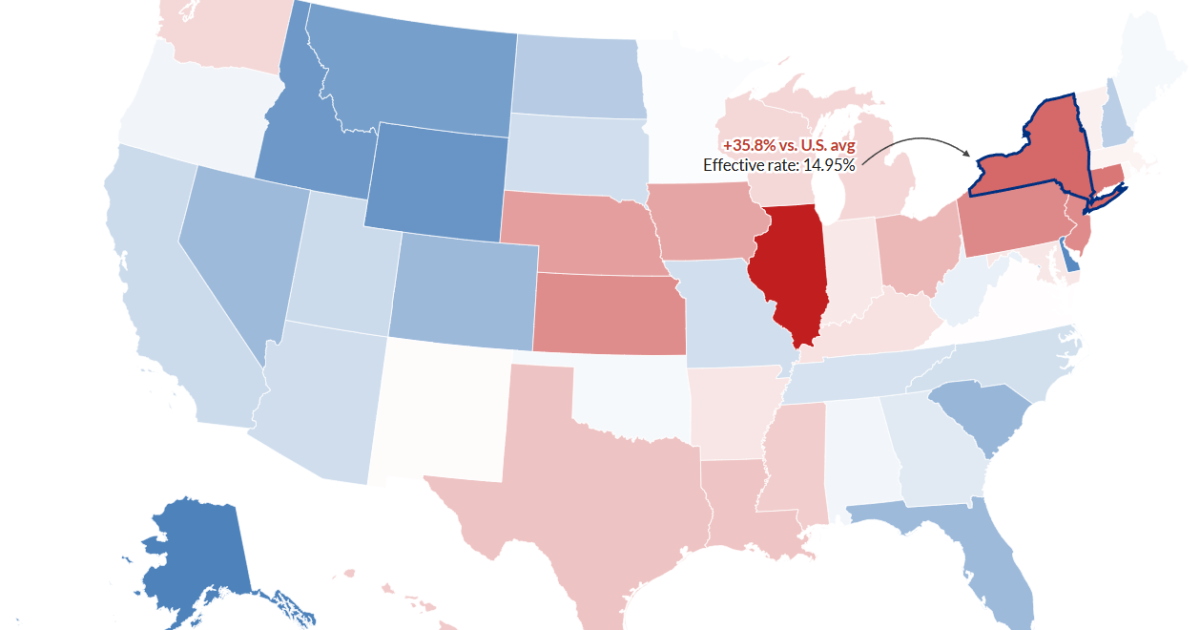
How does your state’s effective tax rate rank?

March 26, 2026
edit post
Chart of the Week: The  Trillion AI Surge

Chart of the Week: The $1 Trillion AI Surge

March 26, 2026
The Adviser Magazine

The first and only national digital and print magazine that connects individuals, families, and businesses to Fee-Only financial advisers, accountants, attorneys and college guidance counselors.

CATEGORIES

  • 401k Plans
  • Business
  • College
  • Cryptocurrency
  • Economy
  • Estate Plans
  • Financial Planning
  • Investing
  • IRS & Taxes
  • Legal
  • Market Analysis
  • Markets
  • Medicare
  • Money
  • Personal Finance
  • Social Security
  • Startups
  • Stock Market
  • Trading

LATEST UPDATES

  • Crayola Less Mess Painting Activity Kit only $11 (Reg. $25)!
  • XRP Shows Unusual Stability As Volatility Hits 2026 Low – Here’s What This Means
  • Home Office to be part of Education Sector Action Group
  • Our Great Privacy Policy
  • Terms of Use, Legal Notices & Disclosures
  • Contact us
  • About Us

© Copyright 2024 All Rights Reserved
See articles for original source and related links to external sites.

Welcome Back!

Login to your account below

Forgotten Password?

Retrieve your password

Please enter your username or email address to reset your password.

Log In
No Result
View All Result
  • Home
  • Financial Planning
    • Financial Planning
    • Personal Finance
  • Market Research
    • Business
    • Investing
    • Money
    • Economy
    • Markets
    • Stocks
    • Trading
  • 401k Plans
  • College
  • IRS & Taxes
  • Estate Plans
  • Social Security
  • Medicare
  • Legal

© Copyright 2024 All Rights Reserved
See articles for original source and related links to external sites.