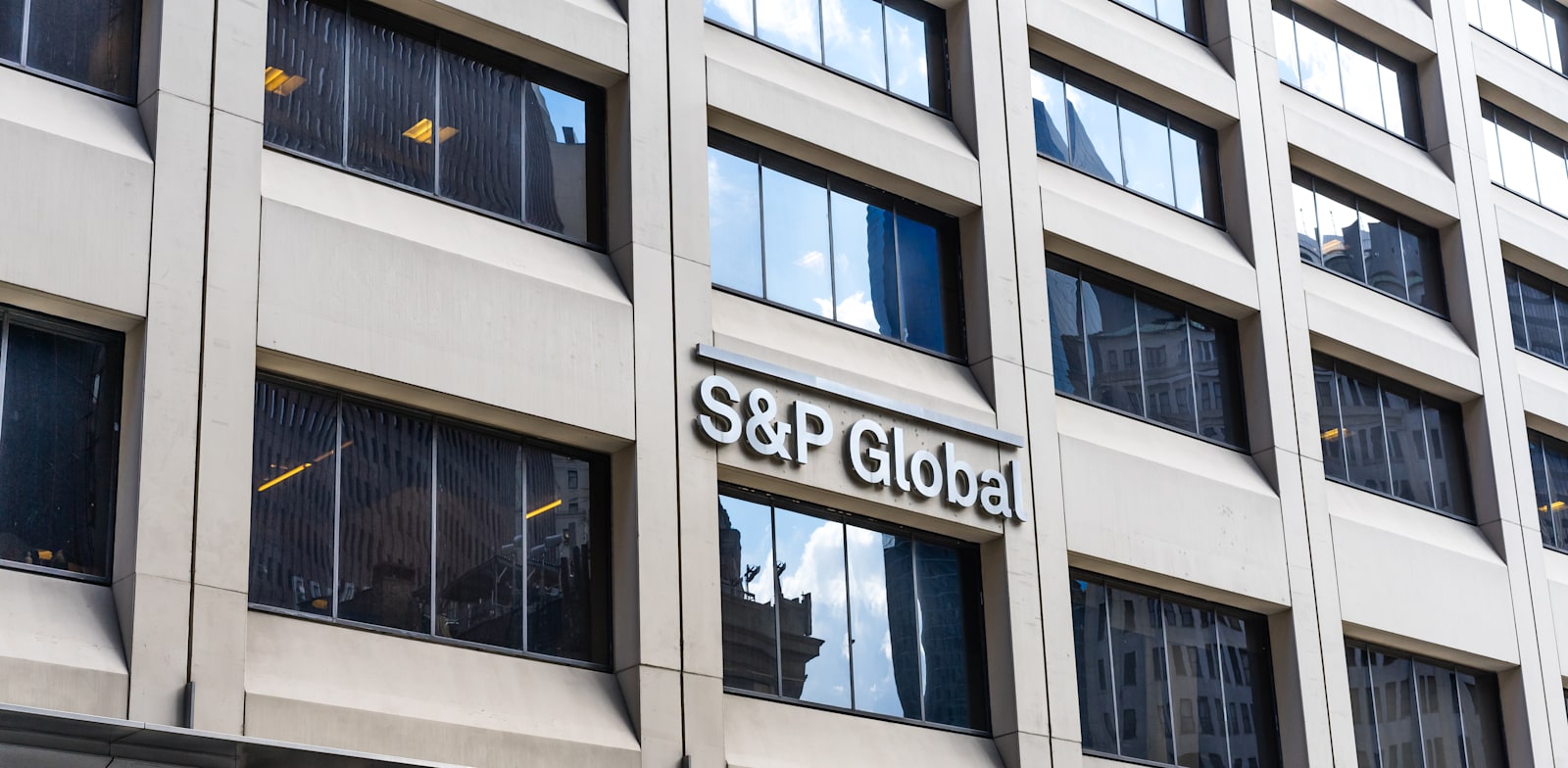
International ratings agency S&P has made its first remarks about the war against Iran, publishing an update for investors today headlined “Middle East Conflict Is Starting to Strain Credit Channels Across Sectors.”
S&P’s survey comments on the various countries involved in the conflict including Israel, which receives a relatively good assessment as it enters the renewed war. The report says, “Israel’s wealthy economy has historically been resilient not least due its sizable high?tech services sector (some 20% of GDP and over 50% of exports), with a high percentage of employees able to work from home. This should somewhat cushion the impact of security disruptions.”
On the other hand, S&P adds, “Israel’s small size and high population density suggest the socioeconomic and fiscal fallout from physical damage to infrastructure could be sizable.”
S&P rates Israel A, after two downgrades during the war over the past two years. In its most recent rating announcement for Israel in November, S&P raised its outlook for Israel from “negative” to “stable,” signaling the country’s rating recovery is beginning to move back up.
The intensity and scope of military actions in the Middle East represent a major escalation in hostilities,,” said S&P Global Ratings today. “The suspension of the vast majority of shipping through the Strait of Hormuz, and the rise in over-the counter Brent oil and liquefied natural gas prices are perhaps the most concrete market responses to the conflict so far.
S&P believes, “The gravity of the situation has moved from high to severe in our pre-defined scenarios and consequently, the potential for events to weaken credit quality across sectors has increased.
“Our base-case scenario remains that military confrontation will be relatively short lived. However, public statements of US military operations lasting up to one month and the nature of US and Israeli military objectives–including regime change–are far broader than those relating to the 12-day war in June 2025. The intensity and geographic reach of attacks are also far wider than those seen last year. The conflict is already affecting trade and supply routes, including the Strait of Hormuz, and energy prices and aviation, with airspace closed across the region.”
Published by Globes, Israel business news – en.globes.co.il – on March 3, 2026.
© Copyright of Globes Publisher Itonut (1983) Ltd., 2026.