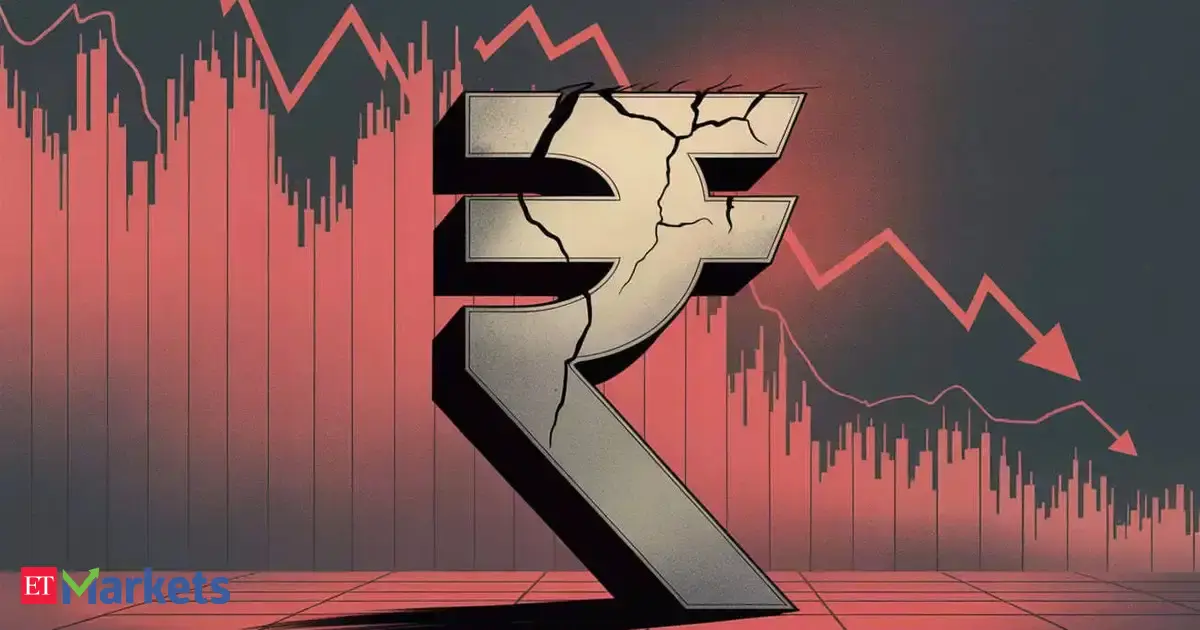
The rupee opened near 89.90 and briefly touched 90 in the interbank system, extending an eight-month downturn that has made it one of Asia’s weakest currencies this year.
A four-decade slide that saw everything
The latest drop caps a journey that began in 1983, when the rupee first crossed 10 to the dollar. Back then, India’s economy was closed, inflation was high, and foreign investment was minimal.The real shock came in April 1991 when the rupee crossed 20 during a historic balance of payments crisis. India had to pledge its gold reserves to stay afloat, and the sharp devaluation that followed pushed the currency into the low 30s within two years.
The 20 to 30 move remains the rupee’s fastest period of depreciation, with a compound annual rate of almost 25%, according to Sahil Kapoor of DSP Mutual Fund.After stabilising briefly through the mid-1990s, the currency crossed 40 in 1998, a period marked by the Asian financial crisis and India’s own sanctions shock after the Pokhran nuclear tests. Through the early 2000s, the rupee hovered between 44 and 49, helped by a global tech boom and steady inflows into India’s services sector.
The next big milestone arrived in October 2008, when the rupee breached 50 amid the global financial crisis. Foreign investors dumped emerging-market assets, commodity prices spiked, and domestic growth slowed sharply.
It took five more years for the rupee to hit 60 in June 2013, when the “taper tantrum” and India’s own twin balance-sheet problems triggered a domestic confidence crisis. The rupee was one of the worst-performing Asian currencies that year.
The drift towards 70 in 2018 came during a period of rising oil prices, persistent current account deficits and a strengthening US dollar. Four years later, in July 2022, the currency crossed 80 during the Russia-Ukraine war, as soaring commodity prices and aggressive rate hikes by the Federal Reserve drove a global rush into the dollar.
Now the rupee has touched 90, pushed by a mix of structural and short-term pressures. Year-to-date, it is down roughly 5% — one of the steepest drops in Asia.
What’s behind the current slide
The sharpest blow has come from US tariffs of up to 50% on Indian goods, which have hit exports and dampened foreign investor appetite.
Foreign portfolio investors have sold nearly $17 billion of Indian equities this year. Even though India continues to attract strong gross inflows, large exits from IPOs and private-equity divestments have turned net flows negative.
Foreign direct investment has also weakened. For two consecutive months, net FDI has been negative, as Indian companies step up overseas acquisitions and foreign investors repatriate earlier investments. The Reserve Bank of India highlighted this trend in its November bulletin, pointing to a rise in outward FDI and reduced reinvested earnings.
Meanwhile, the merchandise trade deficit hit a record high in October, driven by a spike in gold imports and the slowing of exports to the US importers, worried about further depreciation, have accelerated their hedging, while exporters hold back dollar sales in the hope of better rates. This imbalance has left the rupee exposed at every stage of the recent slide. Traders say each break of a key level—including Tuesday’s fall past 88.80 and Wednesday’s breach of 90—has triggered a fresh wave of dollar buying.
The RBI has tried to smooth volatility, selling dollars both in the spot and forward markets. But the scale of demand has forced it to run down reserves and build sizeable forward positions. Short dollar positions in the forward book have climbed to about $63 billion, a five-month high, reflecting the central bank’s attempt to supply the market with future dollars to ease near-term stress.
Still, analysts say the RBI is allowing the rupee to adjust gradually. Economists at HSBC describe the currency as a “shock absorber” for the economy, especially during periods of high tariffs. A slower, controlled weakening helps keep India’s external imbalances in check and prevents a sharp build-up of trade distortions.
Also read: Rupee collapses beyond 90 per USD for first time ever: What this means for D-St investorsAs the rupee settles into the 90 zone, markets remain on edge. Dollar demand from importers is strong, speculative positions have picked up, and foreign investors are cautious. A softer US dollar, helped by expectations that Kevin Hassett may become the next Federal Reserve Chair, has offered some relief. But domestic factors — weak flows, hedging distortions and record trade deficits — continue to overshadow any external support.
(Disclaimer: Recommendations, suggestions, views and opinions given by the experts are their own. These do not represent the views of Economic Times)