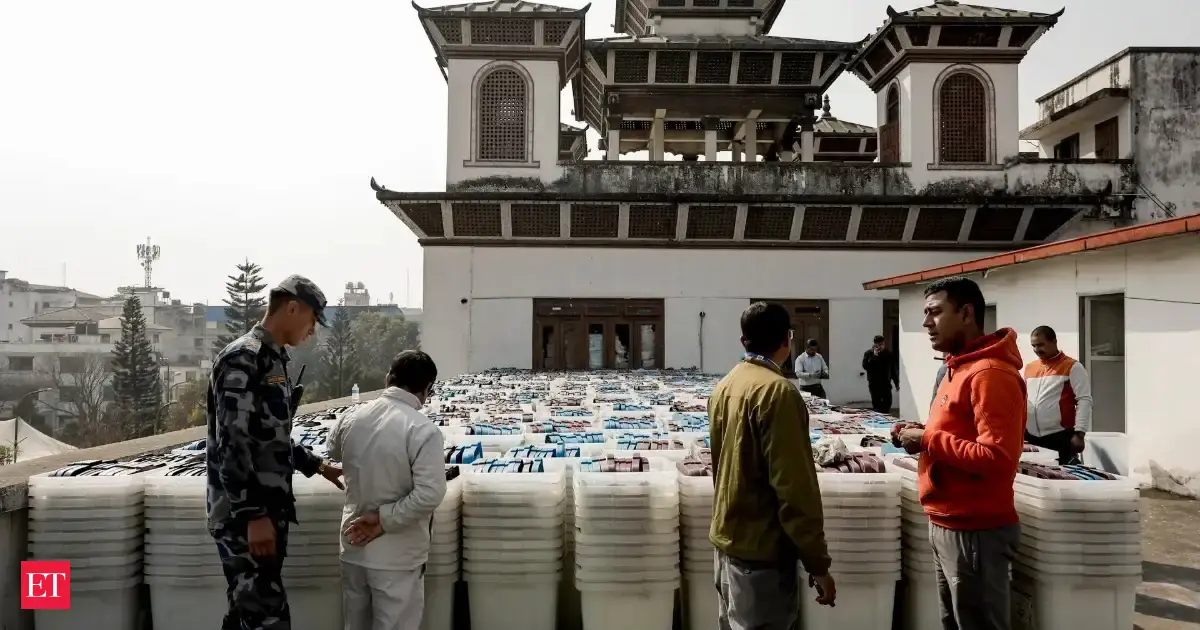
Nearly 19 million of Nepal’s 30 million people are eligible to vote in the March 5 election for the 275-member house of representatives. About one million of the voters, most of them youth, were included since last year’s protests.While direct contest will decide 165 seats, the rest will be decided through proportional representation, where seats are allocated to parties in proportion to their vote share.
Jobs and economy are key issues in this election particularly for the youth, Kathmandu-based sources told ET. India will be watching the outcome of the elections closely given its strategic and economic interests in the Himalayan state. China, too, will keep an eye and would prefer to deal with an established political party, preferably the Communists and Maoists, according to Nepal watchers.
Nepal’s largest trading partner is India, accounting for 63% of imports, or $8.6 billion, followed by China at 13%, or $1.8 billion, according to World Bank figures. Over the last few years, India and Nepal have been able to create hydel power partnership, aiming to replicate the India-Bhutan model in future.
Rapper-turned-politician and former Kathmandu mayor Balendra Shah of Rastriya Swatantra Party is among the frontrunners for prime minister. He is in direct contest with four-time prime minister Oli of Communist Party of Nepal (Unified Marxist-Leninist).Oli has an uphill task of getting support from the youth, which had overthrown his government through the street protests. Other contenders include Nepali Congress party’s 49-year-old Gagan Thapa. Former PM and ex-Maoist leader Prachanda may not be eyeing the top post but is active in the election process.