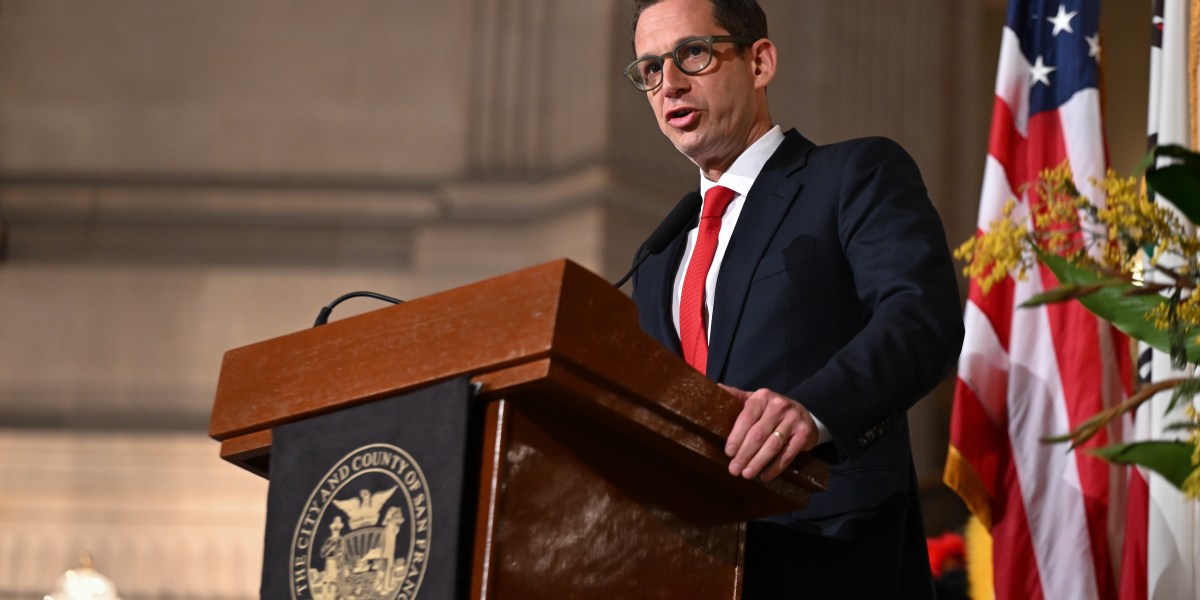
Since taking office in 2025, San Francisco Mayor Daniel Lurie has been on a mission to shake the city out of a post-pandemic economic slump.
A political outsider, Lurie was previously best known as an heir to the Levi Strauss family fortune and a philanthropist focused on poverty-fighting initiatives.
Now, Lurie has leveraged his connections across industries to boost the city’s reputation and economy following a slow recovery. Years after the pandemic, San Francisco’s downtown is still struggling with a high vacancy rate and facing long-term issues with open-air drug markets and homelessness.
Lurie has been a vocal advocate of change in the city and has long championed bringing new business to the city. As chairman of the city’s host committee in 2013, Lurie persuaded the NFL to host the Super Bowl in the Bay Area when Levi’s Stadium in Santa Clara was still under construction. Now, as the city’s leader, Lurie is hoping lightning strikes twice.
As football fans get ready to descend for Sunday’s Super Bowl LX, the entire Bay Area is preparing for a major economic windfall. San Francisco is expected to be the hub of tourism traffic, giving Lurie the opportunity to offer sports fans a taste of what to expect when the FIFA World Cup follows this summer. He’s hoping it advertises all the progress being made under his back-to-business approach.
Bring business back
A native San Franciscan, Lurie founded Tipping Point Community, an anti-poverty nonprofit, in 2005. The organization has invested more than $440 million in services for housing, early childhood education, and employment across the Bay Area. He led the organization until he began running for mayor.
Lurie has focused his mayoralty on improving quality of life in the city and bringing back business to the city’s downtown, which emptied out during the pandemic.
The region is expecting to experience an economic impact of $370 million to $630 million, including up to $440 million in San Francisco, according to a Boston Consulting Group study commissioned by the host committee. The game is also expected to attract 90,000 visitors from outside the Bay Area and support about 5,000 jobs.
“We are ready to show off our restaurants, our small businesses, our parks,” Lurie said in a press conference on Monday. “There will be a lot of traffic this week, but I think with the economic impacts coming, I think it’s going to be well worth it.”
Last year’s NBA All-Star Game in San Francisco generated $328.2 million in economic impact, according to a study by the Temple University Sport Industry Research Center. Nearly 143,000 people from 40 states and 44 countries attended the event.
Not taking people for granted
San Francisco’s economic struggles since the pandemic have been well-documented. Before the pandemic, office activities accounted for more than 75% of the city’s GDP. With stay-at-home orders giving way to a strong preference for remote work, commercial real estate tanked, and the office vacancy rate is still at about 35%.
Major retail stores such as Uniqlo, Nordstrom Rack, and Anthropologie shut their doors.
“We took our business community for granted,” Lurie said at the Fortune Brainstorm AI conference in December. “We said, ‘We can just keep punishing you … and you’re going to stay.’ Well, that didn’t happen. People fled.”
Between 2020 and 2024, the city’s population decreased by about 50,000 people, according to Census data. A proposed tax on billionaires threatens to drive more business out of the Bay Area and has already led to the departure of longtime Bay Area residents, such as Google cofounders Sergey Brin and Larry Page and investors David Sacks and Peter Thiel.
After refraining from comments on the proposal for weeks, on Jan. 26, Lurie joined Gov. Gavin Newsom in his opposition to the tax. Lurie said he is against the tax because he believes it will make people leave the city, which is already facing a budget shortfall owing to federal cuts to food assistance and health care.
“Everybody should be paying their fair share,” Lurie said. “But if people can up and flee, I’d rather see something done at the national level.”
Lurie told Fortune the city must “strip away the red tape” for small businesses, and that he sees the government as a partner to businesses.
Last year, Lurie brought together business leaders—including former First Republic Bank president Katherine August-deWilde, philanthropist Laurene Powell Jobs, and president and CIO of Alphabet Ruth Porat—to start the nonprofit Partnership for San Francisco to harness “private sector expertise and resources to help address the city’s most pressing challenges.”
Lurie has also quietly met with Powell Jobs, former Apple designer Jony Ive, and Gap CEO Richard Dickson to work on a branding campaign for the city, the San Francisco Standard reported. Ive’s design firm LoveFrom previously worked on a civic pride campaign funded by San Francisco business leaders, including Gap board member Bob Fisher and tech executive Chris Larsen.
Since Lurie took over, the city has seen its vacancy rate decrease by 6.5%, and its tourism is up post-pandemic, even before the Super Bowl and World Cup boost. AI startups are flooding into San Francisco, and 85 of the 133 AI companies that signed leases in the city in 2025 were early-stage startups, the Standard reported.
“This is the greatest city in the world when we’re at our best,” Lurie told Fortune. “And I think people are starting to see that again.”