Indian Prime Minister Narendra Modi will make an official visit to Israel this week during which he will hold discussions with Israeli Prime Minister Benjamin Netanyahu and address the Knesset. The visit marks another step in deepening strategic and security ties between the countries.
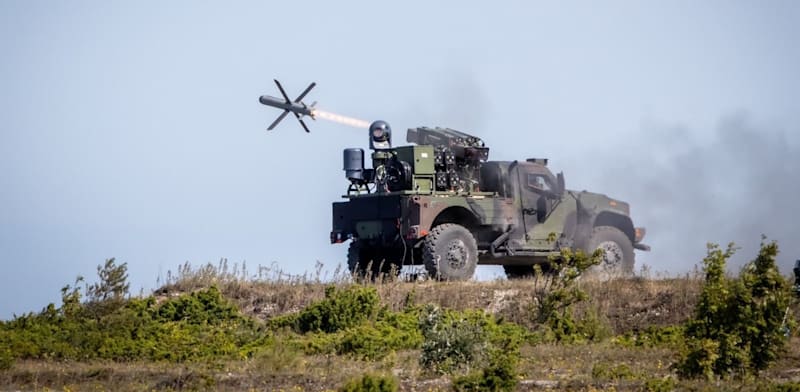
Over the past decade, India has become a major customer of Israel’s defense industry, with the expectation at the political level that the scale of cooperation will further expand. India has been Israel’s biggest defense customer for years, with 34% of total sales between 2020 and 2024, according to the Stockholm International Peace Research Institute (SIPRI). Figures from the Ministry of Defense International Defense Cooperation Directorate (SIBAT) show that total arms sales by Israel to India during this period amounted to about $20.5 billion.
The ties between the countries go beyond direct procurement deals, as each of the major Israeli defense companies currently has Indian subsidiaries and collaborations with local industry on the subcontinent. These moves are intended to align Israeli activity with the “Make in India” and “Self Reliance” programs led by Modi with the aim of strengthening his country’s productive independence.
Ahead of Modi’s visit, SIBAT head, Brig. Gen. (Res.) Yair Kulas, tells Globes about the trends in trade with India, and sheds light on the joint work behind the scenes during the war.
The Israeli-Indian standard
Kulas says that Ministry of Defense director general Gen. (res.) Amir Baram has defined India as a key country and even personally led a delegation of all the heads of departments in the ministry to deepen ties. India’s importance was clearly reflected during the war, when, according to foreign media reports, ships with Indian-made weapons docked in Israel. A prominent example of this cooperation is Adani Corp., which produces the Indian Drishti 10 Starliner drone based on Elbit Systems Hermes 900.
“Especially during the war, we turned to many sources and purchased equipment through the Defense Procurement Directorate,” Kulas explains of bilateral procurement. According to him, India is a true partner, and in times of war there is a clear desire to procure from it, since the Indians produce “to the standards of Israeli industries.”
However, the biggest story is the enormous size of India’s procurements from Israel. “In 2012, we exported $300 million, we rose to $700 million in 2013 and to $1 billion in 2014,” says the head of SIBAT. “The big jump occurred in 2017 with the sale of Barak systems, which led to a jump to about $3.4 billion.”
After that, there was a consistent decline to $880 million in 2023, and again a growth trend. “In 2024, we sold about $1.1 billion, and in 2025, although the data has not yet been fully processed, it is more than $1.5 billion.”
RELATED ARTICLES
India agrees arms deals with Israel worth $8.6b – report
India signs deal for Elbit developed PULS launchers
India to procure 1,000 Rafael SPICE air-to-surface missiles
India and Israel’s winning combination
What made the difference?
“The decline was created as a result of the Make in India and Self Reliance programs, which require more significant production, of about 50% to 60% of the deal,” explains Kulas. According to him, every major power today has a desire for local production, and therefore the strategy of Israeli industries is to establish “production units” in target countries. Just as a large company must have production in the US for the American market or in Germany for NATO procurement, India is the central anchor in Asia. Due to the enormous size of the Indian market, participation in tenders currently requires a massive manufacturing presence within the country.
On this week’s visit itself, the Hindustan Times website reported that a key issue that will be on the agenda during Modi’s visit to Israel is air defense. As part of this, joint development in the ballistic missile defense industry, and even laser defense, is on the agenda.
Forbes India recently reported that the total number of deals that Israel has closed with India since the beginning of the year is a whopping $8.6 billion. Kulas says he does not know this specific figure, but stresses that the official export figures do not reflect the full depth of the ties. “The SIBAT figure is partial,” explains Kulas, “It includes exports from our industries in Israel to India, but does not include what our industries produce within India itself. “There is currently no data that can indicate exactly how much, for example, Adani Corporation will produce in India with its share of the partnership.”
Getting ahead of the copycats
Israel is seen as an international technological leader in the defense industries. Alongside growing demand, it is also dealing with the phenomenon of technological copying. A prominent example of this was last October, when Armenian company Davaro unveiled the Dragonfly 3 suicide drone, which looks almost like an exact copy of the Harop manufactured by Israel Aerospace Industries (IAI). Armenia has deep defense ties with India, which itself deploys the Harop as a strategic customer. This is in contrast to Israel, which ranks eighth in the world’s defense exporters with a share of 3.1% of total world trade, according to SIPRI data.
Due to reports of copies of various Israeli systems in some countries, the question arises of how Israel maintains its place at the forefront of global technology. “Before exporting, we go through various bodies such as the Director of Security of the Defense Establishment and MAFAT,” explains Kulas. “This includes strict security agreements and there is no lawlessness here. It is clear that people try to copy, even at exhibitions, but this is a race in which we must always produce the next generation. The trick is to be one step ahead of everyone else, and that’s exactly what MAFAT is about. Once you’ve used certain capabilities, the enemy already knows them, so you have to keep moving forward.”
By virtue of his role as the defense export leader at the Ministry of Defense, Kulas routinely works with government officials in India to create marketing and sales opportunities. He describes a close relationship with the Indian procurement director general and explains that Israeli industry now understands that it must have a local “manufacturing foothold,” while Indian companies need technology transfer. “We provide the political umbrella for things to flourish,” he says. “Military cooperation also includes the work of startups between MAFAT and the Indian DRDO, and it is clear that both countries are united around this goal.”
The Gateway to Asia
According to Kulas, manufacturing within India does not only serve the local army, but is a gateway to the entire Asian market. “Once you produce in India, you can reach other countries,” he says optimistically. “The market is big not only for India itself but also for third countries in the region.”
How do you summarize 2025 for SIBAT in general? And what are the main objectives of Modi’s visit?
Kulas replies that although the final figures will only be received in April, he feels that Israel’s defense industry will succeed in breaking “another glass ceiling.” “Despite the challenges of the war, demand is on a crazy rise,” explains Kulas. “The boycotts and recriminations have indeed created difficulties, but on the other hand, the proof on the battlefield and the results of the fighting in Gaza, Lebanon, Syria and Iran are bringing a surge in our industries.”
As for the main objectives of Modi’s visit, Kulas emphasizes the importance of direct involvement at the highest political level. “This is a visit at a strategic level, and once there is direct involvement of the prime ministers, they are the ones who guide the defense industries and the defense ministries,” he notes.
Published by Globes, Israel business news – en.globes.co.il – on February 23, 2026.
© Copyright of Globes Publisher Itonut (1983) Ltd., 2026.