No Result
View All Result
SUBMIT YOUR ARTICLES
  • Login
Friday, December 19, 2025
TheAdviserMagazine.com
  • Home
  • Financial Planning
    • Financial Planning
    • Personal Finance
  • Market Research
    • Business
    • Investing
    • Money
    • Economy
    • Markets
    • Stocks
    • Trading
  • 401k Plans
  • College
  • IRS & Taxes
  • Estate Plans
  • Social Security
  • Medicare
  • Legal
  • Home
  • Financial Planning
    • Financial Planning
    • Personal Finance
  • Market Research
    • Business
    • Investing
    • Money
    • Economy
    • Markets
    • Stocks
    • Trading
  • 401k Plans
  • College
  • IRS & Taxes
  • Estate Plans
  • Social Security
  • Medicare
  • Legal
No Result
View All Result
TheAdviserMagazine.com
No Result
View All Result
Home Market Research Business

All Israelis will foot bill for mandatory rooftop solar panels

by TheAdviserMagazine
6 months ago
in Business
Reading Time: 5 mins read
A A
All Israelis will foot bill for mandatory rooftop solar panels
Share on FacebookShare on TwitterShare on LInkedIn


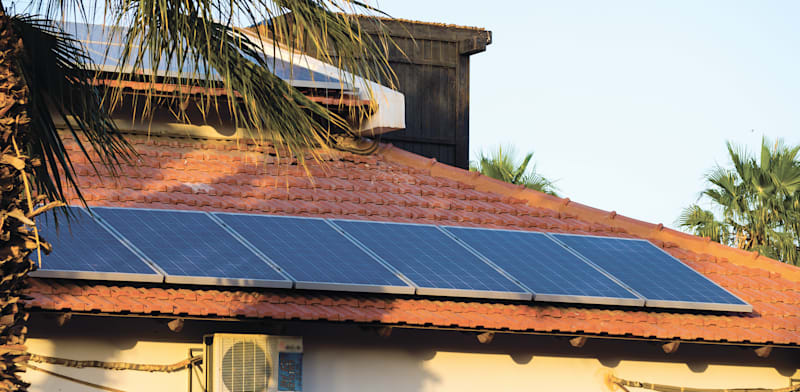
Later this year, Israel will become one of the first countries in the world to require the installation of solar panels on roofs, according to new regulations approved by the National Planning Authority, Ministry of Energy and Infrastructure, and the Ministry of Interior. From December, obtaining an occupancy permit (Form 4) will be conditional on the installation of solar panels on roofs of every house with a roof area of more than 100 square meters, industrial buildings, public buildings, and even non-residential buildings with a roof area of 250 square meters or more.

The regulations were approved as part of a trend to expand electricity production from solar panels on roofs, with a target of 100-150,000 roofs by 2030, and increasing production from them even more by 2040. This is to decentralize the grid and increase use of renewable energy. While the benefits are clear, experts and government officials warn that it will cost hundreds of millions of shekels a year in incentivized tariffs paid to the owners of the rooftop solar panels, which will roll directly onto our electricity bills. Despite the criticism, the Ministry of Energy and Infrastructure insists that there is a market failure that needs to be fixed.

The Ministry of Energy and Infrastructure has also approved new payment methods for those who install solar panels on their roofs, with a more rapid return on investment and linking payments to the Consumer Price Index (CPI). All this while locking in the price for 25 years, even assuming that production from solar panels will become more efficient and cheaper in the future. Today, panels that produce up to 15 kilowatts reward the property owner with NIS 0.48 per kWh, 3-4 times the amount paid for panels on large solar fields, and even NIS 0.54 per kWh for properties in large cities. Electricity consumers pay the bill for these incentivized tariffs.

The public is in no rush

Despite the generous subsidy, there are only about 30,000 solar paneled roofs in Israel. According to Ministry of Energy and Infrastructure sustainable energy division head Ron Eifer the reason is “A lack of familiarity with or attention to the issue among builders” as well as “an ‘agency problem’ in which the party constructing the building will often not be the party that will benefit from the ongoing profits from the solar panel system.” This is why, he says, the law requires the installation of a relatively small system (starting at 5 kilowatts, such as a small private roof), and the roof owners will decide whether they want to expand it.


RELATED ARTICLES


Does it pay for homes to install rooftop solar panels?


New housing rooftop solar panel incentives unveiled


Solar energy fails to shine in Israel


The first US state to impose such a legal requirement was California in 2020, and a few years later France and Italy enacted similar legislation, as well as several states in Germany. The EU will gradually impose such a requirement between 2026 and 2032.

But the question arises: Why are both subsidies and coercion required? According to Eifer, there are major benefits that make it worthwhile. “It contributes to making the electricity sector cleaner, more decentralized and more resilient. Also, bringing electricity production closer to where it is consumed will save on electricity losses and the need to build expensive power lines that take up a lot of space.”

But some doubt this. A study by the National Economic Council claims that even after calculating the benefits in saving land in the Negev and the costs of building transmission infrastructure, it is still more profitable to build large solar fields than hundreds of thousands of solar roofs. These are significantly more efficient, and require a much lower payment per kWh produced. In addition, there is no need for a long-term commitment of 25 years and special payment tracks. According to the same study, converting solar rooftops and other dual-use projects with a low chance of realization to large ground-based solar fields would save the economy about NIS 8 billion.

However, Eifer from the Ministry of Energy and Infrastructure stresses that the ministry’s policy is to promote both fields and solar panel rooftops. The Israel Electricity Authority is also concerned about the considerable cost, especially due to the high payment guaranteed to those who install solar panels on their roofs. They estimate that, assuming that the solar roofs will not come at the expense of ground-based facilities but at the expense of conventional gas-fired generation, reaching the Ministry of Energy’s goal of 100,000 new solar roofs will cost the electricity sector NIS 425 million per year. Reaching the more ambitious goal of 150,000 roofs will cost NIS 888 million per year – which will increase electricity bills for the entire country by 2.5%.

While the Electricity Authority recognizes the advantages that the Ministry of Energy presents on solar paneled roofs, it is concerned about the high price. “There are great advantages in the requirement to install solar panels on roofs, because it will make it easier to plan a more efficient and cheaper distribution network for consumers,” the Electricity Authority says, “However, as the subsidy for renewable energies is already high today, the Authority recommends focusing on creating a tariff structure that will encourage investments without an additional and burdensome cost on the electricity tariff for consumers.”

Either way, at the end of 2026, the current regulatory arrangements around subsidies for solar panels on roofs will end, which will open the door to lowering the tariff for new installers. If this happens, will allow for more efficient planning of the network, but with a lower subsidy for production.

In any case, the main hope of the Ministry of Energy and Infrastructure is actually fewer private homes, and more large solar roofs such as those on factories and hospitals that will produce much more for the first 15 kilowatts purchased by the Israel Electric Co. (IEC) at an extremely high price.

“Extreme and harsh step”

A senior government official in the energy sector is protesting the new policy to force the installation of solar paneled roofs, calling it an “extreme step” and “a harsh regulation that violates property rights, raises housing prices and increases the cost of living.” According to him, “There are already high solar panel tariffs that encourage installation and guarantee a handsome return for those who choose to do so. The fact that the scope of installation is insufficient does not justify the use of the harshest regulatory tool: a blanket requirement.”

In the private sector, opinions are divided: the Manufacturers’ Association, whose factories will be a major factor in the production of solar paneled roofs, is strongly opposed. According to its president, Dr. Ron Tomer, “We see this as a gross interference by the government in the considerations of industry and the business sector.” He would prefer “regulatory incentives for installing solar panels, such as fast-track building permits, so that they choose to install these panels of their own free will and not through regulatory coercion that could only harm them.”

On the other hand, solar panel installers will of course benefit from the new regulations. Volta Solar founder and CEO Eran Tal says, “Solar energy is a critical national infrastructure, especially in a densely populated, hot, and threatened country like ours. The obligation to utilize the roofs of public, commercial, and private buildings for the production of clean electricity is a necessary step in terms of energy security, emergency resilience, and economic savings for every household. From the perspective of the entire economy, saving land, reducing pollution, easing the burden on the electricity grid, and increasing energy independence are steps that carry double value – both for the national economy and for the individual consumer.”

Published by Globes, Israel business news – en.globes.co.il – on June 30, 2025.

© Copyright of Globes Publisher Itonut (1983) Ltd., 2025.



Source link

Tags: billfootIsraelismandatorypanelsrooftopsolar
ShareTweetShare
Previous Post

Robinhood reveals tokenized stock trading in the EU

Next Post

Markets Are Soaring: Is It Time to Dial Back Your Risk?

Related Posts

edit post
Why India’s AMC business could be entering a long growth phase? Aditya Kondawar explains

Why India’s AMC business could be entering a long growth phase? Aditya Kondawar explains

by TheAdviserMagazine
December 19, 2025
0

The listing of ICICI Prudential Asset Management Company has reignited discussions around valuation premiums in the AMC space, especially when...

edit post
Southeast Asian economies prove resilient in the face of Trump’s tariffs as supply chains expand

Southeast Asian economies prove resilient in the face of Trump’s tariffs as supply chains expand

by TheAdviserMagazine
December 19, 2025
0

Within a year of taking office, U.S. president Donald Trump turned global trade on its head. His sweeping tariffs took...

edit post
Politics may trump macros in 2026 US rate cycle: Rajeev Agrawal

Politics may trump macros in 2026 US rate cycle: Rajeev Agrawal

by TheAdviserMagazine
December 19, 2025
0

The latest US macroeconomic data has reopened questions around the true state of the economy. Inflation and jobless claims have...

edit post
FedEx raises FY26 EPS outlook to .80– amid network transformation and B2B momentum (NYSE:FDX)

FedEx raises FY26 EPS outlook to $17.80–$19 amid network transformation and B2B momentum (NYSE:FDX)

by TheAdviserMagazine
December 18, 2025
0

Earnings Call Insights: FedEx Corporation (FDX) Q2 2026 Management View CEO Rajesh Subramaniam highlighted, "In Q2, we provided excellent service...

edit post
Asian stocks join Wall Street rally, brace for BOJ hike

Asian stocks join Wall Street rally, brace for BOJ hike

by TheAdviserMagazine
December 18, 2025
0

SYDNEY: Asian share markets rebounded on Friday as a turnaround in tech lifted Wall Street, leaving investors counting down to...

edit post
Jelly Roll, country-rap superstar who found music while serving prison time, pardoned by Tennessee governor in front of Christmas Tree

Jelly Roll, country-rap superstar who found music while serving prison time, pardoned by Tennessee governor in front of Christmas Tree

by TheAdviserMagazine
December 18, 2025
0

Tennessee’s governor pardoned country star Jelly Roll on Thursday for his criminal past in the state, acknowledging the Nashville native’s long road back from...

Next Post
edit post
Markets Are Soaring: Is It Time to Dial Back Your Risk?

Markets Are Soaring: Is It Time to Dial Back Your Risk?

edit post
Will Palantir Technologies Ever Pay A Dividend?

Will Palantir Technologies Ever Pay A Dividend?

  • Trending
  • Comments
  • Latest
edit post
How Long is a Last Will and Testament Valid in North Carolina?

How Long is a Last Will and Testament Valid in North Carolina?

December 8, 2025
edit post
How to Make a Valid Will in North Carolina

How to Make a Valid Will in North Carolina

November 20, 2025
edit post
In an Ohio Suburb, Sprawl Is Being Transformed Into Walkable Neighborhoods

In an Ohio Suburb, Sprawl Is Being Transformed Into Walkable Neighborhoods

December 14, 2025
edit post
Democrats Insist On Taxing Tips        

Democrats Insist On Taxing Tips        

December 15, 2025
edit post
Living Trusts in NC Explained: What You Should Know

Living Trusts in NC Explained: What You Should Know

December 16, 2025
edit post
Who Should I Choose as My Powers of Attorney?

Who Should I Choose as My Powers of Attorney?

December 6, 2025
edit post
BP Names Meg O’Neill as CEO in Leadership Shake-Up

BP Names Meg O’Neill as CEO in Leadership Shake-Up

0
edit post
Earnings Summary: A snapshot of FactSet’s (FDS) Q1 2026 results

Earnings Summary: A snapshot of FactSet’s (FDS) Q1 2026 results

0
edit post
A Comprehensive Analysis of New Launch vs. Resale Market in Singapore – Investment Watch Blog

A Comprehensive Analysis of New Launch vs. Resale Market in Singapore – Investment Watch Blog

0
edit post
Prices rose at 2.7% rate

Prices rose at 2.7% rate

0
edit post
Target Pajamas Deal: Holiday Pajama Pants only !

Target Pajamas Deal: Holiday Pajama Pants only $5!

0
edit post
Jump Trading Hit with B lawsuit Tied to Terra’s B Crash

Jump Trading Hit with $4B lawsuit Tied to Terra’s $50B Crash

0
edit post
Jump Trading Hit with B lawsuit Tied to Terra’s B Crash

Jump Trading Hit with $4B lawsuit Tied to Terra’s $50B Crash

December 19, 2025
edit post
Why India’s AMC business could be entering a long growth phase? Aditya Kondawar explains

Why India’s AMC business could be entering a long growth phase? Aditya Kondawar explains

December 19, 2025
edit post
Southeast Asian economies prove resilient in the face of Trump’s tariffs as supply chains expand

Southeast Asian economies prove resilient in the face of Trump’s tariffs as supply chains expand

December 19, 2025
edit post
Politics may trump macros in 2026 US rate cycle: Rajeev Agrawal

Politics may trump macros in 2026 US rate cycle: Rajeev Agrawal

December 19, 2025
edit post
Jump Trading sued for  billion over Terraform Labs fallout: Report

Jump Trading sued for $4 billion over Terraform Labs fallout: Report

December 18, 2025
edit post
FedEx raises FY26 EPS outlook to .80– amid network transformation and B2B momentum (NYSE:FDX)

FedEx raises FY26 EPS outlook to $17.80–$19 amid network transformation and B2B momentum (NYSE:FDX)

December 18, 2025
The Adviser Magazine

The first and only national digital and print magazine that connects individuals, families, and businesses to Fee-Only financial advisers, accountants, attorneys and college guidance counselors.

CATEGORIES

  • 401k Plans
  • Business
  • College
  • Cryptocurrency
  • Economy
  • Estate Plans
  • Financial Planning
  • Investing
  • IRS & Taxes
  • Legal
  • Market Analysis
  • Markets
  • Medicare
  • Money
  • Personal Finance
  • Social Security
  • Startups
  • Stock Market
  • Trading

LATEST UPDATES

  • Jump Trading Hit with $4B lawsuit Tied to Terra’s $50B Crash
  • Why India’s AMC business could be entering a long growth phase? Aditya Kondawar explains
  • Southeast Asian economies prove resilient in the face of Trump’s tariffs as supply chains expand
  • Our Great Privacy Policy
  • Terms of Use, Legal Notices & Disclosures
  • Contact us
  • About Us

© Copyright 2024 All Rights Reserved
See articles for original source and related links to external sites.

Welcome Back!

Login to your account below

Forgotten Password?

Retrieve your password

Please enter your username or email address to reset your password.

Log In
No Result
View All Result
  • Home
  • Financial Planning
    • Financial Planning
    • Personal Finance
  • Market Research
    • Business
    • Investing
    • Money
    • Economy
    • Markets
    • Stocks
    • Trading
  • 401k Plans
  • College
  • IRS & Taxes
  • Estate Plans
  • Social Security
  • Medicare
  • Legal

© Copyright 2024 All Rights Reserved
See articles for original source and related links to external sites.