No Result
View All Result
SUBMIT YOUR ARTICLES
  • Login
Monday, February 2, 2026
TheAdviserMagazine.com
  • Home
  • Financial Planning
    • Financial Planning
    • Personal Finance
  • Market Research
    • Business
    • Investing
    • Money
    • Economy
    • Markets
    • Stocks
    • Trading
  • 401k Plans
  • College
  • IRS & Taxes
  • Estate Plans
  • Social Security
  • Medicare
  • Legal
  • Home
  • Financial Planning
    • Financial Planning
    • Personal Finance
  • Market Research
    • Business
    • Investing
    • Money
    • Economy
    • Markets
    • Stocks
    • Trading
  • 401k Plans
  • College
  • IRS & Taxes
  • Estate Plans
  • Social Security
  • Medicare
  • Legal
No Result
View All Result
TheAdviserMagazine.com
No Result
View All Result
Home Legal

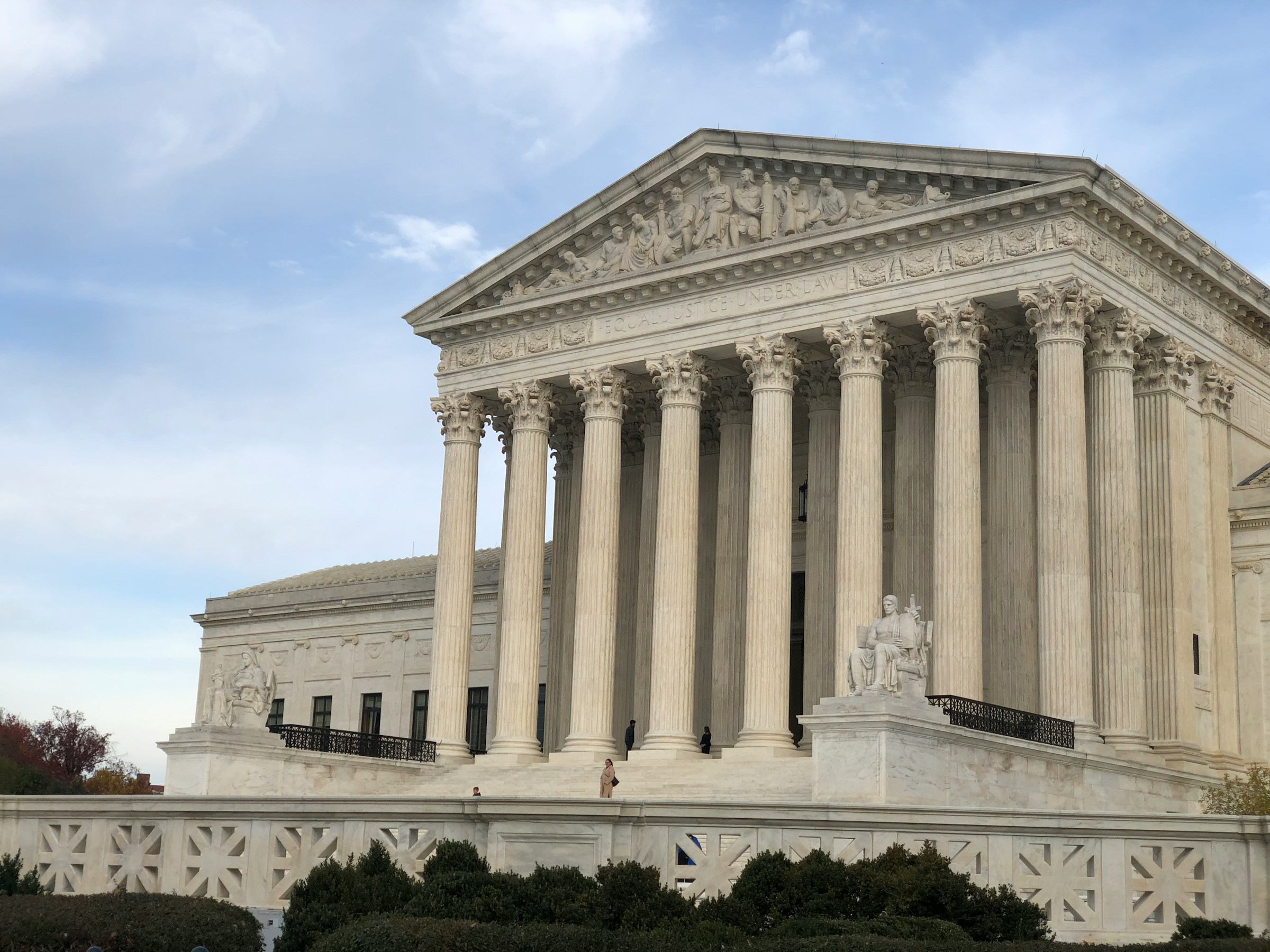
Supreme Court further closes the prison gates

by TheAdviserMagazine
10 hours ago
in Legal
Reading Time: 5 mins read
A A
Supreme Court further closes the prison gates
Share on FacebookShare on TwitterShare on LInkedIn


Civil Rights and Wrongs is a recurring series by Daniel Harawa covering criminal justice and civil rights cases before the court.

On Jan. 20, in what would be an otherwise unremarkable order, the Supreme Court dismissed Danny Howell’s petition for review, denying his request to proceed “in forma pauperis” – a request to forgo having to pay the court’s filing fees and comply with the court’s printing requirements because he is financially unable to do so. But the court did not just deny Howell’s request and dismiss his petition. It went far further, barring Howell from filing any future noncriminal petitions in forma pauperis, “Martin-izing” him.

Justice Ketanji Brown Jackson dissented from the mere two-sentence order. And in her dissent, she sounded the alarm about how the court’s seemingly mundane procedural practice of Martin-izing would-be petitioners raises real access-to-justice concerns, especially for those who are incarcerated.

To start, filing in the Supreme Court is remarkably expensive. A petitioner – that is, the litigant seeking Supreme Court review – must pay a $300 filing fee and bear the cost of producing dozens of bound copies, an obligation that can easily run into the thousands of dollars. As law professor William Aceves recently lamented: “[F]orcing litigants to spend hundreds, if not thousands, of dollars on processing, printing, filing, and serving unneeded documents does not facilitate an open and accessible justice system.”

For litigants who cannot afford those steep costs, the court allows petitions to be filed in forma pauperis. But that avenue is neither transparent nor simple. Petitioners who were not granted in forma pauperis status in the courts below must submit a detailed (and intrusive) financial affidavit, and the rules offer little guidance about how indigence is assessed or what level of hardship qualifies. Thus, the decision to grant in forma pauperis status rests largely on opaque judgments about the applicant’s degree of poverty into which the public (and the applicant) has no real insight.

Beyond those barriers to entry, the court claims discretion to deny fee waivers for petitions it deems frivolous and, in some cases, to impose prospective filing bans on “abusive” repeat filers. It was that authority the court exercised to bar Howell, who was sentenced to spend 70 years in an Indiana prison, from filing any future noncriminal petitions unless he pays the filing fee (and presumably, the related printing costs).

In her dissent, Jackson explained how the practice of Martin-izing came to pass. When the court first imposed prospective filing bans in the late 1980s and early 1990s, the targets were prolific litigants: individuals who had filed dozens of meritless petitions. Indeed, the eponymous Martin filed 45 petitions in the Supreme Court over the course of ten years, including 15 petitions in the two years before he was banned from filing in forma pauperis. The court claimed such prospective bans were necessary to “discourage abusive tactics that actually hinder [it] from providing equal access to justice for all.” And at first, prospective filing bans were considered an extraordinary sanction.

But, as Jackson continued, what was once extraordinary has become routine. “By [her] count, the Court has now invoked Martin hundreds of times to prospectively bar indigent litigants from filing in forma pauperis.” And as Howell’s case illustrates, the court no longer waits for someone to file dozens of what it deems frivolous petitions to take this draconian step – Howell had “filed only six petitions over the span of 14 years—hardly a flood,” with his last petition filed over eight years ago. As Jackson pointed out, the court now “reflexively Martin-ize[s] petitioners after only a few petitions.”

This practice of prospectively closing the courthouse doors is troubling from a pure access-to-justice perspective. But as Jackson continued, it is of even greater concern when applied to those who are indigent and incarcerated. Prisoners’ legal circumstances can quickly change. New constitutional violations can arise from terrible conditions of confinement that are unfortunately relatively routine (think unsafe housing conditions and inadequate medical treatment). An unexpected constitutional claim may take shape based on the abuse from a single prison official (think retaliation or excessive force). Or shifts in statutory interpretation or retroactivity doctrine over which an incarcerated person has no control can suddenly render previously unavailable claims viable (think changes to how the Armed Career Criminal Act is interpreted).

Enormously consequential decisions have been filed by incarcerated petitioners proceeding in forma pauperis: Clarence Gideon’s handwritten petition, for instance, produced the modern right to counsel. By effectively barring imprisoned people who have filed multiple petitions from ever filing again – because a lifetime denial of in forma pauperis status amounts to precisely that – the court is willfully closing its eyes to potentially meritorious claims.

The court’s use of its internal operating procedures to prevent prisoners who represent themselves from even getting through the door is especially worrying given all of the legal and practical hurdles incarcerated litigants already face. Take the Prison Litigation Reform Act. That law requires even poor incarcerated people to pay filing fees, limits the damages available to them, and requires them to exhaust the internal prison grievance systems before heading to court, systems that themselves are often opaque or dysfunctional. Or consider habeas review. Even for the most skilled practitioner, habeas is a labyrinth characterized by strict deadlines, deferential standards, and strict limits on multiple petitions.

These are just examples of the legal barriers. Now consider the practical ones.

Those who are incarcerated rarely have access to counsel. Prison law libraries are often sparse and outdated, and the time one can spend in the library is entirely contingent on the facility’s whims. Some states, like North Carolina, have local rules that prevent incarcerated people from giving each other help with their legal pleadings. And even if they can do all the legwork and clear all the hurdles to file suit, an incarcerated person may still choose not to do so for fear of retaliation. Adding on top of all this a permanent Supreme Court filing ban brings into stark relief how a system already stacked against incarcerated litigants can quietly tip from difficult to inaccessible.

A permanent filing ban does not merely punish past conduct; it forecloses future claims that cannot yet be known. And it’s not even clear what it takes to be banned: the court’s order does not explain what made Howell’s prior filings “abusive” or “frivolous.” The Supreme Court only grants 0.1% of in forma pauperis petitions, and there is no way of knowing which petitions were denied as frivolous, as compared with those that were denied purely because the court exercised its discretion to pick and choose its cases. Unexplained sanctions like the one imposed on Howell provide no usable feedback about how to conform conduct to the court’s expectations. If anything, they generate uncertainty and may encourage over-deterrence, discouraging incarcerated individuals from pursuing what might otherwise be colorable claims.

To be sure, the Supreme Court has a legitimate interest in curbing abusive litigation. But when the court resolves to further that interest through permanent filing bans, it privileges administrative efficiency over meaningful access to judicial review for the people most dependent on the courts for constitutional protection.

Recommended Citation:
Daniel Harawa,
Supreme Court further closes the prison gates,
SCOTUSblog (Feb. 2, 2026, 10:00 AM),
https://www.scotusblog.com/2026/02/supreme-court-further-closes-the-prison-gates/




Source link

Tags: closescourtGatesprisonSupreme
ShareTweetShare
Previous Post

Supreme Court suspends closure of Army Radio

Next Post

Top Privacy Coins Poised to Lead the Next Crypto Bull Run

Related Posts

edit post
Adding a Child to Your Home’s Deed Can Trigger Legal Exposure You Didn’t Expect

Adding a Child to Your Home’s Deed Can Trigger Legal Exposure You Didn’t Expect

by TheAdviserMagazine
January 30, 2026
0

Adding a Child to Your Home’s Deed Can Trigger Legal Exposure You Didn’t Expect Adding an adult child to the...

edit post
New York judge drops death penalty for Luigi Mangione – JURIST

New York judge drops death penalty for Luigi Mangione – JURIST

by TheAdviserMagazine
January 30, 2026
0

Editor’s note: This story is part of ongoing coverage of the lead up to Mangione’s trial. Read coverage of federal...

edit post
Law Firm Website Trends for 2026 in a Post-Search World

Law Firm Website Trends for 2026 in a Post-Search World

by TheAdviserMagazine
January 29, 2026
0

For more than a decade, law firm websites have been playing catch-up. First to mobile, then to SEO and content...

edit post
Large Entities Achieve Double the Patent Allowance Rate of Micro Entities

Large Entities Achieve Double the Patent Allowance Rate of Micro Entities

by TheAdviserMagazine
January 29, 2026
0

The USPTO classifies patent applicants into three entity categories: large entities (regular undiscounted), small entities (businesses with fewer than 500...

edit post
Aiming To Make AI More Easily Accessible for Smaller Law Firms, Legal AI Company August Launches Self-Service Platform and Free Educational Library

Aiming To Make AI More Easily Accessible for Smaller Law Firms, Legal AI Company August Launches Self-Service Platform and Free Educational Library

by TheAdviserMagazine
January 27, 2026
0

Aiming to remove the sales-cycle obstacles that have kept generative AI tools out of reach for many solo and smaller-firm...

edit post
“Express Advocacy at 50,” by Allison R. Hayward

“Express Advocacy at 50,” by Allison R. Hayward

by TheAdviserMagazine
January 26, 2026
0

From an Institute for Free Speech symposium on the 50th anniversary of Buckley, which I've been cross-posting; this is by Allison...

Next Post
edit post
Top Privacy Coins Poised to Lead the Next Crypto Bull Run

Top Privacy Coins Poised to Lead the Next Crypto Bull Run

edit post
Apple (AAPL): Bullen-Angriff nach Rekordgewinnen und KI-Fantasie!

Apple (AAPL): Bullen-Angriff nach Rekordgewinnen und KI-Fantasie!

  • Trending
  • Comments
  • Latest
edit post
Most People Buy Mansions But This Virginia Lottery Winner Took the Lump Sum From a 8 Million Jackpot and Bought a Zero-Turn Lawn Mower Instead

Most People Buy Mansions But This Virginia Lottery Winner Took the Lump Sum From a $348 Million Jackpot and Bought a Zero-Turn Lawn Mower Instead

January 10, 2026
edit post
Utility Shutoff Policies Are Changing in Several Midwestern States

Utility Shutoff Policies Are Changing in Several Midwestern States

January 9, 2026
edit post
80-year-old Home Depot rival shuts down location, no bankruptcy

80-year-old Home Depot rival shuts down location, no bankruptcy

January 4, 2026
edit post
Tennessee theater professor reinstated, with 0,000 settlement, after losing his job over a Charlie Kirk-related social media post

Tennessee theater professor reinstated, with $500,000 settlement, after losing his job over a Charlie Kirk-related social media post

January 8, 2026
edit post
Florida Snowbirds Are Running Into Residency Documentation Problems

Florida Snowbirds Are Running Into Residency Documentation Problems

January 10, 2026
edit post
I run one of America’s most successful remote work programs and the critics are right. Their solutions are all wrong, though

I run one of America’s most successful remote work programs and the critics are right. Their solutions are all wrong, though

January 11, 2026
edit post
Women’s Jeans and Denim Jacket from under  at Walmart (Plus More Cute Clothing Finds!)

Women’s Jeans and Denim Jacket from under $10 at Walmart (Plus More Cute Clothing Finds!)

0
edit post
Why some women go gray gracefully while others look washed out: a colorist explains

Why some women go gray gracefully while others look washed out: a colorist explains

0
edit post
When A Hosting Provider Becomes A Hostile Provider: The Notepad++ Compromise

When A Hosting Provider Becomes A Hostile Provider: The Notepad++ Compromise

0
edit post
Ask an Advisor: The future of legacy CRMs in an AI world

Ask an Advisor: The future of legacy CRMs in an AI world

0
edit post
Do Freelancers Really Pay Taxes Four Times A Year

Do Freelancers Really Pay Taxes Four Times A Year

0
edit post
Kinneret remains low even after wet January

Kinneret remains low even after wet January

0
edit post
Why some women go gray gracefully while others look washed out: a colorist explains

Why some women go gray gracefully while others look washed out: a colorist explains

February 2, 2026
edit post
Medicare Savings Programs Are Accepting New Applications Again

Medicare Savings Programs Are Accepting New Applications Again

February 2, 2026
edit post
Ask an Advisor: The future of legacy CRMs in an AI world

Ask an Advisor: The future of legacy CRMs in an AI world

February 2, 2026
edit post
When A Hosting Provider Becomes A Hostile Provider: The Notepad++ Compromise

When A Hosting Provider Becomes A Hostile Provider: The Notepad++ Compromise

February 2, 2026
edit post
Women’s Jeans and Denim Jacket from under  at Walmart (Plus More Cute Clothing Finds!)

Women’s Jeans and Denim Jacket from under $10 at Walmart (Plus More Cute Clothing Finds!)

February 2, 2026
edit post
5 Ways to Use AI to Slash Your Grocery Bill (No Tech Skills Required)

5 Ways to Use AI to Slash Your Grocery Bill (No Tech Skills Required)

February 2, 2026
The Adviser Magazine

The first and only national digital and print magazine that connects individuals, families, and businesses to Fee-Only financial advisers, accountants, attorneys and college guidance counselors.

CATEGORIES

  • 401k Plans
  • Business
  • College
  • Cryptocurrency
  • Economy
  • Estate Plans
  • Financial Planning
  • Investing
  • IRS & Taxes
  • Legal
  • Market Analysis
  • Markets
  • Medicare
  • Money
  • Personal Finance
  • Social Security
  • Startups
  • Stock Market
  • Trading

LATEST UPDATES

  • Why some women go gray gracefully while others look washed out: a colorist explains
  • Medicare Savings Programs Are Accepting New Applications Again
  • Ask an Advisor: The future of legacy CRMs in an AI world
  • Our Great Privacy Policy
  • Terms of Use, Legal Notices & Disclosures
  • Contact us
  • About Us

© Copyright 2024 All Rights Reserved
See articles for original source and related links to external sites.

Welcome Back!

Login to your account below

Forgotten Password?

Retrieve your password

Please enter your username or email address to reset your password.

Log In
No Result
View All Result
  • Home
  • Financial Planning
    • Financial Planning
    • Personal Finance
  • Market Research
    • Business
    • Investing
    • Money
    • Economy
    • Markets
    • Stocks
    • Trading
  • 401k Plans
  • College
  • IRS & Taxes
  • Estate Plans
  • Social Security
  • Medicare
  • Legal

© Copyright 2024 All Rights Reserved
See articles for original source and related links to external sites.