Editor’s note: This story is part of ongoing coverage of the lead up to Mangione’s trial. Read coverage of federal oral arguments to dismiss Counts Three and Four here.
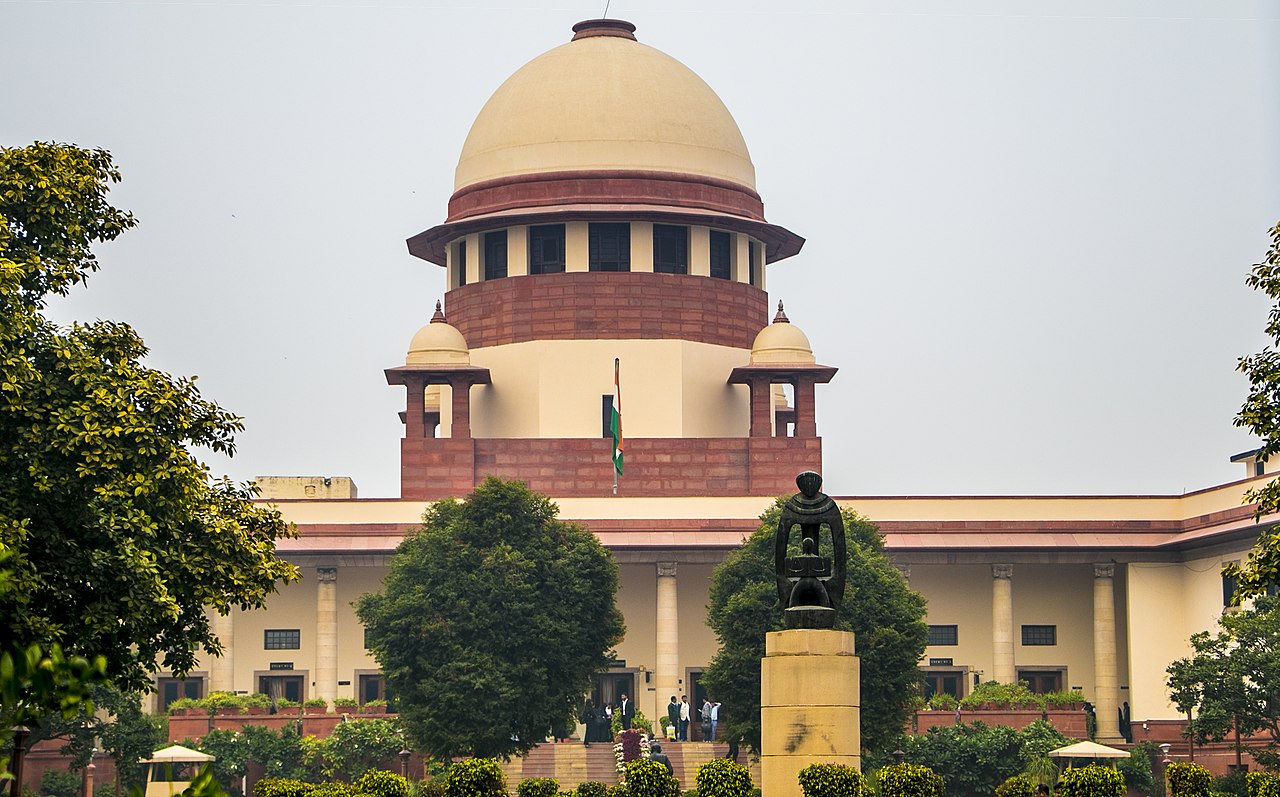
Judge Garnett of the Southern District of New York dismissed Counts Three (murder through use of a firearm) and Four (firearms offense) in US v. Mangione on Friday, thus also dropping the death penalty as an eligible punishment for Mangione.
The trial will now proceed on Counts One and Two, which charge Mangione with causing the death of Brian Thompson under two federal stalking laws. The maximum penalty for each count is life without parole. Federal prisoners are not eligible for parole under the Sentencing Reform Act of 1984.
Counts Three and Four relied on the federal interstate stalking statute, 18 U.S. Code § 2261A, as the predicate “crime of violence.” Because Judge Garnett disagreed on this classification, the death penalty is precluded as a punishment. In her 39-page decision, Judge Garnett stated that “no one could seriously question” if gunning the victim down on a public street in midtown Manhattan was “violent criminal conduct.” She continued, however, that the elements of the stalking offenses do not necessarily require the “use, attempted use, or threatened use of physical force against the person or property of another,” as defined under federal law.
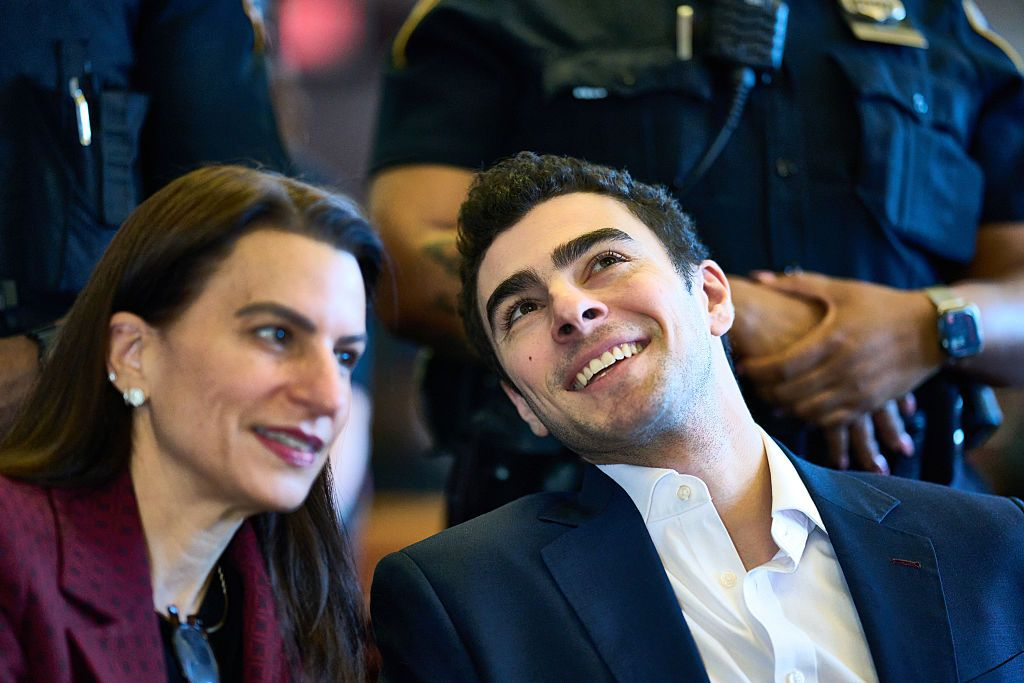
In a press conference outside the federal courthouse, lead defense attorney Karen Friedman Agnifilo, standing with the rest of the defense team, thanked the Court “for this incredible legal decision” and Mangione’s supporters who came to the courthouse as well as those who were unable to. “We all are very relieved,” Friedman Agnifilo told the press before the defense team left the press conference.
Assistant US Attorney Dominic Gentile stated that the federal government is not ready to decide if it will appeal. Judge Garnett gave the prosecution until February 27, 2026, to decide. The federal government could appeal under 18 USCS § 3731. The Second Circuit has consistently interpreted this statute to permit appeals in cases where a district court’s order effectively dismisses a discrete basis of criminal liability, even if the order does not formally dismiss an entire count. For example, in US v. Quinones, the Second Circuit held that the government could appeal a district court’s pretrial order striking the death penalty from a case, reasoning that such an order was tantamount to dismissing a portion of the indictment.
Because the trial is non-capital, the case will proceed according to Judge Garnett’s January 23 scheduling order—in-person jury selection is slated to commence on September 8, 2026 and a non-capital trial on October 13, 2026. However, Second Circuit appeals will likely postpone the federal case by approximately one year at a minimum. Mangione’s New York state trial, which is expected to take approximately 2 months, is thus expected to proceed first.
Assistant US Attorney Jun Xiang indicated that federal prosecutors are prepared to and will likely propose jury instructions mandating that the government prove the mens rea for both counts—that Mangione knew or intended to place Thompson in reasonable fear of death or serious bodily injury.
In October 2025, the defense moved to dismiss Counts Three and Four. On January 9, 2026, oral arguments were held on the motion, with the federal government arguing for the categorical approach to interpreting the federal stalking statutes as “crimes of violence.”
In a separate decision on Friday, Judge Garnett denied the defense’s motion to suppress Mangione’s black backpack from the Altoona McDonald’s, where he was apprehended. The backpack and its contents, including a 9mm pistol, loaded magazine, suppressor, “manifesto” or red notebook, and hand-drawn notes, will thus be presented to Mangione’s federal jury. Authorities also recovered a separate grey backpack in Central Park that they allege was found with Monopoly money, candy, and a Tommy Hilfiger jacket.