
If you’ve received a notice from the Texas Comptroller’s Office regarding a penalty for failure to file or pay your tax report on time, know that you’re not alone. Many Texas taxpayers face late filing penalties or missed payments. Fortunately, the state offers relief through payment plans or payment penalty waivers, and Form 89-224 is one of the main forms used for this. Whether you missed a deadline due to reasonable cause or simply didn’t understand the requirements, you should know your options.
This article is for educational purposes to help you better understand how the Texas penalty waiver, also called the penalty abatement program, works. First, let’s review Forms 89-224 and 89-225 and how they apply to your situation.
What Are Forms 89–224 and 89–225? What Is the Texas Penalty Waiver (Abatement)?
The Texas penalty waiver, or penalty abatement, is a form of tax relief offered by the Texas Comptroller to businesses or individuals who have missed a tax filing or payment deadline. Taxpayers typically use Form 89-224 to request such relief. This form is specifically designed for those seeking a waiver of penalties related to the late filing of a tax report or late payment of Texas taxes.
Form 89-224 requires the following details:
Contact information
Type of tax (state tax, sales tax, property tax, etc.) and filing
Tax report period
Year the tax return was due
Penalty amount
Explanation of the reason for the delay and any corrective actions taken
Submitting the form doesn’t automatically eliminate your penalties. Waivers are reviewed and approved by the Texas Comptroller’s Office, and you must pay the back taxes before a waiver is granted. If you have already paid the penalty and your waiver request is approved, you will receive a refund for that amount.
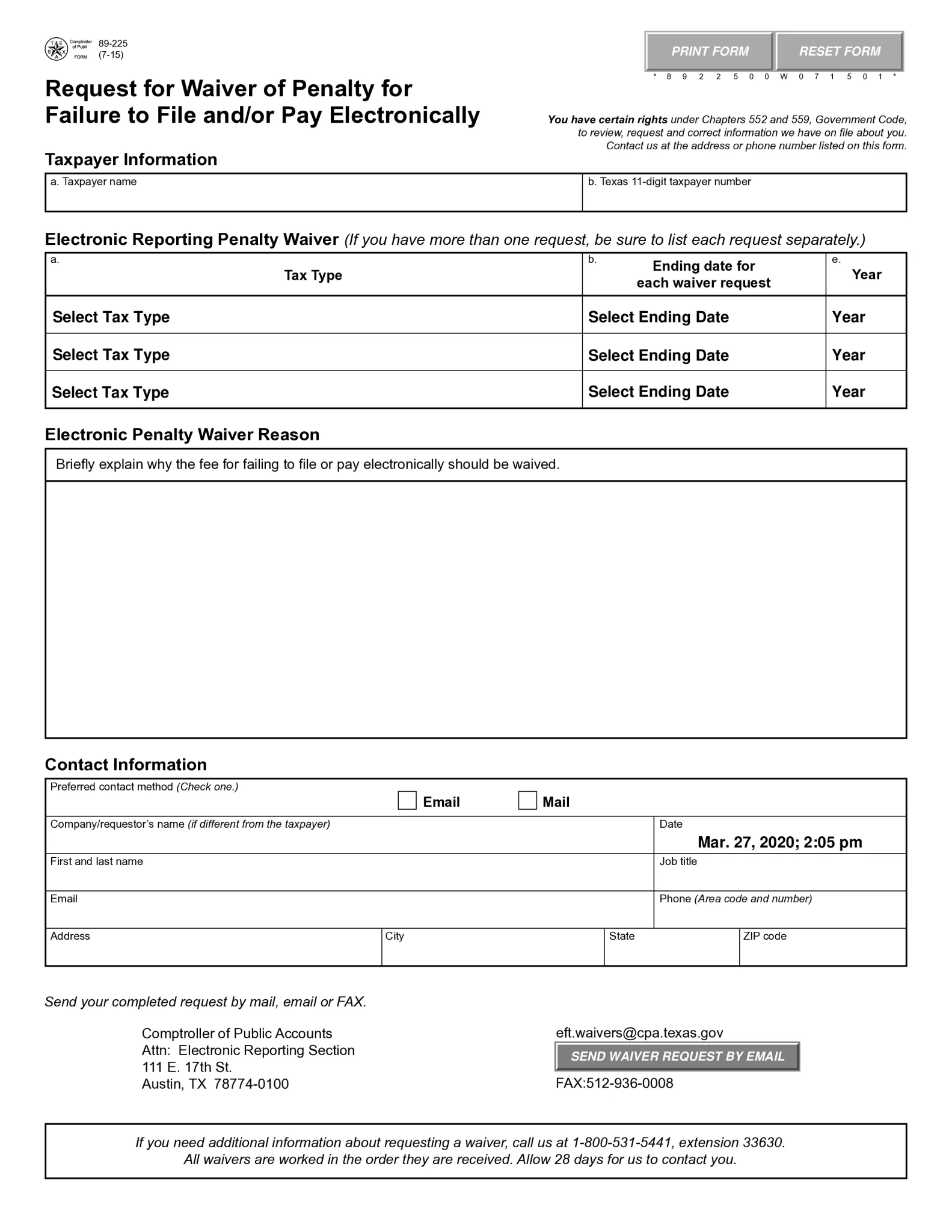
Meanwhile, Form 89-225 is used in a voluntary disclosure agreement, often when a taxpayer proactively reports back taxes not yet identified by the state. Although they are similar in purpose, Form 89-225 typically applies to more complex or self-reported issues and may follow different procedures than Form 89-224. Both forms can be submitted by mail or email. In some cases, businesses using electronic reporting systems may be required to keep digital records to support their request.
Knowing the eligibility requirements is the first step to understanding whether you qualify for a penalty waiver.
Eligibility Requirements for a Texas Penalty Waiver
Before submitting your request for waiver using Form 89-224, make sure that you meet the Texas Comptroller’s eligibility criteria. Not all taxpayers qualify, and overlooking a requirement could result in a denied application. Here’s what you need to know:
You must be current on all state tax filings and payments at the time of your request.
You cannot have received another penalty waiver within the past two years unless you can demonstrate extenuating circumstances.
Your request for a waiver must be submitted within four years of the original tax due date.
Meeting these qualifications doesn’t guarantee approval, but it puts your request in the best possible position for state consideration.
How Can I Apply in Texas for a Penalty Waiver?
If you believe you qualify for relief, the next step is to submit your penalty waiver request. In Texas, this involves filling out Form 89-224 and sending it to the Texas Comptroller via mail or email. Be sure to follow all instructions on the form carefully and include every required detail.
Clearly explain the cause of the late filing or payment and outline the steps you’ve taken to prevent future issues when preparing your request. The Comptroller will evaluate whether your explanation demonstrates a good-faith effort to meet your payment obligations in the future.
To strengthen your request, list practical steps you’ve taken to avoid future penalties, such as setting calendar reminders, using electronic reporting tools, hiring a tax professional, setting up a payment plan, or enrolling in auto-pay.
To avoid delays or denial, verify that your submission is complete, accurate, and within the four-year window from when the tax was originally due.
For Help With Form 89–224, Reach Out to a Tax Professional
Completing Form 89-224 and understanding Texas penalty waivers can be overwhelming, especially when you’re already facing a payment obligation or undue delay. That’s why it’s wise to consult a qualified tax professional, such as a CPA or tax attorney. They can help ensure your return is accurate, your explanation is solid, and your waiver request is as strong as possible. Tax professionals can negotiate with the Texas Comptroller, Texas Department of Labor, and Texas Workforce Commission due to their experience with these agencies.
At Community Tax, our experienced team provides tax preparation and amended return services designed to help clients stay compliant and avoid future penalties. Whether we’re reviewing your filing history, organizing documentation, or identifying errors that triggered penalties, we’re here to guide you every step of the way. Our reputation for reliable, knowledgeable service is reflected in the countless positive reviews and successful outcomes we’ve delivered.
A properly prepared tax return is one of the most effective ways to prevent penalties and the associated fees. Late filing, underreporting income, and submitting inaccurate information can all lead to penalties, even if the mistakes were unintentional. Working with a professional reduces the risk of these errors so you can stay in compliance and avoid the need for future penalty waiver requests.
FAQs
Many Texans have questions about how Form 89-224 applies to specific tax situations, particularly regarding sales, property, and franchise taxes. These topics often arise together, particularly for businesses, religious organizations, and owners of taxable property. The FAQs below address some of the most common concerns.